

Three-minute read
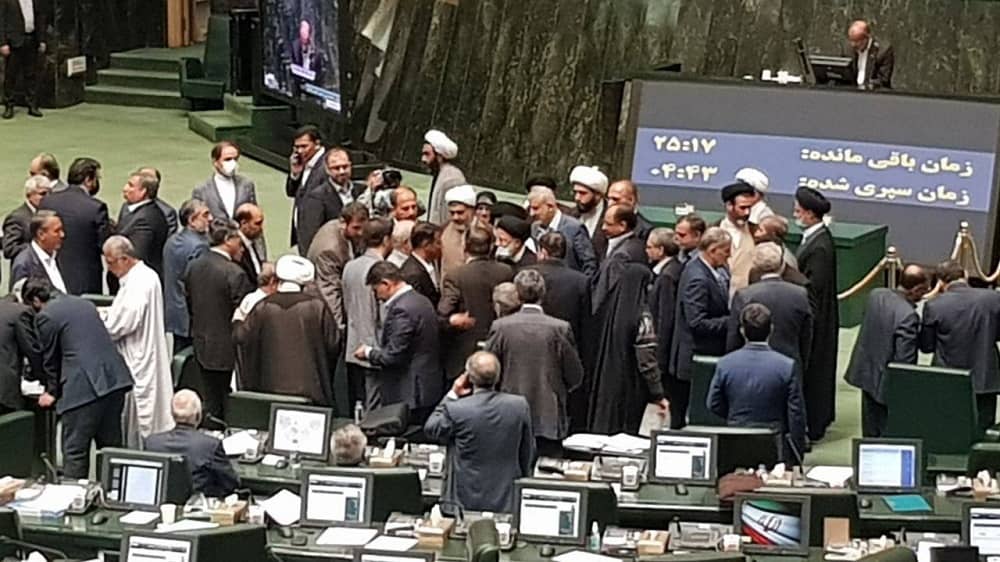
Iran’s ruling establishment is gripped by intensifying internal conflict as the economy deteriorates and public dissent surges. Senior officials, clerics, and IRGC commanders are now openly clashing over negotiations with the United States and the future of the regime’s nuclear program — a dispute revealing both the regime’s internal fragility and its dangerous impulses.
In an editorial published on March 10 in the state-run Khorasan newspaper, Mehdi Fazaeli, a longtime confidant of the regime’s Supreme Leader Ali Khamenei, launched a scathing attack on advocates of renewed nuclear talks with the U.S., warning that “prescribing negotiations is not only useless, it may kill the patient.” Dismissing sanctions as the main cause of Iran’s economic collapse, Fazaeli insisted that those who believe “negotiation is the cure for economic disease” are promoting “the most useless and even harmful solution.”
He cited the two rounds of nuclear talks — in the early 2000s and again during the 2015 JCPOA — as cautionary tales. “Back then, our foreign minister strolled and laughed in Geneva with the U.S. Secretary of State. And what did we get in return? Absolutely nothing,” Fazaeli wrote, blaming the nuclear deal’s collapse not on its flaws for Iran, but on Donald Trump’s belief that it gave away too little.
Internal Defections Cripple #Iran’s Regime Ahead of High-Stakes U.S. Negotiationshttps://t.co/2ltDtsBU1P
— NCRI-FAC (@iran_policy) April 8, 2025
Meanwhile, the regime’s military-security establishment is growing more explicit in its threats. On the same day, Ali Shamkhani, former secretary of the Supreme National Security Council, warned on X (formerly Twitter): “Continued foreign threats and military pressure could lead to Iran expelling IAEA inspectors and cutting off cooperation.” His message was echoed by Yadollah Javani, the IRGC’s political deputy, who declared that if threats continue, “Iran will revise the defensive doctrine and the nature of its nuclear program. The meaning of this revision is very clear.”
This marks a major escalation. In sermons and parliamentary speeches, multiple regime insiders have hinted that the Supreme Leader’s so-called fatwa against nuclear weapons is not immutable. Kermanshah’s Friday prayer leader, Habibollah Ghafoori, said on April 4: “If our enemies pursue foolish acts or aggression, the Islamic Republic might officially reconsider this fatwa.” He claimed this “secondary ruling” would be legitimate under Islamic jurisprudence and serve as “a proven model of deterrence.”
The threat was reinforced by lawmaker Qaseem Osmani on April 6, who stated: “The only path to confront global arrogance is rapid, uninterrupted movement toward building a nuclear weapon. Our nuclear knowledge must now serve deterrence.”
#Iran News: Khamenei Mouthpiece Threatens to Assassinate U.S. President, Doubles Down Against Criticismhttps://t.co/syckinAxF7 pic.twitter.com/jwyKkk7nN9
— NCRI-FAC (@iran_policy) April 7, 2025
These remarks come amid a wider “wolf pack” conflict over the regime’s future. Former head of parliament’s National Security Committee, Heshmatollah Falahatpisheh, responded to Kayhan’s threats of assassinating Trump by writing: “If you wanted war, you’d go to Lebanon. Don’t insult Iran by linking your foolish plots to its name.”
He added: “The nation is paying the price for extremists’ bluff. One day, the profiteers of sanctions will be tried, even if those trials come late.”
Amid these elite clashes, deeper fissures within state propaganda are also emerging. Extremist factions insist the regime’s nuclear program is purely peaceful and grounded in national dignity. Yet at the same time, they invoke the bomb as a “deterrent” against perceived threats. Cleric Ghafoori denounced skeptics of nuclear energy as “enemy infiltrators” and claimed “the West wants nations to be nuclear slaves under their oversight.”
Persian Year 1403: A Year of Tumult for the Regime and Transformation for #Iran #Nowruz https://t.co/y3UAN3Gy05
— NCRI-FAC (@iran_policy) March 20, 2025
Even factions close to the fake “reformists” are warning against these contradictions. State-affiliated commentator Ahmad Zeidabadi called the new pro-bomb rhetoric “a pit, not a path,” warning that Iraq’s own WMD posture paved the way for its invasion and downfall. “The more our officials speak of changing our nuclear strategy, the easier they make it for the U.S. and Israel to act,” he cautioned.
The contradictions are growing more visible. While Tehran’s officials blame the West for economic hardship, internal voices — including those from parliament — are openly admitting to rampant mismanagement, distrust, and public disillusionment.
What’s clear is that the regime, nearly half a century old, is facing concurrent crises of economic collapse, strategic confusion, and internal fragmentation. Its leadership now debates, in the open, the very taboos it once held as sacred — a sign not of strength, but of a desperate system careening toward the unknown.