

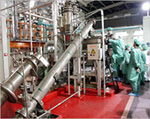
NCRI – Iran regime resumed nuclear fuel research on Tuesday which drew worldwide criticism.
Western powers had called on the regime to refrain from any work that could help it develop atomic weapons.
Gregory Schulte, Washington’s ambassador to the IAEA, said Iran’s move showed its "disdain for international concerns," adding, "the regime continues to choose confrontation over cooperation."
The European Union was quick to denounce the resumption of research, which a spokeswoman for EU foreign policy chief Javier Solana labeled "a step in the wrong direction."
German Foreign Minister, Frank-Walter Steinmeier, said that diplomats from his country would meet Solana and British and French envoys in Berlin this week to decide "whether there is now any basis for further negotiations with Iran."
British Prime Minister Tony Blair’s official spokesman said the international community was "running out of patience" with Tehran.
British Foreign Secretary Jack Straw said: "There was no good reason why Iran should have taken this step if its intentions are truly peaceful."
Russia said Tehran should abide by international commitments and that its decision to resume research caused concern.
In a foreign policy address Tuesday, French President Jacques Chirac warned Tehran it would be committing a "grave error" if it ignored the international community’s repeated warnings and pressed ahead with its nuclear program.
European diplomats have said they would seek an emergency meeting of the IAEA to consider referring Tehran to the Security Council for failing to allay fears it is seeking an atom bomb.
One EU and one non-EU diplomat said Iranian regime was planning to get 164 centrifuges running at Natanz to try to master the technique of producing nuclear fuel.
According to information from within the regime, it intends to feed uranium hexafluoride (UF6) into the cascade at Natanz soon.