

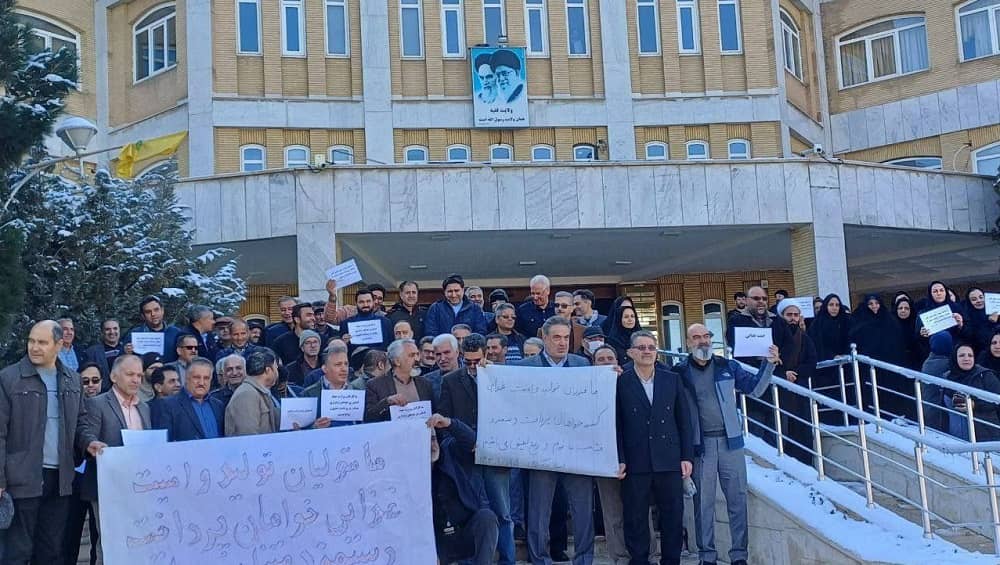
In the last few days, widespread protests and strikes persisted in Iran as various groups expressed grievances over economic hardships, low wages, and inadequate working conditions. The unrest highlights the growing dissatisfaction among workers, retirees, and marginalized communities.
January 4
Khorramshahr, Khuzestan Province: The 12th consecutive day of strikes by workers of Iran Ofogh Company in the Yadavarn oil field continued as the workers demanded better pay and improved working conditions. Despite their persistent efforts, regime authorities have ignored their demands, further fueling discontent among the striking workforce.
Zanjan, Zanjan Province: Workers of the Ministry of Agriculture staged a protest rally to decry low wages and unfavorable working conditions. The protesters emphasized the need for immediate changes to alleviate their financial struggles.
Kerman, Kerman Province: Recently retired teachers rallied in protest against the non-payment of overdue retirement bonuses. The educators criticized the authorities for their prolonged neglect, which has left them struggling financially.
January 4—Khorramshahr, southwest Iran
12th day of strikes by workers of Iran Ofogh company in the Yadavarn oil field, protesting regime authorities ignoring their demands for better pay and working conditions.#IranProtests pic.twitter.com/x8sVeEt6Gm— People's Mojahedin Organization of Iran (PMOI/MEK) (@Mojahedineng) January 4, 2025
PMOI Resistance Units in Zahedan continue activities and stress that the Iranian regime's executions and other repressive measures are no longer effective.#PMOI #ResistanceUnits pic.twitter.com/qKoS7DBGX2
— People's Mojahedin Organization of Iran (PMOI/MEK) (@Mojahedineng) January 4, 2025
Seman, Seman Province: Retired educators from the class of 2022 gathered outside the provincial governorate to demand payment of their delayed bonuses and pensions, highlighting the severe economic challenges they face.
Sirjan, Kerman Province: Workers from Gol Gohar Company staged their second day of protests over low wages and job insecurity. Reports indicated that some employees were suspended following their participation in the rallies.
Abadan, Khuzestan Province: Workers from the Abadan Petrochemical Complex protested delayed wages and the closure of the facility. The demonstrators, frustrated by months of unpaid salaries, chanted, “Enough with empty promises; our tables are empty.”
January 4—Zanjan, northwest Iran
Workers of the ministry of agriculture rally to protest low wages and poor working conditions.#IranProtests pic.twitter.com/nGfl25RQWn— People's Mojahedin Organization of Iran (PMOI/MEK) (@Mojahedineng) January 4, 2025
January 1, 2025
Arak, Markazi Province: For the third consecutive day, residents of Arak protested severe air pollution. Demonstrators called on authorities to take immediate action to address the environmental and health crisis.
The protests and strikes across Iran highlight the deepening economic and social grievances within various segments of the population. From the oil workers of Khorramshahr to the recently retired teachers in Kerman, Zanjan, and Shiraz, a unifying theme emerges: mounting frustration over unpaid wages, deteriorating working conditions, and the government’s inability—or unwillingness—to address systemic issues. These protests are not isolated events but interconnected expressions of a broader social discontent fueled by economic mismanagement and neglect.
The persistence of these protests across cities and sectors signifies a society increasingly unwilling to remain silent in the face of hardship. As the regime continues to ignore these demands, the risk of these localized actions coalescing into a nationwide movement becomes ever more pronounced, setting the stage for intensified confrontations in the months ahead.