

Three-minute read
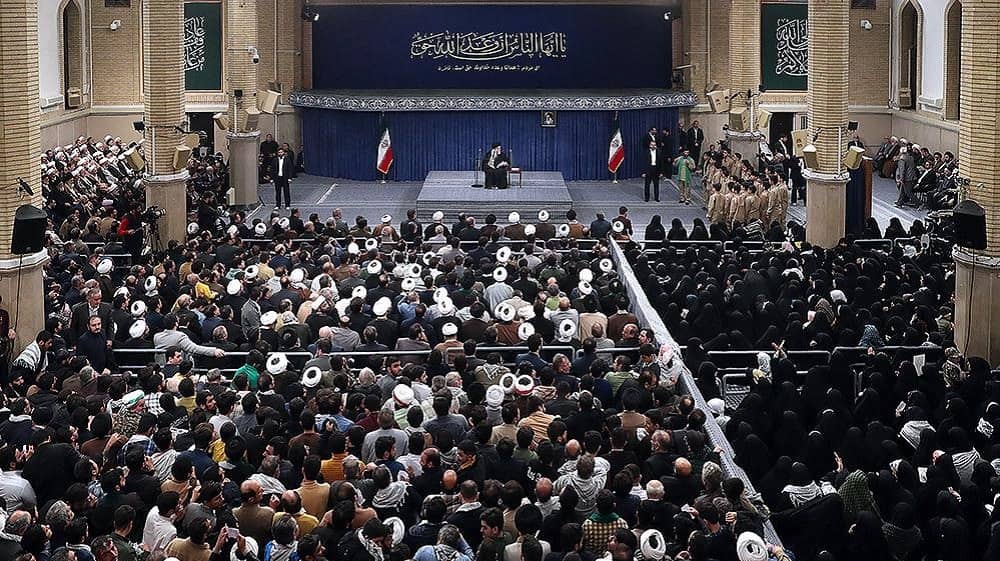
The Iranian regime’s Supreme Leader Ali Khamenei delivered a combative speech on January 8, criticizing proponents of negotiations with the United States and accusing critics of being “intimidated by American policies.” His remarks, come as the regime grapples with significant regional and domestic challenges, including the collapse of Bashar al-Assad’s regime in Syria, a critical blow to Tehran’s influence in the Middle East.
Khamenei’s recent public appearances have grown notably frequent, with the Supreme Leader delivering his fifth speech since the fall of Assad—an unprecedented pattern in recent years. Analysts attribute this unusual visibility to the regime’s urgent need to maintain morale among its supporters and project an image of resilience in the face of growing dissent.
In his speech, Khamenei lashed out at proponents of U.S. dialogue, stating, “Those promoting talks with America are either asleep, drunk, or mad.” He justified his aggressive stance by framing U.S. hostility as a reaction to losing control over Iran after the 1979 revolution. “America had taken possession of Iran, and we pulled it from their clutches,” he claimed. “To consider the demands of America and Israel is to threaten the republic and democracy of the country.”
#Khamenei’s Speech Reflects Iranian Regime’s Morale Crisis After Strategic Loss in #Syriahttps://t.co/9EwLTl0Ydv
— NCRI-FAC (@iran_policy) January 1, 2025
Khamenei, often known for cloaking his warnings in historical reflections and indirect language, cautioned his followers: “We must fortify ourselves, our thoughts, and public opinion against the enemy’s propaganda. They claim you are growing weaker while you are actually growing stronger. They project their own weakness as strength. They say, ‘I will destroy you with threats,’ while you are becoming immune to threats. The fundamental task is to tear apart the illusion of the enemy’s power, to shatter it, and not let their propaganda influence public opinion. The key to this issue is simple: do not believe the enemy’s words.”
He also expressed concern about the morale of his forces, saying: “The next issue is ‘hope.’ Hope. We must remain hopeful in divine guidance, in God’s support, and in the strength that God has given nations. This is precisely the opposite of what the enemy seeks to do: they want to strip hope from the hearts of our youth, to make them despair. Everyone with a platform in media or propaganda, everyone with a voice, must prioritize keeping hope alive in the hearts of the people. No discouraging words should be spoken.”
Though Khamenei did not directly address Syria in this speech, his emphasis on media control and propaganda underscores the regime’s acute awareness of its vulnerabilities. “We must shield public opinion from the lies, threats, and distortions of the enemy,” he instructed, urging state propaganda outlets to counter-narratives about the regime’s declining influence.
Khamenei Digs in As #Assad’s Fall Rattles #Tehranhttps://t.co/LW9OIi50Kp
— NCRI-FAC (@iran_policy) December 11, 2024
Amid these challenges, Khamenei sought to rally his followers by invoking divine support, saying, “We must be hopeful of divine guidance and the God-given strength of nations.” He added that activists in media and public discourse must focus on reviving hope while avoiding despair.
With mounting domestic discontent and international pressure, including the imminent return of Donald Trump to the U.S. presidency, Khamenei’s frequent public appearances and aggressive rhetoric underscore a regime on the defensive. By directing attention outward and rallying loyalists, Khamenei seeks to mask the profound weaknesses threatening his grip on power.
Even if Khamenei considers making concessions to international pressure, the regime’s profound fragility compels it to fear that any retreat could trigger significant defections within its ranks. To mitigate this risk, it resorts to bold rhetoric, escalates domestic repression, and intensifies its crackdown on dissidents in prisons to maintain the appearance of strength.