

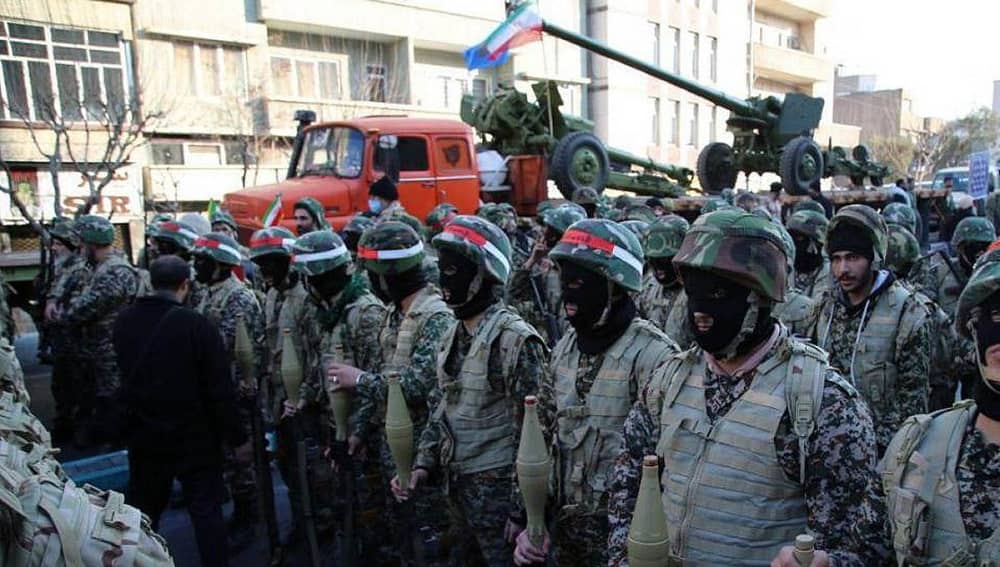
Today, January 13, the state-affiliated Farhikhtegan newspaper, tied to Ali Akbar Velayati, senior advisor to Supreme Leader Ali Khamenei, published a pointed article titled “A Few Well-Meaning Suggestions to Esteemed Commanders—Your Silence is Your Missile.” The article expressed alarm over internal criticisms of the IRGC and highlighted the importance of maintaining a strong propaganda narrative about the clerical regime’s military power.
The article acknowledged the role of propaganda in bolstering the regime’s image, stating, “A simple sign of the importance of Iran’s military power is the enemy’s relentless focus on undermining it, from massive attacks on global public opinion to the use of all-encompassing sanctions to weaken Iran. Without Iran’s defensive and military strength, 80 percent of the anti-revolutionary narrative would not exist.”
The article in Farhikhtegan appears to subtly address the fallout from the recent “110,000-strong Wayfarers of Jerusalem” drill in Tehran, during which Hassan Hassanzadeh, commander of the IRGC’s Mohammad Rasulullah division, admitted to widespread refusals by IRGC and Basij members to participate. His remarks, published by Sharq Daily and later suppressed by intelligence agencies, disclosed that the regime had to rely on 27,000 Afghan residents in Iran to fill the ranks.
#Iran News: #IRGC Commander Admits Widespread Refusals to Join Wayfarers’ Drill in Tehranhttps://t.co/ewz3f3TIIE
— NCRI-FAC (@iran_policy) January 11, 2025
This incident underscores Farhikhtegan’s concern about the implications of such disclosures, which the article describes as “self-destructive currents targeting the military apparatus under the guise of criticism.” The newspaper notes that “unnecessary and misguided positions by individuals within this combat system or those previously affiliated with it” serve to undermine the IRGC’s image and give external enemies opportunities to exploit internal weaknesses.
The article also highlights the regime’s efforts to counteract the narrative of weakness, stating, “The military exercise demonstrates Iran’s readiness for future challenges and prioritizes building public confidence in the nation’s defense capabilities.” This aligns with broader directives from the regime’s Supreme Leader Khamenei, who recently urged media and military officials to project strength and counterclaims of declining morale.
#Iran News: IRGC Stages Massive Drill in #Tehran Amid Fear of Uprisinghttps://t.co/Rd1fDhqcIR
— NCRI-FAC (@iran_policy) January 8, 2025
While not directly naming Hassanzadeh, Farhikhtegan appears to reference his controversial remarks by warning against public statements that expose vulnerabilities. The piece concludes with a call for silence among commanders, emphasizing that military credibility should be built in the field, not through public commentary: “Military power is not expressed behind microphones… Commanders must prioritize the cohesion of their forces and avoid self-inflicted damage.”
Referring to past incidents, Farhikhtegan concluded, “To avoid repeated mistakes, two immediate steps are essential: first, eliminate unauthorized commentary and analysis across all military branches; second, end the process of glorifying short-sighted individuals using national military resources. Both actions have already caused serious errors.”