

A massive, nationwide strike by tens of thousands of truck drivers in Iran entered its fifth consecutive day on May 26, 2025, crippling supply chains and spreading to at least 124 cities across 30 provinces. This powerful display of defiance underscores the unbearable economic conditions imposed by the clerical regime and the growing, organized resistance of the Iranian people.
The regime, visibly shaken, has responded with a mixture of threats, arrests, and desperate propaganda, further exposing its inability to address the profound grievances fueling the unrest.
The Truckers’ Stand: A Nation Grinds to a Halt
The strike, which began on May 22, 2025, saw drivers halt operations and refuse to load cargo, protesting a litany of economic woes that have made their livelihoods untenable. Their demands are clear: an end to rock-bottom freight rates, relief from crippling fuel quota reductions, affordable prices for essential parts and tires, comprehensive insurance support, the abolition of unfair road tolls and commissions, job security, and the establishment of fixed, fair rates. Systemic corruption, they state, exacerbates all these issues.
The strike’s impact has been immediate and widespread. Reports indicate significant disruptions in fruit and vegetable markets nationwide, a sharp reduction in cargo loading at major logistics centers, and even emerging fuel shortages in some regions, notably in Markazi province. The protest has steadily gained momentum, with drivers in provinces such as Fars, Yazd, Isfahan, and Hormozgan, who had not initially joined, participating in subsequent days despite regime pressure. In some instances, drivers have resorted to blocking roads to amplify their protest. The geographical reach of the strike is vast, encompassing major urban centers like Tehran, Isfahan, Shiraz, Mashhad, Tabriz, and Ahvaz, alongside dozens of smaller cities from Ardabil in the northwest to Zahedan in the southeast.
May 26—Torbat-e-Jam, northeast Iran
5th day of a strike by truck drivers, refusing to load cargo, protesting soaring prices of parts and tires, reduced fuel quotas, lack of insurance support, unfair commissions, and systemic corruption.#IranProtestspic.twitter.com/omfXVqxelC— People's Mojahedin Organization of Iran (PMOI/MEK) (@Mojahedineng) May 26, 2025
Regime’s Panic: Admissions of Failure and Desperate Repression
The scale and effectiveness of the truckers’ strike have visibly rattled the Iranian regime. Members of the Majlis (parliament) have publicly voiced grave concerns, inadvertently admitting the severity of the crisis. Mohammadreza Rezaee, head of the parliamentary Development Commission, warned on May 26, 2025, “If a driver strikes for even one day, thousands of billions in losses are inflicted on the country’s economy… The country’s enemies are lying in wait, and one of their targets is the driver community because this segment plays a strategic role in supplying fuel and goods.”
Another MP, Adel Najafzadeh, delivered a stark assessment, stating, “The country’s transportation fleet is collapsing due to a lack of attention in recent decades, no modernization, and also the absence of serious support for the hardworking class of drivers.”
May 26—Aqqala, northern Iran
5th day of strike by truck drivers. Drivers have halted operations on main roads and loading terminals, demanding fair fuel distribution, elimination of unfair commissions, genuine insurance and union support.#IranProtestspic.twitter.com/1gLGRjGpJp— People's Mojahedin Organization of Iran (PMOI/MEK) (@Mojahedineng) May 26, 2025
Faced with this challenge, the regime has resorted to its well-worn tactics of suppression and blame. Reports from Kermanshah, Kerman, Fars, Kurdistan, and Bushehr indicate the arrest of striking drivers. Security forces have attempted to break the strike through threats, intimidation, physical assaults, and hollow promises, but have often been met with the steadfast resistance of the truckers.
Simultaneously, regime officials attempt to deflect responsibility. Reza Akbari, the Deputy Minister of Roads, claimed, “A limited and small number of drivers are trying to create inflammation, and these actions are the result of incitement by hostile foreign media who want to show the country’s roads as unsafe.”
May 26—Isfahan, central Iran
Fifth day of a nationwide strike by truck drivers and heavy vehicle operators. Drivers in East Isfahan refuse to load or move goods.#IranProtestspic.twitter.com/WsRBkAlM1u— People's Mojahedin Organization of Iran (PMOI/MEK) (@Mojahedineng) May 26, 2025
The Crushing Economic Reality and Broader Discontent
The truckers’ strike is not an isolated event, but the most visible manifestation of a deep-seated economic crisis rooted in what protesters describe as “systemic poverty and governmental oppression.” The soaring prices of essential goods like vehicle parts and tires, coupled with reduced state support such as fuel quotas and inadequate insurance, have pushed many to the brink. Drivers in Sabzevar, northwest Iran, joining the nationwide action, explicitly termed it a “nationwide uprising against corruption and injustice.”
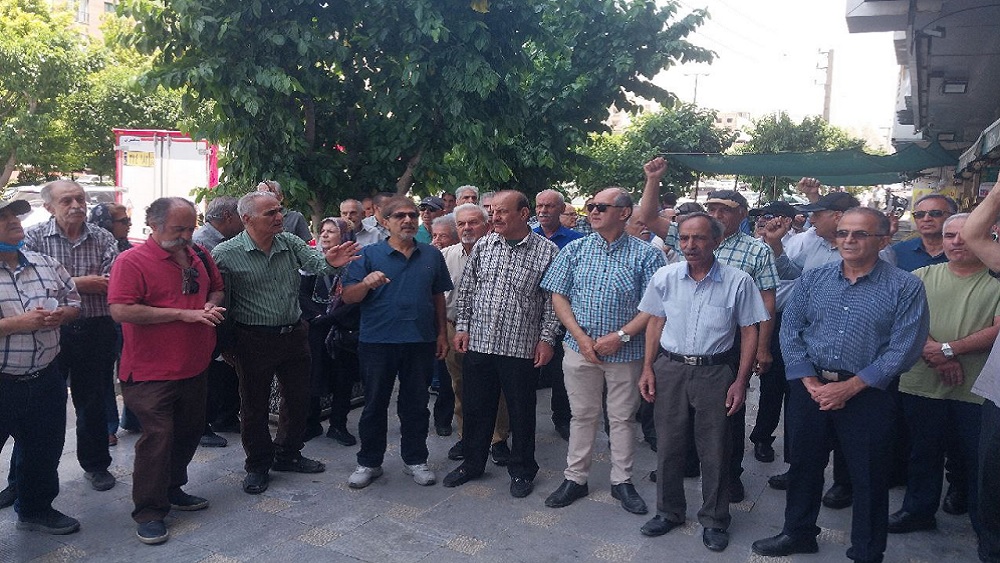
This widespread economic suffering is echoed in simultaneous protests by other sectors of Iranian society. On May 26, 2025, retired oil workers in Ahvaz, southwest Iran, rallied, demanding higher pensions and access to basic services.
May 26—Ahvaz, southwest Iran
Protest by retired oil workers, demanding higher pensions and access to basic services.#IranProtestspic.twitter.com/D2StK63coz— People's Mojahedin Organization of Iran (PMOI/MEK) (@Mojahedineng) May 26, 2025
In Kermanshah, Tehran, and Sanandaj, retirees of the Telecommunications Company of Iran (TCI) resumed their protests against low pension benefits and pervasive government corruption. Their chants, such as “Shout for your rights!” and the poignant “Don’t say we don’t have it, we’re tired of this slogan,” directly challenge the regime’s narrative of scarcity and its failure to provide for its citizens.
In Hoveyzeh, southwest Iran, laid-off workers of the Gas Refining Company demanded reinstatement, expressing their exhaustion with the regime’s “false promises,” even after a direct order from the local governor for their return to work was ignored.
May 26—Tehran, Iran
Retirees of the Telecommunications Company of Iran (TCI) resume protests against low pension benefits and financial grievances.#IranProtestspic.twitter.com/Uze0shhJui— People's Mojahedin Organization of Iran (PMOI/MEK) (@Mojahedineng) May 26, 2025
A Regime on the Defensive, A Nation Stirring
The breadth and intensity of the truckers’ strike, powerfully augmented by the persistent protests of retirees and workers, paint a clear picture of a regime struggling under the weight of its own economic mismanagement and endemic corruption. The admissions of failure from within its own parliament, coupled with its reliance on brute force and tired propaganda, reveal not strength, but profound weakness and fear.
The Iranian people, from the highways to the city squares, are demonstrating remarkable courage and an increasingly unified resolve. Their demands for basic economic justice are intrinsically linked to a deeper yearning for dignity, accountability, and fundamental change.
The regime’s inability to address these legitimate grievances, choosing instead the path of repression, only serves to galvanize further resistance. This nationwide movement signals that the Iranian people are no longer willing to passively endure a system that prioritizes its own survival over their welfare. The ongoing struggle is a testament to their determination to reclaim their rights and forge a future free from tyranny and corruption.