

Two-minute read
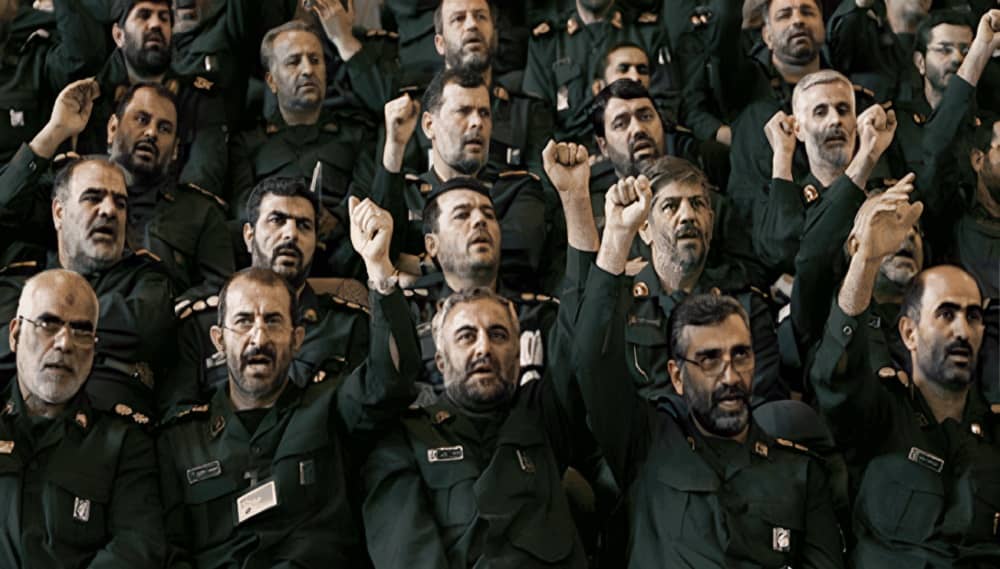
Calls to designate the Islamic Revolutionary Guard Corps (IRGC) as a terrorist organization are gaining unprecedented international traction, as governments across Europe and the Americas move closer to formal action against the regime’s most powerful military and ideological arm.
On May 27, Denmark’s Foreign Minister Lars Løkke Rasmussen told his country’s parliament that the IRGC’s actions—both within Iran and across the Middle East—justify its inclusion on the European Union’s terrorist blacklist. “This includes their violent and completely unacceptable behavior in suppressing the Iranian people,” Rasmussen said, referring to the IRGC’s brutal role in quelling the 2022 nationwide protests following the death of Mahsa Amini in morality police custody. He also cited the IRGC’s ongoing support for terrorist proxy groups including Hezbollah, the Houthis, and Syria’s Assad regime.
The Danish parliament is now reviewing a formal legislative proposal that would push the EU to take decisive action against the IRGC.
Just days earlier, over 560 members of the UK House of Commons and House of Lords signed a bipartisan letter demanding that the British government designate the IRGC a terrorist organization. Among the signatories were former ministers and prominent political figures like Iain Duncan Smith and Suella Braverman. The letter warned that appeasement of what it called a “collapsing regime” in Iran would only embolden its repressive tactics and nuclear ambitions.
#Iran News: U.S. Lawmakers Introduce Bill to Designate #IRGC-Linked Militias as Foreign Terrorist Organizationshttps://t.co/QVhen6n3xw
— NCRI-FAC (@iran_policy) April 22, 2025
The push is also echoing inside the European Parliament, where lawmakers from across the political spectrum reiterated their demand during a conference on May 14. Held in Brussels, the gathering brought together senior European officials, security analysts, and Iranian human rights advocates. The participants emphasized the IRGC’s central role in cross-border terrorism, hostage-taking, and crackdowns on dissent.
While the European Parliament passed a non-binding resolution in late 2023 urging the EU Council to list the IRGC, actual implementation requires a judicial ruling by a member state—a hurdle several countries are now actively working to overcome.
Beyond Europe, Paraguay took bold action in April 2025, officially designating the IRGC as a terrorist entity. Its president, Santiago Peña, stated the decision was based on the Iranian regime’s systematic violations of human rights and international peace, aligning Asunción with the United States, which blacklisted the IRGC in 2019 during Donald Trump’s presidency.
#France’s Parliament Calls for EU to Designate #IRGC and Basij as Terrorist Organizationshttps://t.co/xeFSxoE54H
— NCRI-FAC (@iran_policy) January 30, 2025
Canada also joined the growing list in 2024, invoking its Criminal Code to declare the IRGC a terrorist organization. The move enables Canadian authorities to freeze assets and prosecute any entities providing support to the Guard Corps.
This global alignment reflects not only the IRGC’s direct involvement in repression, extraterritorial operations, and nuclear proliferation—but also a broader recognition that diplomatic engagement with Tehran’s military-security apparatus has failed to yield results.
Yet even as these efforts build, the IRGC continues to operate with impunity across Iran and much of the region. Critics argue that without unified and enforceable action—particularly from the EU—the regime will continue to export terror and shield itself from accountability through intimidation and diplomatic evasion.
Whether Europe will move from rhetorical condemnation to tangible designation remains to be seen, but the pressure from national parliaments, victims of Iranian repression, and international security circles is now louder than ever.