

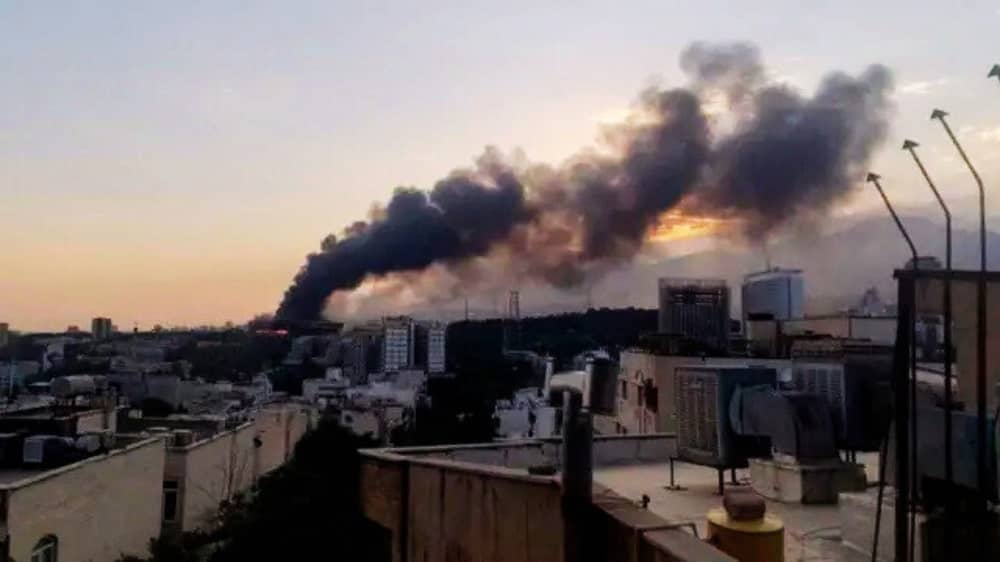
On the tenth day of the Iran-Israel war, the conflict entered a new phase as the United States launched direct military strikes on Iran’s key nuclear facilities, joining Israel in an unprecedented escalation. The attacks, which struck deep underground enrichment and centrifuge sites, signal a turning point in a war that now involves open confrontation between Tehran and Washington.
At 2:30 a.m. local time on Saturday, U.S. B-2 stealth bombers dropped over a dozen of the Pentagon’s largest bunker-busting bombs on the fortified Fordow facility, while Natanz and Isfahan were also hit. According to Wall Street Journal and New York Times sources, the operation was coordinated with Israeli forces and involved long-range cruise missiles launched from American submarines. President Donald Trump declared the mission “a complete success,” stating: “Fordow is gone. Our aircraft are returning safely. Now is the time for peace — or something much worse.”
Hours before the U.S. assault, the Israeli Air Force conducted massive airstrikes with 50 fighter jets, targeting dozens of regime sites across Iran. According to an official IDF statement, nuclear facilities in Isfahan, including a uranium conversion center and a centrifuge production site, were bombed. Additional targets included missile silos, UAV launch platforms, radar systems, and air defense batteries.
In an address to the nation, President Trump said the aim of the U.S. strikes on Iran “was the destruction of Iran’s nuclear capacity” and warned of more attacks “if peace does not come quickly.” Follow live updates. https://t.co/ilCxOQgNeo
— The New York Times (@nytimes) June 22, 2025
The regime suffered significant personnel losses. Among the dead were Aminpour Judaki, commander of the IRGC’s second drone division, and Behnam Shahriari, Quds Force logistics chief responsible for arms transfers to Hezbollah and Hamas. Shahriari was killed while in transit in western Iran.
While Iranian state media condemned the strikes as violations of international law, they avoided acknowledging the scale of the losses. Tasnim and Mehr repeated regime lines of defiance and resilience, invoking “nuclear martyrs” and vowing continuation of the atomic program. A statement from the Atomic Energy Organization, published by state media, framed the attacks as “a savage act against a national industry” and promised that development would continue “with the blood of the martyrs.”
Following the attacks, Iran launched a new round of missile strikes on Israel, reported by Al Arabiya, with explosions heard in Haifa and Tel Aviv. Meanwhile, the Telegram channel Chand Saniyeh reported heavy air defense activity over Tehran and Mashhad. Iranian officials declared the U.S. attack a direct act of war. “Now, Iran will decide how to respond,” said regime MP Mohammad Manan Raisi, while regime mouthpiece Kayhan called for missile strikes on the U.S. Navy in Bahrain and closure of the Strait of Hormuz to Western vessels.
The U.S. strikes on Iran fueled fears that Israel's war with Tehran could escalate to a wider regional conflict, and other countries began reacting with calls for diplomacy and words of caution. https://t.co/saEgTXwkVZ
— The Associated Press (@AP) June 22, 2025
In Geneva, a Friday diplomatic meeting between Iranian officials and European ministers ended without results. According to Axios, although no concrete offers were made, European diplomats noted a subtle shift in tone: the Iranian delegation showed rare willingness to discuss its missile program, proxy militias, and even the detention of European nationals. Still, Foreign Minister Araghchi used the moment to denounce the U.S. as a “violator of the UN Charter” and threatened consequences under what he called “all options on the table.”
International reaction was swift. UN Secretary-General António Guterres called the U.S. strike a “dangerous escalation” and warned of spiraling conflict with “catastrophic consequences.”
Most Gulf markets trade up, unfazed by rising regional tensions as US strikes Iran https://t.co/8bHK9jkIDX https://t.co/8bHK9jkIDX
— Reuters (@Reuters) June 22, 2025
Meanwhile, regime-aligned outlets have begun referring to the attacks as the start of a full-scale war. “The war has now begun for us,” declared the IRGC on its official X and Telegram channel. In parallel, calls for free satellite internet have intensified, as the regime continues to expand its digital repression — a system of surveillance and censorship activists describe as “Iran’s digital apartheid.”
As airstrikes continue and military posturing escalates, the regime finds itself battered militarily, cornered diplomatically, and exposed internally. The tenth day of war has shattered all illusions of containment — and opened a new chapter of regional confrontation with global stakes.