

Three-minute read
In the aftermath of a devastating conflict with Israel and U.S., the Iranian regime is confronting an unprecedented combination of military, nuclear, and domestic crises. A series of targeted airstrikes has decimated Iran regime’s senior military and nuclear leadership, prompting a retaliatory suspension of cooperation with the International Atomic Energy Agency (IAEA) by the regime’s parliament. Simultaneously, the regime has launched a nationwide crackdown on dissent, marked by mass arrests, desertions in the military, and escalating repression.
Suspending IAEA Cooperation
On Wednesday, Iran regime’s parliament passed a bill suspending the country’s cooperation with the IAEA. Speaker Mohammad Bagher Ghalibaf accused the agency of turning a blind eye to attacks on Iran’s nuclear infrastructure.
“The International Atomic Energy Agency, which refused to even marginally condemn the attack on Iran’s nuclear facilities, put its international credibility up for auction,” Ghalibaf said.
He declared that the Atomic Energy Organization of Iran would halt cooperation until the safety of the country’s nuclear facilities is ensured. The final approval for the bill now rests with regime’s Supreme National Security Council, according to the state-affiliated Nournews outlet.
War at Home: #Iran’s Prisons in Crisis Amid Regional Conflicthttps://t.co/TATMVpvKFn
— NCRI-FAC (@iran_policy) June 25, 2025
Massive Military and Nuclear Losses
The IRGC and Iranian state media have confirmed the elimination of several of its top military and nuclear figures during a series of high-precision strikes carried out prior to the ceasefire.
High-Ranking Military Casualties:
- Hossein Salami – Commander-in-Chief of the IRGC
- Mohammad Bagheri – Chief of Staff of Iran’s Armed Forces
- Amir Ali Hajizadeh – IRGC Aerospace Force Commander
- Gholam-Ali Rashid – Head of Khatam-al-Anbiya Central HQ
- Mehdi Rabani, Gholamreza Mehrabi, Davoud Shekhiyan, Masoud Shanei, Saeed Izadi, Behnam Shahriari – Senior IRGC officials
- Mahmoud Bagheri, Mohammad Bagher Taherpour, Mansour Safarpour, Masoud Tayeb, Khosrow Hassani, Javad Jarsara – Additional confirmed fatalities among IRGC officers
A key political figure, Ali Shamkhani, senior advisor to Supreme Leader Ali Khamenei, was also seriously injured in an airstrike targeting his residence.
Targeted Nuclear Experts:
At least nine nuclear scientists were also killed in coordinated attacks:
- Fereydoon Abbasi-Davani, former head of the Atomic Energy Organization of Iran
- Mohammad-Mehdi Tehranchi, Akbar Matlabi-Zadeh, Saeed Borji, Amir-Hassan Faghihi, Abdolhamid Minoochehr, Mansour Asgari, Ahmadreza Zolfaghari Daryani, Ali Bakaei Karimi
In addition, Mohammadreza Sedighi Saber, a sanctioned nuclear researcher previously tied to detonation systems and targeted by U.S. sanctions, was assassinated in Gilan Province. He had direct links to sensitive nuclear programs.
NCRI Statement: Sudden and Forced Transfer of #Iranian Political Prisoner Ali Younesi to Unknown Locationhttps://t.co/lPsK9Yp128
— NCRI-FAC (@iran_policy) June 19, 2025
Direct Strike on IRGC Regional Headquarters
On Monday, June 23, an Israeli airstrike destroyed the Imam Hassan Mojtaba IRGC Command Center in Karaj, Alborz Province—a critical hub in the regime’s military and suppression network. Internal regime sources confirmed at least 20 fatalities among senior and mid-ranking IRGC personnel, including:
- Mojtaba Karami – Deputy IRGC Commander, Alborz
- Akbar Enayati – Deputy Social Affairs Officer
- Ali Torkashvand – Clerical Inspector
- Gholam Ojani, Mohsen Kohkhel, Vali Rezazadeh, Saeed Sharifi – Lieutenant Colonels
- Seyed Mojtaba Moinpour – Brigadier General
- Ali Asgari, Davoud Zandiyeh, Reza Zamanzadeh, Mohammad Roshandel – Colonels
- Seyed Mustafa Mirghaffari, Ali Javadipour – Captains
- Ebrahim Nazari, Fatemeh Salehi, Davoud Dideban – IRGC/Basij members
- Fardin Ebrahimi, Salar Mousavinejad – Conscripts
- Gholamreza Souri – Basij member
- Fatemeh Salehi – IRGC personnel
Shortly after, the IRGC’s Alborz command issued a statement identifying 14 more casualties from what it called a “brutal and inhumane” Israeli strike. These included:
- Javad Izadi – conscript
- Seyed Mojtaba Moinpour – brigadier general
- Ali Javadipour and Seyed Mustafa Mirghaffari – captains
- Reza Zamanzadeh, Mohammad Roshandel, Davoud Zandiyeh, Ali Asgari – colonels
- Saeed Sharifi, Vali Rezazadeh – lieutenant colonels
- Ebrahim Nazari – IRGC member
- Davoud Dideban – civilian from Karaj
- Fardin Ebrahimi, Salar Mousavinejad – conscripts
Authorities stated that full identification of victims would continue in coordination with the families. The death toll from the strike marks one of the deadliest blows to the IRGC in recent memory.
#Iran’s Regime Faces Internal Reckoning as Ceasefire Beginshttps://t.co/cC94qGKplK
— NCRI-FAC (@iran_policy) June 25, 2025
Post-War Crackdown and Rising Domestic Turmoil
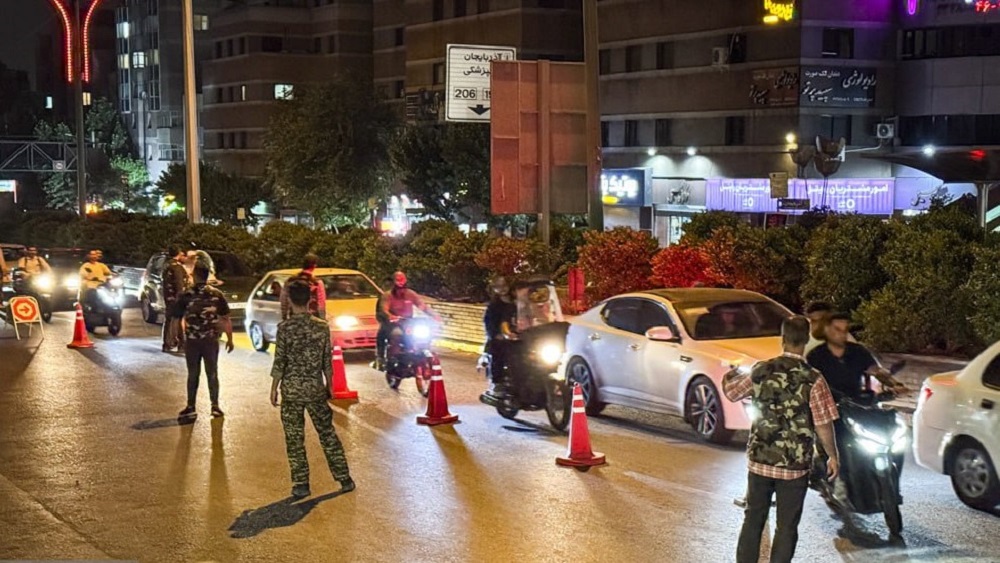
Following the ceasefire, Iran is witnessing a surge in internal repression. According to Tasnim News Agency, at least 115 people have been arrested in Kermanshah Province alone for allegedly “disturbing security.” Further arrests were reported by the IRGC and police in Hamedan, Hormozgan, Fars (53 detainees), Gilan (36), and Zarand (11 arrested for anti-regime activities).
Simultaneously, reports from Farda News suggest a growing wave of disobedience within the ranks of Iran’s military and security forces. Incidents of desertion, refusal to follow orders, and personnel going into hiding have alarmed the regime. In response, the regime’s General Staff has issued sweeping new orders allowing commanders to use “the harshest possible measures” to suppress internal dissent and reestablish control. The original Farda News post was later taken down and is currently not available online.
Arrests for Espionage and Drone Activity
Multiple state media outlets and news agencies have reported the arrest of more than 700 individuals over the course of the 12-day war. Detainees were accused of offenses ranging from guiding drones, operating micro-drones, photographing sensitive sites, to leaking intelligence. According to the report, over 10,000 micro-drones were seized in Tehran alone. Human rights groups and opposition activists have denounced these arrests as a cover for mass repression, warning that the regime is using the wartime chaos to silence civil dissent.
The regime has lost several of its most influential military and nuclear figures, its command infrastructure has been directly hit, and its international nuclear commitments are now unraveling. Internally, a crisis of loyalty is gripping its security forces, while a sweeping wave of arrests signals the regime’s desperation to maintain control.
What lies ahead for Iran is uncertain—but the ground beneath the regime has undoubtedly shifted.