

Four-minute read
On April 20, 2026, the clerical regime in Iran executed two members of the People’s Mojahedin Organization of Iran (PMOI/MEK) in Karaj Central Prison: Hamed Validi, a 45-year-old civil engineer, and Mohammad (Nima) Masoum Shahi, a 38-year-old technical worker. The judiciary’s official outlet, Mizan News Agency, reported the hangings and described the men as “elements of an espionage network” convicted of moharebeh—waging war against God—along with “cooperation with hostile groups,” “assembly and collusion against national security,” and membership in a criminal group. Tasnim News Agency, aligned with the Revolutionary Guards, echoed the charges in nearly identical language, claiming the pair had maintained contacts “through cyberspace” and received training abroad before plotting actions inside Iran.
These accusations follow a precise pattern the regime has applied to other PMOI members. The National Council of Resistance of Iran (NCRI) documented the same tactic in its September 27, 2025, statement, warning that the judiciary in Alborz Province was preparing death sentences by “falsely linking” prisoners to foreign espionage solely on the basis of their known PMOI affiliation. The NCRI had submitted the names of Validi, Masoum Shahi, and two others to the United Nations and international human-rights bodies in May 2025—explicitly to preempt exactly this fabrication.
A Timeline That Exposes the Pretext
The chronology alone dismantles the espionage claim. Validi and Masoum Shahi were arrested on May 13, 2025—well before any regional conflict the regime later invoked. Their cases had already been publicized by the Iranian Resistance months earlier. The judiciary waited until September 2025 to issue death sentences and carried them out only in April 2026, after nearly a year in custody. This sequence is not consistent with the discovery of active foreign operatives; it matches the regime’s routine practice of retrofitting political cases with national-security labels to justify eliminating organized dissidents.
The NCRI’s September 2025 statement described the proceedings as a “fraudulent show and clerical kangaroo court,” noting that the only “evidence” cited was the prisoners’ long-standing ties to the PMOI. No independent verification of foreign contacts has ever been presented beyond the regime’s own media assertions.
"Why would a successful, highly educated civil engineer like Hamed Validi choose a path of such extreme risk? Why would young Iranians with promising careers and families sacrifice everything to join the #MEKResistanceUnits? What is it about the message of organized resistance…
— NCRI-FAC (@iran_policy) April 20, 2026
The Visible Social Backlash
The regime’s fear of the organized resistance became unmistakable in the weeks before these executions. Between late March and early April 2026, authorities hanged at least six other PMOI members on parallel charges. Each had recorded video messages or letters from prison, reaffirming their commitment to the Resistance and rejecting demands to renounce it. These final testaments circulated widely inside Iran and among the diaspora, directly contradicting the regime’s long-standing assertion that the PMOI possesses “no popular base.”
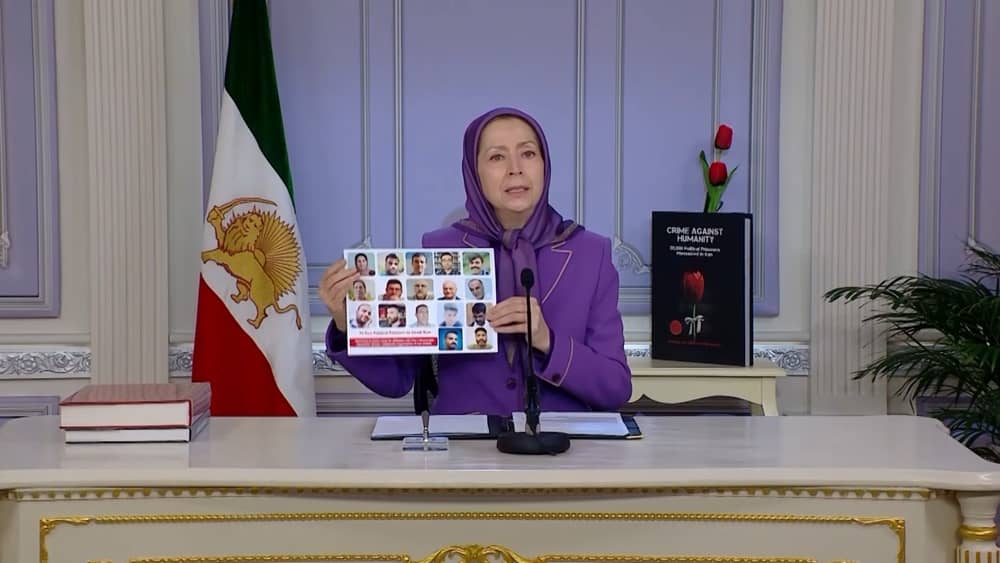
On several occasions throughout 2025, Mrs. Maryam Rajavi, president-elect of the NCRI, showed images and announced the names of these heroes to raise awareness and call for international action to save their lives. The public response inside the country—quiet gatherings, defiant graffiti by Resistance Units, and renewed activity despite heavy security—demonstrated that each execution amplified rather than silenced the opposition’s reach. The regime’s decades-old narrative collapsed under the weight of visible domestic resonance.
The United Nations must call on member states to, under the principle of universal jurisdiction, bring the regime’s leaders and those responsible for crimes against humanity and genocide to justice.https://t.co/N9ulggM2Uy pic.twitter.com/2tk4M7UNWC
— Maryam Rajavi (@Maryam_Rajavi) December 2, 2025
Months of Failed Coercion
Court records and resistance sources confirm that Validi and Masoum Shahi endured months of intense pressure in prison. Interrogators demanded public repentance, televised renunciation of the PMOI, and staged confessions distancing them from the organized opposition. The men refused. Only after their executions did state media pivot fully to the foreign-spy narrative, flooding outlets with claims of encrypted contacts and external training. The shift reveals the propaganda’s purpose: when physical and psychological coercion failed to produce ideological surrender, defamation of the dead became the fallback.
Hamed Validi’s own pre-arrest video message, released by Simay Azadi television, makes the deception plain. Recorded in March 2025—before any espionage allegations surfaced—he stated: “Our commitment is to maintain the fiery boundaries: standing against both the Shah and the Sheikh.” The date and content stand in direct contradiction to any later claim of foreign recruitment.
Iran News Alert – Simay Azadi Exclusive – Last Oath of Hamed Validi, Member of PMOI
""Our commitment is to maintain the fiery boundaries: standing against both the Shah and the Sheikh," PMOI member Hamed Validi, executed on April 20, says in his last oath taken in March 2025. pic.twitter.com/o9QSTdZQcZ— SIMAY AZADI TV (@en_simayazadi) April 20, 2026
Propaganda’s Dual Purpose
The regime deploys two interlocking falsehoods. First, it brands committed PMOI members as foreign spies to recast political executions as acts of national defense. Second, it insists the Resistance lacks any domestic support, hoping to isolate it from Iranian society. Both claims are undermined by the same evidence: the prisoners’ refusal to break under torture, their pre-arrest affirmations of loyalty, and the measurable public backlash to prior executions. When ordinary Iranians respond to the images and words of the executed with solidarity rather than indifference, the “no popular base” assertion loses credibility.
This is not speculation. The pattern repeats across cases. The regime’s own behavior—arresting known PMOI affiliates, subjecting them to prolonged interrogation without extracting recantations, then executing them and retroactively labeling them traitors—reveals the propaganda as a tool to manage political cost rather than reflect reality.
"For decades, the ruling system has pursued a deliberate and sustained strategy to dehumanize and demonize @Mojahedineng to sever any connection between this organized Resistance and successive generations of Iranians. Yet what emerges from Vahid’s message is not the intended…
— NCRI-FAC (@iran_policy) April 12, 2026
Lessons from Iran’s Own History
Independent journalists and analysts have a duty to scrutinize these claims without amplification. Every dictatorship in history, especially in Iran’s modern past has relied on the same twin instruments: repression and narrative control. The Shah’s SAVAK once accused domestic opponents of foreign collusion to justify crackdowns, equating the monarchy with “the nation” and branding patriots as traitors. The current regime simply updates the language. By smearing real opponents as agents of hostile powers, it attempts to erase the distinction between the state and the people it rules.
The executions of Validi and Masoum Shahi, like those preceding them, are not about counter-espionage. They stem from the regime’s recognition that an organized, ideologically coherent resistance continues to resonate inside Iranian society. Each time a PMOI member’s final words reach the public, the foundational propaganda—that the only alternative to clerical rule is chaos or betrayal—is exposed. The Iranian people are watching, remembering, and refusing to accept the official story. So should the rest of the world.