

Three-minute read
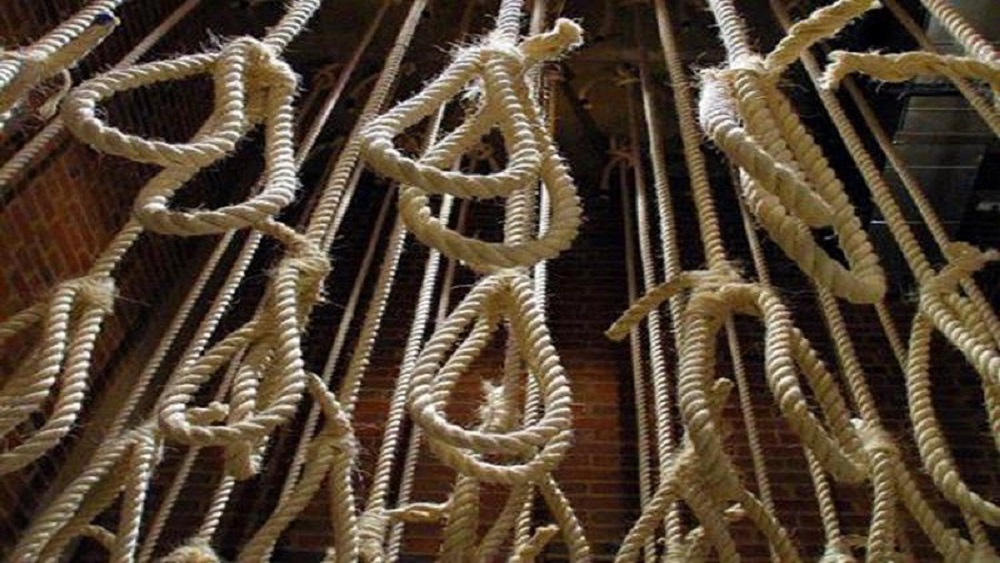
Newly released figures once again confirm that executions in Iran are not about justice, but about the regime’s survival through fear and violence. According to state-run Ham-Mihan daily, published on August 27, 2025, at least 975 people were executed in Iran in 2024. This represents the highest number in 17 years—even according to the regime’s own diluted figures—and a 17% increase compared to the previous year. The report noted that “31 women were executed, and four executions were carried out in public.”
Public hangings are deliberately staged spectacles. By forcing citizens—including children—to witness such violence, the regime aims to remind society that power rests only in its hands. In one case documented by Ham-Mihan, “an execution in Isfahan was held near an elementary school in the afternoon, with about 200 boys witnessing the hanging.”
Scientific research cited in the report confirms the devastating impact on children. A 2006 study in the Iranian Journal of Psychiatry and Clinical Psychology found that viewing such scenes can cause moderate to severe mental health disorders, including post-traumatic stress, recurring intrusive memories, and strong physiological reactions.
Dr. @JavaidRehman: “The #Iranian regime has weaponized the death penalty to exterminate dissent. The international community failed to act in 1988. It must not fail again.” pic.twitter.com/KYKjxTGaL8
— NCRI-FAC (@iran_policy) August 8, 2025
Warnings From Within the Regime’s Own Experts
Even regime-affiliated psychiatrists have sounded alarms about the destructive effects. In a letter to the judiciary on August 25, 2025, Vahid Shariat, head of the Iranian Psychiatric Association, warned: “The execution of death sentences in public not only has no effect in reducing crime, but it also potentially increases violence. Research shows that after executions are carried out, the number of murders actually rises. We strongly insist that this practice be stopped.”
Similarly, psychiatrist Amirhossein Jalali Nedoushan stressed: “In a society already burdened with harsh and brutal violence, such measures make it increasingly rigid, ugly, and unsafe.”
Normalizing Violence Through Spectacle
Public executions not only traumatize children but also serve to normalize cruelty. In recent years, the regime has encouraged citizens to take photos with executed prisoners, often under the supervision of regime officials. Turning death into a public spectacle is part of the regime’s attempt to “make violence ordinary” and desensitize society. When children treat executions as curiosity or entertainment, the moral boundary between life and brutality collapses.
#Iran News in Brief
Stunning confession by former regime insider reveals executions as a tool to silence dissent.
Emadeddin Baqi: "The Judiciary announced the execution of #MohammadGhobadlou and four Kurdish youths, which gained widespread attention due to their political… pic.twitter.com/G5bJ0niKl6— NCRI-FAC (@iran_policy) February 4, 2024
Even regime-linked legal experts have admitted there is no law in Iran requiring executions to be carried out publicly. One jurist told Ham-Mihan: “There is no article in Iran’s penal code that explicitly defines any crime as punishable by public execution. This shows that the choice of method is not legal but political.”
The deliberate decision to stage executions in public is a psychological weapon—designed to terrorize society at a time when protests and social demands are rising.
The True Purpose: Suppressing a Restless Society
The regime justifies executions as a deterrent, but the real aim is to maintain its grip on power. By staging death in public squares, the regime seeks to suppress explosive social anger and delay the next wave of uprisings.
For 46 years, every president, parliament speaker, judiciary chief, and above all the supreme leader has been complicit in these crimes against humanity.
14th World Day Against the Death Penalty is an excellent opportunity to publicly oppose the use of this inhuman punishment #NoDeathPenalty pic.twitter.com/6O74WNVLcU
— NCRI-FAC (@iran_policy) October 10, 2016
Toward a Final Confrontation
The shocking number of executions in 2024, along with scientific evidence of their destructive effects, confirms that the regime is engaged in systematic psychological warfare against its own people. Beneath this terror, however, lies a society yearning for life, freedom, and equality.
The regime’s spectacles of death cannot erase the reality that the Iranian people are preparing for a decisive confrontation with tyranny—one that will end this cycle of repression and violence once and for all.