

On Sunday, November 30, 2025, Iran witnessed a synchronized eruption of nationwide protests coinciding with a historic collapse of the national currency. As the regime of Supreme Leader Ali Khamenei continues to prioritize regional proxy conflicts, the Iranian economy has entered a freefall, triggering strikes across critical industrial sectors and pushing pensioners to the streets with slogans directly targeting the regime’s foreign policy.
The US Dollar reached an unprecedented high of 116,750 Tomans on Sunday, while the Euro climbed to 135,380 Tomans. The psychological barrier of the currency market has been shattered, signaling to the Iranian public that the administration of Masoud Pezeshkian has lost all control over the nation’s financial stability.
The Economic Shock: “The Law of the Jungle”
The currency crash had an immediate, violent impact on daily life. Reports from Tehran indicate that prices for essential food items tripled within a 24-hour window. Basic staples such as Indian rice, tea, and tomato paste reportedly vanished from shelves in major chain stores.
November 30—Bandar Abbas, southern Iran
Workers of Madkoosh Steel walked out in protest over unpaid wages, low pay, and discriminatory treatment. They demand overdue salaries, fair benefits, and real accountability from company officials.#IranProtests pic.twitter.com/iLrHinTedq— People's Mojahedin Organization of Iran (PMOI/MEK) (@Mojahedineng) November 30, 2025
The price of a tray of eggs has hit 300,000 Tomans, and canned tuna has exceeded 120,000 Tomans. Shoppers described the situation as “the law of the jungle,” lamenting the total absence of government oversight as their purchasing power evaporates by the hour.
Industrial Strikes in the South: The Workers’ Revolt
While inflation crushed households, heavy industry in southern Iran ground to a halt. In Bandar Abbas, workers at the Madkoush Steel Company launched a strike on Sunday, citing months of unpaid wages and “blatant discrimination.”
Simultaneously, a significant protest erupted at the ISOICO Shipbuilding complex in Hormozgan. Workers, drivers, and service staff refused to work, gathering to protest the non-payment of wages and a six-month lapse in insurance coverage. One veteran employee described the situation as “open theft,” noting that while officials cling to their seats, workers are being crushed. “The day is not far when the people’s shout will break the dam of silence and their demand for rights will reach the closed rooms of the oppressors,” the worker warned.
November 30—Bandar Abbas, southern Iran
Staff, workers, and service drivers of Iran Shipbuilding and Offshore Industries complex (ISOICO) rallied to protest unpaid wages and overdue insurance contributions. They demand immediate payment of salaries and basic labor rights long… pic.twitter.com/nrD5NdzSrP— People's Mojahedin Organization of Iran (PMOI/MEK) (@Mojahedineng) November 30, 2025
Further north in Shush, workers at the Middle East Sugar Factory continued their protests for the second consecutive day. Their demands include the implementation of job classification laws and the reinstatement of colleagues who were fired for previous activism.
Retirees and Social Outrage: “Leave Lebanon Alone”
Perhaps the most politically charged demonstrations came from the nation’s retirees. Social Security and Steel industry pensioners held rallies in Ahvaz, Shush, Kermanshah, Isfahan, and Tehran. Unlike strictly trade union gatherings, these protests featured slogans that directly challenged the regime’s ideological pillars.
In Shush, struggling under the weight of poverty, protesters chanted, “Leave Lebanon alone, think of us!” explicitly linking their economic misery to the regime’s funding of foreign proxies like Hezbollah. Other chants included “We fight, we die, we get our rights!” and “High prices, inflation, are the bane of the people’s lives.”
November 30—Kermanshah, western Iran
Social Security retirees rallied to denounce soaring prices and corruption, demanding justice and protection of their livelihoods.#IranProtests pic.twitter.com/TT16CB5mvg— People's Mojahedin Organization of Iran (PMOI/MEK) (@Mojahedineng) November 30, 2025
In Kermanshah, retirees gathered outside the Social Security office, labeling the government the “enemy of life” and accusing officials of selling out the elderly for commissions. In Isfahan, steel retirees described their plight as an “injustice” that has left them with no option but to take their rights on the streets.
Corruption and State-Sponsored Theft
The systematic corruption of the regime was also in the spotlight. In Tehran, victims of the “King Money” cryptocurrency scam gathered outside the Supreme Court. The fraud, involving approximately €170 million and 4,100 plaintiffs, has left thousands of families destitute. “You took our capital, our youth, our peace… but you didn’t take our hope and unity,” one protester declared, vowing to pursue justice until the end.
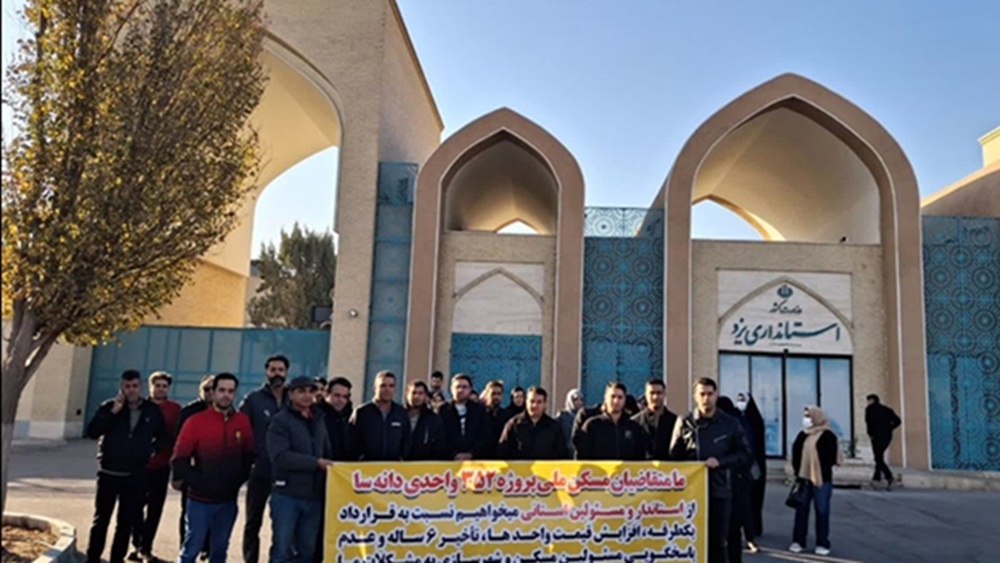
Meanwhile, in Yazd, applicants for the state-run “National Housing” project protested unfulfilled promises and indefinite delays. In Khuzestan, contractors for the General Department of School Renovation rallied outside the governor’s office demanding unpaid debts, following similar protests by medical staff, highlighting that the government is defaulting on payments across all public sectors.
November 30—Yazd, central Iran
Applicants of the National Housing Plan rallied to protest severe delays, uncertainty in the project, and officials’ unfulfilled promises. They demand clear timelines and real action, not empty assurances.#IranProtests pic.twitter.com/CTZXdRAiyY— People's Mojahedin Organization of Iran (PMOI/MEK) (@Mojahedineng) November 30, 2025
Students and Teachers Join the Fray
The unrest extended to educational institutions. In Ahvaz, students at the Hoveyzeh campus of Chamran University protested the inedible quality of dormitory food by laying their food trays on the ground in a symbolic act of defiance. In Tehran, retired educators (class of 2022) rallied outside the Parliament (Majlis), demanding the pensions they earned after a lifetime of service.
The events of November 30, 2025, paint a picture of a regime facing a comprehensive systemic failure. The simultaneous collapse of the rial and the eruption of protests across diverse sectors—from steel and sugar industries to education and pensioners—demonstrate that the economic crisis has metastasized into a political crisis.