

On December 16 and 17, 2025, a synchronized wave of unrest took place in different cities across Iran, bridging the gap between blue-collar workers, medical professionals, and university students. The simultaneous protests in Tehran, Golestan, and Zanjan provinces highlight a deepening crisis in governance, where the regime’s mismanagement has paralyzed the country’s most vital sectors.
The Healthcare Crisis: Unpaid Nurses and Vanishing Medicine
In Golestan province, the collapse of the healthcare infrastructure was on stark display on December 17. Nurses gathered outside the University of Medical Sciences and the provincial Governor’s office to protest severe economic neglect. Despite the grueling demands of their profession, these frontline workers reported that they have faced nine months of wage arrears. According to protesters, the government has only settled 50 percent of the claims dating back to May 2025. Their slogan, “9 months work, 0 rights,” encapsulates the plight of a medical sector pushed to the breaking point.
December 17—Gorgan, northern Iran
Nurses rallied outside the Golestan University of Medical Sciences and the Governor’s Office over unpaid wages and mounting cost-of-living pressures. They say 9 months of arrears remain and only 50% of May claims were paid, vowing to keep… pic.twitter.com/mq4Gt71BD0— People's Mojahedin Organization of Iran (PMOI/MEK) (@Mojahedineng) December 17, 2025
Simultaneously, a more shadowy crisis brought addiction therapists to the Ministry of Health in Tehran on December 16. Protesters revealed a critical shortage of Opium tincture, a vital medication for nearly one million patients undergoing maintenance therapy nationwide. While shortages have hit 15 provinces—including Hamadan, Hormozgan, and Mazandaran—therapists pointed to a disturbing paradox: the regime continues to issue export licenses for these narcotics while domestic clinics run dry.
The human cost of this policy is immediate. Therapists warned that the scarcity is forcing patients toward the black market, where costs have skyrocketed from 2 million to 18 million Tomans per month. Experts fear this state-driven scarcity will push patients toward dangerous synthetic substances like fentanyl, precipitating a new public health disaster.
Industrial Stagnation in Abhar
The unrest extended to the industrial sector in Zanjan province. On the morning of December 17, 280 workers at the Siaden Steel Factory in Abhar stopped work to protest unpaid wages dating back to October. The grievances went beyond paychecks; workers described degrading working conditions, including a lack of basic hygiene facilities and the refusal of management to provide essential work clothes. Despite repeated appeals to local officials, the workers stated that no solutions have been offered, leaving strikes as their only avenue for recourse.
December 16—Tehran, Iran
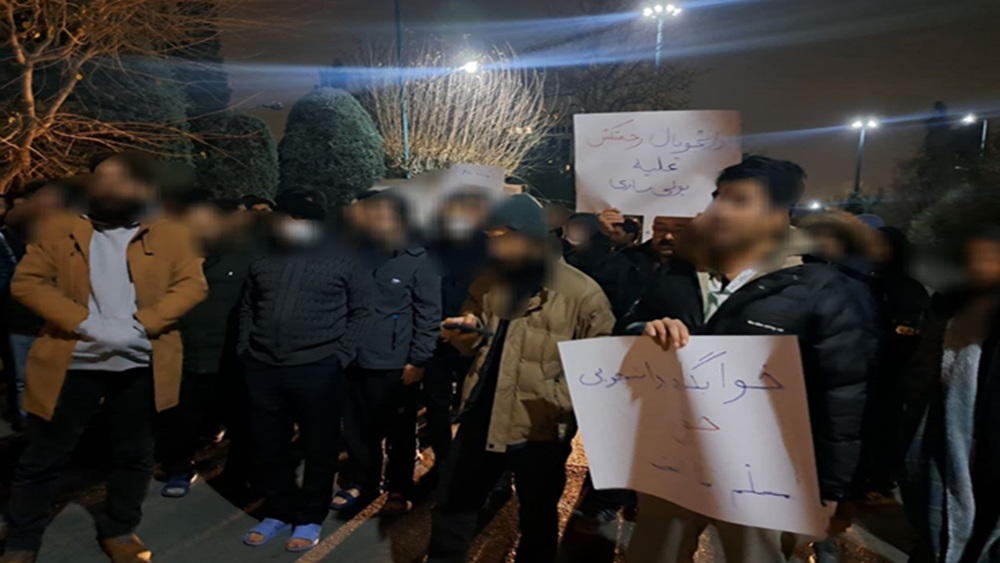
University of Tehran dorm students rallied at the dorm entrance to protest the university’s “commercialization” and profit-driven policies, saying education is being turned into a business while dorm conditions deteriorate.#IranProtests pic.twitter.com/j7c2ToDVre— People's Mojahedin Organization of Iran (PMOI/MEK) (@Mojahedineng) December 17, 2025
The Monetization of Education
In the capital, the crisis of resource management spilled into the academic sphere. On December 16, students at Tehran University gathered at the dormitory compound to protest the “monetization of the university.” Students reported severe overcrowding, with six students forced into rooms designed for four.
University officials, rather than addressing the housing shortage, have begun evicting senior students, citing “capacity limits.” While officials admitted that land is available for development, they claimed the government lacks the credit to build new facilities, effectively turning higher education into a business where welfare is, as the students chanted, “only a mirage.”
The regime’s inability to manage basic services—whether distributing medicine, paying wages, or housing students—stands in sharp contrast to its continued allocation of resources toward exports and profit-seeking ventures. As these varied sectors find their voices in protest, the message is uniform: the current administration is either unable or unwilling to address the most fundamental needs of the Iranian people.