

THIS PAGE WILL BE UPDATED WITH THE LATEST NEWS
UPDATE: 01:30 PM CET
FBI: The Iranian Regime Presents a Threat from Many Angles

Threats from the Iranian regime and its terrorist partners can reach across the globe. The FBI is committed to identifying and disrupting all Iranian intelligence and military operations that threaten American citizens or our nation’s security and critical infrastructure. Working with our intelligence and law enforcement partners worldwide, the FBI has countered a diverse set of threats directed by the Iranian regime, including attempted terrorist attacks and kidnappings, espionage and foreign influence operations, cyber attacks, sanctions evasion, and illicit procurement of sensitive technology to support Iran’s military capability and nuclear program.
The Iranian regime has used repressive tactics in its wrongful detention of Americans in Iran on unsubstantiated criminal charges. The Iranian regime has also exported its repression through its harassment and lethal targeting of Iranian dissidents worldwide, including Americans living in the United States.
UPDATE: 09:00 AM CET
Missiles Seized in Al-Bukamal Were to Be Smuggled to Hezbollah in Lebanon

Sources close to the Syrian Ministry of Interior reported that the SAM-7 anti-aircraft missiles seized in the Al-Bukamal area of Deir ez-Zor province in eastern Syria were intended to be smuggled to Hezbollah in Lebanon via Syrian territory.
The sources told Asharq Al-Awsat that during the years of the Syrian war, missiles were being smuggled from Iran through Iraqi territory into Syria via a network of tunnels dug by Iranian militias and their affiliated groups when they controlled the Al-Bukamal area. At that time, these forces were fighting alongside the regime of Bashar al-Assad, which was overthrown on December 8, 2024, by Syrian factions led by Hayat Tahrir al-Sham.
The sources further indicated that the intended recipient of the missile shipment smuggled through Syrian territory was Hezbollah in Lebanon, which had also fought alongside the Assad regime during the war in Syria.
US Envoy for Iraq Praises Militia Disarmament Signals but Demands Binding National Framework

US envoy Mark Savaya has welcomed reported moves by Iraqi armed groups toward disarmament, while insisting that only a binding national framework can make the process real and lasting. He framed the moment as a decisive test for Iraq’s sovereignty and rule of law amid intense US pressure to curb Iran-aligned militias. Posting on social media platform X, Savaya said the reported steps toward disarmament were an encouraging sign and described them as a positive response to long-standing appeals from Iraq’s top religious authorities. He emphasized that those clerical leaders provide moral guidance that continues to act as a compass for the country.
The reported steps by Iraqi armed groups toward disarmament are a welcome and encouraging development. This move represents a positive response to the longstanding calls and aspirations of the Marjaeya and our respected religious authorities. I extend my deep appreciation for… pic.twitter.com/5X8MQCMqqi
— Mark Savaya (@Mark_Savaya) December 22, 2025
He warned, however, that statements of intent are not enough and stressed that disarmament must be comprehensive and irreversible, carried out through a clear, binding national framework grounded in the constitution and rule of law. Savaya argued that this framework should dismantle all armed factions and ensure an orderly, lawful shift of their members into civilian life.
UN Experts Urge Iran to Stop Execution of Woman Activist

UN experts and 400 prominent women have urged Iran not to execute Zahra Tabari, a 67-year-old electrical engineer and women’s rights activist.
Ms. Tabari was arrested in April and accused of collaborating with a banned opposition group, the People’s Mujahideen Organization of Iran (PMOI), according to her family.
In October, she was convicted of “armed rebellion” by a Revolutionary Court in Rasht after a trial via video link that lasted less than 10 minutes. Her family said the verdict was based on extremely limited and unreliable evidence: a piece of cloth bearing the words “Woman, Resistance, Freedom”, and an unpublished audio message.
Iranian authorities have not yet commented on the case.
UPDATE: 07:30 AM CET
How The Iranian Regime’s ‘Automotive Mafia’ Is Suffocating the Population

The air pollution crisis in Iran has transcended the boundaries of an environmental challenge, reaching a deadly threshold that can only be described as a “silent massacre.” As winter sets in and flu season exacerbates respiratory issues, the Iranian people are not just battling viruses, but a toxic atmosphere engineered by regime corruption. According to official admissions by the regime’s own Ministry of Health on November 10, air pollution now claims the lives of 57,000 Iranians annually. This staggering figure can no longer be dismissed as the cost of industrial development or a natural occurrence; it is a systematic killing where the perpetrators are well-known figures within the ruling establishment. While the burning of Mazut (heavy fuel oil) in power plants is a significant factor, a second, equally lethal culprit is the mass production of substandard vehicles by domestic manufacturers.
Mahdieh Keyhani and Mahin Rashidi: Execution of Two women in Iran

Amid the ongoing wave of executions in Iran, two female prisoners, Mahdieh Keyhani, 41, and Mahin Rashidi, 39, were executed in the central prisons of Hamedan and Shiraz. At dawn on Sunday, December 21, 2025, the death sentence of Mahdieh Keyhani, a 41-year-old woman from Tabriz, was carried out in Hamedan Central Prison. She had been arrested approximately five years ago in Hamedan on charges of the “premeditated murder of her husband” and was sentenced to qisas (retributive execution) by the Iranian regime’s judiciary. Separately, on the morning of Wednesday, December 17, 2025, Mahin Rashidi, a 39-year-old woman from Kashan, was executed in Shiraz Central Prison. She had been detained around one year and four months earlier on charges related to drug offenses and subsequently sentenced to death.
203 Cases of Femicide Recorded in Iran in Current Year

The human rights organization Hengaw, in a report warning about the rise in femicide in Iran, wrote that during the current year (starting from March 21, 2025), 203 cases of femicide were recorded in the country. The report states: “Due to the anti-women laws of the Iranian regime, as well as patriarchal and so-called honor-based social relations in Iranian society, a significant portion of femicide cases fall into the category of hidden statistics.” In another report published on November 25, Hengaw wrote that from the beginning of the current Gregorian year until November 25, 2025, at least 176 cases of femicide were recorded in various cities across Iran, with at least 25 cases motivated by so-called honor.
Mass Executions in Iran: How the Regime Turned the Death Penalty into a Tool of Political Survival

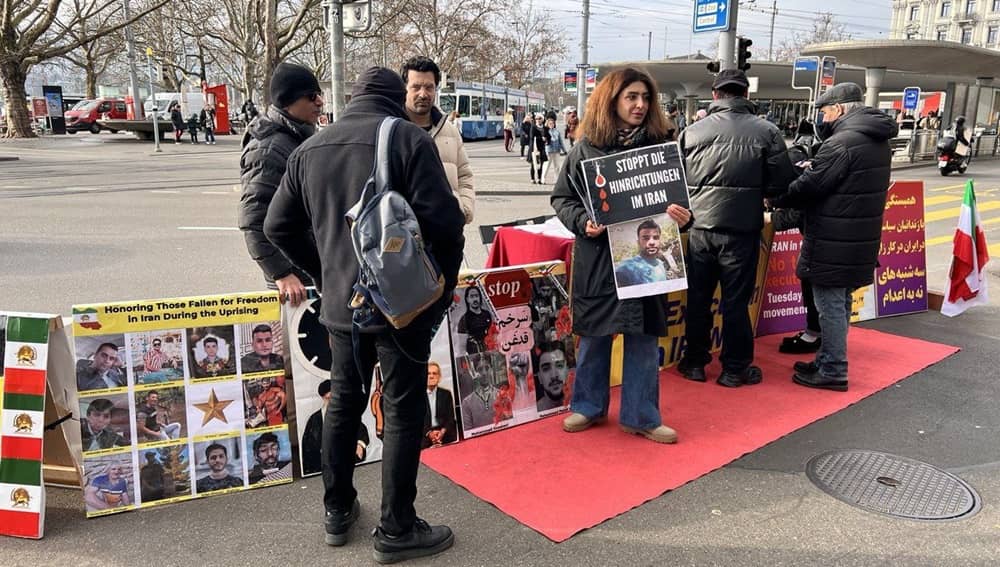
With more than 1,700 executions in 2025, the Iranian regime is using capital punishment as a calculated mechanism of repression, fear, and ideological control. Executions in the Iranian regime of Iran have long stood at the center of international concern over human rights violations. In 2025, however, this practice has reached unprecedented and alarming dimensions. Reports by human rights organizations indicate that more than 1,400 executions were carried out from the beginning of the year through mid-November, with supplementary data suggesting the number has exceeded 1,700, making 2025 one of the bloodiest years of the past four decades. This is not merely a matter of criminal justice.