

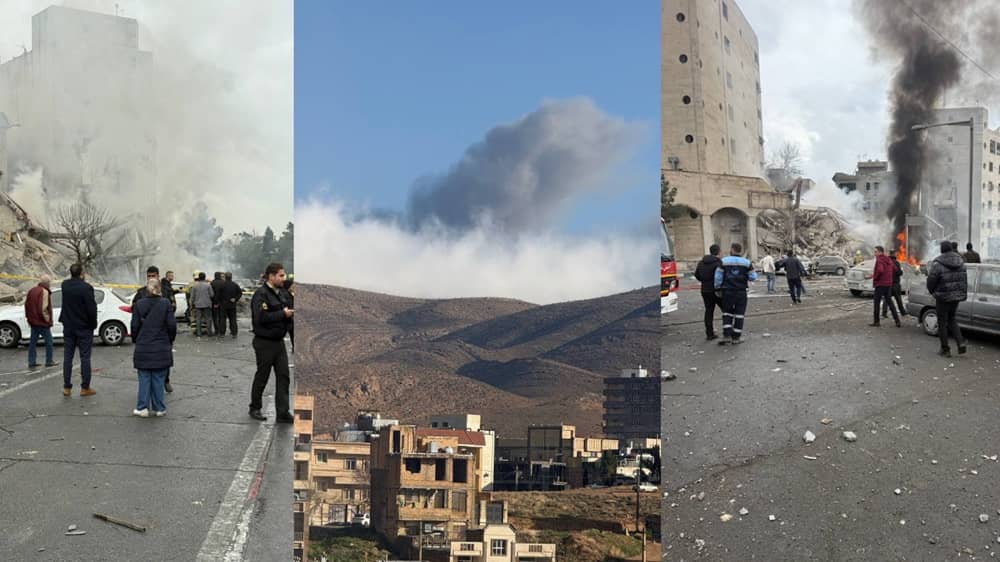
THIS PAGE WILL BE UPDATED WITH THE LATEST NEWS
UPDATE: 10:00 PM CET
Iran at War: A Regime Under Fire from Without — and Within

As the war surrounding Iran enters its 18th day, the country stands at a moment of historic uncertainty. Missiles and drones have struck military installations and strategic infrastructure across the country, while the regime’s leadership struggles to project an image of authority. Yet the most important battle may not be unfolding in the skies above Iran or in the waters of the Persian Gulf. It is taking place on the ground, inside the country itself.
Even as explosions reverberate across the region, Resistance Units linked to the Iranian opposition movement, the People’s Mojahedin Organization of Iran (MEK), have intensified their campaign against the theocratic regime. Their actions, ranging from acts of defiance to targeted disruption, highlight a reality Tehran’s rulers have long feared, that an external conflict could ignite a domestic uprising capable of toppling the regime from within. For decades the clerical establishment has relied on two pillars to maintain its grip on power, repression at home and confrontation abroad. The current war is exposing the fragility of that strategy.
UPDATE: 09:00 PM CET
South Pars Strike, Gulf Missile Alerts and New Leadership Hits Mark Another Day of Escalation in Iran War
The war entered a more dangerous phase on Wednesday as strikes hit Iran’s South Pars gas complex and nearby facilities at Asaluyeh, pushing the conflict deeper into energy infrastructure and raising the threat of direct retaliation against Gulf oil and gas sites. Brent crude surged above $108 and toward $110, while Saudi Arabia said it intercepted four ballistic missiles over Riyadh hours before an emergency consultative meeting of Arab and Islamic foreign ministers in the capital. Residents of Riyadh received hostile-threat phone alerts for the first time, underscoring how far the conflict has spread beyond Iran and Israel.
Iranian state media said projectiles hit parts of the South Pars Special Economic Energy Zone and the Asaluyeh refinery complex, with accounts describing damage to tanks and refinery infrastructure and naming phases 3, 4, 5 and 6 among the affected units. Workers were moved to safe areas, firefighting teams were deployed and several phases were taken offline to prevent the fire from spreading. South Pars is the Iranian section of the world’s largest known natural gas reservoir, shared with Qatar, and is central to Iran’s domestic energy system. The IRGC-run news agency Fars said gas tanks and parts of a refinery were hit and that the fire was later brought under control. Qatar called the strike a dangerous escalation, the UAE also condemned it, and Reuters reported that Iran halted gas flows to Iraq to divert supply to domestic use.
Hours ago, U.S. forces successfully employed multiple 5,000-pound deep penetrator munitions on hardened Iranian missile sites along Iran’s coastline near the Strait of Hormuz. The Iranian anti-ship cruise missiles in these sites posed a risk to international shipping in the… pic.twitter.com/hgCSFH0cqO
— U.S. Central Command (@CENTCOM) March 17, 2026
Tehran responded by declaring a list of Gulf energy facilities to be “direct and legitimate targets.” The warning named Saudi Arabia’s Samref refinery and Jubail petrochemical complex, the UAE’s Al Hosn gas field, and Qatar’s Mesaieed and Ras Laffan facilities. Reuters also reported that Ras Laffan installations were being evacuated and that Qatar’s LNG production had already been fully shut by the war, leaving roughly a fifth of global LNG supply offline and heightening fears of a longer energy shock.
On the military front, Israel said it had killed Iranian Intelligence Minister Esmail Khatib in an overnight strike. The claim came a day after the clerical regime confirmed the killing of Ali Larijani, one of the highest-ranking Iranian figures to die since the war began. Reports indicated that Larijani’s funeral was held in Tehran and that Iranian missiles fired in retaliation killed two people near Tel Aviv, bringing Israel’s death toll in the war to 14. Tehran said it fired at Tel Aviv, Haifa and Beersheba as well as at U.S. bases in Bahrain, Iraq, Jordan, Kuwait, Saudi Arabia and the UAE. Reuters also reported growing concern in Israel over Iranian cluster-warhead missiles, which are harder to intercept before submunitions disperse.
Russia is benefitting financially from the U.S.-Israeli war with Iran, analysts tell CBS News, as Tehran's retaliatory strikes paralyze crude oil shipments through the Strait of Hormuz and send global energy prices skyward. https://t.co/FqS55v6IjD
— CBS News (@CBSNews) March 18, 2026
Iranian officials signaled no softening after Larijani’s death. Judiciary chief Gholamhossein Mohseni Ejei, President Masoud Pezeshkian and Speaker Mohammad Bagher Ghalibaf all vowed continuity and revenge in public statements carried by Iranian state media, while the Revolutionary Guards announced a new “Wave 59” salvo of missiles and drones. Foreign Minister Abbas Araqchi claimed the system remained structurally strong regardless of individual losses and added that Iran’s doctrine against nuclear weapons was unlikely to change, even as he called for a new Strait of Hormuz protocol after weeks of disruption to one of the world’s most important energy corridors.
Inside Iran, the domestic atmosphere remained tense. NetBlocks said the near-total internet blackout entered its 19th day, with international connectivity still cut off after 432 hours for all but a limited group of users. At the same time, Chaharshanbe Suri celebrations brought crowds into the streets in Tehran, Karaj and other cities despite warnings and attempted crackdowns. In many cities, locals reported that patriotic songs including “Ey Iran” were heard at some gatherings and that security forces moved against crowds in Chitgar in western Tehran and in parts of Karaj; videos posted online appeared to show people running as gunshots rang out.
Al Arabiya Geopolitical and Security Expert Riad Kahwaji explains what outcomes are expected from the emergency meeting in Riyadh on the war with Iran.#Iran #SaudiArabia #GCC @Riadk1 @catalina_mda pic.twitter.com/vZwR2sozE3
— Al Arabiya English (@AlArabiya_Eng) March 18, 2026
Elsewhere in the battlefield, explosions and air-defense activity were reported in central Tehran, and attacks were reported in Yazd against an airport and military sites. Iran told the IAEA that a projectile also landed near the Bushehr nuclear power plant without causing damage or injuries, but Russia condemned the strike as irresponsible and said it had landed only metres from the reactor, warning of radiological risk. In Lebanon, Reuters reported some of the heaviest Israeli strikes on central Beirut in decades, showing how the war’s Iranian and Hezbollah fronts are increasingly overlapping.
The United States also escalated pressure on Iran’s coastal missile network. U.S. Central Command said on X that American forces used multiple 5,000-pound deep-penetrator munitions against hardened missile sites along Iran’s coastline near the Strait of Hormuz. Separately, Reuters reported that the aircraft carrier USS Gerald R. Ford, deployed in the Red Sea, is expected to make a temporary stop at Souda Bay in Crete after a fire in its main laundry area left nearly 200 sailors treated for smoke-related injuries, damaged about 100 berths and led to one evacuation from the ship.
With the Strait of Hormuz blocked after the assault by the United States and Israel, Iran has threatened another vital maritime trade choke point: the Red Sea. https://t.co/7KvZPYmIoL
— NBC News (@NBCNews) March 18, 2026
Diplomatically, the rhetoric remained severe but there were still calls for restraint. U.N. Secretary-General António Guterres said “the war in the Middle East must stop” and urged full implementation of Security Council resolutions, singling out Resolution 2817 as Gulf states continued to come under attack. Saudi Arabia convened ministers from Arab and Islamic states in Riyadh, while Turkey said NATO was deploying another Patriot system to Adana, in addition to one recently placed in Malatya, to reinforce defenses against missile threats from the war. Adana hosts Incirlik Air Base, where U.S., Qatari, Spanish, Polish and Turkish personnel are present.
The humanitarian and political warnings also intensified. The World Food Programme said the war could push another 45 million people into acute hunger by June through higher food, oil and shipping costs and blocked aid routes. At the U.N. Human Rights Council, an NGO intervention warned that political prisoners in Iran faced even greater danger during bombardment, while U.N. human rights experts separately warned that the armed conflict was aggravating existing patterns of repression and abuse. In Washington, Director of National Intelligence Tulsi Gabbard told senators that Iran’s government appeared “intact but largely degraded,” and that Tehran and its proxies still retained the ability to strike U.S. and allied interests.
Director of National Intelligence Tulsi Gabbard provided the latest intelligence community assessment on Iran on Wednesday, telling the Senate Intel Committee that Iran's regime "appears to be intact, but largely degraded due to attacks." https://t.co/LWTBJ4JExU pic.twitter.com/ggkQff97O3
— ABC News (@ABC) March 18, 2026
UPDATE: 08:00 PM CET
‘Iranian People Should Lead Regime Change,’ Say Exiled Dissidents In Brussels

Some 1,000 Iranians are expected at a demonstration in Brussels on Thursday to emphasise that regime change should be led by the Iranian people. Coinciding with the EU summit, the pro-democracy National Council of Resistance of Iran (NCRI) is organising a demonstration in front of the EU institutions at Place Schuman in Brussels on Thursday, from 09:00 to 11:00.
“For over two decades, the Iranian resistance has emphasised that neither appeasement will tame this regime, nor will foreign intervention bring about its downfall,” Mohammed Mohaddessin, chair of the Foreign Affairs Committee of the NCRI, said during a press briefing on Wednesday.
The NCRI is a coalition of Iranian dissident groups, which calls for the overthrow of the current Iranian regime via a democratic revolution in Iran.
It also rejects the return of the previous ruling monarchist, pro-Shah factions, which were overthrown in 1979.
UPDATE: 10:00 AM CET
PMOI Resistance Units Mark Fire Festival by Lighting the Path to a Democratic Republic

In direct defiance of the clerical regime’s repressive measures during wartime conditions, PMOI Resistance Units took to the streets on March 16, 2026 as part of the Fire Festival campaign against the regime.
Across the nation, brave activists organized revolutionary campaigns, projecting a message of readiness and defiance. The central theme of these nationwide activities was the Iranian people’s unwavering support for the National Council of Resistance of Iran (NCRI) Provisional Government and the total rejection of all forms of dictatorship.
Activities spanned major cities, including Tehran, Karaj, Mashhad, Shiraz, Kerman, Qazvin, Sari, Zahedan, and Ilam. Activists hung banners from highway overpasses, installed posters, and distributed flyers against the backdrop of the regime’s threats to crack down on dissidents.
Evin Prison: Hot Water Cut Off, Severe Shortages of Basic Supplies and Medication Reported

According to reports received from prisoners’ families, conditions inside Evin Prison have deteriorated significantly in recent days. Detainees are facing acute shortages of basic necessities and increasingly alarming living conditions. Approximately 200 women political prisoners are currently detained at Evin Prison. They have been particularly affected by the suspension of hot water and repeated disruptions in electricity supply.
Reports indicate that power in certain sections of the facility is being provided solely through diesel generators, a stopgap measure that has severely undermined the reliability of essential services.
UN Special Rapporteur Urges Global Pressure on Iran Over Escalating Human Rights Violations

A newly released report by Mai Sato, the United Nations Special Rapporteur on the situation of human rights in Iran, has called for intensified international pressure on the Iranian regime. Presented to the United Nations Human Rights Council, the report paints a stark picture of escalating repression between January 2025 and February 2026. The findings focus on three primary trends: the violent suppression of nationwide protests, a sharp increase in executions, and widespread internet shutdowns used to obscure state abuses.
A significant portion of the report examines the wave of protests that began on December 28, 2025, initially driven by economic grievances and the collapse of the national currency. What started in major cities such as Tehran quickly spread nationwide, reaching over 190 cities across all 31 provinces.
Iran’s War and the Cost of Appeasement: Why Regime Change Is Framed as the Only Path Forward

At a time when Iran and the broader Middle East are engulfed in escalating conflict, a central argument is gaining renewed urgency: the current crisis is not accidental, but the predictable outcome of decades of dictatorship and international appeasement. According to this perspective, the only viable path to peace lies not in negotiation or reform, but in the overthrow of the ruling system through organized resistance and popular uprising.
This view rests on a long record of warnings that, supporters argue, were consistently ignored by the international community. Over the past four decades, the National Council of Resistance of Iran (NCRI) said to have exposed key elements of the regime’s conduct—from the rise of religious fundamentalism as a global threat in the 1990s to the revelation of covert nuclear activities in the early 2000s, as well as its regional interventions and internal repression.
These disclosures, they contend, were not isolated incidents but part of a broader pattern: a system structurally incapable of reform. In this framework, the ruling establishment is seen as inherently expansionist, reliant on repression at home and destabilization abroad to maintain its grip on power.
Iran Regime’s New Ruler, Same Repression: The Post-Khamenei Reality

The death of Ali Khamenei, Iran regime’s pervious supreme leader on February 28, 2026, marks a historic inflection point for Iran. Yet instead of opening a path toward reform or structural change, the rapid elevation of Mojtaba Khamenei has reinforced what many critics describe as the regime’s fundamental instinct: survival through continuity, not transformation. In one of the first major international reactions, the President of the European Parliament stated that Khamenei’s death should signal the end of dictatorship in Iran. That sentiment reflects a broader expectation—but not necessarily the reality now unfolding.
The Iranian regime, born out of the 1979 revolution, established itself under the doctrine of velayat-e faqih—clerical rule justified through religious authority. Over nearly five decades, this system has systematically suppressed dissent, eliminated political opposition, and extended its influence beyond Iran’s borders through ideological and military means.
NCRI Announces Six-Month Plan for Transitional Government in Iran

Opposition coalition outlines roadmap for democratic transition, pledging elections within six months of forming an interim administration
The National Council of Resistance of Iran has announced a detailed plan to establish a transitional government in the event of the fall of Iran’s mullahs regime, outlining a six-month roadmap to transfer power to the people through free elections.
According to the NCRI, the proposed transitional government would be formed immediately after the fall of the current authorities in Tehran. Its primary mandate would be strictly limited to organizing and facilitating free and fair elections within a maximum period of six months.
Officials emphasized that the interim administration would not function as a permanent power structure but rather as a mechanism to ensure a peaceful and democratic transfer of authority.
The council stated that sovereignty would ultimately be handed over to representatives elected by the Iranian people.
EU Expands Sanctions on Iran Over Human Rights Abuses

New measures target IRGC commanders, judiciary officials, and surveillance entities linked to crackdown on January 2026 protests.
The Council of the European Union announced on March 16, 2026, a new round of sanctions against Iran, targeting 16 individuals and three entities accused of serious human rights violations. The measures are part of the European Union’s ongoing response to the Iranian regime’s violent suppression of nationwide protests in January 2026, which reportedly resulted in thousands of civilian casualties.
According to the Council, those sanctioned include senior officials directly involved in coordinating and executing the repression. Among them is Iran’s Deputy Minister of the Interior for Security and Law Enforcement Affairs, along with several commanders from local branches of the Islamic Revolutionary Guard Corps.
“National Security” as a Pretext for Organized Crimes in Iran

Recent statements by Abbas Araghchi, the Foreign Minister of the Islamic Republic, justifying internet shutdowns under the guise of “security reasons and protecting the people during wartime,” unveil a systematic strategy to mask widespread domestic repression. Field analysis and credible reports indicate that what the regime’s diplomatic machine labels as “wartime protective measures” is, in reality, a coordinated campaign of arbitrary detentions, preventive crackdowns on protesters, the fabrication of security cases, and the deliberate endangerment of prisoners’ lives. Citing documented events from March 2026 (Esfand 1404), this report demonstrates how the Islamic Republic exploits the state of armed conflict as a “legal and oversight vacuum” to violate its fundamental international obligations, including the International Covenant on Civil and Political Rights (ICCPR).
Ali Larijani; A Key Security Figure in Repression and the Survival of the Ruling Regime in Iran

Ali Ardeshir Larijani was one of the key figures in the power structure of the ruling regime in Iran; an individual who, over four decades, operated across three defining domains; security, media, and politics, and played a role in consolidating this structure. His trajectory, from managing state media to presiding over parliament and ultimately serving as Secretary of the Supreme National Security Council, reflects a position that was not merely administrative, but functioned at the level of decision-making and implementation of security policies.
Within this framework, Larijani’s role cannot be confined to a single office. At each stage, he advanced components of the mechanisms of control and repression; from shaping official narratives and discrediting opponents, to engineering power balances and participating in the management of security responses to protests. This continuity presents a profile of an individual who played an effective role in linking the various instruments used to maintain the system.