

THIS PAGE WILL BE UPDATED WITH THE LATEST NEWS
UPDATE: 10:30 PM CET
Israeli Strikes Spread Across Iran as Tehran Answers with Missile Salvos, While the War Pushes Deeper into the Region
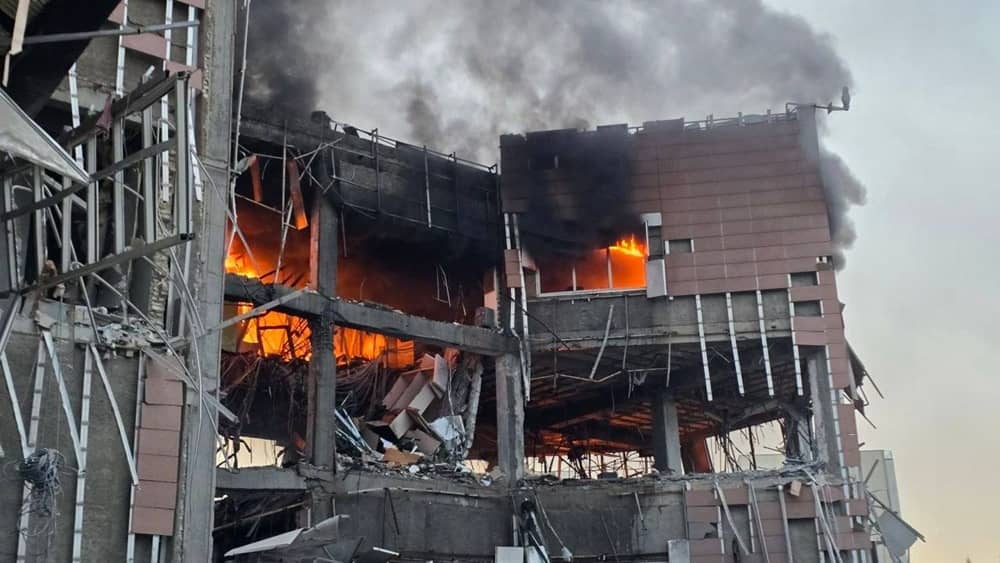
Iran absorbed the heavier visible damage over the past 24 hours, with Israeli strikes reported across military, intelligence and infrastructure targets from Tehran to Isfahan, Tabriz, Qazvin, Bushehr province and Shiraz, while the Iranian regime answered with repeated missile salvos that damaged parts of central Israel. Around that exchange, the war widened further into Iraq, Lebanon and the Gulf, shipping tensions around Hormuz deepened, and inside Iran the authorities tightened repression as the nationwide internet blackout entered its 25th day.
The most substantial same-day losses were inside Iran. Israeli statements said strikes hit more than 50 targets, including missile-launch sites, military facilities, two centers tied to the IRGC intelligence organization, another linked to the Intelligence Ministry, and depots used to store weapons and air-defense systems. Isfahan was one of the clearest focal points: the Israeli military said it had completed a broad wave against “production centers” there, while Iranian semi-official reporting said the city’s gas administration building and a gas pressure-reduction station on Kaveh Street were hit, damaging nearby homes. A projectile was also reported near a gas pipeline serving the Khorramshahr power plant, though local authorities said it landed outside the pipeline station area and caused no deaths.
U.S. forces have destroyed more than 9,000 military targets inside Iran, significantly removing the Iranian regime's combat capability. pic.twitter.com/7w1ZCS0JGn
— U.S. Central Command (@CENTCOM) March 24, 2026
Local accounts reported explosions around Shahin Shahr near Malek Ashtar University, which is linked to the Defense Ministry; a military-warehouse blast in Qaemieh, Isfahan; repeated strikes around Khomein’s missile depots; an explosion in the industrial area of Liyā in Qazvin; a reported strike on a missile site near Borazjan in Bushehr province; four heavy explosions in Shiraz; and renewed activity around the Amand missile site near Tabriz. Four missiles were also launched from the missile complex near Yazd, indicating that the clerical regime was still able to fire from at least some hardened launch infrastructure even as other sites came under attack.
Citizen reports described a concentrated burst of explosions across Tehran between roughly 12:35 and 12:45 a.m., with blast sounds, shaking windows and car alarms reported from Ekbatan, Pounak, Shahrak-e Gharb, Marzdaran, Sattarkhan, Yousefabad, Saadatabad, Amirabad-e Shomali, Seyed Khandan, Tarasht, Boulevard-e Shahrzad, Shahrak-e Vafajr, Narmak, Heravi, Pirouzi, Tehranpars, Velenjak, Tajrish, Niavaran, Lavizan, Naziabad, Shahr-e Rey, Baghershahr and Yaftabad. Some residents also reported hearing air-defense fire 15 to 20 minutes before the main explosions.
⚠️ Update: #Iran's internet blackout has entered its 25th day after 576 hours, leaving the public isolated from the world as whitelisted accounts seek to take control of the narrative. The measure leaves civilians without vital updates and without a voice on the global stage. pic.twitter.com/64N51Is1bS
— NetBlocks (@netblocks) March 24, 2026
Iranian state media reported six dead in strikes in the Moftah area of Tabriz and the death of Hamid Mirzadeh, an IRGC commander in Tabriz. The same day also brought a security reshuffle in Tehran, with Mohammad Bagher Zolqadr appointed secretary of the regime’s Supreme National Security Council, replacing Ali Larijani, whose death belongs to the broader war background rather than Tuesday’s direct casualty list.
The regime’s retaliation remained significant, but on this day it was less destructive than the damage being reported inside Iran. Early in the day, at least seven missile waves from Iran into Israel, with sirens in and around Dimona and repeated rescue deployments to impact points in central Israel. By later Tuesday, AP described around a dozen salvos in all. Tel Aviv again took visible damage, with residential and commercial buildings, vehicles and surrounding streets hit; additional damage was reported from debris or impacts east of Tel Aviv, in northern Israel and in an open area outside Beersheba. Israeli emergency services reported six light injuries in the day’s strikes. An Israeli assessment suggested that one of the Tel Aviv strikes may have involved either a new medium-range missile configuration or an unusual warhead type; Wall Street Journal reporting separately described a rare 220-pound warhead striking a residential street.
Oil prices rose Tuesday after fresh fighting overnight between Israel and Iran diminished hopes that an end to the Middle East war, now in its fourth week, might be imminent. https://t.co/4IYQVaUgrJ
— CNN (@CNN) March 24, 2026
The regional spillover was not incidental; it was one of the defining facts of the day. In Iraq, strikes on a Popular Mobilization Forces site in Habbaniyah in Anbar killed senior militia figures tied to Iran-aligned networks. Conflicting but important casualty reporting put the toll at at least six dead and 15 wounded, while other sources raised it above 20 and named nine dead, including Saad Duwai al-Baiji, Wathiq al-Fartousi and other local commanders or operatives, with Haidar al-Mamouri also reported killed. Separately, IRGC-linked forces and allied militias struck a Peshmerga base in Khalifan, Erbil, killing six fighters and wounding at least 20.
Lebanon moved on two tracks at once: diplomatic rupture with Tehran and continued military escalation with Israel. Beirut decided to revoke approval for the regime’s ambassador-designate Mohammad Reza Sheybani, declare him persona non grata and order him out by March 29, while recalling Lebanon’s own ambassador from Tehran for consultations. Outside reporting the same day showed that this was unfolding alongside intensified Israeli military action in and around Beirut and an Israeli announcement that it intended to hold a swath of southern Lebanon up to the Litani River as a “security zone.”
Lebanon orders Iran’s ambassador to leave.
The Foreign Ministry says Tehran’s diplomatic representative in Lebanon has to leave by Sunday, declaring him persona non grata.Follow AP's live updates: https://t.co/1UC6ZTRMPn
— The Associated Press (@AP) March 24, 2026
Across the Gulf, the conflict kept radiating into civilian infrastructure, air defense and maritime security. Bahrain advanced a draft UN Security Council resolution authorizing states to use “all necessary means” to protect shipping in and around the Strait of Hormuz, while France circulated a softer alternative centered on de-escalation and defensive coordination. Heavy explosions and shelter warnings in Bahrain were reported, and AFP said Amazon confirmed a drone-related outage at one of its cloud-service facilities there. By later Tuesday, the UAE Defense Ministry said a Moroccan civilian contractor working with the Emirati military had been killed in Bahrain in an Iranian missile attack and five other personnel were wounded. Kuwait said seven overhead transmission lines had been knocked out by falling debris, causing partial outages, while AP and official Saudi statements indicated that Saudi air defenses were again intercepting drones over the Eastern Region.
According to Iranian state media, at least 466 people had been arrested in recent days, while another 67 were detained for allegedly filming strike sites and sending images to Persian-language media. The reports suggested 24 arrests in Hamedan, where authorities claimed to have seized 11 new-generation Starlink devices and other equipment; four more arrests in Lorestan; two in Kerman, where officials alleged weapons transfers and said seven pistols and 10 magazines were seized; and three in Shahroud accused of preparing information on military and sensitive sites.
President Trump said Iran made a major energy-related concession to the United States, describing it as a positive development, although he did not give details https://t.co/PtHhM7GZZ6
— Reuters (@Reuters) March 24, 2026
Meanwhile, security forces have been using schools for deployment and staging in some areas. At the same time, NetBlocks said Iran’s internet shutdown had entered its 25th day, or 576 hours, leaving much of the public isolated from outside information during a period of bombardment and rumor.
On the diplomatic front, Washington claimed progress toward negotiations, while regime officials denied direct talks, indicating that messages were moving only through indirect channels. AP and other reporting later Tuesday showed Pakistan offering to host talks, with Oman and China also pressing for diplomacy, even as the Iranian regime publicly denied direct negotiations and kept firing missiles. Separately, Rafael Grossi expressed renewed insistence that Tehran’s claims about a religious prohibition on nuclear weapons should be verifiable if there is truly nothing to hide.
GEN. JACK KEANE: "We are well on our way to accomplishing every single objective that the president assigned to the United States military." https://t.co/J1KRKoAVfh
— Fox News (@FoxNews) March 24, 2026
Inside the Fight for Free Iran

The political landscape in Iran is undergoing a massive transformation as citizens face immense pressure from internal repression and external conflicts.
Kyiv Post’s Jason Jay Smart sits down to discuss these urgent developments with Shahin Gobadi, a member of the Foreign Affairs Committee of the National Council of Resistance of Iran (NCRI).
As the Parliament in exile of the Iranian Resistance, the NCRI provides crucial insights into the daily realities for the Iranian people fighting for a democratic future.
Despite severe threats from the regime, millions of Iranians have recently protested across all thirty-one provinces to demand an end to the theocracy. A deeply organized resistance network is rapidly growing inside the country to challenge the Islamic Revolutionary Guard Corps.
UPDATE: 1:00 PM CET
Government of Iran Cyber Actors Deploy Telegram C2 to Push Malware to Identified Targets
 The Federal Bureau of Investigation (FBI) is releasing this FLASH to disseminate information on malicious cyber activity conducted by actors on behalf of the Government of Iran Ministry of Intelligence and Security (MOIS). Specifically, MOIS cyber actors are responsible for using Telegram as a command-and-control (C2) infrastructure to push malware targeting Iranian dissidents, journalists opposed to Iran, and other opposition groups around the world. This malware resulted in intelligence collection, data leaks, and reputational harm against the targeted parties. The FBI is releasing this information to maximize awareness of malicious Iranian cyber activity and provide mitigation strategies to reduce the risk of compromise. Due to the elevated geopolitical climate of the Middle East and current conflict, the FBI is highlighting this MOIS cyber activity. The FBI assessed MOIS cyber actors are responsible for using Telegram as a C2
infrastructure to push malware targeting Iranian dissidents, journalists opposed to Iran, and other oppositional groups around the world. This FLASH warns network defenders and the public of continued malicious cyber activity by Iran MOIS cyber actors and outlines the tactics, techniques, and procedures (TTPs) used in this malware campaign.
UPDATE: 7:30 AM CET
How The Iranian Resistance’s Progress and Internal Defections Are Cornering a Fragile Regime
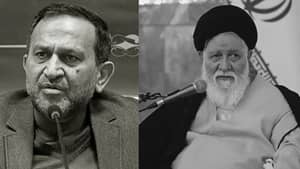
Following the massive nationwide uprisings of December 2025 and January 2026, the Iranian regime finds itself at a historic impasse. The ruling clerics only managed to maintain their fragile grip on power through the massacre of thousands of protesters.
This vulnerability has been compounded by severe inner turmoil following the death of Supreme Leader Ali Khamenei in a February 28 airstrike and the highly contested installation of his son, Mojtaba, on March 9.
Amidst this wartime chaos, statements from top regime officials reveal an unprecedented fear of the organized Resistance—the PMOI and its National Liberation Army (NLA)—and mounting panic over mass defections within their own suppressive ranks.
Iran’s Regime Exposed: Billion-Dollar Crypto Network Used to Evade Sanctions and Fund Proxy Groups

A new investigative report by the German outlet NTV has unveiled a sophisticated financial network operated by Iran’s regime, exposing how more than $1 billion was funneled through shell companies based in London to bypass international sanctions.
According to the report, published on Monday, the operation is closely tied to the Islamic Revolutionary Guard Corps (IRGC), which has allegedly used cryptocurrency exchanges—identified as Zedcex and Zedxion—to convert illicit oil revenues into digital assets. This mechanism allowed Tehran to circumvent sanctions and discreetly transfer funds across borders.
Experts from TRM Labs, a blockchain intelligence firm, analyzed transaction patterns and concluded that over 87 percent of the network’s activity is directly linked to the IRGC. Their findings highlight the scale and centralization of the operation within the regime’s military-financial apparatus.
Iranian Opposition Supporter Calls for Recognition of Transitional Government

In a revealing interview with Rai News, Ghazal Afshar, a supporter of the National Council of Resistance of Iran, outlined the growing role of organized resistance inside Iran and called on European governments to recognize a transitional political alternative to the current regime.
Afshar pointed to the Ten-Point Plan proposed by Maryam Rajavi as a comprehensive framework for transferring power to the Iranian people. She described the initiative as a structured roadmap aimed at ending decades of authoritarian rule—first under the monarchy and then under the current clerical establishment—and replacing it with a democratic system based on popular sovereignty.
A central theme of the interview was the expanding role of resistance units operating inside Iran. Afshar described these networks as increasingly active and capable of challenging the regime’s security apparatus through coordinated operations targeting key centers of power.
Iranian Opposition Voices Unite: Organized Resistance Presented as Only Path to Change
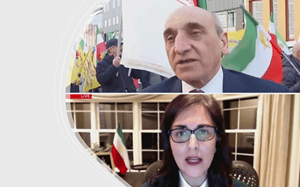
A major gathering of Iranian opposition supporters on March 19, 2026, outside European Union institutions has brought renewed attention to what organizers describe as the only viable solution to Iran’s ongoing crisis: regime change led by the Iranian people and their organized resistance.
According to coverage by Reuters, demonstrators gathered in large numbers in Brussels, voicing a unified message that rejects both foreign military intervention and continued Western appeasement of Tehran. Protesters carried banners and chanted slogans emphasizing their opposition to all forms of dictatorship, including both monarchy and the current clerical regime.
Among the key speakers was Shahin Gobadi, spokesperson for the People’s Mojahedin Organization of Iran (PMOI/MEK). Speaking on the sidelines of the demonstration, he underscored that the Iranian opposition has consolidated around a clear and consistent strategy.
Time to Correct the West’s Historic Mistake on Iran

The Iranian regime is perpetrating widespread brutality against its citizens during the ongoing protests that erupted in late 2025, with estimates ranging from several thousand to over 36,000 deaths amid a severe crackdown by security forces.
Entities such as the Islamic Revolutionary Guard Corps (IRGC), Basij militia, Ministry of Intelligence and Security (MOIS), and State Security Forces (SSF) have raided hospitals across the country, including in Tehran, Ilam, Esfahan, and other provinces, deploying tear gas, firing metal pellets, arresting injured protesters directly from treatment beds, and assaulting medical staff.
Under nationwide internet blackouts, these forces impose curfews, conduct mass arbitrary arrests, and subject detainees to torture, including sexual violence. This orchestrated repression, condemned by Amnesty International and the United Nations as potential crimes against humanity, demands urgent international intervention—not mere condemnation, but strategic support for the Iranian people’s survival.
Ahmadreza Radan; Central Role in the Implementation of Repression in Iran
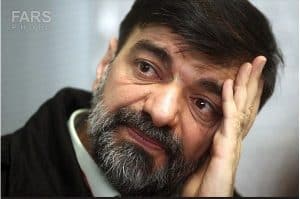
Ahmadreza Radan, the Commander-in-Chief of the Law Enforcement Command of the ruling regime in Iran (FARAJA), is considered one of the key figures in the country’s internal security structure, whose record is closely associated with the management and implementation of repressive policies against citizens, particularly in the context of nationwide protests. An examination of his background, positions, and performance indicates that his role has not been limited to administrative command, but has extended to the design, direction, and operational execution of policies that have resulted in widespread violations of fundamental rights.
Ahmadreza Radan was born in 1963 in Isfahan and began his activities in the early 1980s within the Basij and later the Islamic Revolutionary Guard Corps. His presence in conflict zones, particularly in Kurdistan during the Iran–Iraq war, formed his initial experience in security and military domains.
Law Enforcement Command of the Ruling Regime in Iran; Internal Security and Social Control

The Law Enforcement Command of the ruling regime in Iran (FARAJA), as the principal body responsible for “internal security,” has undergone a fundamental transformation in its function and nature over recent decades. While ostensibly tasked with maintaining public order and enforcing the law, in practice it has become part of the regime’s security-political apparatus, playing a central role in suppressing protests, enforcing social control, and implementing ideological policies. An examination of its structure, background, and performance indicates that FARAJA has evolved beyond a conventional police force into an organized instrument for the enforcement of political authority.
Following the 1979 revolution, three primary institutions were responsible for internal security: the Shahrbani (urban police), the Gendarmerie, and the Islamic Revolutionary Committees. The Revolutionary Committees, which rapidly expanded across the country, were ideological in nature from the outset and operated not only in policing functions but also in political and social control. Numerous reports from that period indicate arbitrary arrests, violence, and the absence of legal oversight in their operations.
Iran War Economic Impact: How the 2026 Conflict Is Shaking the Global Economy
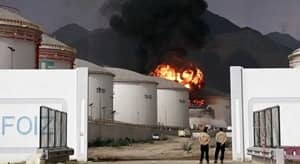
Iran war economic impact is no longer a contained geopolitical issue—it has rapidly evolved into a global economic shock. What makes the 2026 conflict different is not just its scale, but where it is unfolding: the Strait of Hormuz, a chokepoint that once carried nearly 20 million barrels of oil per day—about 20% of global consumption—along with over one-fifth of global LNG trade. As that flow falters, the consequences are now rippling far beyond the Persian Gulf, feeding directly into inflation, energy prices, and household costs across Western economies.
This is no longer about regional instability. It is about inflation, growth, and the cost of living across the world.
Iranian Resistance Rally in Amsterdam Backs Provisional Government for a Democratic Republic in Iran

The rally brought together freedom-loving Iranians from diverse backgrounds, including Kurdish, and other Iranian nationalities, in a unified show of solidarity. The event also received notable attention from national media outlets, amplifying its message across the Netherlands.
Alleged Iranian Spies Are Already in the US — And Infiltrating Silicon Valley

Alleged Iranian spies with ties to regime bigwigs have been charged with infiltrating Silicon Valley. Last month, a federal grand jury indicted three Iranian software engineers for allegedly stealing trade secrets from tech companies, including Google.
Two of the suspects are sisters, Samaneh Ghandali, 41, and Sorvoor Ghandali, 32. They were charged alongside Mohammadjavad Khosravi,40, who is Samaneh’s husband, with allegedly using their employment at unidentified technology companies to “obtain access to confidential and sensitive information,” according to the Department of Justice.
The tech workers then allegedly “exfiltrated confidential and sensitive documents, including trade secrets related to processor security and cryptography and other technologies, from Google and other technology companies.”