

THIS PAGE WILL BE UPDATED WITH THE LATEST NEWS
UPDATE: 10:30 PM CEST
Defiant Iranian Protesters Sing in Harrowing Video Before Being Hanged: ‘The Tyrant’s Throne Shall Shatter’

Smuggled video from inside an infamous Iranian prison captured the moment six dissidents broke into song to defy the Islamic regime one last time before they were hanged. The six men, all executed for their alleged actions against the regime, were seen standing in a courtyard at the notorious Ghezel Hesar prison as they made their final stand with a song of resistance, The Sunday Times reported.
“Your rival stands before you now, hardened in the flame — I am the faith, I am revolt, with belief I take my stand — I’ve sworn an oath upon my blood, the tyrant’s throne shall shatter,” the men calmly sung.
Harrowing video shows Iranian protesters sing before being hanged https://t.co/bBf9BePGZp pic.twitter.com/hc2pSw9jJq
— New York Post (@nypost) April 27, 2026
The video was reportedly filmed in the last week of February, with the men identified as Vahid Baniamerian, Babak Alipour, Abolhassan Montazer, Pouya Ghobadi, Akbar Daneshvarkar and Mohammad Taghavi.
Ghobadi, 33, was confirmed to be executed on March 31 after he was allegedly tortured by the regime, which accused him of armed rebellion against the state, according to Amnesty International.
Analysis: Iran — What Repression Really Reveals

A recurring idea in political and media debates is that the People’s Mojahedin Organization of Iran (PMOI), often presented as one of the main—if not the primary—forces of resistance against the Islamic Republic, lacks a social base inside the country. This claim rests on an implicit assumption, rarely questioned: that the rootedness of a political movement can be measured through visible indicators—street presence, media representation, or polling data.
However, this assumption becomes fragile when applied to an authoritarian system.
In a context where demonstrations are harshly suppressed, where the media is tightly controlled, and where political expression can lead to severe punishment, the absence of visibility no longer constitutes proof of nonexistence. On the contrary, it may be the direct product of structural constraints.
In other words, in such systems, “not being seen” does not necessarily mean “not existing.”
UPDATE: 7:30 AM CEST
Tehran’s Killing Machine Accelerates: Executions Expose a Fragile Regime Terrified of a Restive Nation
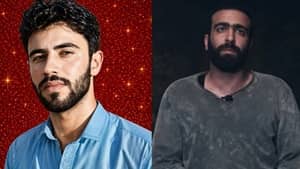
In a relentless continuation of its daily bloodshed against dissidents, the Iranian regime’s killing machine has claimed the lives of two more political prisoners over the past two days. Coming in the aftermath of the massive December 2025–January 2026 nationwide uprising that brought the clerical establishment to its knees, these executions serve as a desperate domestic purge. While the regime attempts to project power and control through these brutal hangings, in reality, it is exposing its deep-seated fear of an increasingly restive society.
Early Saturday morning, on April 25, 2026, the regime’s judiciary hanged Erfan Kiani, a brave rebellious youth from Isfahan. Kiani was arrested during the recent nationwide protests. Mizan, the judiciary’s news agency, attempted to justify the execution by accusing him of “destroying public and private property, setting fires, carrying and using Molotov cocktails, carrying cold weapons, blocking the path of vehicles, and attacking agents.” The regime claimed he acted as a ringleader, stating that “by carrying pre-prepared wooden boards and tires, he facilitated setting fires in the streets” during the January uprising.
Iran Regime Sentences Third Woman to Death Over Protests

Iran regime has sentenced Maryam Hodavand, a 45-year-old political prisoner held in women’s ward of Evin Prison, to death for her involvement in the January 2026 nationwide protests. She has two children.
Handed down by Tehran’s Revolutionary Court, this verdict makes Hodavand the third female protester to face execution in recent months, signaling a brutal escalation in judicial crackdowns.
The sentence was issued amid reports pointing to a lack of transparency in the judicial process, denial of her right to choose legal counsel, and the case’s reliance on confessions obtained under pressure.
During the judicial process, Hodavand was denied the right to an attorney of her choice, and court sessions were reportedly conducted without the presence of independent legal representation. To date, no clear information has been released regarding the timing of her arrest, the process of case formation, details of court hearings, or the legal evidence underpinning the verdict.
Executions as Confession: The Iran Regime’s Descent into Fear and Fragility

In the political lexicon of authoritarian systems, repression is often misread as power. Yet in today’s Iran, the accelerating wave of executions is not a projection of strength—it is a stark admission of systemic fragility. Over the past month, the Iran regime has carried out a disturbing surge in executions, targeting political prisoners, protesters, and ordinary citizens. Verified reports from human rights organizations and opposition networks indicate that dozens have been sent to the gallows in a calculated attempt to instill fear.
But fear, in this context, is not a tool of control—it is a symptom of it. The Iran regime’s reliance on executions underscores its inability to contain a restive population whose grievances have moved beyond economic hardship into outright political defiance. The gallows have become the regime’s last line of defense against a society that no longer consents to be governed through coercion.
The Prince Who “Allows” Democracy
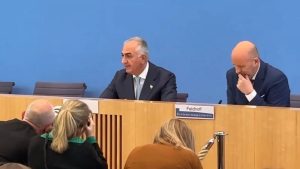
There’s something almost poetic about a man fleeing history—only to trip over it in front of 150 journalists.
During his recent European tour, Reza Pahlavi, son of Iran’s last monarch, appeared eager to position himself as a modern democrat. He spoke of meetings with parliaments, governments, and media outlets across Europe, projecting the image of a statesman-in-waiting. Yet, amid this carefully staged performance, a curious grievance emerged: not one of the 150 journalists, he lamented, asked him about the reported killing of 40,000 Iranians during the January protests.
A remarkable complaint—less for what it reveals about journalists, and more for what it reveals about the speaker. After all, when a political figure is disappointed by the questions not asked, it often means there are answers they were hoping to give.
Instead, the journalists reportedly focused on Iran’s past. An odd choice, one might think—until you remember that for a man whose political identity is inseparable from his lineage, the past is not just history; it’s branding.
Iranian Doctor Sentenced to Death for Helping Injured Protesters

Ameneh Soleimani, a physician, was arrested solely for saving the lives of those injured during the January 2026 uprising and is now facing a death sentence.
Dr. Ameneh Soleimani, a physician and director of a dermatology and cosmetic clinic in Ardabil, a city in northwestern Iran, was arrested in recent days by security forces for admitting and treating individuals injured during protests in the city.
The arrest of Ameneh Soleimani is assessed as part of direct pressure on the medical community to deter them from treating protesters. According to reports from Iran, at least four physicians have so far been arrested for treating the injured, and there is no information about their condition or whereabouts.
Additionally, Khosrow Minaei, a 45-year-old volunteer rescue worker, who had turned his home into a shelter for treating the injured, was arrested on January 14, 2026, during a raid by security forces.
Iran’s Regime Executes Baluch Political Prisoner Amer Ramesh
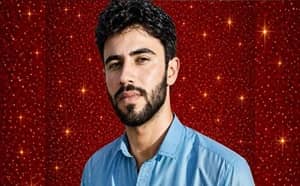
The Iranian regime, continuing its daily extrajudicial executions, executed Baluch political prisoner Amer Ramesh in Zahedan, the capital of Sistan and Baluchestan province.
Mizan News Agency, affiliated with the judiciary of the Iranian regime, stated that the reason for the execution of this political prisoner was alleged involvement in bombings, ambushes against military forces, and membership in Jaish al-Adl, a Baluch militant group. This political prisoner, who was about 18 years old at the time of his arrest, was from the village of Bilingi, near Chabahar in southeastern Iran. He had previously been shot during a raid by security forces on a shop.
On Friday, April 24, this Baluch political prisoner informed his family in a phone call that he had been transferred from Zahedan Central Prison to quarantine and that his execution was scheduled to be carried out at dawn on Sunday, April 26.
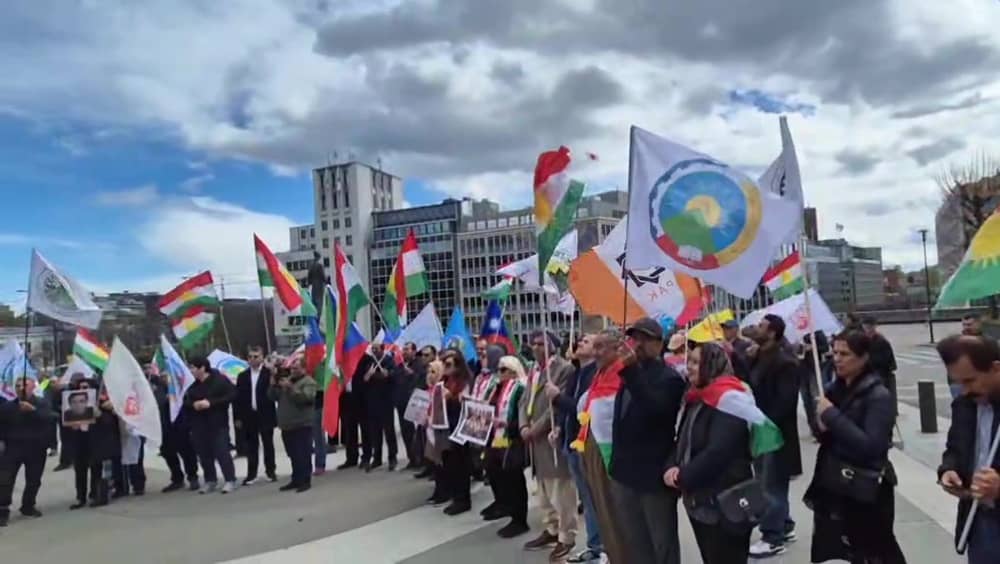
MEK Supporters in Munich Denounce Executions in Iran, Call for Freedom of Political Prisoners

MEK Supporters in Heidelberg Condemn Iran’s Executions, Urge Release of Political Prisoners

Heidelberg, Germany – April 25, 2026 – Supporters of the People’s Mojahedin Organization of Iran (PMOI/MEK) held a book stall and photo exhibition to protest the execution of PMOI political prisoners, as well as protesters arrested in January 2026. The event also expressed solidarity with the “No to Execution” campaign. The event emphasized the Iranian people’s demand for a democratic republic led by the Iranian Resistance as a path toward peace and freedom.
Paris Exhibition Honors Executed Political Prisoners, Calls for a Democratic Republic in Iran

Paris, France – April 25, 2026 – A book stall and photo exhibition by the People’s Mojahedin Organization of Iran (PMOI/MEK) was held in Paris, honoring PMOI political prisoners who were recently executed by the Iranian regime, as well as the fallen protesters of the January 2026 uprising and other nationwide protests. The event emphasized the Iranian people’s demand for a democratic republic led by the Iranian Resistance as a path toward peace and freedom.