

THIS PAGE WILL BE UPDATED WITH THE LATEST NEWS
UPDATE: 07:30 PM CEST
Anti-Iranian Regime Protesters Rally in DC As Trump Urges Tehran to Make Peace Deal

A crowd is gathering in Washington, D.C., on Saturday for a march against the Iranian regime, chanting, “we want justice, we want peace, free Iran, we insist!”
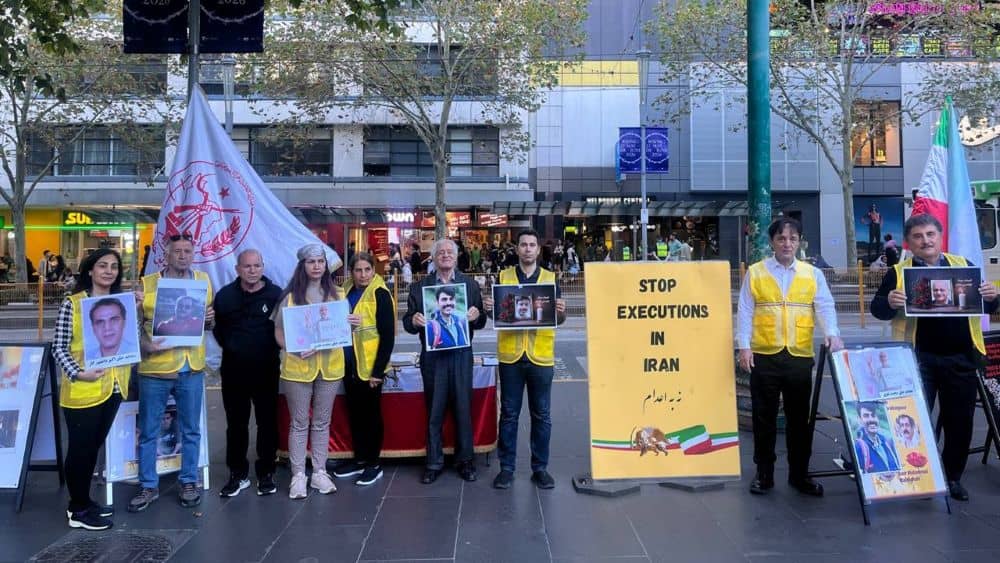
“Regime change in Iran by the people of Iran!” and “stop executions in Iran, now, now, now!” the crowd also was heard chanting ahead of a planned march in the nation’s capital.
The National Council of Resistance of Iran said it expecting thousands of supporters to gather for the rally and march.
“The event, organized under the banner of stopping the regime’s surge in executions and supporting the Iranian people’s resistance, is expected to draw thousands of people demanding international action against the terrorist regime ruling Iran,” it said.
UPDATE: 12:30 PM CEST
US Charges Man with Plotting Iran-Directed Attacks on Jews in London and New York

The US justice department has arrested and charged an Iraqi national accused of involvement in nearly 20 alleged terror attacks and attempted attacks across the US and Europe.
The wave of violence attributed to Mohammad Baqer Saad Dawood al-Saadi has caused huge concern in many European countries but especially the UK, where Jewish community centres, charities, synagogues and other sites have been targeted in recent weeks.
The justice department announced the arrest of al-Saadi on Friday. He faces six terrorism-related charges tied to his alleged role as an operative for the Iraqi paramilitary group Kata’ib Hezbollah and Iran’s Islamic Revolutionary Guard Corps (IRGC), both designated by the US as terrorist organizations.
Al-Saadi, who was transferred into United States custody overseas before being brought to the US, appeared in Manhattan federal court on Friday. The charges filed against him include conspiracy to provide material support to foreign terrorist organizations, conspiracy to bomb a place of public use, and attempted destruction of property by means of fire or explosives.
UPDATE: 09:00 AM CEST
Iran’s Same-Day Death Sentences Show Its Brutality, Again

For more than 20 years, before I went to Congress, I sat on a criminal court bench in Texas. I presided over more than 20,000 cases. I know what a courtroom is supposed to be. It is the place where the state’s power to take a person’s liberty, property, or life is restrained — by procedure, by evidence, by the right to a defense and by the deliberate pace of justice. A courtroom that abandons those safeguards is not a court. It is something else.
Last month, Iran’s judiciary chief, Gholam-Hossein Mohseni Eje’i, made clear what that “something else” looks like.
Speaking to judicial officials in Tehran, Eje’i declared that his courts had adopted a “combat stance,” according to reporting from a longstanding Iranian opposition group. Political cases, he said, must no longer follow normal procedures. Files that once took days to investigate must now be completed within hours. Interrogators are to leave their offices and question defendants directly in prison. Indictments must be drafted at speed. There must be “no delay or hesitation” in carrying out sentences—whether executions or property confiscations. “No leniency whatsoever” is to be shown.
These are not the directives of a judiciary. They are the orders of a system designed for rapid punishment, one in which the outcome is predetermined and the process exists only to legitimize it.
UPDATE: 08:00 AM CEST
A Martyr’s Pledge: Pouya Ghobadi’s Letter Reveals the Indestructible Resolve of PMOI Members
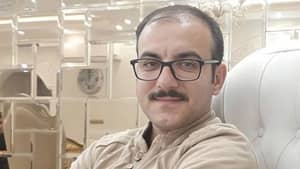
On the morning of March 31, 2026, the Iranian regime executed 33-year-old political prisoner and member of the People’s Mojahedin Organization of Iran (PMOI/MEK), Pouya Ghobadi. Yet, long before he was sent to the gallows, Ghobadi had already defeated his executioners.
A profound letter written by Ghobadi from Brigade 2 of the Greater Tehran Prison (Fashafouyeh) on August 2, 2025, has emerged as a historic testament to the unbreakable spirit of the Iranian Resistance. Penned just days after the regime executed two PMOI/MEK members, Behrouz Ehsani and Mehdi Hassani, the letter proves that the regime’s brutal machinery of death fundamentally fails to break the spirit of its opponents.
For 60 years, the PMOI has demonstrated against both the Shah’s dictatorship and the ruling mullahs that state violence only breeds a more defiant generation. Ghobadi’s letter is a powerful embodiment of this legacy, showing a young man who consciously chose the path of sacrifice for a free Iran.
Iran: Audio Message by PMOI Member Vahid Baniamerian
Simay Azadi has obtained an exclusive voice recording from Vahid Baniamerian, a member of the People’s Mojahedin Organization of Iran (PMOI), recorded from prison in July 2025, before his execution. Vahid was executed on April 4, 2026, in Ghezel Hesar Prison amid a recent wave of executions targeting PMOI prisoners.

The message was addressed to his mother following the executions of fellow PMOI prisoners Behrouz Ehsani and Mehdi Hassani in mid-July 2025, at a time when Vahid and several others were themselves awaiting execution.
In the recording, Vahid reflects on death, faith, poverty, political awakening, his decision to join the PMOI, and his relationship with his mother. He describes his path as one shaped by witnessing injustice, repeated imprisonment, and what he calls a commitment to fight oppression
Iran Regime Sentences Female Political Prisoner to an Additional Year in Prison

Forough Taghipour, a political prisoner held in Evin Prison, has been sentenced to an additional one year of discretionary imprisonment amid the Iranian regime’s ongoing judicial and security crackdown on political prisoners. The sentence was reportedly issued over a statement she published on Student Day and was formally communicated to her inside the prison. Earlier, in March 2026, Forough Taghipour received an official notice informing her that a new case had been opened against her. According to the notice, she was ordered to appear for questioning via video conference before Branch 2 of the prosecutor’s office.
The charge brought against the political prisoner was described as “propaganda against the state inside prison,” an accusation that Iranian authorities have repeatedly used in recent years against imprisoned dissidents and political activists as a tool for imposing additional pressure on political prisoners.
Iran Regime Arrests Justice-Seeking Families and Women Protesters
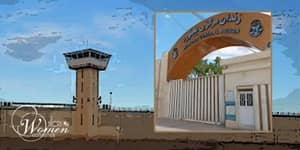
Amid the continuing wave of arbitrary arrests carried out by the Iranian regime, families of those killed during the nationwide protests of January 2026, along with women protesters who participated in the protests across cities in Razavi Khorasan Province, including Mashhad and Sabzevar, have been detained and imprisoned by security forces. The intensifying crackdown on protesters and justice-seeking families is a sign of the authorities’ growing concern over the possible resurgence of anti-government demonstrations and the reemergence of organized public dissent.
On Tuesday, May 5, 2026, at least nine citizens were arrested in the city of Sabzevar. Those detained are relatives of Abolfazl Paydar, one of the victims killed during the nationwide protests of January 2026.
Among those arrested are Farzaneh Parvaneh, his mother, and Elham Parvaneh, his maternal aunt, Amirhossein Paydar, Abolfazl’s brother; Saeed Parvaneh, his maternal uncle.
Iran’s Digital Economy Faces Collapse Under Internet Restrictions and Financial Pressure

Since January 8, when widespread internet disruptions intensified across Iran following nationwide protests and later amid wartime conditions, the country’s digital economy has entered one of the most severe crises in its history.
Severe restrictions on access to the global internet have disrupted the operations of hundreds of thousands of online stores, content creators, bloggers, administrators, and businesses dependent on social media platforms. Many activists and entrepreneurs in the sector now describe the situation as the “slow death” of Iran’s digital economy.
The Iranian regime justified the restrictions by citing “security conditions” during the peak of unrest. At the same time, international internet monitoring organizations reported dramatic declines in Iran’s connectivity to the global network, with access in some periods dropping to near-total isolation.
For online businesses, the consequences have been devastating. Many lost the ability to sell products, advertise services, process customer communication, or even maintain normal business operations.
The Politics of Sacrifice and the Illusion of Legitimacy in Iran’s Future
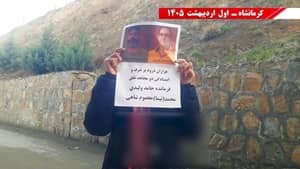
In an era where the boundary between truth and manufactured narratives grows increasingly blurred, one fundamental question remains unavoidable: who has the right to speak of leadership and Iran’s future? Those who have stood firm and paid the price, or those who have remained in safe political distance while riding the wave of public discontent?
This is not merely a political dispute. It is an ethical, historical, and structural question — one whose answer may determine whether a movement matures into a democratic force or becomes another vehicle for recycled authoritarianism.
Political legitimacy cannot be separated from cost and accountability. Those who, over decades, have sacrificed their freedom, security, families, and lives in defense of public rights have accumulated a form of moral capital that cannot simply be dismissed or erased through media narratives or political branding. This cost is not abstract. It is visible in executions, imprisonment, torture, and the systematic elimination of dissidents by the Iranian regime.
Among those who have paid the heaviest price are supporters and members of the People’s Mojahedin Organization of Iran, many of whom have faced execution solely for their political affiliation or support for organized resistance. The continued persecution of these individuals demonstrates a reality that many prefer to overlook: resistance in Iran is not symbolic theater. It remains a living and ongoing confrontation whose price is still being paid in blood.
Iran’s Tourism Industry Near Collapse Amid War, Internet Shutdowns, and Economic Crisis

Reports emerging from Iran indicate that the country’s tourism industry has effectively entered a state of near-total shutdown following months of economic stagnation, war, political instability, and widespread internet disruptions.
The head of Iran’s Association of Air Travel and Tourism Agencies says travel agencies have “practically had no economic activity since last Nowruz,” while industry experts warn that the ongoing “neither war nor peace” environment has brought tourism-related businesses to a standstill.
Hormatollah Rafiei, speaking on May 12, stated that according to estimates submitted to Iran’s Ministry of Cultural Heritage, Tourism, and Handicrafts, the tourism sector has suffered nearly 5 trillion tomans in losses in just the past two months alone.
Iran has faced continuous instability since June of last year, following the 12-day war between Iran and Israel, subsequent domestic unrest, and crackdowns on protests. A separate 39-day conflict that began on February 28 with joint US-Israeli military operations remains under a fragile ceasefire.
Rising Food Prices Push Iranian Families Deeper Into Economic Hardship

According to reports published by Tehran-based economic media outlets, the total cost of goods included in Iran’s subsidized electronic coupon basket has surged dramatically since the removal of the country’s preferential currency policy.
The price of the basket, which previously stood at approximately 2.18 million tomans before the elimination of subsidized exchange rates, has now climbed to nearly 3.78 million tomans.
The subsidized basket includes essential household goods such as chicken, cooking oil, eggs, rice, sugar, pasta, low-fat milk, cheese, yogurt, red meat, and legumes.
Figures released on May 7, show that the cost of these basic items has increased by roughly 1.6 million tomans in recent months. However, the value of the government-issued electronic coupon allocated to eligible households has remained fixed at one million tomans.
The continuing rise in food prices comes as Iran’s national currency experiences a historic decline in value.
Targeted Repression of Iranian Women, From Mass Arrests to Death Sentences

Women in Iran have faced a wave of widespread arrests and targeted repression; a wave that indicates a planned intensification of control amid the crisis. Features of this period include mass arrests, the issuance of heavy judicial sentences, and increased harassment and pressure on the families of political prisoners, those executed, and those killed during the January 2026 uprising.
This report presents a picture of the situation of women in conditions where political crises and restrictions on information have further obscured the true scale of violations of their rights.
Iran’s regime has once again exploited the atmosphere of tension and war crisis it has imposed on the Iranian people to intensify domestic repression. While public attention was partly focused on regional developments and war, security apparatuses systematically expanded the scope of control and suppression inside the country.
IRGC Increases Terrorist Activities in Gulf Arab Countries
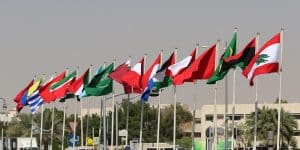
At a time when Iran’s regime is pursuing a policy of regional militarism, a broad wave of alleged IRGC-linked terrorist activity is intensifying in Gulf Arab countries.
A recent report by the U.S. newspaper The New York Times has once again drawn attention to Iran’s extraterritorial activities and networks linked to the Islamic Revolutionary Guard Corps (IRGC) across Arab states in the Persian Gulf. The report describes a wave of mass arrests in several regional countries. Security officials in these states have accused detainees of ties to the IRGC and involvement in security cooperation with Iran’s regime. Meanwhile, the region’s political and media environment has also been affected by growing concerns over IRGC-related terrorism.
According to the report, more than 100 alleged IRGC operatives have been arrested in Gulf Arab countries. The main charges against these individuals are treason and cooperation with networks affiliated with Iran’s regime. The report states that regional governments, following heightened military and security tensions with Iran, have begun extensive surveillance of groups and individuals close to Tehran.
“The Country Is Being Sold”: Inside Iran’s Quiet Breakdown

Field reports received from drivers and citizens across different parts of Iran paint a grim picture of the country’s economic, environmental, and social conditions. The accounts, sent directly by people on the ground, point to the continued large-scale smuggling of national resources, environmental destruction, unsafe roads, and systematic pressure targeting vulnerable groups and religious minorities. A veteran driver working along the border roads of Sistan and Baluchestan said fuel and gas tankers continue moving toward the Pakistan border day and night. According to the driver, many transport workers believe some of these tanker operations are tied to powerful smuggling networks connected to influential groups inside the country.
MEK Supporters in Gothenburg Rally in 120th Week of Iran’s “No to Execution Tuesdays” Campaign
Gothenburg, Sweden — May 12, 2026: Supporters of the People’s Mojahedin Organization of Iran (PMOI/MEK) held a rally to mark the 120th consecutive week of the “No to Execution Tuesdays” campaign, a movement protesting the Iranian regime’s escalating executions and systemic repression.

Protesters condemned the recent execution of political prisoners and demonstrators arrested during the January 2026 uprising. They warned that dozens of political detainees and protesters arrested during recent uprisings are now at imminent risk of execution. Early on Wednesday, May 13, 2026, the regime executed 55-year-old rebel Mohammad Abbasi in Ghezel Hesar Prison. Abbasi was arrested during the January uprising in Malard.