

THIS PAGE WILL BE UPDATED WITH THE LATEST NEWS
UPDATE: 8:30 PM CEST
Lebanese President Slams Iran, Hezbollah, and IRGC: It’s Not Your Country, It’s Ours
Lebanese President Joseph Aoun delivered one of his sharpest rebukes of Hezbollah, Iran and the IRGC on Friday, telling Tehran, “It’s not your country, it’s our country.
“It’s not your job to interfere in our country,” Aoun said during an interview at the presidential palace.
Aoun also accused Tehran of using Lebanon as a “bargaining chip” in its negotiations with the US, calling it “unacceptable.”
During his interview with CNN, Aoun called out Hezbollah and its secretary-general. “The Lebanese people are not your people,” he said, adding that Hezbollah must understand that there is no other way out of the war but to sit and talk “to save what is left” of Lebanon.
Aoun has repeatedly sought to distance Lebanon from regional conflicts and has said decisions concerning the country’s sovereignty and security must be made by the Lebanese state alone.
Economic Fury Targets Iranian LPG Smuggling and Shadow Banking Networks
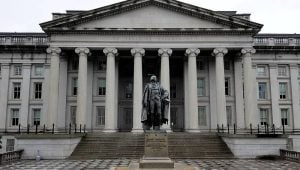
WASHINGTON—Today, the U.S. Department of the Treasury’s Office of Foreign Assets Control (OFAC) is designating a network of individuals, entities, and vessels responsible for shipping hundreds of millions of dollars’ worth of Iranian-origin liquid petroleum gas (LPG)⸺intentionally disguised as Omani LPG⸺to end users in South and East Asia. The network used front companies in the United Arab Emirates and China, foreign bank accounts, and Iran’s shadow fleet to move millions of barrels of Iranian LPG while concealing its Iranian origin and evading U.S. sanctions. OFAC is taking this action to expose the complicit actors enabling an economic lifeline for Iran while exploiting commercial infrastructure to obfuscate their actions.
“Iran’s economy is floundering and its military is decimated,” said Secretary of the Treasury Scott Bessent. “Through Economic Fury, Treasury will continue to sever Iran’s shadow fleet, shadow banking networks, and access to global trade.”
OFAC is also taking action today against Iranian exchange house Mehrdad Geramian Nik and Partners Company and its leadership, who have moved hundreds of millions of dollars of foreign currency on behalf of sanctioned Iranian banks. Iran’s foreign exchange system relies heavily on selected brokers and rahbar companies, which use overseas shell and front companies to conceal Iranian connections, bypass sanctions, and move funds through accounts typically held outside Iran on behalf of Iranian bank customers.
UPDATE: 7:00 PM CEST
Olympians Unite to Speak Out Against Iran for The Execution of the Country’s Star Athletes

A coalition of athletes, including several Olympians, have signed a letter advocating against Iran for its history and plans to execute star athletes, as the planned execution of Iranian boxing champion Mohammad Javad Vafaei Sani looms.
Sani is a boxing champion, coach and political prisoner who is currently facing an imminent risk of execution in Iran by the Ayatollah. He was arrested by the Islamic Revolutionary Guard Corps (IRGC) in March 2020 following his participation in the November 2019 nationwide protests, which were initially sparked by a sudden hike in gas prices. The Iranian judiciary charged him with “corruption on earth,” which is a capital offense in the country.
The Olympians, headlined by women’s tennis legend Martina Navratilova and British swimming gold medalist Sharron Davies, call on world governing powers and sports bodies to intervene to prevent the execution.
“Currently, Mohammad Javad Vafaei Sani, a 31-year-old boxing champion and coach, remains on death row,” the letter states.
“We call on the United Nations, international sports federations, and governments to act immediately to save the lives of Iranian dissidents, including athletes. The world must not stand by while Iran silences its champions. We stand with the victims. We stand for justice.”
Iran Is Hanging Its Sports Stars, A Fact Its World Cup Team Know Only Too Well

With just one week to go before the World Cup kicks off in the United States, Iran’s national team has become the quintessential political football.
As players prepare for the biggest tournament in world football, in the shadow of a nasty, on-going conflict between the two nations, a growing international campaign is shining a spotlight on what critics describe as an escalating human rights crisis back home, with athletes among those caught up in a murderous wave of executions and political repression.
And today a joint statement signed by more than 20 leading sporting figures from around the world has accused Iran’s authorities of carrying out one of the most severe crackdowns in decades. The signatories include tennis legend Martina Navratilova, Olympic swimmer Sharron Davies (now Baroness Davies of Devonport), former Australia football captain Craig Foster and a host of Olympians, world champions and former national team stars. They issue a stark warning: Iran’s champions are being silenced, and the world must not look away.
UPDATE: 5:30 PM CEST
UN Nuclear Watchdog Raises ‘Proliferation’ Fears Over Iran Sites
The International Atomic Energy Agency (IAEA) has not seen any activity at key nuclear sites, judging from satellite images, since the start of the Middle East war, a diplomatic source said.
But the IAEA has not had access to some key nuclear facilities in Iran since Israel, joined by the United States, launched a 12-day conflict in June 2025 that included strikes on nuclear sites.
Nuclear facilities have also been hit in the war that erupted on February 28. The IAEA has repeatedly urged access. According to a CNN report on Sunday, satellite images show that Iran has unblocked 50 out of the 69 tunnel entrances bombed by the US and Israel at 18 underground missile facilities.
A diplomatic source said the IAEA had detected “no more movement” at key sites, such as Isfahan and Natanz, since the start of the war.
The Bushehr plant was built and operated with Russian assistance for civilian purposes but was targeted in the war.
UPDATE: 7:00 AM CEST
40 Million Iranians Face Absolute Poverty as the Regime’s Incompetence Fuels Explosive Anger

Iran’s economy has entered a dangerous new phase that temporary monetary manipulations can no longer mask. As the regime continues its destructive policies, runaway inflation is crushing Iranian households and widening the gap between income and living expenses.
According to the regime’s own Statistics Center, the consumer price index saw a massive jump, reaching 619.6 in April-May 2026, an 8.8% increase in just one month. The 12-month inflation rate has hit 53.9%, with point-to-point inflation reaching 77.2%. Point-to-point inflation for basic necessities has surged past 80%, with devastating spikes in everyday essentials: cooking oil (266%), red meat (175%), food (129.8%), vehicles (125%), and water, electricity, and fuel (95%).
Following the regime’s removal of the “preferred currency,” dairy prices have skyrocketed (the preferred currency is an artificial, heavily discounted dollar rate provided by the Central Bank strictly to selected importers). The state-run KhabarOnline website reported that milk prices jumped 137% over the last year, with raw milk prices increasing 29% in the past week alone. According to the Secretary of the Dairy Industries Association, a bag of milk now costs 840,000 rials, a bottle of milk is 980,000 rials, 400 grams of cheese is 2 million rials, and 2 kilograms of yogurt costs 2.3 million rials.
Ex-IRGC Commander Acknowledges Impact of PMOI Nuclear Revelations
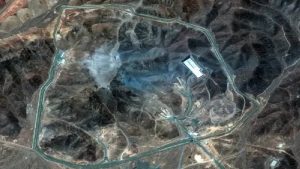
Hossein Alaei says PMOI disclosures led to international scrutiny of Iran’s nuclear program and the 2003 Saadabad negotiations.
In an interview published by the regime-affiliated Iran Talk channel on June 3, 2026, former Islamic Revolutionary Guard Corps (IRGC) commander Hossein Alaei acknowledged that disclosures by the People’s Mojahedin Organization of Iran (PMOI/MEK) regarding Iran’s nuclear activities triggered international scrutiny and eventually led to negotiations between Tehran and European powers.
Alaei, the first commander of the IRGC Navy and a former chief of the IRGC Joint Staff, referred to the period when Iran’s nuclear program first came under international attention.
“Around 2001, when the nuclear work began, the PMOI disclosed information about it and created sensitivity that eventually led to the Saadabad negotiations in 2003,” he said.
Iran’s Inflation Crisis Reaches a New Stage, State Media Warn
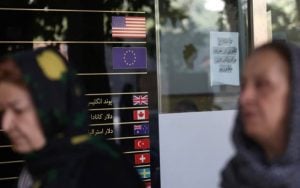
State-affiliated economists say soaring prices, collapsing purchasing power, and structural failures have pushed many Iranian workers beyond inflation and into what they describe as a “survival crisis.”
Two reports published by state-affiliated newspapers on June 2, 2026, reveal growing concern among Iranian economists over the country’s worsening economic conditions. While official figures show inflation already running at some of the highest levels in decades, analysts quoted by the regime’s own media warn that the crisis has evolved beyond rising prices and is increasingly threatening the basic livelihood of millions of Iranians.
According to Jahan-e Sanat, citing data from the Statistical Center of Iran, annual inflation reached 50.6 percent, while point-to-point inflation in April 2026 reached 67 percent compared to April 2025. More strikingly, prices in the goods sector increased by 95.7 percent, while services rose by 39.1 percent over the same period.
Iran: Women Arrested Across Multiple Cities as Crackdown Continues
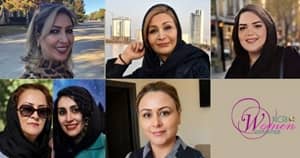
As the clerical regime in Iran intensifies its repression of dissent following nationwide protests, authorities have expanded their campaign against women, teachers, and artists. From arbitrary arrests and prolonged detentions to lengthy prison sentences and the denial of basic rights behind bars, women remain at the center of regime’s crackdown.
At the same time, many detainees continue to be denied fair trial guarantees, medical treatment, and regular contact with their families.
Political prisoner Souri Babaei Chegini is currently serving a three-year prison sentence in Qazvin Prison. She had been sentenced by the city’s Revolutionary Court not only to imprisonment but also to additional punitive measures.
Babaei Chegini was arrested by security forces in Qazvin on January 5, 2026, during nationwide protests. She has now been denied family visits for more than 140 days.
Reza Pahlavi’s Monarchist Movement and the Shadow of Intimidation
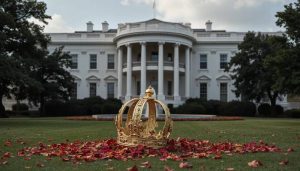
For years, Reza Pahlavi has sought to present himself internationally as a democratic alternative for Iran’s future. Speaking to Western audiences, he frequently invokes democratic values, political pluralism, and human rights. Yet a growing body of reports from journalists, activists, and media organizations in Europe and North America paints a troubling picture of some of the movement’s most vocal supporters. Recent investigations and testimonies have fueled concerns that a segment of the monarchist current has embraced intimidation, harassment, and threats against critics—raising questions about whether the authoritarian culture associated with Iran’s former monarchy has truly been left behind.
A report by Sweden’s national public radio highlighted allegations of widespread harassment targeting critics of Reza Pahlavi and the monarchist movement.
According to the report, threats against journalists, activists, and political opponents have become increasingly common. The investigation drew attention to the contradiction between public calls for democracy and reports of organized campaigns of intimidation carried out by supporters of the former crown prince.
Iran’s Healthcare System Faces Deepening Crisis as Nurses Abandon the Profession

Iran’s healthcare system is confronting an increasingly severe staffing crisis as growing numbers of nurses leave hospitals, abandon the profession, or seek opportunities abroad.
What was once described by officials as a manageable workforce challenge has evolved into a structural crisis that threatens the long-term stability of the country’s healthcare sector. Recent remarks by senior representatives of the Nursing Organization suggest that the problem extends far beyond emigration. A significant number of trained nurses are now choosing to leave healthcare altogether because the profession no longer provides economic security or acceptable working conditions.
The admission is particularly significant because it comes from within the regime’s own healthcare establishment, underscoring the scale of a problem that nurses and labor activists have been warning about for years.
According to comments published by the state-affiliated newspaper Tose’e Irani on June 3, 2026, Yusef Rahimi, First Vice Chairman of Iran’s Supreme Nursing Council, warned that the loss of nursing personnel is accelerating and cannot be explained solely by migration.
Paris Is More Than a Rally—It Is a Political Declaration for Iran’s Future
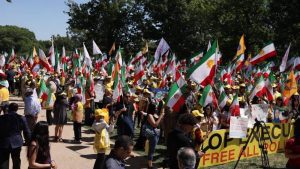
Every nation has moments that transcend the calendar and become part of its political identity. For the Iranian people and their organized resistance, June 20 is one of those moments.
It is not simply the anniversary of a historical event. It represents a defining line between submission and resistance, between accommodation with tyranny and the determination to confront it regardless of the cost.
This year, as thousands prepare to gather in Paris, the significance of that choice is more relevant than ever.
The Iranian regime is facing one of the most profound crises in its history. Years of economic collapse, political repression, corruption, regional adventurism, and international isolation have eroded its legitimacy. Yet history repeatedly demonstrates that the weakening of a dictatorship alone does not guarantee freedom. The decisive question is what political alternative stands ready to shape the future.
That is why the Paris gathering matters.
From the Middle Class to Survival Mode: How Poverty Became Iran’s Defining Crisis
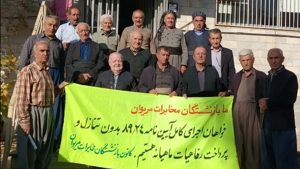
For decades, Iranians have endured recurring waves of inflation, unemployment, economic stagnation, and declining living standards. Yet what was once described as a “cost-of-living crisis” has now transformed into something far more severe. Poverty is no longer confined to society’s most vulnerable segments. It has expanded deep into the middle class, creating a nationwide crisis that is reshaping how millions of people live, work, eat, and plan their futures.
Today, many Iranian families find themselves trapped in a reality where even the most basic aspirations—renting a suitable home, maintaining a balanced diet, obtaining medical care, or purchasing a modest vehicle—have become increasingly unattainable.
The most alarming feature of Iran’s current economic collapse is not merely the growth of poverty, but the disappearance of stability itself.
For years, many middle-class families managed to absorb economic shocks through savings, secondary jobs, or gradual reductions in consumption. That safety net has now largely vanished. Rising prices have outpaced incomes to such an extent that even households with regular employment struggle to cover essential expenses.
Iran’s Aging Fleet Reveals Road Infrastructure Disorder and a Regime Without Solutions
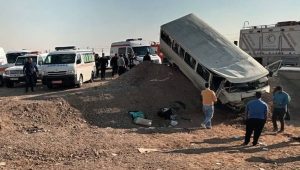
The condition of Iran’s road transportation sector, including its aging vehicle fleet and transportation infrastructure, has once again become a controversial issue. Recent remarks by Alireza Novin, a member of the Iranian regime’s Majlis (parliament), paint a picture of widespread problems in the transportation sector. According to him, these problems range from an aging fleet to deteriorating roads and continue to remain without effective solutions.
In remarks published on June 2 by the state-run Khaneh Eghtesad news outlet, Alireza Novin stated that approximately 60% of the country’s transportation fleet is worn out and obsolete. He described this situation as one of the transportation sector’s major challenges and referred to the fate of thousands of trucks stranded at the Turkish border.
Novin said that approximately 10,000 trucks remain on the Turkish side of the border. According to him, these trucks have been left in limbo without any resolution, and the Turkish government has begun confiscating some of them.
Parviz Sabeti, Notorious SAVAK Torturer, Faces Court After Decades of Silence
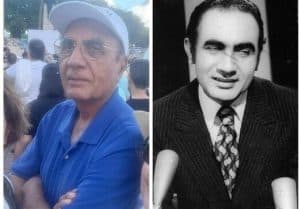
Although decades have passed since the fall of the Pahlavi monarchy, the name of one of the most controversial figures of its security apparatus has once again made headlines. Parviz Sabeti, a senior official of SAVAK—the Shah’s secret police and intelligence organization—and the official responsible for internal security under the Shah’s regime, is now facing a major lawsuit in the United States. The plaintiffs are seeking accountability for allegations including torture, unlawful detention, and widespread human rights violations.
According to a report published by The Guardian newspaper, the man known to his neighbors in the affluent community of Windermere, Florida, as “Peter” is in fact Parviz Sabeti. Many political prisoners from the Pahlavi era regard him as one of the principal architects of repression in the years leading up to the 1979 Iranian Revolution.
For years, Parviz Sabeti lived a quiet and low-profile life with his family in one of Florida’s most luxurious areas. He and his wife, Nasrin Sabeti, established extensive business activities in the construction sector under a new identity and acquired several valuable properties. However, a past that had remained hidden from public scrutiny for decades has now returned to the spotlight.
FIFA Confronts Human Rights Violations in Iran Ahead of World Cup

As the world prepares for the 2026 FIFA World Cup in the United States, Canada, and Mexico, a serious debate is emerging among human rights activists, athletes, and defenders of freedom: should a regime that has, over decades, suppressed, imprisoned, and executed its athletes use football’s most prominent global stage to gain political legitimacy and credibility?
This question is not merely about football. It concerns the relationship between sport and the values that FIFA and international sporting bodies have consistently emphasized values such as human dignity, respect for human rights, and opposition to discrimination and repression.
The global sporting community has not remained silent in the face of certain regimes in the past. The most notable example was South Africa’s apartheid regime, which was excluded for years from international football competitions and many other sporting events due to its racist policies.
Political Prisoner Golrokh Iraee: The Voice of Freedom of Writing Against Repression

Political prisoner Golrokh Iraee is one of the most prominent figures of resistance for freedom of thought in Iran. Having spent years in prison due to her human rights activities and writing about oppression and inequality, she has provided a vivid depiction of repression, censorship, and the role of the pen in fighting injustice in a letter addressed to PEN America. This article introduces the life and struggles of political prisoner Golrokh Iraee and offers a reading of her message regarding the freedom to write. Political prisoner Golrokh Iraee is a writer and human rights activist born in 1980 in Amol. She has been arrested and imprisoned multiple times for writing about stoning, criticizing repressive structures, defending women’s rights, and protesting against executions.
The judicial case-fabrication against her began in 2014, when security agents used an unpublished short story she had written about stoning as a pretext to charge her with “insulting sanctities” and “propaganda against the state.”
From then until today, Golrokh Iraee has been arrested repeatedly, transferred to various prisons, and is currently held as a political prisoner in the women’s ward of Evin Prison.
Can Iran’s Football Team Still Claim to Represent the Iranian People?
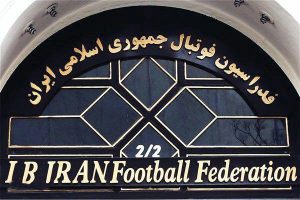
As the world prepares for football’s biggest tournament, a bitter and deeper debate is unfolding behind the scenes: does Iran’s national team truly represent the Iranian people, or has it become a tool for rehabilitating the image of a government that executes its own athletes?
For decades, football was one of the strongest forces of national unity in Iran. Whenever the Iran National Football Team — known simply as Team Melli — stepped onto the pitch, millions of Iranians held their breath together.
Today, however, that sense of unity has fractured in an unprecedented way.
As the national team prepares for international competitions, opposition groups, civil society activists, and human rights organizations are delivering a stark warning to the international community: this team no longer reflects the aspirations of the Iranian people but instead functions as a propaganda shield for the ruling political system.
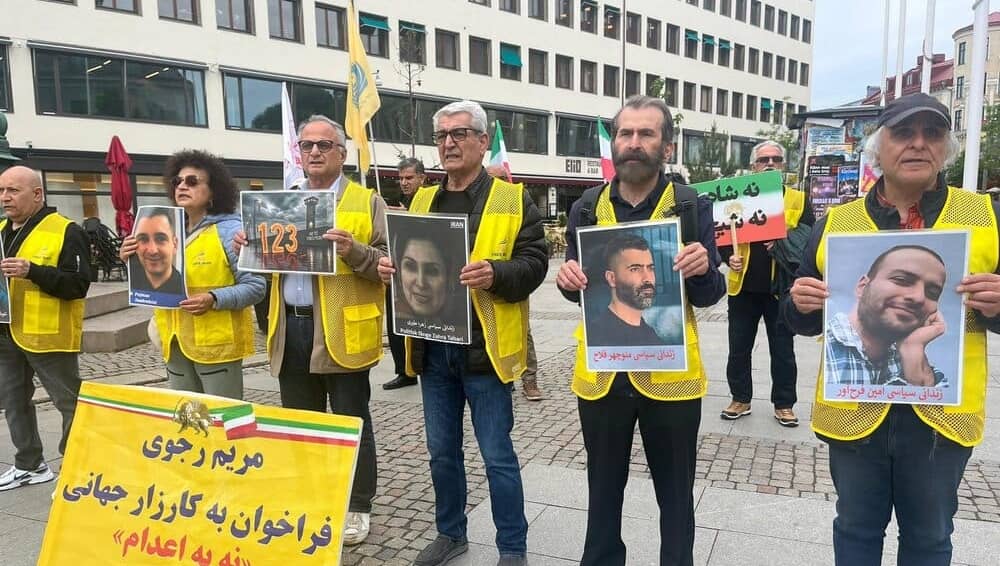
Gothenburg MEK Supporters Mark 123rd Week of “No to Execution Tuesdays” Across 56 Iranian Prisons
Gothenburg, Sweden — June 2, 2026: Supporters of the People’s Mojahedin Organization of Iran (PMOI/MEK) held a rally to mark the 123rd consecutive week of the “No to Execution Tuesdays” campaign, a movement protesting the Iranian regime’s escalating executions and systemic repression.
Gothenburg MEK Supporters Mark 123rd Week of “No to Execution Tuesdays” Across 56 Iranian Prisons #StopExecutionsInIran #FreePoliticalPrisoners #NoDeathPenaltyhttps://t.co/qcfHgK5u6D
— Iran Freedom (@4FreedominIran) June 4, 2026
Protesters condemned the recent execution of political prisoners and demonstrators arrested during the January 2026 uprising. They pointed to the June 1, 2026, execution of two protesters, Mehrdad Mohammadinia and Ashkan Maleki, whom the mullahs’ regime had labeled as leaders of the recent January uprising.
Zurich Exhibition Condemns Iran Executions, Backs NCRI as Democratic Alternative
Zurich, Switzerland – June 2, 2026 – Supporters of the People’s Mojahedin Organization of Iran (PMOI/MEK) held an exhibition in Zurich to protest the execution of PMOI political prisoners, as well as protesters arrested in January 2026. The event also expressed support for the “No to Execution” campaign.
Participants displayed banners reading “No to Executions in Iran” and called for the abolition of the death penalty, urging an immediate halt to executions and the unconditional release of all political prisoners.

The event conveyed a clear message to the international community, urging governments and institutions to stand with the Iranian people rather than any form of dictatorship, and to support their ongoing struggle for freedom, justice, and democracy. Organizers rejected both monarchical and theocratic rule, emphasizing their support for the NCRI as a democratic alternative based on popular sovereignty.