

THIS PAGE WILL BE UPDATED WITH THE LATEST NEWS
UPDATE: 7:30 AM CEST
Tehran’s Escalating War on Political Prisoners Exposes a Weakening Regime


The Iranian regime is dangerously escalating its physical harassment and pressure on political prisoners, highlighted by a brutal, unprovoked raid on Evin Prison. On Saturday, August 1, 2026, at approximately 11:30 AM, prison guards violently assaulted inmates in the political prisoners’ hall of Evin’s Ward 7. The guards severely beat the prisoners and forcibly transferred six individuals to an unknown location, dragging them away despite their injuries and torn clothes.
Five of the disappeared victims are supporters of the People’s Mojahedin Organization of Iran (PMOI/MEK). They include Amir Hossein Moradi, a 26-year-old elite student at Sharif University of Technology who has been held without a single day of furlough since his arrest in April 2020, serving a sentence of six years and eight months. Also targeted were Ehsan Rostami, a sociologist and director of Samandar Publishing and Bookstore, and his cousin Ramin Rostami, both arrested on August 20, 2025.
The other transferred PMOI supporters are 31-year-old Pejman Toobareh-Rizi, who was arrested on January 28, 2025, and sentenced to 20 years in prison, and 58-year-old Mojtaba Taghavi. Taghavi was arrested in March 2024 and sentenced to six years and seven months simply for being the brother of Mohammad Taghavi, a martyred PMOI member executed earlier this year on March 30, 2026. The sixth transferred prisoner is children’s rights activist Afshin Heyratian.
Iran: 32-Year-Old Mother, Mahtab Shir-Mohammadi, Executed in Yasuj Prison

A female prisoner was executed in Yasuj Prison in the early hours of Sunday, August 2, 2026. The prisoner was identified as Mahtab Shir-Mohammadi, a 32-year-old woman from Tabriz and the mother of one daughter.
She had been arrested three years ago on a murder charge and was subsequently sentenced to death. With the execution of Mahtab Shir-Mohammadi at the Prison of Yasuj, the number of women executed in the year 2026, reaches 19. According to data recorded by the Women’s Committee of the National Council of Resistance of Iran, at least 347 women have been executed in Iran since 2007.
Many of the women executed by the Iranian regime are themselves victims of domestic violence and discriminatory family laws. A significant number have acted in self-defense.
Since Masoud Pezeshkian took office, the clerical regime has executed nearly 3,970 prisoners, including 107 women.
Iran Regime’s Regional Proxy Network Shows Signs of Recovery, Raising Security Concerns
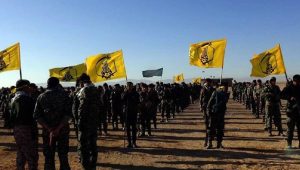
Armed groups backed by the Iranian regime appear to be regaining momentum across the Middle East after suffering significant setbacks over the past several years, according to a report by CNN citing regional analysts.
The assessment suggests that Tehran’s longstanding network of proxy organizations, while weakened by recent regional conflicts and leadership losses, remains operational and is adapting to changing conditions. Analysts argue that the recovery of these groups could strengthen the regime’s ability to exert pressure beyond its borders and complicate regional security dynamics.
For decades, the Iranian regime has pursued a strategy of expanding its influence through allied armed groups operating across the Middle East. These organizations have served as a central component of Tehran’s regional security doctrine, allowing the regime to project power while avoiding direct military confrontation.
Although many of these groups suffered serious losses in recent years—including the deaths of senior commanders and intensified military pressure—they have not disappeared. Instead, analysts believe they are reorganizing and adapting to a new regional environment.
UK Conservatives Call for Iran’s Intelligence Ministry to Be Banned as a Terrorist Organization

Britain’s Conservative Party has called on the government to use newly enacted national security legislation to designate Iran’s Ministry of Intelligence and Security (MOIS) as a terrorist organization, arguing that it poses a threat comparable to the already-banned Islamic Revolutionary Guard Corps (IRGC).
The proposal follows the British government’s recent decision to invoke new emergency powers to proscribe the IRGC and other foreign state-linked organizations under legislation designed to combat hostile activities conducted on behalf of foreign governments.
According to The Telegraph, Conservative lawmakers now want the government to extend those same powers to the MOIS and the Zindashti criminal network, which British officials have identified as closely linked to the intelligence ministry.
Shadow National Security Minister Alicia Kearns argued that while the IRGC has received considerable public attention, the MOIS has played an equally significant role in the Iranian regime’s overseas operations.
Regime-Linked Economists Warn Iran Is Approaching Hyperinflation

Warnings from economists affiliated with the Iranian regime have highlighted growing alarm over the country’s deteriorating economic outlook, with experts cautioning that continued depreciation of the national currency could ultimately trigger hyperinflation.
The latest warning came from Hossein Raghfar, an economist known for his proximity to the regime, who described Iran’s economic situation as “extremely unfavorable” and argued that current monetary and exchange-rate policies risk driving the country toward a far more severe inflationary crisis.
Speaking to the state-affiliated ILNA news agency on Saturday, Raghfar responded to recent remarks by fellow regime economist Masoud Nili, who warned that Iran has reached what he described as the “station before hyperinflation.”
While Raghfar argued that Iran has not yet entered a state of hyperinflation in the technical sense, he acknowledged that the country’s economic indicators are moving in a deeply troubling direction.
He pointed out that prices of many goods have increased by more than 100 percent over recent months. However, he noted that economists generally define hyperinflation as a period in which monthly inflation reaches approximately 40 to 50 percent, a threshold Iran has not yet crossed.
Continued Labor Protests: Telecommunications Retirees Rally in Various Iranian Cities
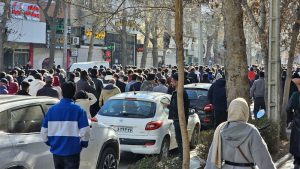
As labor protests continued across different parts of Iran, on Monday, August 3, telecommunications retirees in Bijar County and dismissed workers from the maintenance unit of Salman Farsi Petrochemical Company in Mahshahr held protest gatherings, demanding that their grievances be addressed.
In Bijar, a group of telecommunications retirees staged a protest over their living conditions, the management of the Telecommunication Company of Iran, and the performance of the company’s major shareholders. The protesters identified the Execution of Imam Khomeini’s Order (EIKO), the IRGC Cooperative Foundation, and Mobin Trust Consortium as the principal shareholders of the telecommunications company and called for their livelihood and labor-related demands to be addressed.
At the same time in Mahshahr, 52 dismissed workers from the maintenance unit of Salman Farsi Petrochemical Company gathered outside the governor’s office and the office of the local member of Majlis (parliament), demanding reinstatement and an end to their employment uncertainty.
Raid on Evin Prison’s Ward 7 and the Enforced Disappearances of Six Political Prisoners

Following the receipt of verified and complementary information, on Saturday, August 1, 2026, Evin Prison guard forces launched a violent raid on Ward 7 (housing political prisoners). After severely beating and injuring six political prisoners, officers transferred them to an undisclosed location. As time passes without any official clarification, concerns regarding their torture and enforced disappearance have intensified.
At approximately 11:30 AM on Saturday, August 1, 2026, special guard units at Evin Prison entered the political prisoners’ hall in Ward 7 without presenting any written transfer order or official warrant. The officers subjected six political prisoners to severe physical assault and violence.
The severity of the violence resulted in physical injuries to the prisoners and tore their clothing during the forced extraction. Eyewitnesses described the atmosphere of the ward during the operation as extremely tense and intimidating.
Field reports emphasize that this action was pre-planned and executed under the direct supervision and presence of senior Evin Prison officials. Officials present at the scene include
From Deterrence to Diplomacy: Iran’s Internal Debate Deepens Over U.S. Relations Following Halted Strike
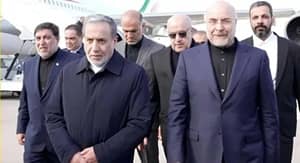
Tehran — Donald Trump’s decision to halt a strike that he had previously said was ready to be carried out has confronted Iran with a choice that extends beyond foreign policy. Inside the country, disagreement over negotiations with the United States has evolved into a broader debate over the definition of victory, the function of deterrence, the cost of continuing the war, and the role of the Islamic Republic’s regional network.
Rather than reflecting a simple divide between the government and its opponents, these disagreements are also visible among factions close to Iran’s power structure. Some conservative writers and media outlets view the halted strike as evidence of a strategic failure by the United States and proof that pressure should continue. Others, including analysts writing in state-affiliated and reformist newspapers, argue that deterrence succeeds only if it opens the way to a political resolution of the crisis.
Trump has said that he called off the attack following requests from Iran and regional countries in order to create an opportunity to reach a swift agreement. Yet there is no consensus in Tehran even over the reasons behind that decision. Amir Ali Abolfath, an international affairs analyst, told Arman-e Melli that the U.S. president typically “raises the level of threats to the highest point” before backing down at the last moment in an effort to place psychological pressure on Iran and compel it to accept Washington’s demands.
Rally in Gothenburg Condemns Executions and Supports a Democratic Republic in Iran
Gothenburg, Sweden – August 1, 2026: Supporters of the People’s Mojahedin Organization of Iran (PMOI/MEK) gathered to protest the Iranian regime’s ongoing wave of executions and to call for an immediate halt to death sentences.

Protesters called on the Swedish government to take decisive action against the Iranian regime over its executions and terrorist activities, including closing the regime’s embassy in Sweden, which they described as a hub for espionage and terrorism. They also demanded the immediate and unconditional release of all political prisoners in Iran.
Iranian Resistance Supporters in Malmö Commemorate the 1988 Massacre Victims and Call for Justice
Malmö, Sweden – August 1, 2026: Iranian Resistance supporters held a rally and exhibition in Malmö to commemorate the 38th anniversary of the 1988 massacre of more than 30,000 political prisoners in Iran. The event also paid tribute to recently executed members of the People’s Mojahedin Organization of Iran (PMOI/MEK) and protesters killed during Iran’s nationwide uprising in January 2026.

The exhibition shed light on the ongoing human rights abuses carried out by Iran’s ruling clerical regime. It recalled the 1988 massacre, in which over 30,000 political prisoners—many of them PMOI supporters and members—were executed.
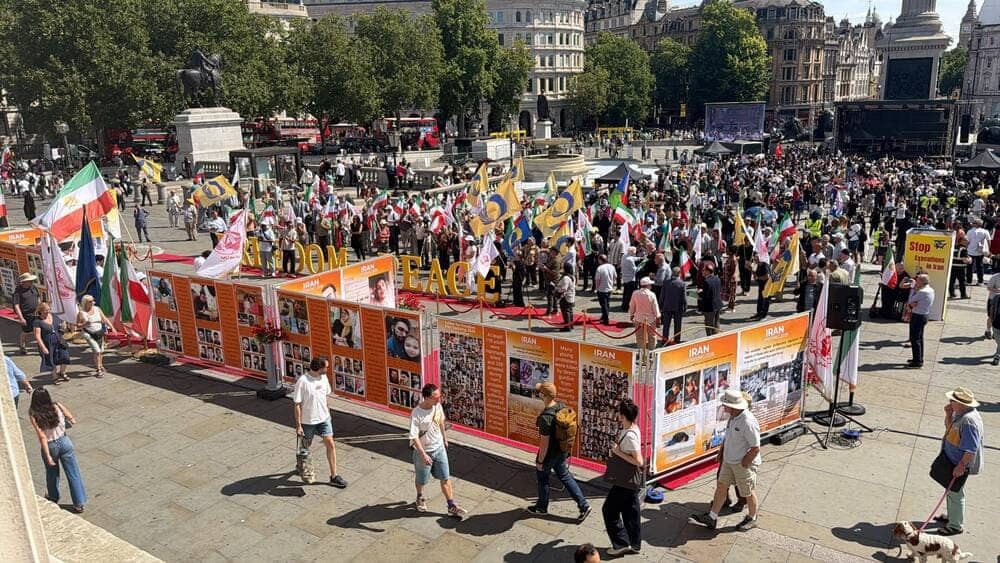
Rally and Exhibition Mark 1988 Massacre Anniversary at Trafalgar Square in London
London, United Kingdom – August 1, 2026: Iranian Resistance supporters held a rally and exhibition at Trafalgar Square on Saturday, August 1, to commemorate the 38th anniversary of the 1988 massacre of 30,000 political prisoners in Iran.
The event was attended by members of the Iranian community in the United Kingdom and supporters of the National Council of Resistance of Iran (NCRI) and the People’s Mojahedin Organization of Iran (PMOI/MEK).

Participants condemned the recent wave of political executions in Iran, including the public executions of two young protesters during the recent uprising, as well as the executions of political prisoners and PMOI members.