

Three-minute read
In the controlled echo chambers of state television and the filtered feeds reserved for the regime’s loyalists—those with pristine white SIM cards and privileged access to the outside world—Iran’s clerical establishment is staging a meticulous theater of survival. Forty-day mourning rites for a slain Supreme Leader, once the singular vortex of military and political power, are broadcast as rituals of unbreakable continuity. Pundits parse the state’s triumph over “the greatest assault of the century.” Generals vow a crushing reply to alleged violations in Lebanon. The Spanish embassy reopens with fanfare, as if diplomacy were merely paused for a summer storm. Military spokesmen insist the ceasefire was accepted on Tehran’s terms; provincial governors promise swift reconstruction of shattered infrastructure. The message is layered, insistent, almost incantatory: We endure. The world could not finish us. Pay no attention to the fissures beneath the victory banners.
It is a bravado born of desperation. The clerical dictatorship has always understood that the end of crisis is the beginning of its own unmaking. For forty-five years the regime has thrived on perpetual emergency—war with Iraq, sanctions, proxy battles, nuclear standoffs—each one furnishing the alibi for repression, the justification for economic plunder, the rationale for silencing dissent. Remove the alibi and the machinery of control stands suddenly naked.
"The 2026 #IranWar, which erupted on 28 February and ended in the fragile Islamabad Accords of early April, laid bare a stark reality: Iran’s two most visible contenders for power are united not by vision, but by their willingness to sacrifice the country itself to secure rule,"…
— NCRI-FAC (@iran_policy) April 8, 2026
Weakened leadership
The contrast with the revolution’s founding moment is stark. Ruhollah Khomeini did not merely lead the 1979 upheaval; he absorbed its entire moral capital. He was its theologian, its warlord, its living constitution. Legitimacy, religious charisma, political hegemony—all flowed through a single man. His successor, Ali Khamenei, never commanded that kind of awe. By the 1990s the regime had already been forced to institutionalize its own fractures, tolerating rival factions under the thin veneer of “reform.” The gesture was merely cosmetic, aimed at Western audiences hungry for signs of moderation, but it also reflected a deeper truth: the system had split along fault lines of ideology, interest, and sheer exhaustion. What began as revolutionary unity had hardened into managed schizophrenia.
Now another succession unfolds in the shadow of fresh graves. Mojtaba Khamenei, elevated beneath the smoke of war, may enjoy the loyalty of the Revolutionary Guards and certain entrenched patronage networks. Yet patronage is not the same as consolidation. The contradictions the conflict papered over—between factions, between generations, between the state and the society it claims to embody—will not remain under the rug once the bombs stop falling. They will push upward like roots cracking pavement.
"In a clear sign of weakness, Iran’s regime has ramped up its use of foreign Shia militias and even child recruits to suppress domestic unrest, exposing the fragile state of its own security apparatus," @HakamianMahmoud writes. #IranWar https://t.co/iYNH4Xg7hS
— NCRI-FAC (@iran_policy) April 6, 2026
Explosive society
And the society is waiting. Millions of Iranians have lived for years under the compounding weight of inflation that devours salaries, blackouts that turn summer nights into saunas, water shortages that turn once-fertile fields to dust, and fuel lines that stretch like accusations. The war did not alleviate any of these afflictions; it intensified them.
Infrastructure damaged by precision strikes will take years and billions to repair—money the treasury, already strained by years of mismanagement and corruption, does not possess. Every unrepaired bridge, every darkened neighborhood, every empty reservoir will serve as a mute indictment of a state that chose confrontation over competence.
Then there is the internet. For months the regime throttled, filtered, and severed the country’s digital arteries, citing national security. The cost to small businesses, to families separated by exile, to an entire generation that lives half its life online, has been incalculable. That cost cannot be sustained indefinitely. When the connections are restored—as they must be—the accumulated grievances will not trickle out; they will surge.
Iranians have spent the war years watching, recording, and remembering: the conscript sons sent to die in someone else’s proxy fight, the mothers mourning in silence, the fathers bartering dignity for bread. The regime’s propaganda may still command the state channels, but it cannot command memory.
"Every execution, every checkpoint, every forced rally, every hysterical warning that “the streets must not be empty” is a scream of terror from a dying dictatorship. If it were not afraid of #IranProtests, it would not need to kill Amirhossein Hatami today," writes @SaforaSM…
— NCRI-FAC (@iran_policy) April 2, 2026
Back to the streets
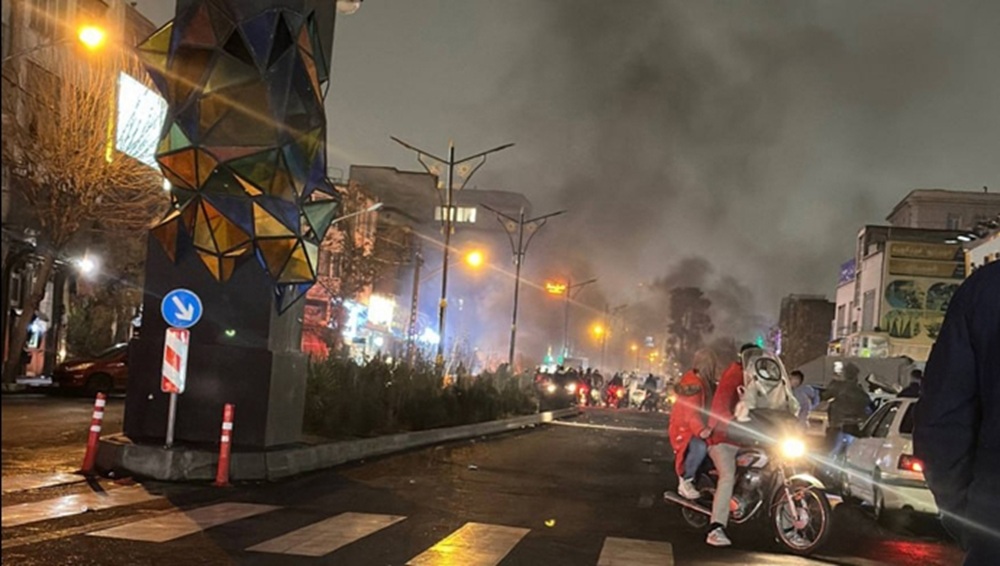
Most dangerously for the authorities, the war has delivered an unambiguous lesson to the Iranian street. The world’s most advanced militaries demonstrated that they could bloody the regime, degrade its assets, expose its vulnerabilities. Yet the deeper deliverance—the removal of the men who have killed their children, imprisoned their sisters, humiliated their brothers—cannot be outsourced. That realization is corrosive to any dictatorship. It shifts the burden of agency back onto the people themselves.
Therefore, on the morning after the ceasefire, every exhausted and exasperated mind, long numbed by the present order, will turn instinctively toward the search for real change and the practical means to bring this regime to an end.
That path will not be found among the sham opposition groups that dressed foreign strikes in the language of “rescue operations” and peddled fantasies of 160,000 soldiers and policemen defecting overnight. Real transformation will begin, as it always has, in the neighborhoods, the universities, and the bazaars—quiet, determined, and impossible to outsource. The regime may still cling to its slogans and its surveillance, but the arithmetic of survival has shifted. Every day without an external enemy is now a day when the internal contradictions must be faced. The house that perpetual war built cannot stand in peace.