

THIS PAGE WILL BE UPDATED WITH THE LATEST NEWS
UPDATE: 01:30 PM CEST
German Intelligence Agency Warns of Pro-Iranian Terror Group

Germany’s domestic intelligence agency, the Federal Office for the Protection of the Constitution (BfV), has raised the alarm: the threat posed by pro-Iranian extremists in Europe appears to be intensifying significantly. According to a report by the Handelsblatt, the agency is particularly warning of a new level of escalation by the group “Harakat Ashab al-Yamin al-Islamiya” (HAYI).
“What is new is HAYI’s warning that it will no longer limit itself to ‘simple’ attacks, but may also incorporate more dangerous methods in the long term,” the agency said in response to an inquiry by Handelsblatt. Security officials fear this could signal a shift from arson attacks to operations involving explosives or firearms.
Since March 9, investigators have recorded several attacks on Jewish and U.S.-affiliated facilities across Europe, including in Germany. In many cases, these were arson attacks, which HAYI later claimed responsibility for in videos. According to the BfV, the acts were “carried out during the night or early morning hours” and have so far not resulted in casualties. Facilities in the Benelux countries and United Kingdom have been particularly affected.
Trump Tells Aides to Prepare for Extended Blockade of Iran: Report

US President Donald Trump has instructed aides to prepare for an extended blockade of Iran, The Wall Street Journal reported Tuesday.
Citing US officials, the report said that in recent meetings, Trump opted to continue squeezing Iran’s economy and oil exports by preventing shipping to and from its ports.
He assessed that his other options—resume bombing or walk away from the conflict—carried more risk than maintaining the blockade, officials added, the report said.
The US and Israel launched a joint offensive against Iran on Feb. 28, prompting Tehran to respond with strikes on what it described as US interests across the region, many of them in Gulf countries.
A ceasefire was announced on April 8 through Pakistani mediation, followed by talks hosted in Islamabad on April 11-12, but the negotiations ended without an agreement.
GCC Secretary-General: No Compromise on Gulf Security… Freedom of Navigation Is a Priority
The 19th consultative meeting of the leaders of the Gulf Cooperation Council was held in the city of Jeddah, at the invitation of King Salman bin Abdulaziz Al Saud and under the chairmanship of Crown Prince Mohammed bin Salman. The leaders discussed developments in the regional situation.
The Secretary-General of the GCC, Jassem Al-Budaiwi, stated that the leaders emphasized the need to pursue a diplomatic path leading to an end to the crisis and the strengthening of stability. They also expressed strong condemnation of these attacks, considering them a violation of state sovereignty and of the United Nations Charter, while stressing the decline in trust toward Iran and the necessity of taking serious steps to rebuild it.
He further noted that the leaders reaffirmed the right of member states to defend themselves, individually and collectively, in accordance with Article 51 of the UN Charter. They stressed that the security of GCC states is “indivisible,” and that any attack on one member state is considered an attack on all.
Iran’s Guards Seize Wartime Power, Weakening Supreme Leader’s Role
DUBAI, April 28 (Reuters) – Two months into a war with the U.S. and Israel, Iran no longer has a single, undisputed clerical arbiter at the pinnacle of power — an abrupt break with the past that may be hardening Tehran’s stance as it weighs renewed talks with Washington.
Since its creation in 1979, the Islamic Republic has revolved around a supreme leader with final authority on all key matters of state. But the killing of Ayatollah Ali Khamenei on the first day of the war, and the elevation of his wounded son, Mojtaba, have ushered in a different order dominated by commanders of the Islamic Revolutionary Guard Corps (IRGC) and marked by the absence of a decisive, authoritative referee.
Mojtaba Khamenei remains at the apex of the system, but three people familiar with internal deliberations say his role is largely to legitimize decisions made by his generals rather than issue directives himself.
UPDATE: 11:30 AM CEST
Iran: Reza Pahlavi’s European Tour and the Problem of Legitimacy

In April 2026, Reza Pahlavi —the son of the deposed Shah of Iran—undertook a high-profile tour of Europe, visiting Sweden, Italy, and Germany. The stated aim was to mobilise political support, engage policymakers, and position himself as a leading figure within Iran’s fragmented opposition. Rather than consolidating legitimacy, the tour exposed the gap between visibility and political credibility, writes Firouz Mahvi, Iranian opposition-NCRI.
Across all three countries, his appearances were marked by protests, institutional distance, and critical media scrutiny.
The culmination in Berlin—where he was denied official meetings and became the subject of a symbolic protest—crystallised a broader pattern: visibility without legitimacy.
Economic Fury Targets Iran Shadow Banking Facilitators
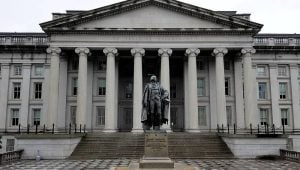
WASHINGTON—Today, as part of Economic Fury, the U.S. Department of the Treasury’s Office of Foreign Assets Control (OFAC) designated 35 entities and individuals that oversee Iran’s shadow banking architecture, facilitating the movement of the equivalent of tens of billions of dollars tied to sanctions evasion and Iran’s sponsorship of terrorism. These networks allow Iran’s armed forces—including the Islamic Revolutionary Guard Corps (IRGC)—to access the international financial system to receive payment for illicit oil sales, purchase sensitive components for missiles and other weapons systems, and transfer money to Iran’s terrorist proxies.
“Iran’s shadow banking system serves as a critical financial lifeline for its armed forces, enabling activities that disrupt global trade and fuel violence across the Middle East,” said Secretary of the Treasury Scott Bessent.
UPDATE: 07:30 AM CEST
Conference at the UK Parliament to Stop Executions in Iran and Support the NCRI Provisional Government
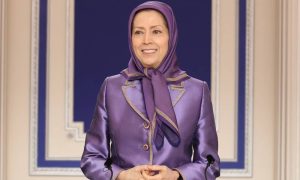
Mrs. Maryam Rajavi’s speech: “Honorable Members of the House of Commons and the House of Lords,
Distinguished friends, Thank you for your attention to the critical situation in Iran and for your valuable solidarity with the Iranian people’s resistance to establish a democratic republic. Today, our people and our country are facing very difficult conditions. On one hand, they are confronted with the many hardships of war, caused by the regime’s nuclear and terrorist projects. On the other hand, a regime that has become fragile and unstable has intensified its campaign of repression against Iranian society. This includes the arrest of thousands of people, the complete and continued shutdown of the internet, and the execution of young people arrested during the uprising, as well as members of the People’s Mojahedin Organization.”
“Since March 19, the ruling clerics have executed 18 political prisoners. Eight of them were members of the PMOI, and the other ten were from among rebellious protesters. They were tried and sentenced to death in unjust courts that violated minimum judicial standards. They had been deprived of all their rights, subjected to torture, and their families were arrested or faced with threats and abuse.”
Iran’s Human Rights Crisis: MEP Petras Auštrevičius Calls for EU Accountability
In an exclusive interview with Simay Azadi, MEP Petras Auštrevičius criticized the European Union’s “too slow” response to the escalating human rights crisis in Iran, while calling for a fundamental shift in Western strategy toward supporting a total regime change. Highlighting the lack of accountability for those behind the wave of executions, Auštrevičius said, “Names might change, but the regime will not,” urging the international community to prioritize the freedom of the Iranian people over economic interests like oil and gas.
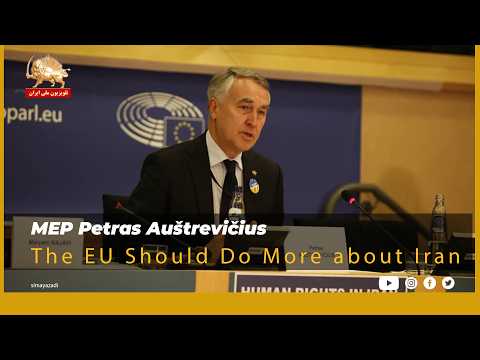
Q: Thank you very much, Mr. Auštrevičius, for this interview. First of all, tell us what the European Union and the European countries should do when it comes to Iran’s human rights situation.
Petras Auštrevičius: I’m sure we have to do much more. From time to time we express our full support for human rights and especially voicing strong concerns about the human rights violations, but we do probably too little, if anything.
O Mothers of Iran: A Manifesto of Unyielding Resistance to Misogynistic Barbarity
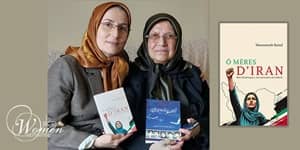
Through the deeply moving story of the Ebrahimpour family, Massoumeh Raouf delivers, with Ô Mères d’Iran (O Mothers of Iran), a masterful work that transforms grief into an act of political resistance.
By the Women’s Committee of the National Council of Resistance of Iran
Published by Éditions Intervalles in Paris, Massoumeh Raouf’s latest work, Ô Mères d’Iran (O Mothers of Iran), reaches far beyond the bounds of a simple testimony to assert itself as a major political and moral statement in the face of religious dictatorship.
At once a life narrative, a document of contemporary history, and a rallying cry, the book is rooted in the brutal reality of Iran under both monarchical rule and the regime of the mullahs. It explores a space where the maternal figure ceases to be merely a symbol of affection, becoming instead the meeting point between individual memory and a collective tragedy orchestrated by the state. Through the fate of Fatemeh Eslami, better known as Mother Ebrahimpour, the author brings to light a truth the regime is desperately attempting to erase from public consciousness.
Female Inmates Join Week 118 of Hunger Strike Despite Threats
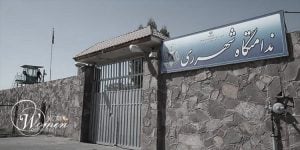
The “No to Executions Tuesdays” campaign has announced that, in its 118th consecutive week, prisoners in 56 facilities across Iran have once again engaged in a coordinated hunger strike.
According to a statement released by the campaign, protesting inmates have resumed their strike despite intensified pressure and sweeping restrictions, in response to the increasing use of the death penalty. This protest movement, now one of the longest-running and most sustained forms of resistance inside Iran’s prison system, reflects the prisoners’ continued opposition to capital punishment.
A significant proportion of these prisoners are women political prisoners, currently serving their sentences in the women’s ward of Evin Prison (Tehran), Qarchak Prison (Varamin), the women’s ward of Sepidar Prison (Ahvaz), the women’s ward of Adelabad Prison (Shiraz), the women’s ward of Zahedan Prison, the women’s ward of Yazd Prison, and the women’s ward of the Lakan Prison in Rasht.
Iran Regime’s Revolutionary Courts: Instruments of Repression Disguised as Justice
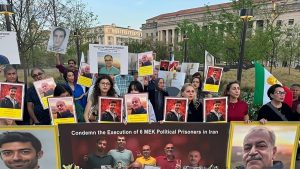
Since the escalation of nationwide unrest in January 2026, the Iran regime’s judiciary has sharply intensified its use of the death penalty. Even amid wartime conditions—when court operations were partially disrupted and due process severely compromised—death sentences not only continued but increased. This trend underscores a broader reality: executions are not incidental within the Iran regime; they are strategic. The issuance and implementation of death sentences remain among the most severe mechanisms of repression employed by the Iran regime. At the center of this system are the Revolutionary Courts—judicial bodies that have, for decades, functioned less as instruments of justice and more as enforcers of political control.
Established in the immediate aftermath of the 1979 revolution by order of Ruhollah Khomeini, these courts have operated with sweeping authority. From the era of Sadegh Khalkhali, their first head, to the current judiciary leadership under Gholamhossein Mohseni Eje’i, thousands have been sentenced to death on vague or politically motivated charges, often without fair trial standards.
Unemployment in Iran: A Silent Engine of Social Erosion

Today, unemployment in Iran increasingly resembles an invisible queue—millions of educated young people standing in limbo, with neither realistic prospects for employment nor a clear vision for their future.
What was once considered a conventional economic indicator has evolved into a mechanism of gradual social erosion. Even before the recent war, millions of young Iranians faced a harsh reality: precarious employment, insufficient income, and forced detachment from their fields of expertise. Now, amid intensifying economic and military pressures, this condition has escalated into what can only be described as a form of “economic warfare against society.”
Unemployment in Iran is not cyclical—it is structural. Under the system of Velayat-e Faqih, long-standing policies have systematically weakened productive sectors of the economy. Dependence on unstable revenues, rent-seeking practices, and the suppression of an independent private sector have eroded the labor market’s capacity to absorb skilled workers.
Iran Regime’s Shift Toward Praetorian Rule Signals Deepening Crisis

In the aftermath of sustained war-driven policies and the broader consequences of its strategic decisions, the Iran regime is exhibiting clear signs of structural transformation. What was once presented as a hybrid political system is now increasingly diverging from conventional governance models, moving decisively toward a concentration of power within security and military institutions. Over recent years, a gradual yet unmistakable shift has taken place within the Iran regime. Formal state institutions have seen their influence diminish, while security and military bodies have expanded their authority across political and executive domains. This evolving dynamic aligns with what political theory defines as “praetorian governance.”
At the center of this transformation stands the Islamic Revolutionary Guard Corps (IRGC), whose role has expanded far beyond its original military mandate. Its growing influence across political, economic, and administrative spheres has blurred the boundary between formal governance and parallel power structures. Decision-making is now increasingly concentrated within opaque and restricted circles, eroding institutional transparency and accountability.
Iran’s Regime Nearing Oil Export Deadlock
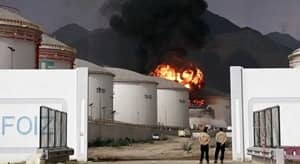
Bloomberg, citing the analytics firm Kpler, reported that the Iranian regime is facing a growing oil storage crisis, with remaining spare capacity to store crude oil expected to last only about 12 to 22 more days.
According to the report, a naval blockade by the United States against ports controlled by the Iranian regime has sharply reduced oil exports, and the loading of crude oil from these ports has dropped by about 70%.
Kpler states that crude oil exports by the Iranian regime have fallen from an average of about 1.85 million barrels per day in March to around 567,000 barrels per day. At the same time, tanker traffic through the Strait of Hormuz has nearly stopped, and the firm reported that it has not observed any tanker successfully bypassing the United States naval blockade around the area.
Restrictions, Pressure, and Detention of Families of Opponents of Iran’s Regime

According to a report by Sky News on April 26, Iran’s regime has intensified its repressive policies against opponents.
In recent weeks, the policies of Iran’s regime toward opposition figures living abroad have seen a noticeable escalation; policies that have not been limited to direct political prosecution but have expanded to include legal, administrative, and financial pressure tools, the imposition of restrictions that prevent them from managing their assets, and also targeting their relatives inside the country. Opponents and observers have described these actions as transnational repression.
Since the start of the war, legal and media reports have documented numerous cases in which repressive authorities of Iran’s regime have detained or summoned family members of opposition figures and activists living abroad; an action viewed as a direct pressure tool to silence dissenting voices.
Iran’s Regime Ramps Up Execution of Baluch Political Prisoners to Control Society
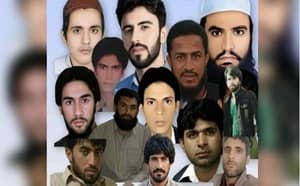
Documented reports from recent years show that the execution of Baluch political prisoners in Iran has become a consistent and recurring pattern. This process begins at the stage of arrest and continues through to the implementation of the sentence. At all stages, there are signs of widespread human rights violations. Data published by the Baluchestan Human Rights Documentation Network presents a consistent picture of this process over the period from 2013 to 2026.
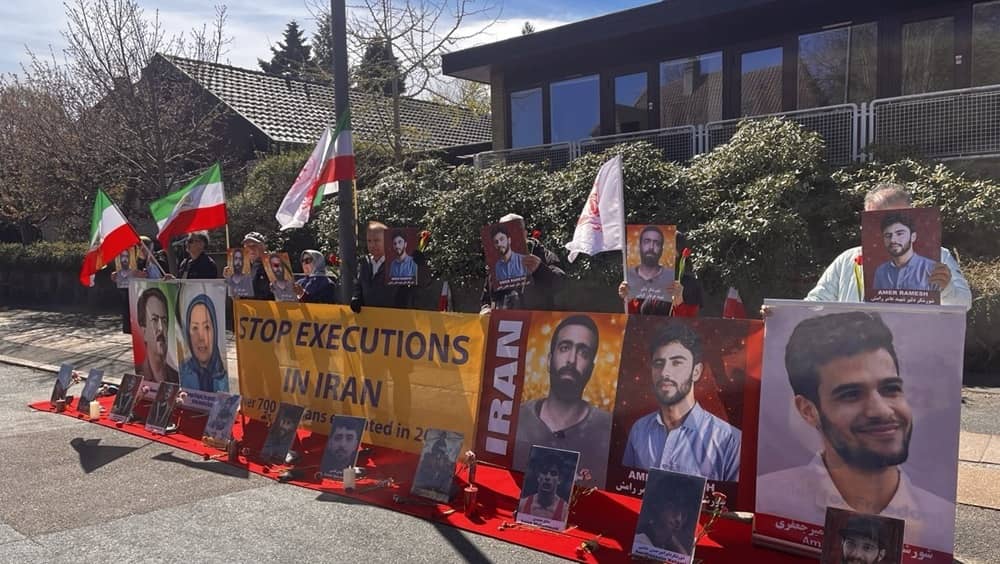
In these cases, executions have mainly been carried out based on security-related charges. Accusations such as “armed rebellion” (baghi), “enmity against God” (moharebeh), and “corruption on earth” (efsad-e fel-arz) have been raised in most instances. These charges are raised in a closed security environment. Many defendants have not had the opportunity to effectively defend themselves. Names such as Amer Ramesh, Abdolbaset Dehani, and Javid Dehghan Khaled appear among these cases. The handling of these cases has lacked necessary transparency.
Born Behind Bars: Tasnim’s Childhood Stolen in Evin Prison

Before her eyes could adjust to the colors of the world, Tasnim learned to see walls. Cold, gray walls that defined the borders of her childhood. She has never run through a park, never felt the wind on her skin, never known what it means to be free. Her world is a confined ward inside Evin Prison—where her father is gone, and her mother could be taken from her at any moment.
In one of the rooms in the women’s ward of Evin Prison, where the air is heavy with the smell of disinfectant and loneliness, a two-year-old girl takes small steps across cold tiles. Her name is Tasnim—a name that evokes the pure, refreshing water of paradise—yet her life has known little but dryness, fear, and confinement.
Tasnim was born in prison. Her mother, Nasimeh Eslam-Zehi, a Baloch political prisoner, gave birth to her inside those narrow cells. From her very first breath, the sound of iron doors closing became part of her world.
Sydney Rally Condemns Executions of Political Prisoners, Calls for Action Against Iran Regime

Sydney, Australia – April 25, 2026 – Supporters of the People’s Mojahedin Organization of Iran (PMOI/MEK) gathered to condemn the executions of PMOI political prisoners and protesters of the January 2026 uprising carried out by the Iranian regime, and to honor their memory.
Gothenburg Rally Condemns Executions, Honors Dr. Kazem Rajavi, Backs NCRI Democratic Alternative

Gothenburg, Sweden — April 25, 2026 — Supporters of the People’s Mojahedin Organization of Iran (PMOI/MEK) gathered to commemorate the anniversary of the assassination of Dr. Kazem Rajavi. Freedom-loving Iranians paid tribute to Professor Rajavi,, a distinguished human rights advocate and a symbol of resistance against tyranny.