

Three-minute read
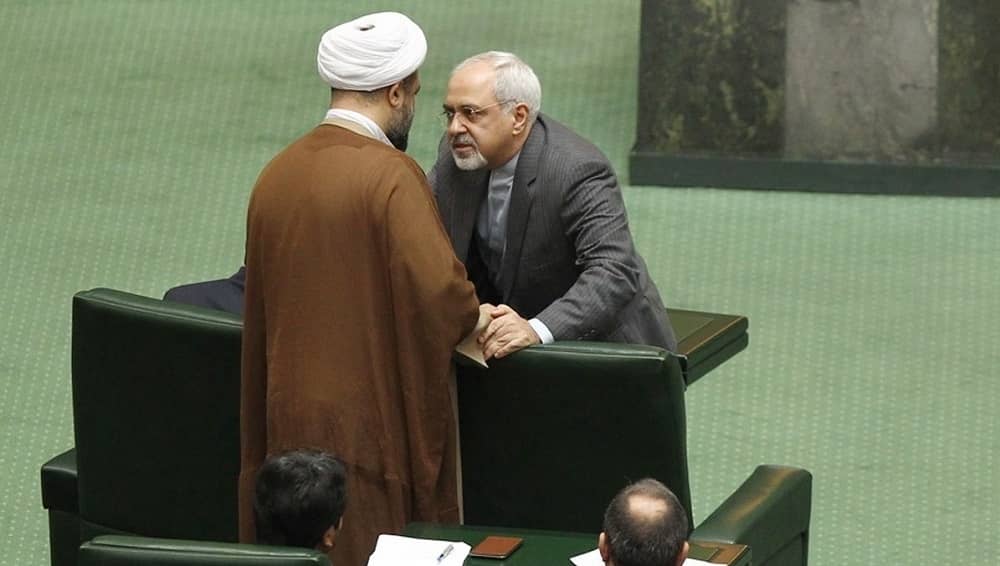
The latest infighting inside Tehran is no longer a routine dispute between “hardliners” and “moderates.” It reflects a deeper struggle between rival camps advancing competing survival strategies for the regime amid nuclear deadlock, economic crisis, and fears of social explosion.
One faction — centered around ideological hardliners and elements closely tied to the system’s security apparatus — fears that negotiations with the United States will inevitably lead to concessions and eventual submission. From their perspective, any retreat in the nuclear file or regional posture would shatter what remains of morale inside the regime’s security forces, proxy networks, and already demoralized ideological base.
The opposing camp, increasingly composed not only of traditional revisionists but also figures long associated with Ali Khamenei himself, argues that refusing compromise could trigger something even more dangerous: war, maritime strangulation, economic collapse, and ultimately nationwide uprising.
Iran’s regime, militarily degraded after #IranWar and confronting economic collapse, drought and a nationwide internet blackout, is relying almost entirely on psychological warfare and #propaganda to project strength and buy time, @shahriarkia writes.https://t.co/ozRu1iOhnp
— NCRI-FAC (@iran_policy) May 15, 2026
Araghchi Admits Nuclear Deadlock
This strategic divide surfaced publicly after regime Foreign Minister Abbas Araghchi acknowledged on May 15, 2026, in New Delhi that talks with Washington over enriched uranium had reached “almost a deadlock.”
According to the state-run outlet Tabnak on Friday, Araghchi admitted: “The issue of our enriched materials is extremely complicated and we have almost reached a deadlock with the Americans on this particular issue.”
The statement was more than a diplomatic update. It was effectively an admission that Tehran remains trapped between two existential fears: concessions that may signal weakness internally, or confrontation that may accelerate collapse externally.
"The infighting is taking place while the regime hasn’t decided about the course—concession or going to #IranWar. Once the final decision is made, a major fracture is expected to weaken the regime severely, exposing it to the outburst of social anger that is witnessing these…
— NCRI-FAC (@iran_policy) May 12, 2026
Fear of Weakness and Collapse
For the regime’s hard core, the danger lies in appearing weak. Figures associated with the Paydari current increasingly portray negotiations as a pathway toward internal erosion similar to what they believe followed the 2015 nuclear deal. Despite years of bold rhetoric, anti-American messaging, and claims of strategic independence, the regime’s leadership is now compelled to sit across from what it internally describes as the “killers of the martyred leader” and representatives of the same powers it accuses of targeting its highest military ranks and frontline security personnel.
On May 14, MP Hamid Rasaee openly warned that parliament had effectively been shut down to prevent lawmakers from obstructing “ongoing negotiations with the enemy.”
Rasaee revealed that the secretary of the Supreme National Security Council had allegedly stated “it is not expedient for parliament sessions to be held.” He claimed the goal was to stop parliamentary “warnings and oversight” from interfering with negotiations.
"History suggests that mass repression can suppress symptoms without resolving causes. None of the structural grievances that fueled the uprisings since 2017 have disappeared. Instead, they have accumulated," @MehdiOghbai writes on #IranRevolution2026.https://t.co/Fvoi43hUPl
— NCRI-FAC (@iran_policy) May 9, 2026
Parliament Shutdown Exposes Regime Anxiety
The closure of parliament for more than two months has become a symbol of the regime’s broader internal paralysis. Rasaei argued that secrecy serves only one purpose: preventing regime supporters from realizing the scale of potential concessions. Earlier this month, he attacked the “confidential” nature of Tehran’s proposals to Washington, arguing that “the enemy knows everything, but the people and even parliament representatives do not.”
MP Amirhossein Sabeti echoed those concerns, demanding “transparency” from Araghchi and warning against another hidden compromise. “The condition for trust is transparency and honesty with the people,” he declared during public gatherings.
"Iranian state media and insiders reveal a regime that possesses no real internal strength, economic resilience, social capital, or diplomatic cards left to play. It is openly counting on political turmoil inside the #UnitedStates and the global headache of disrupted shipping and…
— NCRI-FAC (@iran_policy) May 4, 2026
Revisionists and Security Fears Over Social Explosion
The other camp’s calculation is shaped less by moderate tendencies and more by the fear that prolonged pressure — sanctions, maritime tension, and economic contraction — could push society toward another uncontrollable rupture. In their view, the greater risk is not compromise, but systemic overload: a combination of economic exhaustion and political paralysis that could trigger mass unrest.
This concern is most clearly reflected in repeated references to the 2019 fuel crisis, when a sudden increase in gasoline prices triggered nationwide protests that escalated rapidly into one of the most serious challenges to the Islamic Republic in decades, resulting in widespread unrest and a severe security response.
In his remarks, Hamid Rasaee directly linked current debates over fuel subsidies and pricing to that precedent, warning that new adjustments to gasoline quotas and prices — reportedly including increases in higher-tier fuel prices to as much as 15,000–20,000 tomans — could reproduce similar instability dynamics. His intervention frames the issue not as a policy dispute, but as a question of regime stability under conditions of economic pressure.
"Amid mounting military and diplomatic pressure, the Iranian regime’s ruling cliques are tearing each other apart over whether to pursue negotiations with the United States, extend the ceasefire, or double down on confrontation," @MasumehBolurchi. #IranWar…
— NCRI-FAC (@iran_policy) May 1, 2026
Hormuz and Internet Control
Araghchi’s remarks on the Strait of Hormuz also reflected Tehran’s attempt to maintain leverage while under pressure. He stated that Tehran is coordinating with Oman regarding the future management of the strategic waterway and insisted that vessels passing through Hormuz “must coordinate with the Iranian navy.”
At the same time, internal tensions are spilling into other areas of governance, including cyberspace control. State-affiliated outlets sharply criticized the regime’s president Masoud Pezeshkian after he appointed Mohammad Reza Aref to oversee cyberspace management rather than easing internet restrictions.
The state-linked website Entekhab criticized the move on May 14, while Jahan Sanat on May 15 described the policy as a “government show to continue the absurd internet farce.” Critics warned that internet restrictions are crippling businesses, media outlets, and public trust at a time of mounting instability.
"Deepening internal divisions within Iran’s ruling establishment have come into sharp focus in late April 2026, as officials, lawmakers, clerics, and state media openly clash over war strategy and #negotiations with the United States," writes @HakamianMahmoud.…
— NCRI-FAC (@iran_policy) April 29, 2026
A Regime Divided Over How to Survive
The regime’s conduct before and during the June 2025 twelve-day war and the subsequent 40-day conflict laid bare the depth of this existential dread. Despite absorbing major military losses and endangering the lives of senior commanders and top leadership figures, Tehran refused to make any visible retreat. For the hardline core, preserving deterrence and projecting defiance remained essential to sustaining morale inside its security forces, ideological base, and proxy networks.
Yet the current disputes reveal a growing conviction among other establishment figures that prolonged economic crisis, institutional paralysis, secrecy, and social pressure could ignite the very danger they fear from within. The conflict inside Tehran is therefore not about diplomacy itself, but about which path is less likely to trigger the regime’s ultimate nightmare: another nationwide uprising converging with organized opposition forces.