

THIS PAGE WILL BE UPDATED WITH THE LATEST NEWS
UPDATE: 7:00 PM CEST
Economic Fury Targets Networks Generating Billions for Iran’s Terrorist Regime
WASHINGTON—Today, as a part of Economic Fury, the U.S. Department of the Treasury’s Office of Foreign Assets Control (OFAC) designated a prominent Iranian foreign currency exchange house and associated front companies that oversee hundreds of millions of dollars in transactions on behalf of sanctioned Iranian banks. Collectively, Iranian exchange houses facilitate billions of dollars in foreign currency transactions each year, enabling the regime and its armed forces to evade sanctions, access the international financial system, and move funds derived from oil and petrochemical sales.
OFAC today also blocked 19 vessels involved in Iranian petroleum and petrochemicals shipments to foreign customers, transactions that have generated hundreds of millions of dollars in revenue. Together, today’s actions further reduce the revenue available to the Iranian regime to develop weapons, support terrorist proxies, and siphon funds outside Iran for personal enrichment.
Europol Disrupts Thousands of IRGC Online Accounts Across 19 Countries

Europol has taken down more than 14,200 online posts, accounts and links tied to Iran’s Islamic Revolutionary Guard Corps, including restricting the IRGC’s main X account — which had accumulated more than 150,000 followers — following the EU’s designation of the organisation as a terrorist group in February.
The operation, carried out by Europol’s EU Internet Referral Unit between 13 February and 28 April, involved law enforcement authorities from 19 countries.
Investigators said the IRGC had built a highly structured digital network spanning major social media platforms, streaming services, blog-hosting sites and independent websites. Content was distributed in Arabic, English, French, Persian, Spanish and Bahasa Indonesia.
India’s Adani to Pay $275m Settlement to US Over Iran Sanction Violations
Dubai: India’s Adani Enterprises agreed to pay $275 million to settle potential civil liability related to apparent violations of US sanctions on Iran tied to liquefied petroleum gas (LPG) imports, the US Treasury Department said on Monday. The US Treasury Department’s Office of Foreign Assets Control (OFAC) said the Indian conglomerate purchased LPG shipments between November 2023 and June 2025 from a Dubai-based trader that claimed to supply Omani and Iraqi-origin gas.
According to OFAC, “red flags should have put AEL on notice that the LPG actually originated from Iran.”
The Treasury Department said Adani Enterprises caused U.S. financial institutions to process 32 U.S. dollar-denominated payments totaling about $192.1 million linked to the shipments.
OFAC said the Dubai-based supplier presented itself as a middleman primarily supplying LPG from Oman and Iraq, but “in reality, the company served as a conduit for illicit Iranian supply to enter the market.”
Germany Urges Iran to Halt Missile Program and Regional Proxy Operations
The German government has renewed its call on Iran to halt its missile activities, curb its regional proxy operations, and submit its nuclear program to international oversight amid ongoing tensions in the region.
Speaking at a government press conference on May 18, government spokesperson Stefan Kornelius said Chancellor Friedrich Merz had repeatedly made Berlin’s position on the Iran conflict clear in recent days and weeks.
“The central issue is that Iran is being called upon to end its provocations and especially its proxy activities,” Kornelius said. He added that Iran’s missile program “must be stopped” and that its nuclear program must be placed under international control and monitoring.
Kornelius also said Tehran was being urged to return to negotiations, particularly regarding the situation surrounding the Strait of Hormuz.
The comments came after a phone call between Chancellor Merz and U.S. President Donald Trump, during which the two leaders discussed major international crises, including Ukraine and Iran. While declining to disclose details of the conversation, Kornelius described the talks as having taken place in a “very good atmosphere.”
UPDATE: 8:30 AM CEST
Why SAVAK Still Haunts Iran’s Political Future

The recent spectacle in Regensburg, Germany, where supporters of Reza Pahlavi marched with banners and T-shirts bearing the insignia of SAVAK, should unsettle anyone who values democracy, human rights, and historical memory. Displaying the emblem of the Shah’s secret police is not mere nostalgia. It signals, more troublingly, a willingness to rehabilitate one of the most feared instruments of repression in modern Iranian—and indeed global—history.
For millions of Iranians, SAVAK was synonymous with terror. Established in 1957 under Mohammad Reza Pahlavi, the organization became the backbone of the monarchy’s authoritarian rule. Armed with sweeping powers and bolstered by foreign intelligence assistance, SAVAK infiltrated universities, labor unions, newspapers, political parties, and even private gatherings. By the 1970s, it had evolved into a vast machinery of surveillance, intimidation, and torture that touched nearly every politically conscious Iranian family.
Its victims came from across the political spectrum: liberals, leftists, nationalists, religious dissidents, intellectuals, students, and members of the People’s Mojahedin Organization of Iran (PMOI/MEK). Amnesty International and numerous historians documented the brutality of SAVAK interrogations, detailing electric shocks, cable whippings, nail extraction, savage beatings, mock executions, and sustained psychological torment. Prisoners described being burned on metal frames and subjected to devices engineered to maximize pain and humiliation. One of the regime’s darkest episodes occurred in April 1975, when political prisoners were executed near Evin Prison after being taken from their cells in handcuffs and blindfolds.
UPDATE: 7:30 AM CEST
PMOI Resistance Units Target Regime Centers in Response to Brutal Execution Spree
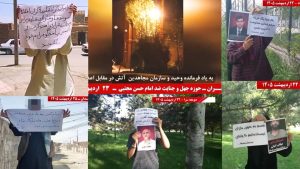
In a bold display of defiance against the Iranian regime’s wave of executions and threats to kill dissidents, PMOI/MEK Resistance Units carried out fiery operations across the country on May 14. These daring acts targeted the regime’s centers and symbols of repression, effectively shattering the state’s intimidation tactics.
The Resistance Units executed 10 specific operations. In Tehran, they set fire to an Islamic Revolutionary Guard Corps (IRGC) Basij base, while in Azadshahr, they targeted a base belonging to the repressive security forces tasked with cracking down on dissidents and protests. Across several cities—including Chabahar, Ilam, Iranshahr, Lordegan, Saravan, and Tehran—Resistance Units torched propaganda posters featuring the eliminated supreme leader Ali Khamenei. Additionally, in Mashhad, a propaganda poster featuring various regime officials and leaders was set ablaze.
Iran’s Police Chief Admits to 6,500 Arrests Amid Rising Executions
Iran’s Police Commander Ahmad-Reza Radan said in an interview with state television on May 18 that authorities had arrested more than 6,500 people accused of espionage, collaboration, or anti-government activity since the start of the recent conflict, adding that 567 cases involved individuals linked to opposition groups.
Iran's Police Chief admits to 6,500 arrests
In this Video Iran Police Chief, Ahmad-Reza Radan confirms:
• 6,500 citizens detained in recent weeks.
• 567 linked to the MEK and other opposition groups.
• Vows to hunt every January protester: “We won’t let them go.” https://t.co/pkB41BvjoR pic.twitter.com/99DmAS1Jsw— Pasha Borjkhani (@BorjkhaniP1847) May 18, 2026
“In the field of traitors and spies, from the beginning of the war until now, more than 6,500 traitors and spies have been arrested… 567 of whom were special cases related to ‘hypocrisy’ and anti-revolutionary groups,” Radan said, using the official derogatory term often applied by authorities to the People’s Mojahedin Organization of Iran (PMOI). He added that arrests connected to the January unrest were continuing.
Radan’s remarks come as Iran’s judiciary has publicly outlined what it describes as the results of its crackdown since February 28, reporting the execution of 29 people accused of espionage, terrorism, or armed unrest, lengthy prison sentences for dozens more, and widespread property confiscations. Authorities also reported the seizure of hundreds of properties and the freezing of bank accounts and cryptocurrency assets belonging to political, media, and cultural figures.
Crushed by Design: Structural Crises and Inequitable Policies Push Female-Headed Households to the Edge
Life for the Iranian people under the religious dictatorship is fraught with hardship and peril from every perspective. Whether through the lens of economic deprivation, poverty, and unemployment; the degradation of the environment and infrastructure; crises involving water, electricity, and air pollution; or devastating floods and earthquakes—the current generations of Iranians are experiencing a living hell. This suffering is further compounded by the comprehensive violation of human rights, characterized by suppression, torture, and executions, as well as the squandering of national wealth on nuclear and missile projects and terrorism, which has effectively led to foreign conflict.
Despite these universal hardships, the misogynistic nature of the ruling clerics ensures that women bear a double share of these calamities. Yet, among women, whether in urban centers, rural areas, or marginalized outskirts, there is a growing demographic known as female heads of household, who are considered the most deprived and oppressed members of Iranian society. This is particularly stark given the reality that in present-day Iran, even conventional families where both parents are employed remain incapable of providing the basic necessities for a middle-class household.
The Return of SAVAK’s Shadows: Why Romanticizing Repression Endangers Freedom

In the quiet streets of Germany, where the memory of dictatorship and war still lingers in the political consciousness of Europe, a dark name has begun to reappear: SAVAK.
For thousands of Iranians, SAVAK was never simply an intelligence agency. It was the sound of prison doors closing in the middle of the night. It was the atmosphere of torture chambers, forced confessions, disappearances, and systematic fear. It represented a machinery designed not only to imprison bodies, but to break the human spirit long before physical destruction became necessary.
That is why the recent public appearance of SAVAK symbols, imagery, and rhetoric among some supporters of Reza Pahlavi in Europe should not be dismissed as harmless political nostalgia. The issue extends far beyond disagreement among opposition factions. What is at stake is the normalization of the language of repression itself.
Every authoritarian project begins by rehabilitating its symbols before rebuilding its institutions. Long before prisons are expanded, fear is aestheticized. Violence becomes romanticized. Torture is reframed as “order.” Secret police become symbols of “strength.” And gradually, through repetition and normalization, cruelty enters public life wearing the mask of patriotism.
When Writing Becomes a Crime: Iran’s War Against Writers, Artists, and Memory

Authoritarian regimes do not fear weapons alone. They fear words, memory, art, and the independent imagination. Streets may become the visible battlefield of repression, but the deeper war is often fought against language itself. In Iran, the regime has spent decades constructing prisons not only for political dissidents, but for poems, songs, books, films, and every form of cultural expression that escapes ideological control.
From the early years after the 1979 revolution, the regime understood that controlling political power required controlling narrative, education, and collective memory. Universities were purged during the so-called Cultural Revolution. The Supreme Council of the Cultural Revolution was established to institutionalize ideological oversight over academia, publishing, and the arts. The Ministry of Culture and Islamic Guidance became the gatekeeper of permissible speech, while censorship evolved into a permanent pillar of governance.
What followed was not merely regulation of culture, but a systematic campaign of intimidation and elimination. Newspapers were shut down. Books were banned or rewritten. Films disappeared into censorship archives. Singers were silenced. Writers were exiled, imprisoned, or murdered. Even today, decades later, the machinery of suppression continues to evolve into harsher and more explicit forms.
Tehran’s Landscape of Abandoned Construction Projects Reflects Iran’s Deepening Economic Crisis

The growing number of unfinished construction projects across Tehran is no longer merely an urban planning problem. It has become one of the clearest indicators of the deepening crisis engulfing Iran’s construction and housing sectors. At a time when the housing market is suffering from soaring prices, collapsing household purchasing power, and a severe shortage of residential units, thousands of building projects across the Iranian capital and other major cities have stalled midway through completion. These abandoned projects have trapped billions of tomans in investments, raw materials, and urban resources, gradually turning into visible symbols of economic stagnation and infrastructural decay.
Construction industry experts warn that the continuation of this trend will not only intensify Iran’s housing crisis but will also generate broad economic, social, and even security-related consequences for urban centers. Buildings that were originally intended to help ease the housing shortage are now becoming hubs of urban deterioration, insecurity, and wasted capital.
Iran Intensified Its Persecution of Baha’is in 2026
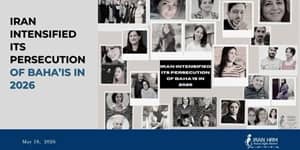
In the spring of 2026, the raid carried out by security agents on the home of a 66-year-old Baha’i woman in Shiraz was not an isolated security operation. Accusing her of “cooperation with Israel,” agents searched the home of Afsaneh Jazabi for hours, confiscating books, religious images, mobile phones, personal documents, and even gold jewelry belonging to the family. The agents then threatened both her and her ill 85-year-old mother with the confiscation of their home and transfer to an undisclosed location. During the raid, the elderly mother suffered a severe drop in blood pressure. Despite her condition, the family was forced to sign a statement declaring that no damage had been inflicted on the property during the operation.
This incident was one of dozens of documented cases recorded during a renewed wave of repression targeting Iran’s Baha’i community in early 2026. The campaign included mass arrests, property seizures, prolonged solitary confinement, denial of medical treatment, pressure for forced confessions, threats against children and family members, and an escalation of state-sponsored hate propaganda.
Empty Tables, Rising Fear: New Reports from Inside Iran

May 18, 2026 | Iran News Wire — Based on citizen reports and documents received from inside Iran. New testimonies from Hamedan, Shiraz, and Isfahan describe worsening economic hardship, rising insecurity, and growing pressure on daily life across Iran.
A wave of reports sent in recent days by citizen journalists from different Iranian cities paints a stark picture of life inside the country. From soaring food prices and collapsing livelihoods to internet restrictions and mounting security pressure, the accounts describe a society pushed to the edge.
The reports, gathered from Hamedan, Shiraz, and Isfahan, focus on three interconnected crises: the worsening economic conditions facing ordinary people, the collapse of parts of the transportation sector, and increasing security and internet restrictions.
MEK Supporters in Gothenburg Protest Executions, back a Democratic Republic in Iran
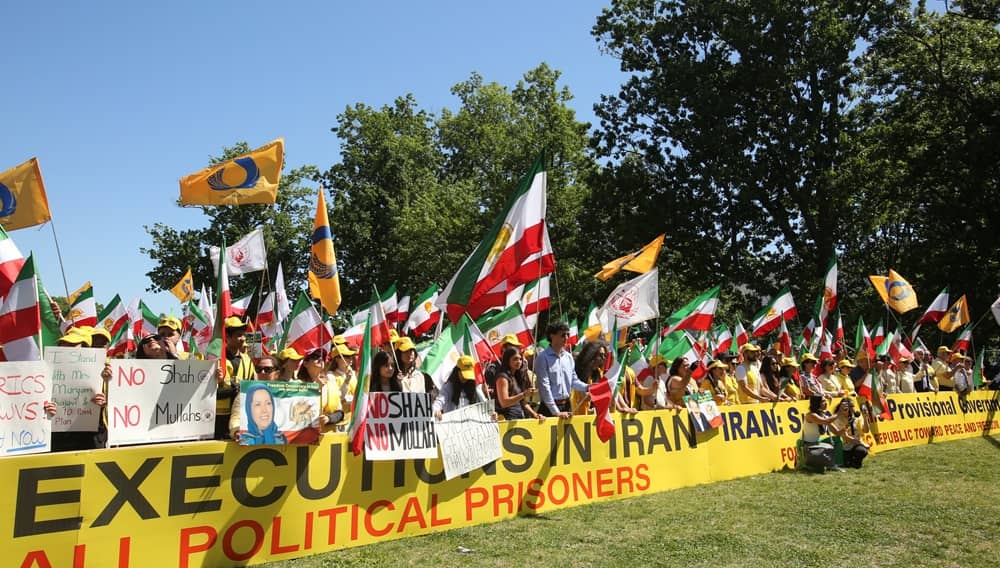
Gothenburg, Sweden — May 16, 2026 — Supporters of the People’s Mojahedin Organization of Iran (PMOI/MEK) gathered to protest the execution of political prisoners in Iran, including PMOI members and individuals detained during the January 2026 uprising.

Demonstrators urged the Swedish government to take firm action against the Iranian regime over its ongoing executions and alleged terrorist activities. They called for the closure of the regime’s embassy in Stockholm, which they described as a hub for espionage and terrorism, and demanded the immediate and unconditional release of all political prisoners in Iran.
Aarhus Rally Condemns Executions in Iran, Backs NCRI as Democratic Alternative
Aarhus, Denmark – May 16, 2026: Supporters of the People’s Mojahedin Organization of Iran (PMOI/MEK) held a rally in Aarhus to protest the executions of political prisoners, including PMOI members and individuals detained during the January 2026 uprising in Iran. They called for the immediate and unconditional release of all political prisoners in Iran.

Participants strongly denounced the actions of Iran’s ruling clerical regime, calling the executions a clear violation of fundamental human rights. Demonstrators honored the victims by displaying their photographs and reaffirmed their determination to continue the struggle against the regime until its overthrow and the establishment of a democratic republic founded on peace, freedom, and justice. They also demanded the immediate and unconditional release of all political prisoners in Iran.