

THIS PAGE WILL BE UPDATED WITH THE LATEST NEWS
UPDATE: 9:30 AM CEST
Resistance Units in Zahedan Reject the Dictatorships of Shah and Mullahs
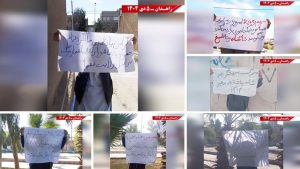
On June 5, PMOI/MEK Resistance Units in Zahedan, southeast Iran, boldly resumed their weekly activities in public spaces. The activists reiterated their unwavering commitment to regime change and their complete rejection of all forms of dictatorship.
These public displays of defiance occur at a time when the ruling regime is at its most fragile and vulnerable point in its history. Following the massive nationwide uprising in January 2026, the regime faces deep-seated popular outrage. Fearing another eruption of protests far more than foreign conflict, the clerical leadership has kept all its repressive forces deployed in the streets.
Activists in Zahedan took to the streets holding placards that condemned both historical and present tyrannies. They proudly highlighted the slogan, “No to monarchy, no to the supreme leader, yes to freedom and equality,” asserting that “Dictatorship is dictatorship, whether with a turban or with a crown.”
Iranian Students, Gen Z, Demand Answers After Years of Empty Promises
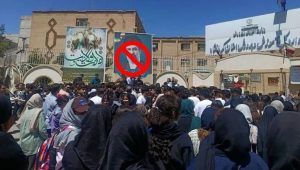
Thousands of Iranian students took to the streets across the country on Saturday, June 6, 2026, launching a nationwide protest against the mandatory inclusion of GPA scores in university entrance exams (the Konkur). The demonstrations, led by Iran’s Gen Z, signify a growing frustration with educational policies that many believe jeopardize their academic futures.
The unrest has spread to more than 20 cities across several provinces. Major demonstrations have been reported in:
- Central & Northern Iran: Tehran, Isfahan, Karaj, Arak, Sari, Rasht, and various cities throughout Gilan Province.
- Eastern & Western Iran: Mashhad, Birjand, Bojnurd, Kermanshah, and Khorramabad.
- Southern & Northwestern Iran: Shiraz, Yasuj, and Tabriz.
In Mashhad, the situation turned tense after protesters gathered outside the Department of Education before moving their demonstration into the building’s courtyard. According to eyewitness reports, authorities locked the exit gates once students were inside, preventing them from leaving.
A heavy presence of Special Units and State Security forces was reported on the scene, resulting in the arrest of several students.
When Law Serves Power: The Legal Debate Behind Political Executions in Iran
The question appears straightforward until it is placed within the context of political repression. In Iran, authorities routinely justify the execution or imprisonment of political dissidents, protesters, and resistance activists through legal indictments that cite offenses against national security, public order, or state institutions.
Official statements often point to charges such as attacking government facilities, damaging public property, confronting security forces, or participating in actions deemed hostile to the state. From the perspective of the authorities, such activities constitute criminal conduct deserving punishment under existing law.
Yet a deeper legal and philosophical question remains unanswered: Is an action criminal simply because a government declares it so, or does the legitimacy of the law itself matter?
Throughout history, governments have frequently invoked legality to justify repression. Authoritarian systems rarely describe themselves as oppressive. Instead, they present their actions as the enforcement of law, the preservation of order, and the defense of security.
Paris 2026: A Gathering for Iran’s Democratic Future
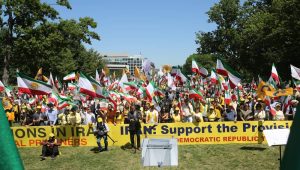
The history of a nation is not measured by ordinary dates on a calendar. It is defined by the decisive moments that alter the course of a people’s future. For many Iranians, June 20, 1981, remains one of those defining moments—a day when the newly established clerical regime openly revealed its intolerance of dissent and responded to peaceful demonstrations with bullets, arrests, and executions.
The events that followed left a lasting mark on Iran’s modern history. Hundreds were killed, thousands were imprisoned, and countless young men and women faced torture and execution for refusing to surrender their beliefs. The crackdown marked the beginning of a systematic campaign to eliminate political freedoms and suppress democratic aspirations that had emerged after the fall of the Pahlavi monarchy.
The significance of June 20 extends far beyond its historical context. It symbolizes a choice that continues to confront Iranian society today: submission to authoritarianism or resistance in defense of freedom and human dignity.
For decades, the Iranian Resistance has argued that the ruling establishment was not merely another political faction born from the 1979 revolution but a system fundamentally incompatible with democratic governance. From this perspective, silence in the face of repression has never been a neutral position. Every concession to tyranny has strengthened the machinery of oppression, while every act of resistance has preserved the possibility of a democratic future.
Regime Insiders Admit That Majority of Iranians Are Dissatisfied
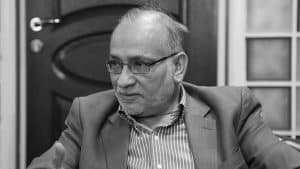
Hossein Marashi, secretary-general of the Executives of Construction Party, acknowledges parts of the social divide between the Iranian people and the Iranian regime. While officials have, over the past years, sought to attribute widespread public protests to foreign actors or opposition political movements, Marashi’s recent remarks have once again drawn attention to the domestic roots of Iran’s political and social crises. His comments, made in an interview with the state-run Etemad newspaper and subsequently reflected in various media outlets, sparked extensive debate about the depth of the social divide between the government and society.
In the interview, Marashi spoke openly about the inefficiency of the economic, social, and judicial structures and emphasized that if the Iranian regime had been able to create a system viewed by the majority of the population as efficient and free of corruption, society’s view of religious rule would also have been different. He stated that administrative corruption, economic problems, and distrust of official institutions have caused a large portion of society to distance itself from the government.
Expansion of Rent-Seeking and Corruption in Iran’s Car Industry

Car imports and the crises resulting from them have become one of the major issues in Iran today. In fact, Iran’s automobile market has for years been plagued by monopoly, unrealistic pricing, and consumer dissatisfaction. In recent years, the Iranian regime promoted an import policy, presenting it as a solution to increase competition and reduce prices. However, market developments show that imported vehicles have not only failed to regulate the market but have also created a new form of monopoly and rent-seeking.
The state-run Eghtesaad24 website wrote on June 5: “Car imports were supposed to unlock the market; with the arrival of foreign vehicles, the monopoly was supposed to be broken, competition was supposed to emerge, and Iranian consumers were supposed to be able to purchase a quality product at a reasonable price after years of waiting. But what has happened in practice is the reproduction of the same old monopoly in a new form, not market liberalization.”
For years, public criticism was directed at domestic automakers. Many believed that the lack of competition had led to declining quality and rising prices. Using the same argument, the Iranian regime advocated for the liberalization of car imports.
Iran’s Terror Cells in Europe: What Was Just Revealed in a London Court

LONDON — Iranian state-sponsored terrorism on European soil has entered a shocking new phase, one in which traditional intelligence operatives have been replaced by the recruitment of European teenagers and transnational criminal networks. Details revealed at London’s Old Bailey court formally exposed this tactical shift, showing how a 17-year-old Norwegian citizen was armed by an Iran-linked Swedish criminal gang to carry out a targeted assassination operation in the United Kingdom.
This latest case involving Iran’s terror cells in Europe highlights a growing security challenge for Western governments and intelligence agencies.
The organized connection between state actors in the Middle East and Scandinavian street gangs represents an unprecedented escalation of the security crisis facing Western Europe. According to documents presented by British counterterrorism prosecutors, the teenage assailant — whose identity remains protected under UK law — was arrested by Metropolitan Police officers in South London only hours before he was due to carry out the murder of a political activist opposed to the Iranian regime.
Paris Exhibition Condemns Executions in Iran, Calls for June 20 Grand Rally
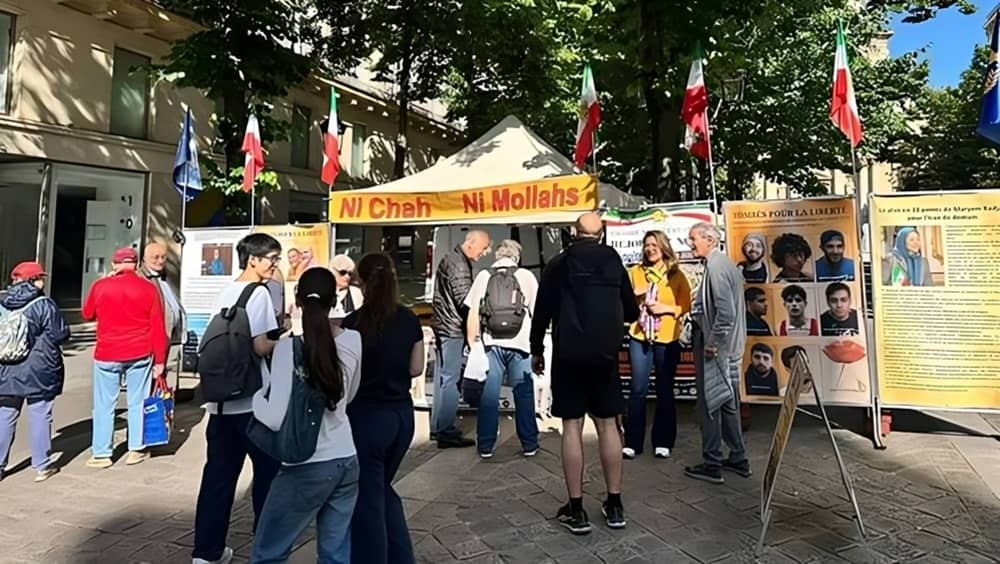
Paris, France – June 5, 2026 – Supporters of the People’s Mojahedin Organization of Iran (PMOI/MEK) held an exhibition protesting the execution of political prisoners and demonstrators following the January 2026 uprising. The event highlighted growing calls for freedom, justice, and the protection of human rights in Iran.

Organizers also issued a clear call to action, urging freedom-loving Iranians and international supporters to join the major rally scheduled for June 20 in Paris under the slogan “A Democratic Republic for Iran.” The rally rejects both monarchical and theocratic dictatorships, emphasizing a third alternative rooted in democracy and popular sovereignty.
Copenhagen: MEK Supporters Condemn Executions, Urge Participation in Paris Free Iran Rally on June 20
Copenhagen, Denmark – June 5, 2026 – Supporters of the People’s Mojahedin Organization of Iran (PMOI/MEK) held a rally to protest the execution of political prisoners and demonstrators following the January 2026 uprising.

Organizers issued a clear call to action, urging freedom-loving Iranians and international supporters to join the major rally scheduled for June 20 in Paris under the slogan “A Democratic Republic for Iran.” The rally rejects both monarchical and theocratic dictatorships, emphasizing a third alternative rooted in democracy and popular sovereignty.