

THIS PAGE WILL BE UPDATED WITH THE LATEST NEWS
UPDATE: 8:30 PM CEST
Treasury Further Dismantles Iranian Financier Zanjani’s Network
WASHINGTON—Today, the Department of the Treasury’s Office of Foreign Assets Control (OFAC) designatedfour individuals and nine entities that form key components of Babak Zanjani (Zanjani)’s broader Iranian sanctions evasion network. Zanjani has leveraged a diverse portfolio—including financial services, gold and precious gem production, digital asset trading, and major transportation and infrastructure projects—to obscure ownership, launder revenue, and expand his capacity to move funds covertly through Iran and offshore.
“The Iranian regime continues to pay a steep economic price for its reckless behavior, with the rial plunging to another record low and inflation up massively,” said Secretary of the Treasury Scott Bessent. “Under President Trump’s leadership, Treasury will continue cutting off economic access for corrupt Iranian regime elites, along with their financiers and facilitators.”
EU Sanctions Iranian Judges Over Persecution of Dissidents, Religious Minorities

The EU on Friday imposed sanctions on five Iranian judges accused of serious human rights violations, including the persecution of political dissidents and religious minorities.
The judges serve in Iran’s regional Revolutionary Courts and have presided over trials involving dissidents, activists, and members of religious minorities, including Nobel Peace Prize laureate Narges Mohammadi, the Council of the EU said in a statement.
The cases were based on “vaguely defined national security and religious charges,” according to the council.
The judges imposed death sentences, lengthy prison terms, flogging, fines and additional punishments on political dissidents and human rights activists, including over their involvement in the 2022 “Woman, Life, Freedom” protests that erupted following the death of Mahsa Amini.
“While the world’s attention is on the war in the Middle East, we can’t lose sight of Iran’s repression against its own people,” EU foreign policy chief Kaja Kallas said on US social media company X.
UPDATE: 7:30 PM CEST
The Hanging of an Iranian Activist Exposes a Regime at the End of Its Rope

Iran’s judiciary announced on Wednesday that it had executed 26-year-old Mehdi Khanaki, a law graduate accused of active participation in the nationwide January 2026 uprising and membership in what the authorities described as a “terrorist group.” The regime’s Mizan news agency did not identify the organization by name. The National Council of Resistance of Iran, however, identified Khanaki as a member of the People’s Mojahedin Organization of Iran, or PMOI/MEK, saying he had been arrested in February after months of surveillance and subjected to severe physical and psychological torture before being sentenced to death.
According to the judiciary, Khanaki had obtained firearms, ammunition, and communications equipment shortly before the uprising, and weapons seized from him had been used during the protests. Whether intended as a judicial announcement or a warning, the message was unmistakable: Tehran was signaling that those who organize resistance against the regime will face the gallows.
The Mullahs Have Dropped the Mask—The Gulf Must Unite to End Tehran’s Reign of Terror

For more than four decades, Iran’s ruling theocracy has perfected the art of plausible deniability. Murder, sabotage, hostage-taking, and terrorism have been carried out through a web of proxies stretching from Lebanon to Yemen, from Iraq to Gaza. Hezbollah, Hamas, the Houthis, and an array of Shi’ite militias served as expendable instruments, allowing Tehran’s clerical rulers to wage war while pretending innocence. That pretense has finally collapsed.
The Islamic Revolutionary Guard Corps (IRGC), the regime’s ideological army and chief instrument of repression, has stepped into the open. Missile and drone strikes launched across the Gulf have exposed the regime’s true character beyond any lingering doubt. Tehran claimed it sought American military bases. Reality tells a far darker story. Bahrain, Kuwait, and Jordan have all endured attacks on civilian infrastructure, including power stations, desalination plants, and vital public utilities upon which millions depend for survival. These were civilian targets. Their destruction serves no legitimate military objective. They provide electricity, drinking water, healthcare support, and essential services for ordinary families. Under the Geneva Conventions and international humanitarian law, deliberate attacks against such facilities constitute war crimes.
UPDATE: 1:00 PM CEST
France, Britain Withdraw Diplomatic Staff from Iran Amid Escalating Tensions
France and Britain have withdrawn diplomatic staff from Iran amid growing security concerns as the conflict between Tehran and Washington escalates.
France has evacuated its embassy in Tehran “due to concerns over recent tensions,” Iran’s state-linked Fars news agency reported.
Britain, meanwhile, said on Thursday that it had temporarily withdrawn its remaining diplomatic staff from Iran.
“Due to the security situation, UK staff have been temporarily withdrawn from Iran. Our embassy continues to operate remotely,” the Foreign Office (FCDO) said on its website.
Britain in June withdrew its embassy staff from Iran, following in the footsteps of other European nations as well as Australia and New Zealand.
US Widens Reward Offer for Information On Company Aiding Iran’s Missile Programme

The US State Department on Thursday widened a reward offer for information about an Iranian company accused of helping to procure materials for the country’s missile programme. In October, the State Department’s Reward for Justice programme said it was offering up to $15 million and possible relocation to the US in return for information about the financial activities of Beh Joule Pars, or BJP, and two of its executives.
“BJP plays an important role in Iranian missile production, helping to procure sensitive materiel to Iran’s weapons industry,” Rewards for Justice said in a statement.
On Thursday, two more BJP employees were added to that reward offer: technical manager Behrooz Derakhshandeh and trade and procurement officer Sara Nemati.
Iran Urged to Stop Protest-Related Executions
 Independent UN human rights investigators on Thursday called for Iran to immediately halt the execution of 10 men who took part in a protest in the central city of Isfahan earlier this year, warning that some of their relatives have already been called for final visits.
The appeal by the Independent International Fact-Finding Mission on Iran follows the 19 July execution of two other men in the same case – Erfan Esfandiari, reportedly 18-years-old, and Gol Mohammad Mohammadi, a 23-year-old Afghan national – which it strongly condemned.
The development is unfolding against a backdrop of longstanding UN concern over the surge in the use of the death penalty in Iran and ongoing hostilities in the region which began in late February.
All 12 men were arrested in connection with protests on 8 January in Isfahan’s Alikhani Square that led to the killing of four members of the security forces.
Gulf States, Jordan Condemn Continued Iranian Attacks, Affirm Right to Self-Defense
The Gulf Cooperation Council (GCC) member states and Jordan on Thursday condemned Iran’s continued attacks on their territories, reaffirming their right to self-defense and calling on the UN Security Council to take urgent action.
In a joint statement, Bahrain, Kuwait, Oman, Qatar, Saudi Arabia, the United Arab Emirates and Jordan said Iranian attacks against their territories, citizens and civilian infrastructure had continued uninterrupted since Feb. 28 and had intensified even after the June 17 memorandum of understanding between the US and Iran.
They said Bahrain, Kuwait and Jordan had been particularly affected by attacks targeting energy facilities, desalination plants, ports, airports and other civilian infrastructure.
The attacks constituted “acts of aggression” that violated the UN Charter, international law, international humanitarian law, UN Security Council Resolution 2817 (2026), and Iran’s commitments under the memorandum of understanding, they added.
UPDATE: 7:30 AM CEST
Iran Ramps Up Executions Under Shadow of War

Paris (France) (AFP) – Vahid Baniamerian’s family only found out he was going to be executed when Iranian state media reports flashed on their phones, saying the supreme court would review his death sentence.
“They did not give any warning. Even the lawyer didn’t know,” a close relative of Baniamerian, based outside of Iran, told AFP, asking not to be identified.
“It was completely illegal, even based on their own oppressive laws.”
Baniamerian, a 34-year-old academic who taught physics, was sentenced to death along with five other defendants on charges of membership of the outlawed People’s Mujahedin (MEK) organisation. All six men have now been hanged.
He is one of dozens of people that rights groups say are political prisoners Iran has executed since the war with the United States and Israel started, from protesters to alleged members of banned groups and people convicted of spying.
Iran has pressed ahead with executions since the earliest phase of the war finished in March, in what activists see as an attempt to instill fear in society and prevent a repeat of the protests that shook the leadership earlier this year.
“I Will Remain a Mojahed and Die a Mojahed”: The Final Testament of PMOI Martyr Mehdi Khanaki

On July 22, 2026, the Iranian regime executed 26-year-old law graduate and member of the People’s Mojahedin Organization of Iran (PMOI/MEK), Mehdi Khanaki. Arrested in February 2026 during massive nationwide protests, Khanaki was subjected to severe torture and sentenced to death in a sham trial on charges of PMOI membership and active participation in the uprising.
His execution is part of a brutal, escalating wave of state violence. Exploiting the fog of war and regional conflicts, Tehran has launched a sweeping campaign of mass arrests and political executions, desperately attempting to mask its own weakness and prevent another uprising.
A recently emerged letter written by Khanaki in September 2024 highlights exactly why the clerical regime is so terrified of the Iranian youth. The letter demonstrates his unshakeable determination to continue the path of the PMOI and his conscious decision to sacrifice his life for a free Iran.
Instead of instilling fear, the regime’s brutality, torture, and executions only serve to harden the resolve of PMOI members and Resistance Units in their struggle to overthrow the religious dictatorship. Khanaki’s words reflect the PMOI’s proud 60-year history of unyielding struggle against two dictatorships—the Shah and the mullahs. It proves that a movement built on such conscious sacrifice is an indestructible force that the regime can never annihilate.
Iran: Political Prisoner Parisa Kamali Denied Medical Care in Yazd Prison
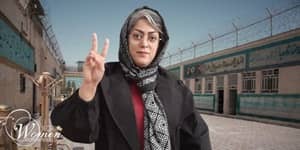
Parisa Kamali, an inmate held in Yazd Prison, continues to be denied adequate medical care despite suffering from hyperthyroidism and requiring specialized treatment.
Delays in specialist examinations, thyroid ultrasound imaging, and the continuation of her treatment have heightened concerns about her physical and psychological condition. Before her arrest, Kamali’s treating physician diagnosed a thyroid nodule and stressed the need for specialized evaluations, regular medical testing, thyroid ultrasound examinations, and continuous treatment. However, since her transfer to Yazd Prison, her medical care has been interrupted, leaving her unable to follow the prescribed treatment plan.
Prior to her detention, Kamali was under the supervision of a medical specialist, and her family consistently monitored her treatment. Given the presence of a thyroid nodule, her physicians considered regular examinations and specialized assessments essential to prevent the progression of her condition.
The Hidden Victimization and Exploitation of Widows in Iran

Exploitation of widows in Iran : Introduction: The survival of the mullahs’ regime rests on two fundamental pillars: overt suppression in society and institutionalized misogyny within its laws. The direct consequence of these two levers is the displacement of millions of female-headed households below the absolute poverty line and their severe exploitation in non-standard labor markets.
However, this is not the whole story; through arbitrary executions and total disregard for work safety in its monopolized industries, the regime’s machinery has itself become a driver of “systematic widowhood” in society. In this second installment of our series of articles, we examine the links between poverty, exploitation, executions, and the tragic work disasters in Tabas and Bandar Abbas.
Just like in every other area of destruction, the corrupt clerical regime provides no statistics on widows—but it is no secret that it is the primary cause of the growing number of widowed women and the descent of Iranian women into deep poverty and suffering.
Iran Nearing Hyperinflation, Regime Economists Warn Amid Deepening Economic Collapse
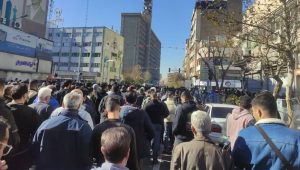
Signs of Iran’s deepening economic crisis are becoming increasingly difficult for the regime to conceal, as senior government economists and officials openly acknowledge the country’s deteriorating financial outlook. In recent remarks, prominent regime economist Masoud Nili warned that Iran has moved beyond chronic inflation and is now approaching what he described as the “threshold of hyperinflation.”
The admissions come amid mounting evidence of economic stagnation, declining investment, shrinking household incomes, and growing public hardship.
Speaking on July 20, Masoud Nili acknowledged the severity of Iran’s economic conditions, attributing the crisis to years of destructive economic policies.
According to Nili, the Iranian economy has progressed beyond the period traditionally characterized as chronic inflation and has entered a far more dangerous phase.
“Inflation in Iran was considered chronic from 1973 until the end of 2018. Since 2019, however, we have moved beyond chronic inflation and entered a period of high inflation.”
The Regime’s Real War Is Against the Iranian People
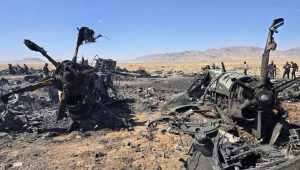
The shadow of war has once again spread across Iran. Yet while the public’s attention is drawn to regional conflict and military developments, another war continues with relentless intensity inside the country—a war waged by the Iranian regime against its own people.
History has shown that whenever this regime faces an external crisis, it seeks to convert that crisis into an opportunity for survival. Under the cover of war, domestic repression is expanded, political space shrinks further, and executions become an increasingly prominent instrument of intimidation. Rather than addressing the country’s mounting economic and social crises, the regime falls back on the tools it knows best: fear and violence.
The contrast between official rhetoric and everyday reality could hardly be starker.
The regime’s president Masoud Pezeshkian recently declared that “the most important battlefield today is the economy and people’s livelihoods.” On paper, such statements suggest that the government recognizes the devastating impact of inflation, unemployment, and declining living standards. For ordinary Iranians, however, the daily reality tells a different story.
Water Crisis and Water Rationing in Iran
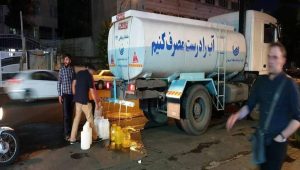
The water crisis in Iran has reached a stage where water outages in various cities have become a daily reality. Meanwhile, reports from domestic media outlets, statistics from relevant institutions, and accounts from citizens show that widespread restrictions on drinking water supplies have affected the lives of millions of people. The Iranian regime is also attempting to portray the water crisis as a natural crisis, while poor management, the overuse of resources beyond their capacity for warmongering purposes, and the effects of drought and climate change have multiplied the severity of the crisis.
At the same time, a citizen said in a video published on July 18 that municipal water had been cut off in some areas of Shahriar for about one week. According to him, residents are turning to water tankers operated by the Tehran Province Water and Wastewater Company to obtain the water they need and are transporting it to their homes in containers.
Iran’s Workers Face Livelihood Crisis Amid War
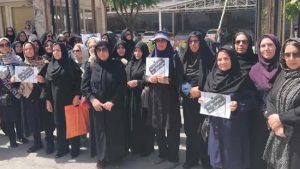
The crisis of unpaid wages in Iran’s production and service sectors has intensified. Amid the current military conflict between the United States and the Iranian regime, many workers have gone months without receiving their salaries and, according to reports, now have only two months of “economic resilience” remaining.
In recent weeks, some businesses and companies that had previously laid off employees have recalled workers to resume operations. However, these workers are now facing unpaid salaries for the Iranian months of Khordad and Tir (May 22 to July 22) and an accumulation of overdue wages.
According to a report published by the state-run ILNA news agency on Thursday, July 23, workers who had turned to jobs such as driving for ride-hailing services to avoid unemployment have now returned to factories but remain deprived of their legally mandated wages and are no longer covered by unemployment insurance.
Crisis of Unpaid Wages for Workers in Southern Iran Amid Escalating War Conditions

The state-run ILNA news agency reported that although officials of the Iranian regime have emphasized the continued operation of public service agencies under the current conditions, many workers in southern Iran have gone months without receiving their wages. Despite being required to report to work during wartime conditions, they are still waiting to be paid.
On Sunday, July 19, ILNA wrote that municipal parks and green space workers in Chabahar and workers on construction projects at Shahid Beheshti Port in Sistan and Baluchestan Province are facing unpaid wages and job insecurity. Reports from Bushehr and Hormozgan provinces also indicate similar problems for workers.
According to the report, unbearable heat, repeated water and electricity outages, and soaring prices have placed additional pressure on working-class households. This situation has been compounded in southern Iranian provinces by unpaid wages, wartime conditions, and insecurity.
ILNA added: “At a time when the country is facing critical conditions, some of these very workers are among the first responders who, following wartime incidents, are responsible for clearing affected areas, maintaining municipal services, and restoring normal conditions.”
Unfair Judicial Process and the Risk of Execution for Defendants in “Isfahan Shohada Square” Case
The case known as “Isfahan Shohada Square” has become one of the most critical and prominent judicial cases linked to the nationwide protests of December 2025–January 2026. In this case, 16 detained citizens face judicial prosecution. According to obtained documentation, a significant portion of the charges brought against them carry heavy penalties, including capital offenses such as “Moharebeh” (enmity against God), “destruction of public property amounting to Moharebeh,” “assembly and collusion against national security,” and “propaganda against the system.”
Although this case shares similarities in the number of defendants and charge structures with the well-known “Isfahan Alikhani Square” case, it remains an independent case in terms of subject matter, proceedings, involved individuals, and cited events. A detailed review of the process demonstrates blatant violations of fair trial standards, court sessions held within high-security prison facilities, denial of defense attorneys’ right to access case files, and the infliction of severe torture on defendants to extract forced confessions.
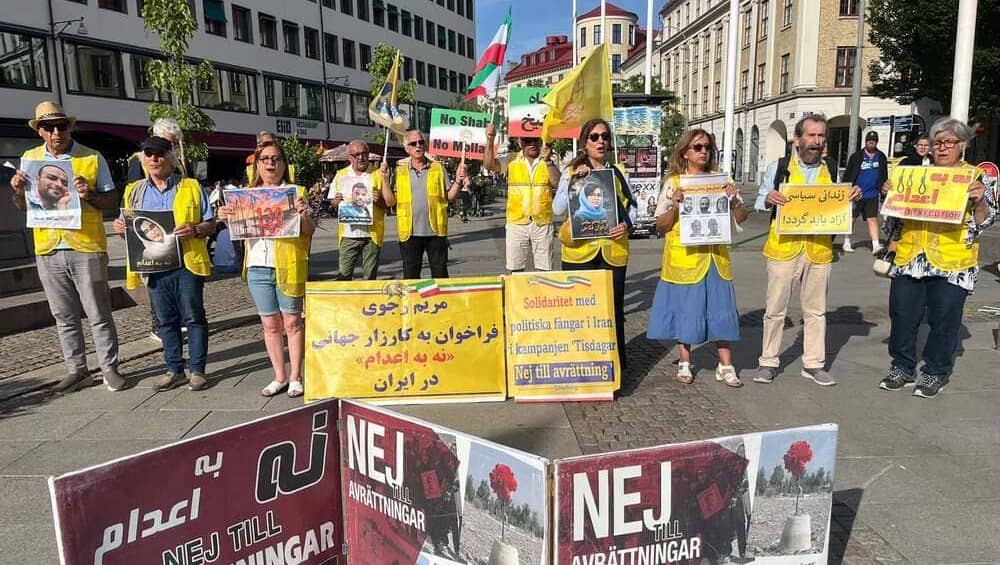
Gothenburg: Rally in Solidarity with the 130th Week of “No to Execution Tuesdays” in 59 Iranian Prisons
Gothenburg, Sweden — July 21, 2026: Supporters of the People’s Mojahedin Organization of Iran (PMOI/MEK) held a rally in solidarity with the 130th consecutive week of the “No to Execution Tuesdays” campaign, a movement protesting the Iranian regime’s escalating executions and systemic repression. Protesters condemned the recent execution of political prisoners and demonstrators arrested during the January 2026 uprising.

Participants also highlighted the regime’s intensifying crackdown, the rising number of executions, and broader repressive measures, including nationwide internet shutdowns. They chanted slogans such as “Down with the executioner regime” and called for the immediate release of all political prisoners.
Freedom-loving Iranians in Gothenburg expressed support for Mrs. Maryam Rajavi, President-elect of the National Council of Resistance of Iran (NCRI), and
Paris Exhibition Condemns Executions, Backs Prisoners’ Hunger Strike, Calls for Democratic Republic in Iran
Paris, France – July 21–22, 2026 – Supporters of the People’s Mojahedin Organization of Iran (PMOI/MEK) organized a book table and photo exhibition condemning the execution of political prisoners linked to the group, as well as protesters arrested during the January 2026 uprising.

The event also expressed support for Iranian prisoners on hunger strike against death sentences, amplifying their demands for justice. It further highlighted the Iranian people’s call for a democratic republic under the leadership of the Iranian Resistance as a path toward peace, freedom, and justice.