

THIS PAGE WILL BE UPDATED WITH THE LATEST NEWS
UPDATE: 7:30 AM CEST
Keith Kellogg Tells Iranian Dissidents The ‘Window Is Open’ To Force Regime Change in Tehran

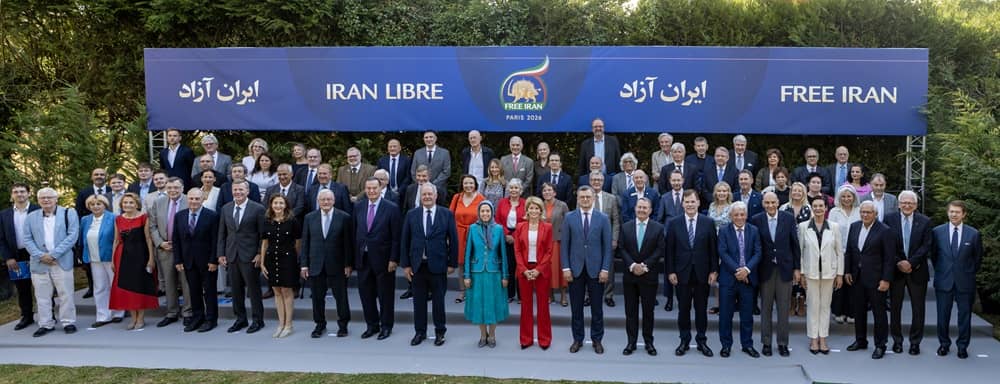
As the Trump administration pushes forward with a new Iran deal, retired Lt. Gen. Keith Kellogg told a Paris gathering of the National Council of Resistance of Iran — an exiled Iranian opposition coalition aligned with the People’s Mujahedin Organization of Iran (MEK) — that Tehran’s rulers are weaker than they have been in decades and urged dissidents to seize what he described as a historic opening.
“The window is open wider than at any moment in a generation, and windows do not stay open forever,” Kellogg said at the two-day event. “The theocratic regime in Tehran will not leave voluntarily. You must force it. The hope is here. Now must come the action.”
Kellogg, a retired U.S. Army lieutenant general and former U.S. special envoy for Ukraine, framed any disarmament agreement not as an endpoint, but as “the first step of something far larger,” saying it should become the foundation for Iran’s future without the current regime.
Iranian Students Protest Imposed Academic Mandates Across Multiple Cities

Iranian students protest entered a new phase on Monday, June 22, 2026, as various cities across captive Iran witnessed rallies by high schoolers and university students. Brave schoolgirls and youth took to the streets to demonstrate against the clerical regime’s anti-cultural, discriminatory policies and abrupt academic decisions. Concurrently, employees of the Kermanshah University of Medical Sciences held demonstrations to protest their dire livelihood conditions.
A large group of Master’s and Ph.D. students from Islamic Azad University—with a remarkably prominent presence of female students—staged a major rally outside the university’s central headquarters in Tehran on June 22. They fiercely protested the regime’s sudden and arbitrary decision to hold final exams in person.
In response to the growing outrage, university officials were forced to make a temporary retreat, announcing a 20-day postponement of the exams. However, the core directive to hold the exams in person remains unrevoked. Rejecting these deceptive maneuvers, the protesting students emphasized that if the decree is not completely overturned, they will resume their protest rally outside the central headquarters tomorrow.
Iran’s Regime Escalates Crackdown After January Protests as Thousands Face Prosecution, Property Seizures, and Death Sentences

Iranian regime judicial authorities have disclosed new details about a sweeping crackdown on participants in the January 2026 nationwide protests, revealing that thousands of judicial cases have been opened across multiple provinces as the regime intensifies efforts to suppress dissent.
Officials in Sistan and Baluchestan, Qazvin, Mazandaran, Zanjan, and West Azerbaijan provinces have collectively reported more than 2,500 legal proceedings related to the January protests, as well as cases connected to the recent conflict involving the United States, Israel, and the Iranian regime.
The disclosures provide a rare glimpse into the scale of the regime’s ongoing repression campaign, which has included mass arrests, security prosecutions, allegations of espionage, property confiscations, and the increasing use of capital punishment.
Mehdi Shamsabadi, the regime’s prosecutor in Zahedan, announced that courts have already issued verdicts against 111 individuals arrested during the January protests.
According to Shamsabadi, some of the sentences have already been carried out, while additional cases remain under judicial review. He also stated that indictments have been issued against individuals accused in cases linked to the recent military conflict involving Iran, the United States, and Israel.
Resistance Units Promote Democratic Republic and Maryam Rajavi’s Ten-Point Plan in Tehran and Shiraz
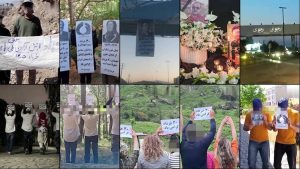
On June 21, 2026, PMOI Resistance Units in Tehran and Shiraz carried out a series of public activities promoting the principles of a democratic republic and expressing support for Mrs. Maryam Rajavi’s Ten-Point Plan for Iran’s future.
Through coordinated photo displays and public messaging campaigns, the activists emphasized key democratic values, including popular sovereignty, free elections, human rights, freedom of expression, gender equality, social justice, judicial independence, environmental protection, and the separation of religion and state. The activities coincided with the Free Iran 2026 gathering and reflected growing support among resistance supporters for an alternative based on democracy and pluralism.
In Shiraz, Resistance Units displayed a series of messages advocating democratic governance and individual liberties.
One display declared: “No to Velayat-e Faqih. Yes to the sovereignty of the people in a republic based on free and pluralistic elections.”
Other messages emphasized freedom of expression, political parties, public assembly, independent media, and unrestricted access to cyberspace. The activists also called for the protection of individual and social rights in accordance with the Universal Declaration of Human Rights, while highlighting the importance of separating religion from the state and guaranteeing freedom of religion and belief.
Inflation in Iran and the Limits of What an Agreement with the United States Can Achieve
A sick political system inevitably produces a sick economy. In an absolute dictatorship where political and social freedoms are suppressed, independent institutions have been dismantled, the rule of law has been replaced by the will of those in power, and the country’s resources are directed towards preserving political rule, the emergence of a healthy, transparent and development-oriented economy is virtually impossible. The profound crisis now engulfing Iran’s economy is not merely the result of one mistaken decision, the incompetence of a particular administration, or a single period of sanctions. It is the direct product of a totalitarian structure that, for nearly five decades, has placed the preservation of its rule above freedom, public welfare and the country’s development.
Within this structure, Iran’s economy has not been managed according to the needs of society, free competition, productive investment and long-term planning. Instead, it has been shaped by the regime’s political and security priorities. A substantial share of public resources, oil revenues, the state budget and the country’s economic capacity has been diverted away from infrastructure, job creation, productivity, public services and higher living standards, and placed at the disposal of military and security institutions, regime-controlled foundations, and regional and weapons programmes. At the centre of this structure stand the Islamic Revolutionary Guard Corps, the Office of the Supreme Leader and a vast network of unaccountable and opaque institutions that control a large part of the economy.
Iran: Minors Military Training – The “Combatant Youths” Scheme to Sustain the Ruling establishment
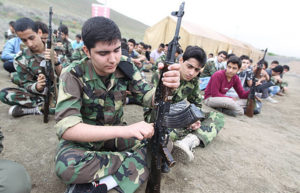
How does the Islamic Republic in Iran violate international conventions and the fundamental rights of children to preserve itself? Alarming reports of systematic violations of the rights of the child have re-emerged in a dangerous dimension. The issue of “weapon training for teenagers in Dishmok” (a town in Kohgiluyeh and Boyer-Ahmad Province) unveils a structural government program known as the “Combatant Youth” scheme. In this initiative, children and teenagers under the age of 18 are subjected to intensive military training, including the handling of heavy combat weapons—an action whose declared objective is “strengthening the spirit of national defense,” but which practically constitutes a flagrant violation of treaties to which Iran is a signatory.
- Children and teenagers are provided with intensive weapon-recognition training.
- Heavy, active combat weapons are placed in the hands of minors.
- Structured military and paramilitary training are administered to schoolchildren.
In recent years, similar programs under titles such as “Combatant Teenager” or “Defensive Training” have been observed in various parts of the country. However, the Dishmok report stands out due to the participation of very young children and the direct deployment of heavy weaponry.
Iran: Remembering the Past to Prevent Future Crimes; the Case of Alireza Shirmohammadali
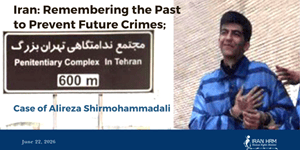
The month of June in Iran serves as a reminder of one of the bitterest events in the history of Iranian prisons; the anniversary of the murder of Alireza Shirmohammadali, a 21-year-old political prisoner who, following his arrest due to online activities and sentence to imprisonment, lost his life after being stabbed in the Greater Tehran Prison (Fashafouyeh). His death was not an ordinary clash among inmates, but rather the result of a chain of decisions and circumstances about which he himself had warned long in advance.
Alireza, a 21-year-old youth from the Naziabad neighborhood of Tehran, was arrested on July 15, 2018 (24 Tir 1397) due to his activities in cyberspace. He was initially held in solitary confinement for 36 days and subsequently transferred to the Greater Tehran Prison. The court sentenced him to eight years in prison on charges including “insulting sanctities,” “insulting the founder of the regime,” and “propaganda against the regime”; a ruling that completely upended the life of this youth and his family. Alireza was the sole breadwinner of his household, and his arrest and imprisonment confronted his family with numerous economic and social difficulties.
The case of Alireza Shirmohammadali is an example of cases in which religious concepts are utilized within the framework of security charges. In practice, the charge of “insulting sanctities” in many instances is linked not to the religious beliefs of the people, but rather to the criticism of political figures and symbols of the ruling establishment. These charges have become a tool in Iran to restrict freedom of expression and to suppress any critical voice against the government.