


THIS PAGE WILL BE UPDATED WITH THE LATEST NEWS
UPDATE: 8:30 PM CEST
Moment Police Stop Express Reporter as Iran Protest Shut Down after Bomb Threat

This is the moment French police refused to allow an Express journalist to interview demonstrators after a ‘Free Iran’ rally was shut down because of a bomb threat. As many as 100,000 anti-Iranian regime demonstrators were expected in the square to campaign for the end of the Ayatollah’s rule. But after reports of reports of two bomb threats – one allegedly linked to the Iranian Revolutionary Guard Corps (IRGC) – a judge in the French capital ordered the march to be cancelled.
Despite the 11th hour ban, tens of thousands of supporters, who had no knowledge of the cancellation, were still due to descend on the capital. Early reports suggested 20 people had been arrested and 12 people seriously wounded in scuffles with police. In one shocking interaction with law enforcement, journalist Paul Baldwin was denied access to interview disappointed demonstrators by a French police officer. In a video of the exchange, recorded by Paul, he says: “I’m not allowed to go in there and report on it?
Shrugging his shoulders, the officer responds “it’s not my problem” to which Paul counters: “You know I am a journalist and you are stopping me from doing my job?”
As the conversation continues the officer, dressed in full riot gear, refuses to judge, and Paul points out: “So you are a French policeman and you’re stopping a British journalist from doing my job?”
UPDATE: 1:00 PM CEST
US Treasury Imposes Sanctions on Lebanese Officials, Others for Aiding Hezbollah
WASHINGTON, June 18 (Reuters) – The U.S. government on Thursday announced sanctions against Lebanese officials it said were aligned with Hezbollah and members of the previously sanctioned Alaa Hassan Hamieh business network, for obstructing Lebanon’s peace process and delaying the disarmament of Hezbollah.
The U.S. Treasury Department said its Office of Foreign Assets Control was also designating individuals in Lebanon, Syria, Iraq, and Oman who it said were raising funds and operating front companies to generate revenue for Hezbollah, an Iran-backed militant group.
Hezbollah, a Shi’ite Muslim group designated a terrorist organization by Washington, has been armed and financed by Tehran since it was founded by the Revolutionary Guards in 1982.
U.S. President Donald Trump said on Wednesday he had spoken to Syria’s leader about combating Hezbollah in Lebanon amid concerns the group will benefit from cash infusions from Iran after a U.S.-Iranian interim memorandum of understanding was signed on Wednesday in a move toward ending the war on Iran.
UPDATE: 10:00 AM CEST
Resistance Units Target Regime Centers to Honor June 20 Uprising Anniversary
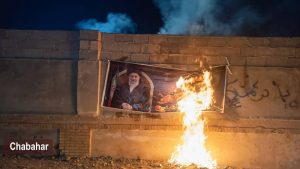
In a powerful display of defiance against the regime’s heavy repressive measures, the PMOI Resistance Units have launched a sweeping campaign of 45 coordinated operations across Iran.
These daring acts commemorate the 45th anniversary of the June 20, 1981 uprising, recognized as the Day of Martyrs and Political Prisoners, the founding of the National Liberation Army of Iran, and the beginning of the all-out resistance against the clerical dictatorship. The Resistance Units boldly targeted the regime’s machinery of suppression, carrying out attacks against numerous IRGC Basij bases in cities across the country, including Tehran, Ahvaz, Eslamshahr, and Qaemshahr. In Zahedan, the units specifically targeted and set fire to several IRGC Basij bases tasked with spying on and suppressing students.
Incendiary attacks and fires also rocked multiple regime facilities in Mohammadshahr, Karaj, Tehran, Iranshahr ,and Farrokhshahr. In Borujen, activists set fire to a center for spreading fundamentalism and terrorism, striking at the ideological core of the regime’s repressive apparatus.
Iran’s Escalating Water Crisis: Energy Imbalance, Popular Protests, and the Role of Women

The water crisis in Iran has transcended a mere natural challenge, evolving into a human, environmental, and economic catastrophe. While the regime has for years attempted to attribute the water shortage solely to declining rainfall and climate change, international researchers and observers emphasize that more than 70 to 80 percent of the current crisis in Iran stems from decades of mismanagement, excessive dam construction, structural corruption, and the unsustainable policies of the clerical regime—decisions that have left the land thirstier and the future of Iranian society darker. However, the consequences of this disaster are not borne equally across all sectors of society. Due to their pivotal role in securing hygiene, managing households, and caring for families, women are the first and primary victims of the country’s escalating drought and water scarcity.
At a time when millions face severe water shortages, Iranian women are forced to bear the heavy burden of livelihood, health, and social insecurities caused by the misogynistic and predatory policies of the mullahs’ regime.
In the first part of this article, we examined the dimensions of the deep imbalance in water resources, the catastrophic depletion of dam reserves, and the initial challenges women face in confronting this crisis.
Iran: Justice Seeking Mother Sentenced to 5 Years in Prison
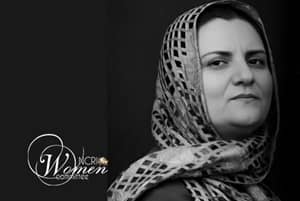
Tayyebeh Nazari Makiabadi, a retired teacher and a justice seeking mother has been sentenced to five years in prison by the Iranian judiciary.
Tayyebeh Nazari, a resident of Sirjan in Kerman Province, is the mother of Maryam Arvin, a lawyer who died after imprisonment during nationwide protests in 2022.
was sentenced by the Revolutionary Court in Mashhad to a total of five years of imprisonment on charges including “assembly and collusion against national security” and “propaganda activities against the state.”
According to the court verdict, the charges against Nazari were based on actions such as traveling from Sirjan to Mashhad, participating in protest gatherings in response to calls circulated on social media, extensive activity on social media platforms, and chanting protest slogans.
Tayyebeh Nazari was arrested on December 12, 2025, during a security forces raid on a memorial ceremony marking the seventh day after the death of Khosrow Alikurdi, a Kurdish lawyer, in Mashhad. At least 40 political activists and members of families seeking justice for victims were also detained during the event.
Iran’s Inflation Crisis Is a Governance Crisis
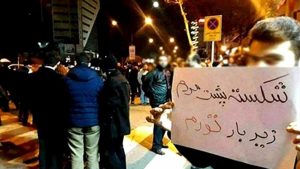
For years, Iranian regime officials have promised that inflation would be brought under control, the national currency would stabilize, and the economy would return to sustainable growth.
Yet the reality experienced by ordinary Iranians tells a different story.
Prices continue to rise. Purchasing power continues to decline. Savings lose value. Investment increasingly flows toward gold, foreign currency, and speculative assets rather than productive sectors of the economy. The gap between official promises and economic reality has become one of the defining features of life in Iran. Recent monetary data provide a stark illustration of this problem.
Independent economists have long warned that rapid growth in the money supply and monetary base would eventually lead to severe inflationary pressures. These warnings were not controversial. They reflected basic economic principles observed across the world. When governments continuously finance deficits through monetary expansion rather than sustainable revenues, inflation is often the inevitable result.
Why the June 20 Paris Gathering Matters for Iran’s Future
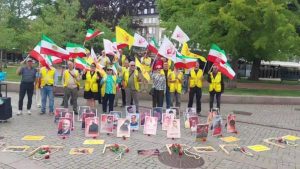
At certain moments in history, political events become more than gatherings. They become markers of a nation’s aspirations, frustrations, and determination to shape its future.
For many Iranians, the upcoming June 20 gathering in Paris represents such a moment. As Iran confronts one of the most turbulent periods in its modern history, the event is expected to bring together thousands of supporters of democratic change, human rights advocates, lawmakers, former government officials, and members of the Iranian diaspora from across the world. Their common message is straightforward: Iran’s future should be decided neither by the current theocratic regime nor by a return to authoritarian rule from the past, but by the Iranian people themselves.
Nearly five decades after the 1979 revolution, the cleric regime faces challenges that extend far beyond economic difficulties. Persistent inflation, widespread poverty, corruption scandals, political repression, and growing public dissatisfaction have eroded the regime’s legitimacy in the eyes of many Iranians. Repeated waves of nationwide protests over the past decade have demonstrated that public frustration is not limited to any single social class, region, or generation.
June 20, 1981: The Day Iran Was Forced to Choose Between Freedom and Theocracy
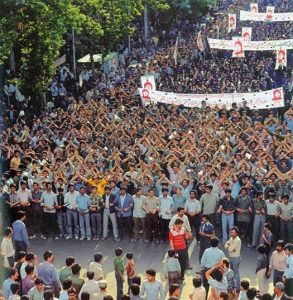
When historians search for the moment Iran’s post-revolutionary future was decided, they often return to a single date: June 20, 1981.
Many events have shaped modern Iran, but few carry the historical weight of that day. It was the moment when the fundamental question facing the country after the 1979 revolution received a definitive answer: Would Iran become a pluralistic republic based on political freedom, or an absolute theocracy centered on the rule of one man?
The answer delivered by Ayatollah Ruhollah Khomeini and the emerging Islamic Republic was unmistakable.
The question was freedom. The response was repression. History is full of moments when nations stand at a crossroads. Iran was no exception. The 1979 revolution mobilized millions of Iranians from diverse political, social, and religious backgrounds. Many believed they were fighting for freedom, democracy, social justice, and an end to dictatorship.
But the years immediately following the revolution revealed a growing conflict between those aspirations and Khomeini’s doctrine of Velayat-e Faqih—the absolute rule of the Supreme Religious Jurist.
Mojtaba Khamenei’s Message After the U.S.-Iran Deal Raises Questions About His Authority
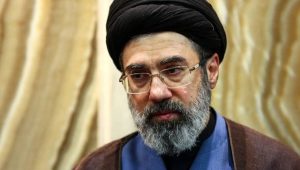
The recent U.S.-Iran memorandum of understanding has triggered a political earthquake in Tehran. Mojtaba Khamenei’s response to the agreement has raised new questions about the authority and direction of Iran’s new Supreme Leader.
The signing of the recent memorandum of understanding between the United States and the Iranian regime has confronted Tehran’s political establishment with an endless internal earthquake. Against this backdrop, Mojtaba Khamenei’s position as the new Supreme Leader has sparked deep ambiguities and questions about the extent of his authority.
After the agreement was finalized, he issued a message that surprised observers despite the issue’s critical importance. The message contained neither audio nor video and was presented solely in written form, emerging from the shadows.
More Than 260 International Organizations Endorse the Paris Free Iran Rally on June 20
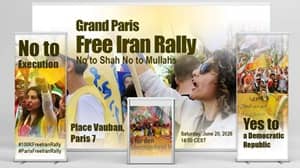
More than 260 parliamentary groups, human rights organizations, associations, and unions have issued a joint statement expressing their support for the Paris Free Iran Rally, scheduled to take place on June 20 in Paris.
Marking the 45th anniversary of the June 20, 1981 demonstration—commemorated as the Day of Martyrs and Political Prisoners—the Paris Free Iran Rally, held under the banner “Iran: No to Executions, Yes to Peace and Freedom,” represents an act of solidarity with the Iranian people and their struggle for freedom.
The demonstration pays tribute to the tens of thousands of Iranians who sacrificed their lives for freedom and democracy. It also echoes the legitimate demands of a nation that has stood firm for decades against repression, human rights violations, and injustice.
The solution to Iran’s crisis lies neither in war nor in appeasement of the ruling clerical regime. Rather, it rests in supporting the Iranian people’s determination to establish a democratic republic and reject all forms of dictatorship—whether that of the Shah or the Supreme Leader.
The signatories expressed their support for the initiative of the National Council of Resistance of Iran (NCRI) to establish a provisional government based on the Ten-Point Plan, which has been endorsed by more than 4,000 parliamentarians and 125 former world leaders.
MEK Supporters in Various Countries Promote June 20 Paris Free Iran Rally for a Democratic Republic
June 19, 2026: In the lead-up to the major June 20 rally in Paris, supporters of the People’s Mojahedin Organization of Iran (PMOI/MEK) have launched activities in various countries, urging freedom-loving Iranians to join the June 20 Free Iran Rally. At this event, 100,000 participants are expected to gather at Place Vauban in Paris’s 7th arrondissement, calling for an end to executions and expressing support for a democratic republic in Iran.
MEK Supporters in Various Countries Promote June 20 #ParisFreeIranRally for a Democratic Republic #100KFreeIranRally #No2ShahNo2Mullahs #StopExecutionsInIran https://t.co/QPFjy2eItL
— Iran Freedom (@4FreedominIran) June 19, 2026
The June 20 Free Iran rally in Paris, to be held under the slogan “A Democratic Republic for Iran,” will reject both monarchical and theocratic dictatorships, emphasizing a third alternative based on democracy and popular sovereignty.