

THIS PAGE WILL BE UPDATED WITH THE LATEST NEWS
UPDATE: 8:30 AM CEST
Shattering The Illusion: Resistance Units Defy Regime’s Security Maneuvers During Khamenei’s Funeral
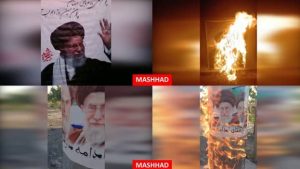
On July 6, as the Iranian regime held heavily militarized state funeral ceremonies for its eliminated supreme leader Ali Khamenei, the PMOI/MEK Resistance Units launched a daring nationwide campaign. While the regime desperately sought to project stability, defiant youth targeted the regime’s centers of repression and corruption. These bold actions echo the true desire of the Iranian people: the complete overthrow of the mullahs’ rule and the establishment of a democratic republic. During the funeral ceremonies, which lasted several days, the regime transformed the ceremonies into a massive political and security maneuver. The primary objective was to artificially project state cohesion and consolidate the unearned position of Mojtaba Khamenei, the newly installed successor. To control the public space and prevent any uprisings, the regime saturated the streets with widespread deployments of the IRGC, Basij, and intelligence agencies.
Throughout the heavily guarded events, regime officials used the platform to demand “revenge” and pledge their allegiance to Mojtaba. Regime president Masoud Pezeshkian vowed that Khamenei’s “path will continue,” while Quds Force chief Esmail Qaani stated that the regime’s forces “know what path to take” following Khamenei’s death. Tehran Mayor Alireza Zakani absurdly claimed that “the people” support Mojtaba Khamenei “with all their being.”
Iran: Student Group Takes Cyber Action Against 900 University Webpages
A student group identifying itself as Sarbedaran 1405, supporting the People’s Mojahedin Organization of Iran (PMOI), announced that it had temporarily replaced the homepages of more than 900 webpages across the websites of K. N. Toosi University of Technology, Tarbiat Modares University, Islamic Azad University, and the University of Isfahan, in addition to eight more. According to the group, the operation displayed messages rejecting both monarchy and the ruling theocracy while commemorating the July 9, 1999 student uprising. Alongside the website defacements, the group also released what it says are internal Iranian government documents obtained during the operation.
🚨 #Breaking Iran: Student Group Supporting PMOI Takes Over 600 University Website Pages
The group @sarbedaran405 said it temporarily replaced the homepages of more than 600 webpages across the websites of K. N. Toosi University of Technology, Tarbiat Modares University,… pic.twitter.com/BdUZPx1wcv
— SIMAY AZADI TV (@en_simayazadi) July 8, 2026
This article is the first in a series presenting English translations of those documents. Part One covers a document classified “Top Secret,” dated January 14, 2026, sent by Iran’s Passive Defense Organization to the Minister of Interior, concerning heightened security and protective measures in response to anticipated threats.
Sign our Statement to Halt the Death Sentence of 25-Year-Old Political Prisoner Arghavan Fallahi

Statement Calling for Immediate Action to Halt the Death Sentence of 25-Year-Old Political Prisoner Arghavan Fallahi: “We express our profound concern over the death sentence imposed on Arghavan Fallahi, a 25-year-old political prisoner in Iran.
“Ms. Fallahi was arrested on 25 January 2025 and detained in Ward 241 of Evin Prison under the authority of the Judiciary’s Intelligence Protection Unit. She spent five months in solitary confinement, during which she was subjected to interrogation as well as severe physical and psychological torture.
“The death sentence was issued by Branch 15 of the Tehran Revolutionary Court, presided over by Judge Abolqasem Salavati, and was communicated to her on 1 July 2026.
Ms. Fallahi, a supporter of the People’s Mojahedin Organization of Iran (PMOI/MEK), was previously arrested in November 2022 along with her father, Nasrollah Fallahi, who was a political prisoner in the 1980s, and was held in prison for a short period. Her father remains in Evin Prison.”
Five Christian Converts, Including Two Women, Sentenced to 55 Years in Prison

On Sunday, July 5, 2026, the Tehran Appeals Court confirmed a 17-year prison sentence for Ayda Najaflou, an 8-year sentence for Lida Alexani, and 10-year prison sentences for each of the three male Christian converts.
The specific charges fabricated by the mullahs’ regime against these individuals include “propaganda against the state” and “acting against national security.”
Ayda Najaflou, a prisoner of conscience and Christian convert who faces a severe risk of spinal cord injury, was arrested in February 2025. She was initially held in the Ministry of Intelligence’s detention center (Evin Prison’s Ward 209) and was eventually released on bail on December 21, 2025.
Lida Alexani was arrested on April 13, 2025, and was released on bail a month later on May 13, 2025. Both female Christian converts are residents of Tehran.
Although Christianity is officially recognized as a minority religion under the Constitution of the Iranian regime, Iranian security agencies treat the conversion of Muslims to Christianity with particular sensitivity and often respond with harsh and punitive measures.
Amnesty International: Six Months After Iran Protest Massacre, Global Inaction Fuels Impunity
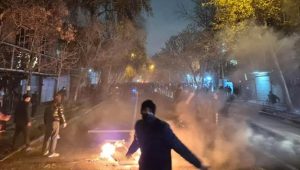
Amnesty International has issued a stark warning on the six-month anniversary of the January 2026 nationwide protest crackdown in Iran, arguing that the international community’s failure to pursue accountability has emboldened the regime and increased the risk of future mass atrocities.
The organization called on the United Nations and governments worldwide to prioritize international justice mechanisms for Iran, stressing that continued impunity is allowing the regime to intensify repression against its own people.
In a statement released on July 8, Amnesty International’s Deputy Regional Director for the Middle East and North Africa, Diana Eltahawy, condemned what she described as the international community’s inadequate response to one of the deadliest crackdowns in Iran’s modern history.
According to Eltahawy, six months after the Iranian regime security forces unlawfully killed thousands of protesters and bystanders over a two-day period in January, survivors and victims’ families remain without justice while those responsible continue to operate with complete impunity.
Iran’s Cost of Living Crisis Pushes Even the Middle Class Toward Poverty

For years, inflation and economic hardship have steadily eroded living standards in Iran. Today, however, the crisis has reached a point where even many middle-class families struggle to afford the most basic necessities. Bread, dairy products, rice, meat, eggs, and cooking oil—once considered essential items that every household could reasonably purchase—have become increasingly out of reach for millions of people.
Reports from across the country paint a picture of a society under mounting economic pressure, where survival has replaced stability and where ordinary families are making painful choices between food, medicine, and housing. Despite repeated government promises of relief, the daily reality suggests that the regime has failed to contain a crisis that continues to deepen.
The rising cost of food remains one of the clearest indicators of Iran’s worsening economic conditions.
Even bread, traditionally the most affordable staple of the Iranian diet, is becoming more expensive. Many bakeries that previously sold subsidized bread have reportedly abandoned the government subsidy program because of disruptions in flour allocations, rigid price controls, and insufficient financial support. As more bakeries move to market pricing, consumers are paying increasingly higher prices for one of their most essential foods.
Six Months After Iran’s January 2026 Protests, Questions Over the Death Toll Remain Unanswered

Six months have passed since the nationwide protests of January 2026, a period that witnessed what many observers describe as one of the bloodiest crackdowns on civilians in Iran’s modern history. Conducted largely behind a near-total internet blackout and severe restrictions on communications, the suppression of the protests left behind a legacy of unanswered questions, disputed casualty figures, and growing calls for accountability.
While the political and social significance of the January uprising continues to shape discussions about Iran’s future, one issue remains particularly contentious: how many people were killed during the crackdown?
Despite the passage of time, conflicting reports and the absence of official transparency have made it impossible to establish a universally accepted death toll. Yet the scale of the violence itself is no longer in dispute.
The protests began in early January 2026 amid growing frustration over the continuing collapse of Iran’s currency, soaring inflation, and worsening living conditions.
What initially emerged as demonstrations among traders and citizens in Tehran’s Grand Bazaar rapidly transformed into a broader anti-government movement. Within days, protests spread across numerous cities and provinces, reflecting widespread anger over economic hardship and dissatisfaction with the ruling establishment.
Khamenei’s Funeral Could Not Conceal the Regime’s Deepening Fragility
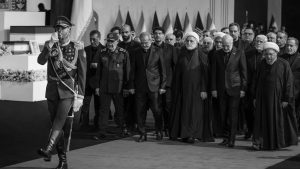
Authoritarian regimes have long understood the political value of grand ceremonies. Funerals, military parades, and mass rallies are designed not merely to honor the dead but to reassure supporters, intimidate opponents, and project continuity at moments of uncertainty. The funeral of Ali Khamenei, the former Supreme Leader of Iran, fit squarely within that tradition.
The regime invested enormous political capital in transforming the ceremony into a carefully choreographed display of resilience following months of military confrontation with Israel and the United States. State media portrayed millions of mourners as proof that the system remained united, confident, and firmly in control. The intended message was unmistakable: despite war, sanctions, and leadership transition, the regime had emerged intact.
Yet beneath the carefully managed spectacle lay a very different reality.
Far from demonstrating unquestioned strength, the funeral highlighted the vulnerabilities that the regime can no longer conceal. The symbolism of mass crowds was overshadowed by conspicuous political absences, growing signs of internal fragmentation, increasing regional pressure, and an economy that continues to deteriorate. The ceremony may have succeeded as political theater, but it failed to erase the profound structural challenges confronting the Islamic Republic.
US and Iranian Regime Exchange Escalating Military Strikes
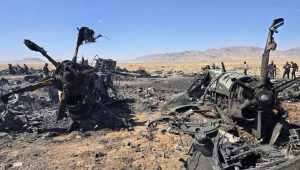
Tensions between the United States and the Iranian regime entered a new phase early Wednesday, July 8. U.S. Central Command (CENTCOM) announced the launch of a large-scale operation against Iranian regime military targets, stating that the strikes were carried out in response to attacks by the regime’s forces on three commercial vessels transiting the Strait of Hormuz. At the same time, the Islamic Revolutionary Guard Corps (IRGC) announced the start of missile and drone attacks against U.S. positions in Bahrain and Kuwait.
In a statement, CENTCOM said U.S. forces had struck more than 80 targets associated with the Iranian regime in southern Iran. According to the statement, the targets included air defense systems, command-and-control centers, coastal radar sites, anti-ship missile equipment, and more than 60 IRGC fast attack boats in or around the Strait of Hormuz.
U.S. Central Command emphasized that the operation was intended to reduce the regime’s offensive capability to attack commercial shipping and to ensure the security of one of the world’s most important maritime routes. CENTCOM also described the regime’s actions against commercial vessels as unprovoked, dangerous, and a clear violation of the ceasefire, warning that if Tehran continues its actions, U.S. forces are prepared to respond further.
Iranian Regime’s Iraqi Proxy Groups in the Trap of Arrest and the Law

Following the arrest of one of the Iranian regime’s proxy operatives in Iraq, who had also been sanctioned by the United States, a large amount of cash was discovered and confiscated from his house. He was involved in money laundering and facilitating the smuggling of the Iranian regime’s sanctioned oil.
Proxy groups were one of the lines and bastions that the Iranian regime had created over the past decades to protect itself. Former regime supreme leader Ali Khamenei, through Qasem Soleimani, created, armed, and supplied proxy group allies in various countries over several decades.
Khamenei, whose corpse-carrying carnival is being witnessed in Iranian cities these days, had repeatedly and openly declared that if the regime does not set its defenses in countries like Syria, Iraq, Yemen, Palestine, and Lebanon, it would have to fight the enemy in the streets of Iranian cities.
This slogan might have been useful for the Iranian regime until before 2017, but when the first widespread protests swept the streets of Iran and the Iranian people chanted “Our enemy is right here, they lie that it’s America,” it turned into a useless tool.
Threats Against Pezeshkian Aide Open a Dangerous New Chapter in Iran’s Internal Conflict
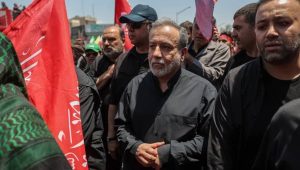
The appearance of threatening leaflets around the home, building entrance and vehicle of Vice President Jafar Ghaempanah marks a new stage in Iran’s internal political disputes, where verbal confrontation is giving way to direct intimidation of officials in President Masoud Pezeshkian’s administration. Arman Melli reported that the leaflets were distributed by an unidentified group early Tuesday morning and contained “threats of physical harm up to complete physical elimination.”
The incident did not occur in isolation. In the same section of the newspaper bulletin, under the heading “War of the Wolves,” Arman Melli followed its report on the threats against Ghaempanah with another article titled “The People Will Not Allow Infiltrators to Penetrate.” The article refers to “enemies,” “infiltrators” and “traitors,” while defining unity not through political parties or factions but through the model of the “Ummah and the Imam.”
In this context, the threats against the vice president carry significance beyond the actions of an anonymous group. When the language used by political opponents and parts of the media rapidly blurs the distinction between critics, infiltrators and enemies, political disagreement becomes more likely to evolve into personal targeting. The newspaper Jomhouri Eslami, in an editorial titled “Political Rationality and the Requirements of Development,” addressed this issue directly, arguing that in Iranian politics “truth has become a victim of political loyalties,” while what ultimately matters is not the national interest but the victory of one’s own “political tribe.”
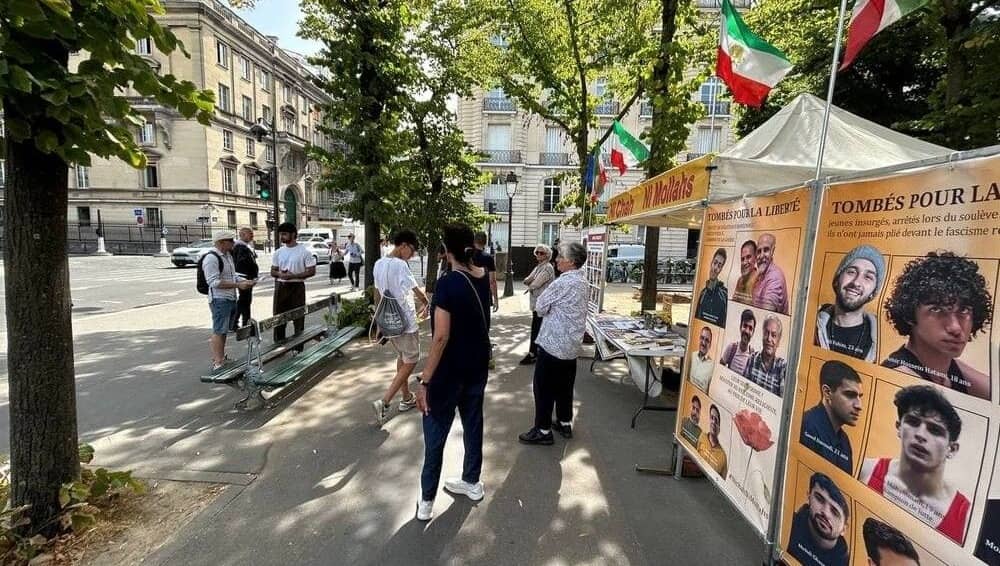
PMOI Supporters in Paris Hold Exhibition Condemning Executions and Back Democratic Change in Iran
Paris, France – July 7, 2026 – Supporters of the People’s Mojahedin Organization of Iran (PMOI/MEK) held a book table and photo exhibition to condemn the executions of PMOI political prisoners and protesters arrested during the January 2026 uprising. The event highlighted the Iranian people’s demand for a democratic republic led by the Iranian Resistance as a path toward peace, freedom, and justice.
PMOI Supporters in Paris Hold Exhibition Condemning Executions and Back Democratic Change in Iran #StopExecutionsInIran #No2ShahNo2Mullahs #FreeIran2026https://t.co/tnsR1Twarl
— Iran Freedom (@4FreedominIran) July 8, 2026
Organizers called on the French public and the international community to recognize the suffering of the Iranian people and their unwavering rejection of all forms of dictatorship, whether monarchical or theocratic. Through powerful images and personal testimonies, the exhibition highlighted the courage and sacrifices of participants in the January 2026 uprising while condemning the regime’s ongoing human rights violations, including the execution of political prisoners.
Gothenburg: MEK Supporters Mark 128th Week of “No to Execution Tuesdays” Across 57 Iranian Prisons
Gothenburg, Sweden — July 7, 2026: Supporters of the People’s Mojahedin Organization of Iran (PMOI/MEK) held a rally in solidarity with the 128th consecutive week of the “No to Execution Tuesdays” campaign, a movement protesting the Iranian regime’s escalating executions and systemic repression. Protesters condemned the recent execution of political prisoners and demonstrators arrested during the January 2026 uprising.

Participants also highlighted the regime’s intensifying crackdown, the rising number of executions, and broader repressive measures, including nationwide internet shutdowns. They chanted slogans such as “Down with the executioner regime” and called for the immediate release of all political prisoners.