

Three-minute read
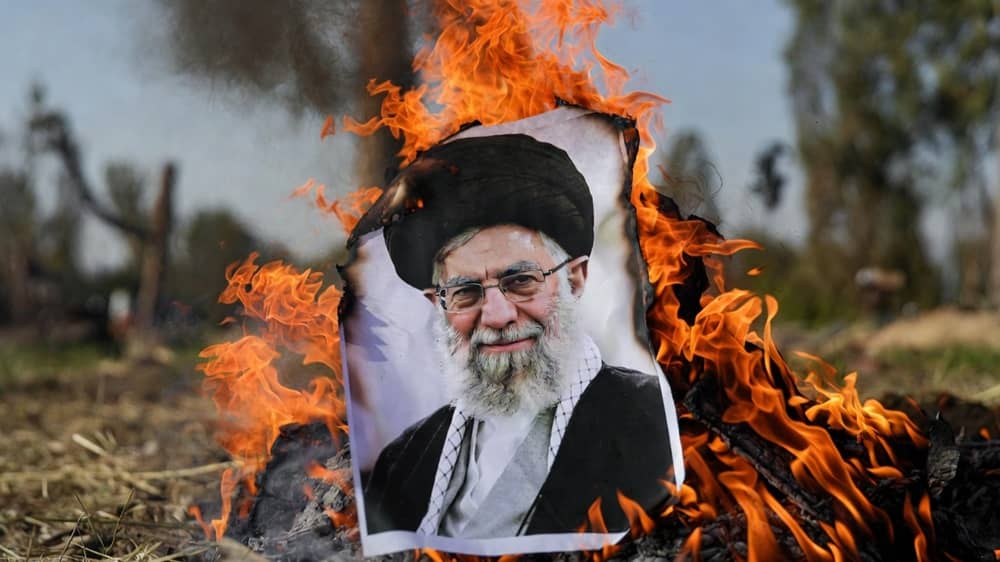
When Ali Khamenei assumed the title of Supreme Leader in June 1989, the prisons were still wet with the blood of the 1988 massacre—a slaughter he had helped orchestrate but whose ledger was charged to his predecessor. From that day forward, every bullet fired into a crowd, every gallows rope tightened in the pre-dawn dark, and every body bag displayed on social media has carried his signature alone. The chronology that follows is not an abstraction. It is an indictment backed by Amnesty International case files, Reuters intelligence sources, and the screams of mothers who were never allowed to mourn.
The pattern began early. In 1992, residents of Mashhad’s Kooy-e Tollab district rose against economic ruin. The Revolutionary Guards restored “order” with live ammunition. Two years later, Qazvin erupted over redistricting, pivoting instantly to anti-regime fury where citizens disarmed security forces. In 1995, Eslamshahr exploded over bus fares and water shortages; army helicopters were deployed against unarmed civilians.
These were local tremors. The earthquakes came later.
The 1999 university dormitory raid in Tehran spread to multiple cities. The 2009 post-election uprising tore the regime’s own political fabric, leaving untold numbers tortured in Kahrizak. Yet even 2009 was a rehearsal.
"On the morning of February 28, as events moved toward their decisive rupture, #Khamenei and his inner circle gathered not in retreat, but in confidence—reviewing what they regarded as a successful suppression of the January uprising and deliberating how best to confront the…
— NCRI-FAC (@iran_policy) March 28, 2026
In December 2017, a protest over egg prices in Mashhad mutated within an hour into chants of “Death to Khamenei,” blazing across 140 cities. In November 2019, Khamenei endorsed the crackdown on fuel-price protests engulfing more than 200 cities, with Reuters reporting approximately 1,500 dead. Then came September 2022, the most geographically sweeping uprising in the regime’s history, drawing schoolgirls and steelworkers alike and resulting in over 750 killed.
And in January 2026—the final major convulsion of Khamenei’s reign—protests over the collapsing rial and runaway inflation spread to 400 cities. After Khamenei publicly ordered a crackdown, security forces opened fire with automatic weapons, leaving thousands dead and cementing his status as the most reviled figure in modern Iranian history.
Tactical Diffusion and the Architecture of Defiance
While international observers often view these explosions of public fury as spontaneous, historical sociology dictates that sustained insurgencies against totalitarian states require a structural vanguard. Central to this paradigm shift is Iran’s organized Resistance.
Khamenei Digs in As #Assad’s Fall Rattles #Tehranhttps://t.co/LW9OIi50Kp
— NCRI-FAC (@iran_policy) December 11, 2024
Since the Resistance Units—clandestine cells affiliated with the Mujahedin-e-Khalq (MEK)—gained a definitive foothold, the sociology of Iranian protests has fundamentally transformed. Slogans have evolved from localized, subsistence-based grievances into groundbreaking, radical demands for the systemic overthrow of the entire theocratic apparatus. Simultaneously, collective action has radicalized; passive demonstrations have escalated into targeted, asymmetrical confrontations against state security apparatuses and regime symbols.
Crucially, this organized network has triggered a powerful “demonstration effect” across the nation. Because human populations inherently model successful defiance, citizens in the most distant and historically marginalized regions have rapidly adopted the confrontational methods of these organized cells. This tactical diffusion has unified disparate local grievances into a synchronized, nationwide insurgency. By providing a replicable blueprint for resistance, these units ensure the regime’s violence no longer yields submission, but rather a decentralized multiplication of radical defiance.
The central fact of post-Khamenei Iran is that the regime has entered a crisis of command. The state still carries on with #war and oppression, but the one office that could settle every serious dispute is gone.https://t.co/6JH4qQriPf
— NCRI-FAC (@iran_policy) March 8, 2026
The Analogy History Has Already Written
Throughout history, every regime that has relied exclusively on coercion has followed an identical arc: each crackdown temporarily restores silence while permanently destroying legitimacy, until the security apparatus itself fractures under the weight of orders it can no longer justify.
Khamenei’s record is a textbook case. Over 36 years, his sole answer to every political, economic, and social crisis has been the same: bullets, batons, and body bags. He has produced no reform, no concession, no institutional outlet for grievance—only graveyards. In doing so, he has manufactured exactly the force that will unseat him: a generation with nothing left to lose, now structurally equipped with an organized leadership ready to fill the vacuum of power.
History’s verdict is consistent and merciless. The people whom authoritarian regimes terrorize the most are the ones who ultimately tear down the palace gates—not despite the repression, but because of it. Every massacre Khamenei ordered was a recruitment poster for his own overthrow. The ledger is closed. The bill is coming due.