

THIS PAGE WILL BE UPDATED WITH THE LATEST NEWS
UPDATE: 7:00 AM CEST
How Khamenei’s Highly Militarized Funeral Exposed a Trembling Regime
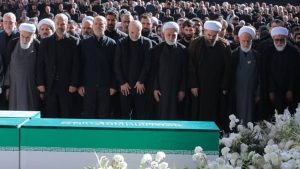
Following the elimination of Ali Khamenei, the Iranian regime orchestrated a massive state funeral not out of mourning, but as a desperate political and security maneuver to mask its extreme vulnerability. For over four months, the regime meticulously planned these ceremonies to serve two primary goals: state propaganda and security consolidation.
Reeling from the massive blows it had taken during the nationwide uprisings at the beginning of the year, the regime frantically sought to reverse its fortunes. They aimed to manufacture a hollow display of crowds to project power, instill fear domestically, and falsely signal international strength. Ultimately, the objective of this elaborate charade was to legitimize the hereditary succession of the new supreme leader, Mojtaba Khamenei, and force a smooth transfer of power.
The regime’s attempt to demonstrate social backing was a totalitarian illusion built on threats and extortion. In reality, more than 70 percent of the attendees from various cities were coerced into participating through severe threats, including the termination of employment, cuts to salaries, and expulsion from universities.
The Ineffectiveness of Population Policies in Iran: Economy, Aging, and the Overlooked Rights of Women
Abstract: A compilation of official data, media reports, and disclosures published in April, May, and June 2026 demonstrates that Iran is grappling with a multi-layered demographic crisis. This crisis is characterized by a plummeting birth rate, declining marriage rates, a rise in lifelong celibacy, rapid population aging, mounting pressure on the healthcare system, and a profound gap between families’ desire to have children and their actual financial and social ability to do so.
Despite this, the ideological population policies in Iran, dictated by the ruling religious dictatorship, rather than addressing the economic, social, and legal root causes of the crisis, have focused primarily on controlling women’s bodies, promoting the role of motherhood, restricting reproductive choices, and securitizing the population issue.
Relying on reports from the regime’s own state media, this review demonstrates that the demographic population policies in Iran have not only failed to resolve the crisis but have actively exacerbated it by completely ignoring women’s rights and the grim economic realities of society.
When Millions Deliver Packages Instead of Building an Economy: Iran’s Motorcycle Courier Boom Is a Poverty Story
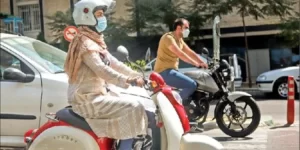
The sight of motorcycle couriers weaving through Tehran’s traffic has become so commonplace that it is easy to mistake it for evidence of a modern digital economy. Food delivery apps, online shopping, and courier platforms appear to signal technological progress and changing consumer habits.
But beneath this surface lies a far less optimistic reality. The rapid expansion of motorcycle courier work in Iran is not primarily a story of innovation. It is a story of economic desperation. Every new rider joining the streets is another reminder of a labor market that is no longer creating productive, stable employment. Instead, it is producing millions of workers whose survival depends on finding the next delivery order.
In many countries, the gig economy complements a functioning labor market. In Iran, it increasingly replaces one.
Reliable nationwide statistics remain scarce, but previous estimates have suggested that around five million motorcycle couriers operate across Iran, with roughly 400,000 working in Tehran alone.
Women Under Siege: New Data Reveal the Escalating Assault on Women’s Rights in Iran

The first half of 2026 paints a grim picture of the state of women’s rights in Iran. New data compiled from documented human rights cases indicate that women continue to bear a disproportionate share of the regime’s repression, facing executions, arbitrary detention, lengthy prison sentences, corporal punishment, and deadly violence both inside and outside the courtroom.
The findings suggest that the crackdown on women has not eased in the years following the 2022 protests. Instead, the state’s security and judicial apparatus appears to have intensified its campaign against female activists, protesters, students, and ordinary citizens, while broader social violence against women continues to rise.
According to documented cases covering the period from January through June 2026, at least 5,000 women were arrested during security operations and nationwide protests. Because of severe internet restrictions and the security environment inside Iran, only a fraction of those detained—368 women—have so far been publicly identified.
Among those whose identities have been confirmed are members of ethnic and religious minorities, university students, teachers, and women from diverse social backgrounds. The figures also include at least 23 girls under the age of 18, highlighting that minors have not been spared from the state’s security campaign.
18 Tir at 27: The Dormitory Raid Was Not an Exception—It Became the Regime’s Blueprint
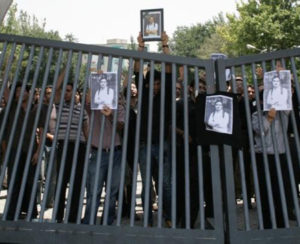
Twenty-seven years after the violent assault on Tehran University’s student dormitories, the events of 18 Tir (7–13 July) 1999 remain far more than an unresolved historical injustice. They represent the moment when Iran’s ruling establishment demonstrated that it would respond to peaceful demands for reform not through dialogue, but through organized violence, intimidation, and impunity. More importantly, the attack became a template—a model that has shaped the regime’s response to virtually every major protest movement that followed.
As Iran marks another anniversary of the dormitory raid, the questions raised by that night remain unanswered. Those responsible were never held accountable, the victims were denied justice, and the culture of impunity that emerged from 18 Tir has continued to define the regime’s treatment of students and political dissent ever since.
The protests began after the closure of the reformist newspaper Salam and proposed legislation further restricting press freedom. Students at the University of Tehran organized peaceful demonstrations against the growing assault on civil liberties.
Continued Human Rights Violations in Iran: Security Forces Open Fire on People Celebrating Khamenei’s Death
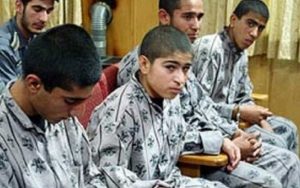
As the Iranian regime staged the funeral of Ali Khamenei four months after his death, human rights media reported that regime security forces opened fire on crowds celebrating the death of the dictator.
The human rights organization Hengaw reported on Wednesday, July 8, that during street celebrations following the announcement of the death of the Iranian regime’s supreme leader, regime forces opened fire on people in several cities across Iran, killing several civilians. Hengaw reported that it has identified two of those killed during that period. According to the report, Nahal Ghalandari from Khorramabad and Faezeh Afshari from Semirom in Isfahan Province were two women who were killed by direct gunfire from regime forces on February 28 and 29 during celebrations following the announcement of Khamenei’s death.
At the same time, the legal advocacy group Dadban announced that 12 people arrested during the January protests in Isfahan have been sentenced to death in a case known as the “Alikhani Square” case.
According to Dadban, the sentences were upheld by Iran’s Supreme Court on July 5, and the cases have been referred to the Enforcement of Judgments Branch of the Revolutionary Court in Isfahan for implementation.
Water Shortages in Iran Have Become a Chronic Crisis, and Alarm Bells Are Ringing
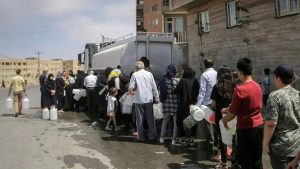
Statements by Iranian regime officials at the beginning of the summer indicate that water stress has spread across most of the country’s provinces, with the situation particularly alarming in Tehran.
Under these circumstances, experts say that short-term measures such as water conservation or water transfer projects may ease some of the current pressure, but they are insufficient on their own to address the full scale of the crisis.
Hashem Amini, chairman of the National Water and Wastewater Engineering Company, said that 58 cities in 23 provinces are currently experiencing water resource stress.
The water crisis has become so severe that even Iran’s mountainous provinces are experiencing water stress. For example, Lorestan Province, despite being one of Iran’s wettest provinces and the source of many rivers, is facing water shortages due to both natural and managerial factors.
Iran Economic Crisis: Domestic Press Reports 90% Inflation and Proposed Interest Rate Hikes
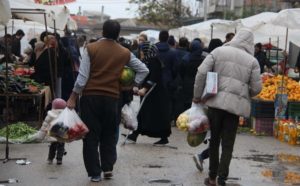
TEHRAN — Official reports and analyses published in the domestic media of the Islamic Republic of Iran reveal deep structural challenges, soaring inflation, and fundamental changes in the country’s trade and housing strategies. These data indicate severe deadlocks in financial markets and a new phenomenon of class migration in the capital due to the prevailing conditions of the Iran economic crisis.
The official newspaper Ettelaat, in a report by Masoud Dashti Derakhshan titled “The Necessity of Strengthening Energy Diplomacy,” addresses the changing rules of the game in the global oil market and the phenomenon of source diversification by major Asian buyers. Citing a report by the international agency S&P Global, the newspaper revealed that Japanese refineries have significantly increased their term purchases of UAE crude oil to approximately 15 million barrels per month for August loading and the third quarter of 2026. Ettelaat acknowledges that during the recent tensions surrounding the Strait of Hormuz, Japan reduced its dependence on Middle Eastern oil from over 95 percent to around 93 percent, bringing imports from the United States to a record 331,000 barrels per day in May. The state-owned media outlet warns that even if political and sanctions limitations are reduced, Iran’s return to traditional markets will be highly difficult due to customers preferring “supply reliability” over “cheap oil.”
Manchester Event Highlights Human Rights Violations in Iran, Calls for a Democratic Republic
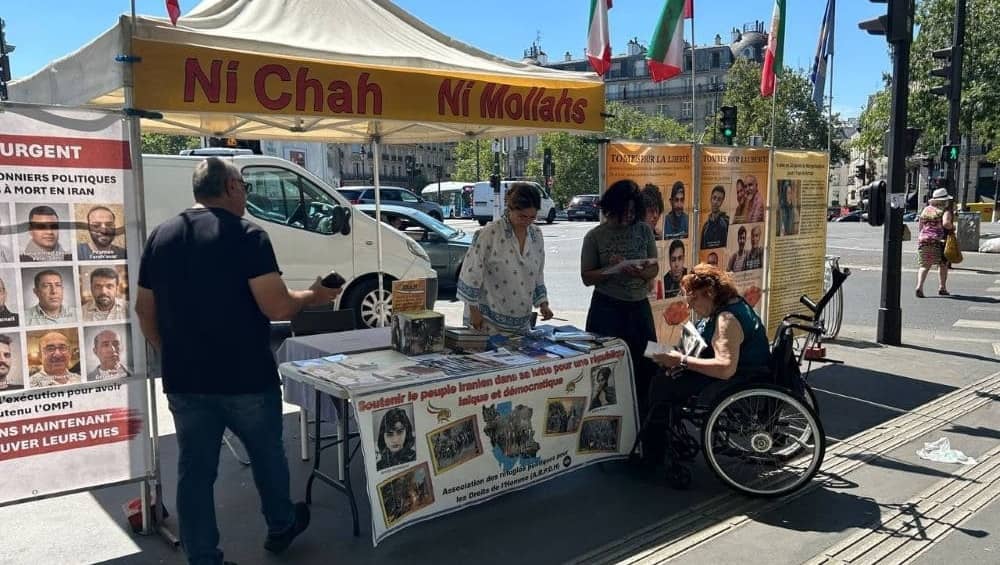
Manchester, UK – July 9, 2026: Members of the Academics in Exile Association in the UK, supporters of the People’s Mojahedin Organization of Iran (PMOI/MEK), organized a book table and photo exhibition in Manchester to raise awareness about the Iranian regime’s escalating executions and systematic human rights abuses. The event drew attention to the regime’s intensifying wave of executions, including those of political prisoners and protesters detained during the January 2026 uprising.

Through photographs, publications, and testimonies, the organizers sought to draw public attention to the suffering of the Iranian people and their determination to reject all forms of dictatorship, whether monarchical and theocratic.