

THIS PAGE WILL BE UPDATED WITH THE LATEST NEWS
UPDATE: 9:00 PM CEST
Treasury Targets Key Supreme Leader Financier and Iran’s Shadow Exchange Houses
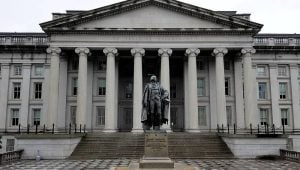
WASHINGTON—Today, following Iran’s resumption of attacks on international shipping in the Strait of Hormuz, the U.S. Department of the Treasury’s Office of Foreign Assets Control (OFAC) took action against Iranian financial facilitator Ali Ansari (Ansari), who oversees a sprawling global network of assets benefitting Iran’s leader—Mojtaba Khamenei—and other regime elites. Ansari has effectively institutionalized large‑scale embezzlement within the Iranian regime, diverting publicly funded wealth into an extensive overseas portfolio of real estate and commercial holdings to enrich himself, regime elites—including notable senior figures within the Supreme Leader’s Office—and the Islamic Revolutionary Guard Corps (IRGC). OFAC today also targeted key Iranian exchange houses that move billions of dollars annually on behalf of sanctioned Iranian banks, using layers of shell companies to obscure the regime’s illicit financial activity.
UPDATE: 3:00 PM CEST
US And Iran Exchange Intensifying Fire Across Mideast, Threatening Ceasefire Deal
DUBAI, United Arab Emirates (AP) — The United States launched new airstrikes against Iran early Thursday, and Tehran responded by targeting U.S.-allied Mideast countries in an exchange of fire that threatened an interim deal intended to help end the war in the Middle East.
Back-and-forth attacks, including a day earlier, have repeatedly threatened the ceasefire. But Thursday’s appeared bigger all around, with sirens sounding at least three times in Bahrain, home to the U.S. Navy’s 5th Fleet headquarters, and missiles targeting Kuwait and Qatar.
Sirens sounded Thursday afternoon in Jordan as well, where the U.S. has stationed troops and aircraft.
An Iranian official accused the U.S. of launching an airstrike later Thursday targeting the area around Iran’s sole nuclear power plant, and other explosions were reported elsewhere in the country during the afternoon.
UPDATE: 7:30 AM CEST
Gallows And Bribes: Why The Regime’s Desperate Campaign Against the January 2026 Martyrs Will Spell Its Downfall
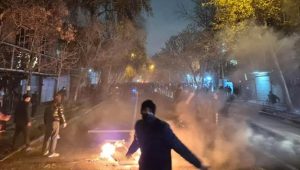
Six months after the historic January 2026 nationwide uprising, the Iranian regime is employing a dual strategy of brutal executions and psychological warfare against grieving families. In a desperate bid to project power and maintain its fragile grip on society, the regime is simultaneously fast-tracking death sentences for protesters and attempting to bribe the families of the martyrs. However, this systematic repression only exposes the regime’s deep-seated desperation, demoralization within its ranks, and profound fear of the Iranian people’s organized resistance. Terrified of a resurgent uprising, the regime is weaponizing its judiciary to fast-track death sentences against young protesters, denying them basic due process to instill fear in a restive population.
In the fabricated “Ali Khani Square” case in Isfahan—stemming from the nationwide protests of January 8, 2026—the regime’s Supreme Court confirmed the death sentences of 12 protesters on July 5, 2026. The cases have already been forwarded to the execution branch of the Isfahan Revolutionary Court, sparking widespread alarm.
Iran: Three Teachers Face Summonses, Imprisonment and Pressure
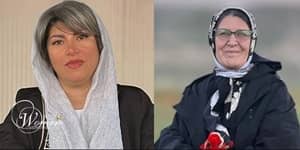
As pressure on teachers’ union activists continues, Ameneh Bayraghdari, Azadeh Saleki and Kowkab Badaghi have faced prison sentences, official summonses and disciplinary proceedings. The measures have once again drawn attention to the situation of teachers and education-sector activists in Iran.
Ameneh Bayraghdari, a 61-year-old retired teacher from Fariman, has been held in Ward 2 of Vakilabad Prison, known as the ward for dangerous offenders, after being arrested in connection with the January protests.
Ameneh Bayraghdari has faced harassment from some fellow inmates. Personal belongings, including clothing, a phone card and even her daily food, have been taken from her on multiple occasions.
Her son, Iman Anbai Farimani, is suffering from bone marrow cancer and his condition is deteriorating. Her husband, Ali Anbai Farimani, also a retired teacher, suffered a stroke after her re-arrest and is currently in a coma.
PMOI Resistance Units Expand Nationwide Campaign After Khamenei Funeral with Anti-Regime Actions Across Iran
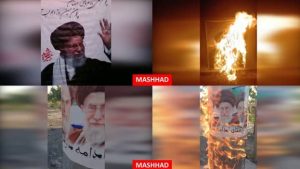
The PMOI’s Resistance Units have carried out a new wave of coordinated activities across dozens of Iranian cities, combining symbolic protests, anti-regime operations, and support for political prisoners in one of the broadest nationwide campaigns in recent months.
The actions unfolded around three major occasions: the funeral of former regime supreme leader Ali Khamenei, the nationwide “No to Execution Tuesdays” campaign, and a series of coordinated revolutionary operations targeting regime symbols. Together, they reflected a strategy of maintaining political pressure while demonstrating that organized resistance continues to operate throughout the country despite heightened security measures.
As the regime organized ceremonies surrounding Khamenei’s burial, Resistance Units responded with widespread public messaging rejecting both religious dictatorship and any return to monarchical rule.
Across multiple provinces, activists displayed banners, graffiti, posters, and PMOI symbols carrying slogans including:
- “Neither monarchy nor supreme leadership—democracy and equality.”
- “Death to the principle of Velayat-e Faqih.”
- “Death to the oppressor, whether Shah or Supreme Leader.”
- “Long live the National Liberation Army.”
- “Hail Rajavi.”
Iran’s Workers Are Paying the Price for a Broken Economy—and a System That Prioritizes Power Over People
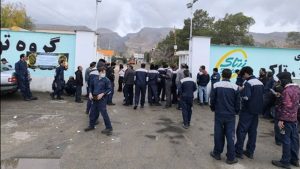
Across Iran, labor protests are no longer isolated workplace disputes. They have become one of the clearest indicators of a country sinking deeper into economic and political crisis.
From factory workers in northern Iran to municipal employees in the country’s eastern provinces, thousands are demanding something remarkably modest: payment of wages already earned, enforcement of existing labor laws, and the basic dignity that should accompany honest work.
The persistence of these protests demonstrates that the crisis confronting Iran’s working class extends far beyond delayed salaries. It reflects the structural failure of an economic system in which workers bear the costs of corruption, political priorities, and decades of mismanagement.
Recent demonstrations across multiple provinces reveal a remarkably consistent pattern of grievances.
Workers report months of unpaid wages, missing insurance contributions, insecure employment contracts, arbitrary dismissals, and employers’ refusal to implement legally mandated wage increases. Many also fear changes to retirement regulations that could further weaken already fragile social protections.
After Khamenei: Iran’s Fight for Freedom Has Entered a New Chapter
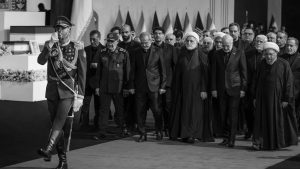
With the burial of Ali Khamenei, one of the darkest chapters in modern Iranian history has formally come to an end. For 36 years, Iran’s supreme leader presided over a state defined by political repression, mass executions, systematic censorship, regional destabilization, and repeated violations of fundamental human rights.
His death, however, should not be mistaken for the end of the system he built.
Instead, it offers an opportunity to examine the legacy of a ruler who transformed the Iranian regime into a sophisticated machinery of repression—one that relied not only on brute force but on institutionalized surveillance, ideological control, and the militarization of nearly every aspect of public life.
Yet despite decades of violence, Khamenei failed in his ultimate objective: extinguishing the Iranian people’s demand for freedom.
Unlike Ruhollah Khomeini, who seized power amid the revolutionary upheaval of 1979 and enjoyed considerable religious and political legitimacy among his followers, Khamenei inherited leadership under far less favorable conditions.
Reza Pahlavi’s Dutch Debacle: How a Divisive Opposition Serves Tehran’s Survival
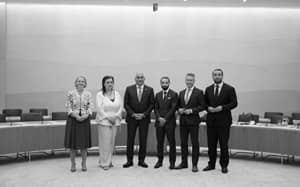
Every authoritarian regime understands a simple political truth: a fragmented opposition is easier to defeat than a united one.
That is precisely why the recent collapse of Reza Pahlavi’s highly publicized visit to the Netherlands deserves attention beyond its immediate embarrassment. The controversy was not merely a diplomatic setback for the son of Iran’s last monarch. It illustrated a broader political reality: an opposition current that claims to champion unity while consistently deepening divisions ultimately strengthens the very regime it says it seeks to overthrow.
For Tehran, no opposition is more useful than one that redirects public energy away from organized resistance and toward endless infighting.
The visit was promoted by monarchist supporters as an opportunity to present Reza Pahlavi as a credible political alternative for Iran’s future. Organizers reportedly expected meetings with Dutch political figures, media engagement, and discussions about democratic change.
Khamenei’s Funeral Was Never About Mourning—It Was About Manufacturing Power
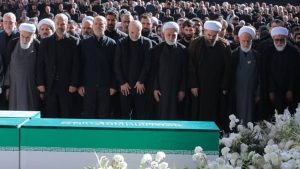
The death of Ali Khamenei, the longtime supreme leader of Iran’s ruling clerical establishment, marked the end of an era. Yet what followed was not merely a state funeral. It was one of the largest propaganda operations the regime has undertaken in recent years.
For international observers unfamiliar with the dynamics of authoritarian politics in Iran, the images broadcast from Tehran and Qom may have appeared to depict a nation united in grief. The reality is far more complex.
The funeral procession served two primary objectives: projecting political strength through carefully staged public imagery and reinforcing the security apparatus by intimidating a population that has repeatedly demonstrated its desire for fundamental political change.
Neither objective changes the underlying reality.
For months, authorities reportedly prepared every aspect of the funeral, from urban logistics to transportation networks and media coverage. The objective was clear: erase the perception of weakness that has emerged after months of political turmoil, nationwide unrest, international isolation, and the leadership transition following Khamenei’s death.
Iran’s July 9 Student Uprising Mark 27th Anniversary
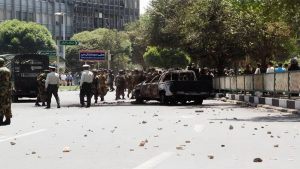
Twenty-seven years have passed since July 9, 1999, when the Iranian regime’s official security forces and paramilitary groups loyal to Ali Khamenei, the former supreme leader of the Iranian regime, attacked the Tehran University dormitories and violently crushed peaceful student protests.
In the early hours after midnight on July 9, 1999, a large number of students at the Amirabad student dormitory in Tehran held an anti-government demonstration and chanted slogans against the regime’s repression.
Shortly afterward, special anti-riot units surrounded the area and stormed the student dormitories using tear gas, batons, and firearms. They brutally beat and assaulted the students.
Now, on July 9, Ali Khamenei is being buried—the man whose decrees extinguished proved that the Iranian regime is not reformable. July 9, 1999, has repeatedly been described by journalists and student and civil activists as a turning point in the Iranian people’s struggle against dictatorship.
U.S. Military Attacks More Than 90 Targets in Iran
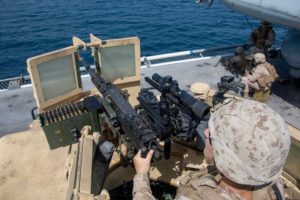
The United States Central Command (CENTCOM) said in a statement that on Wednesday evening, U.S. forces struck about 90 military targets belonging to the Iranian regime.
According to the CENTCOM statement, the targets included air defense systems, coastal surveillance equipment, missile and drone storage sites, naval capabilities, and military logistics infrastructure along Iran’s coastline. CENTCOM added that the latest strikes followed the successful execution of offensive operations against the Iranian regime on Tuesday evening.
In those strikes, CENTCOM forces also targeted about 80 military objectives belonging to the Iranian regime, including more than 60 small boats operated by the Islamic Revolutionary Guard Corps (IRGC). According to CENTCOM, the attacks were intended to impose heavy costs on the Iranian regime for violating the ceasefire by attacking three commercial vessels transiting the Strait of Hormuz.
CENTCOM emphasized that the latest strikes further degraded the Iranian regime’s ability to attack commercial vessels and innocent civilian mariners in the Strait of Hormuz. It added that U.S. forces remain vigilant, possess overwhelming combat capability, and are prepared to carry out any operations ordered by the Commander-in-Chief.
Strait of Hormuz Tensions Rise Amid Differing Views on the Islamabad Understanding
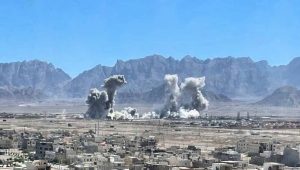
TEHRAN — Reports published in Iranian media indicate that a dispute over the interpretation of certain provisions of an understanding between Tehran and Washington regarding navigation in the Strait of Hormuz has become a major point of contention between the two sides, concurrent with rising military tensions in the Persian Gulf.
The Sazandegi newspaper has reported that despite the understanding between Iran and the United States, military tensions in the region have continued. According to this report, the United States has announced that following attacks on three commercial vessels in the Strait of Hormuz, it carried out airstrikes against targets in southern Iran. Meanwhile, some domestic Iranian media outlets have reported explosions near Bandar Abbas, Qeshm Island, and the Sirik region.
The Tose’e Irani newspaper wrote that the main dispute traces back to the fourth and fifth clauses of the memorandum of understanding, which is referred to as the “Islamabad Understanding.” According to this report, the fourth clause emphasizes lifting maritime restrictions and returning vessel traffic to pre-conflict levels within 30 days. The fifth clause also commits Iran to clearing technical obstacles and mines to facilitate the resumption of commercial vessel traffic between the Persian Gulf and the Sea of Oman within the same timeframe.
Paris Exhibition Condemns Executions, Backs a Democratic Republic in Iran

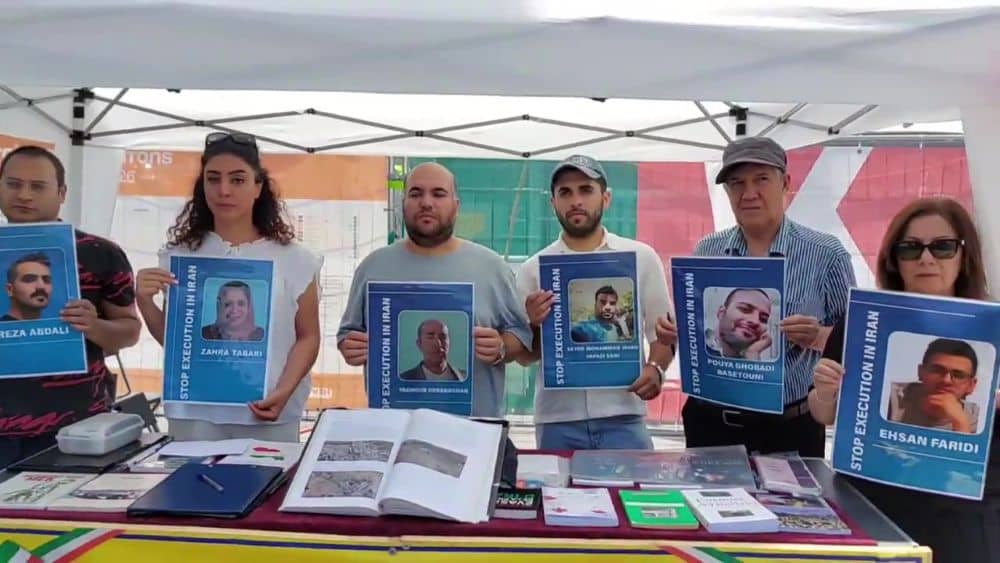
Paris, France – July 8, 2026 – Supporters of the People’s Mojahedin Organization of Iran (PMOI/MEK) organized a book table and photo exhibition to condemn the execution of political prisoners affiliated with the group, as well as protesters detained during the January 2026 uprising. The event underscored the Iranian people’s demand for a democratic republic, led by the Iranian Resistance, as a pathway to peace, freedom, and justice.
Organizers called on the French public and the international community to recognize the suffering of the Iranian people and their unwavering rejection of all forms of dictatorship, whether monarchical or theocratic. Through powerful images and personal testimonies, the exhibition highlighted the courage and sacrifices of participants in the January 2026 uprising while condemning the regime’s ongoing human rights violations, including the execution of political prisoners.
The event also urged the international community to stand with the Iranian people instead of supporting any form of authoritarian rule. Organizers reaffirmed the need to establish a free and democratic republic in Iran and stressed their continued commitment to advancing political rights, civil liberties, and accountability for human rights violations.
Berlin: MEK Supporters Mark Day 128 Outside Iran Regime Embassy, Back Democratic Republic
Berlin, Germany – July 8, 2026: For the 128th consecutive day, supporters of the People’s Mojahedin Organization of Iran (PMOI/MEK) have maintained their sit-in protest outside the Iranian regime’s embassy in Berlin, which they denounce as a hub of espionage and terrorism. The demonstrators are demanding an end to the execution of PMOI political prisoners and other activists detained during the January 2026 uprising.

The protesters reaffirm their opposition to executions, war, and the policy of appeasement toward the clerical regime, emphasizing that the only viable solution is the establishment of a democratic republic based on Mrs. Maryam Rajavi’s Ten-Point Plan.
Lucerne Exhibition Calls for an End to Executions and Support for a Democratic Republic in Iran
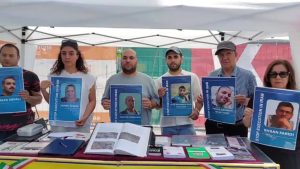
Lucerne, Switzerland – July 7, 2026 – Supporters of the People’s Mojahedin Organization of Iran (PMOI/MEK) held an exhibition to protest the Iranian regime’s increasing use of the death penalty, particularly against political prisoners. The event also expressed solidarity with the “No to Executions” campaign.
The event called for the complete abolition of capital punishment in Iran and the unconditional release of all political prisoners, especially those at risk of imminent execution. Organizers also urged that senior regime officials be held accountable before an international tribunal for crimes against humanity.
The exhibition supported NCRI President-elect Maryam Rajavi’s “No to Executions” campaign and called for its global expansion. It also reaffirmed support for regime change toward a secular, democratic republic—rejecting both theocracy and monarchy.
Swiss citizens visiting the photo exhibition, which featured martyrs and political prisoners sentenced to death, expressed deep solidarity with the Iranian people. They strongly condemned the regime’s inhumane actions and voiced support for the struggle for freedom and human rights in Iran.