

THIS PAGE WILL BE UPDATED WITH THE LATEST NEWS
UPDATE: 9:30 AM CEST
The ‘Third Option’ In Action: How Zahedan’s Resistance Units Are Defining Iran’s Democratic Future
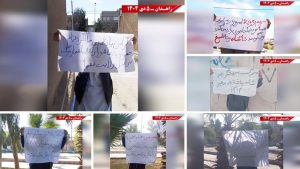
On August 14, 2026, PMOI/MEK Resistance Units resumed their weekly anti-regime activities in Zahedan, southeast Iran, displaying messages of resistance in public places. The activists categorically rejected all forms of dictatorship, including the tyranny of both the mullahs and the ousted Shah.
Holding placards that read, “Iran will neither submit to the ruling theocracy nor return to a monarchical dictatorship. Iran’s only forward path is the path of true freedom,” they showcased the Iranian people’s steadfast demand for liberty. These brave activities come as the regime sits atop a powder keg of public anger and discontent following the January uprising, dealing with deep, irresolvable conflicts within the ruling establishment that leave it increasingly fragile by the day.
A central theme of the Resistance Units’ messaging in Zahedan was a definitive rejection of a return to the ousted monarchy. The activists held signs stating, “A dictator is a dictator, whether with a turban or a crown,” and “No to shah, no to mullahs. The people of Iran demand a democratic republic.”
Iran: Continued Arrests and Long Prison Terms for Women Protesters

January 2026 nationwide uprising has been followed by a wave of continued arrests, harsh sentences, and continued judicial uncertainty for protesters.
In recent cases, a number of women and girls who participated in the protests have faced prison terms, flogging, exile, and additional penalties, while others remain imprisoned without a clear judicial status. At the same time, reports indicate that some women prisoners have been denied access to specialized medical treatment and necessary healthcare services.
Hadiseh Morvaridi Sentenced to Three Years in Prison
Hadiseh Morvaridi, 24, who was arrested during January 2026 nationwide uprising and is imprisoned in Vakilabad Prison in Mashhad, has been sentenced to a total of three years in prison on charges of “insulting the Supreme Leader” and “propaganda against the state.”
Hadiseh Morvaridi was arrested on January 8, 2026, in Fariman County.
Political Prisoners Face Escalating Abuse and Collective Punishment in Iran’s Prisons
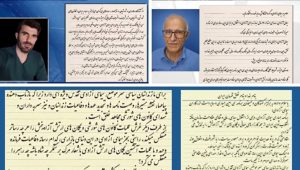
Iranian prison authorities are intensifying pressure on political prisoners and their families through a combination of deprivation, punitive transfers, denial of medical care, and arbitrary detention, according to reports from the Iranian Resistance.
The reported abuses include harsh conditions in Ward 7 of Evin Prison, the transfer of political prisoners to facilities far from their home provinces, withholding of medication and personal belongings, and the detention of relatives in apparent attempts to force prisoners to abandon their political positions. The cases highlight the broader use of Iran’s prison system as an instrument of political repression, where deprivation and collective punishment are reportedly employed alongside imprisonment and prosecution.
Political prisoners held in Ward 7 of Evin Prison are reportedly being subjected to extremely harsh living conditions.
According to the reports, prison authorities have denied prisoners access to cooling devices despite temperatures exceeding 40 degrees Celsius. The prisoners are also reportedly deprived of adequate basic living and sanitary facilities, while insect infestations have become widespread.
Iran’s Inflation Crisis Enters New Territory as Poverty and Unemployment Deepen

Iran’s economic crisis is entering a new and increasingly dangerous phase. Official statistics cited by Iranian economists show annual inflation reaching 66 percent, while inflation in some income groups and disadvantaged provinces has reportedly entered three-digit territory.
At the same time, unemployment is rising, productive activity is weakening, and household purchasing power continues to erode. The combination has pushed Iran’s so-called misery index—the combined rate of inflation and unemployment—to approximately 96 percent, according to data for Tir 1405 (July 2026).
The figures point to more than a conventional inflation crisis. They suggest an economy in which persistent price increases are increasingly interacting with unemployment, declining production, shrinking real incomes, and weakening social stability.
Economist Farshad Momeni, a regime-affiliated economist, warned on August 13 that Iran had entered what he described as a period of economic misery. Referring to the latest Statistical Center of Iran inflation report, he acknowledged that three-digit inflation had appeared among some income groups and in some disadvantaged provinces.
US Treasury Secretary: The Iranian Regime Will Be Isolated in a Way the World Has Never Seen
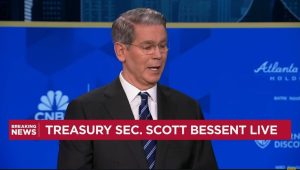
While there are no signs that tensions between the Iranian regime and the United States are easing, U.S. Treasury Secretary Scott Bessent announced new and “unprecedented” economic measures against the Iranian regime, saying Washington will continue its maritime blockade of Iran’s ports alongside intensified financial pressure.
Speaking to the Newsmax television network on Thursday, August 13, Bessent said details of the new U.S. measures will be released next week. According to him, the measures will subject the Iranian regime to a level of economic isolation the world has never witnessed before.
The U.S. Treasury secretary said the policy has two main pillars: intensifying economic isolation and continuing the maritime blockade in the Strait of Hormuz, which he said could prevent goods from entering and leaving the Iranian regime’s ports.
In recent months, Bessent has repeatedly spoken about implementing a campaign he calls “economic fury” against the Iranian regime. According to him, harsh sanctions and U.S. military operations have placed significant pressure on Iran’s economy, leaving the regime facing a severe inflation crisis and financial difficulties.
Political Prisoner Denied Treatment in Greater Tehran Prison
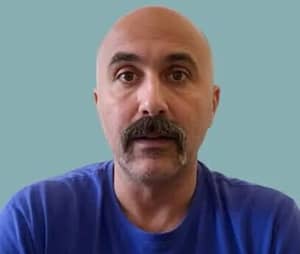
The physical condition of Hamid Haj-Jafar Kashani, a political prisoner held in Tehran Great Prison, has reportedly become concerned due to being denied appropriate medical care. The political prisoner suffers from serious spinal problems, gastrointestinal illnesses, and a heart condition, but according to information received, he has not been provided access to treatment appropriate to his medical conditions. At the same time, reports have emerged of increased pressure on him following his participation in the “No to Executions Tuesdays” campaign and his protests against the implementation of death sentences.
Despite these circumstances, reports indicate that he has not been provided with appropriate medical attention or the necessary healthcare services. The mental and psychological condition of the political prisoner has also been described as concerning due to his imprisonment conditions and the pressures imposed on him.
For a prisoner suffering from multiple illnesses, delays in diagnosis, specialized examination, or treatment can lead to a worsening of the illness and the emergence of more serious complications. Regardless of the nature of the charges or conviction, responsibility for providing medical care to a prisoner rest with the Prisons Organization and the responsible authorities.
Iran’s Regime Cuts Food Voucher Benefits Under ‘Overseas Resident’ Label

In its latest move against low-income segments of society, the Iranian regime has suspended food voucher benefits for a large number of citizens and, through text messages, has instructed them to visit government service offices to prove they are in Iran; otherwise, they will be classified as overseas residents and will no longer be eligible for the vouchers.
Many citizens have gone to these government service offices after receiving the messages, creating crowded lines of people trying to prove that they live in Iran. Even more striking is that they must also pay a fee to prove their presence.
The government’s move has sparked widespread reactions, with many social media users pointing out that even if the goal were to cut food vouchers for people living abroad, there are much simpler ways to verify residency—unless the real objective is to generate revenue from citizens while creating yet another burden for them.
The monthly food voucher allocation is 10 million rials (about $5.3) per person. The benefit is provided in non-cash form and is designated for purchasing essential goods.
Iran: Shahab Zohdi, Father of One, at Risk of Execution
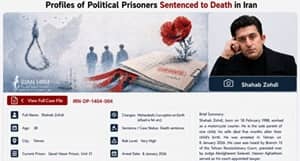
Shahab Zohdi was born on 18 February 1988. Before his arrest, he worked as a motorcycle courier. His wife died five months after the birth of their child, and for approximately the past fifteen years he has been responsible for raising the child. This family background underscores the human consequences of the death sentence: its execution would not only deprive Shahab Zohdi of his right to life, but would also leave his child without a father.
Shahab Zohdi was arrested in Tehran on 8 January 2026. His arrest was connected to a case that judicial authorities have linked to a fire at Basij Base 185, named after Martyr Mahmoud Kaveh, on Namjou Street in Tehran. The use of this description does not establish his involvement in the incident; the available information does not clarify the evidence, the basis on which the alleged act was attributed to him, the text of the judgment, or his defence submissions.
The case was heard by Branch 15 of the Tehran Revolutionary Court, presided over by Judge Abolghasem Salavati. Hassan Aghakhani was appointed as court-appointed counsel. The court sentenced Shahab Zohdi to death on charges of moharebeh (enmity against God) and efsad-e fel-arz (corruption on Earth). The exact dates on which the judgment was issued and served, the full text of the ruling, the evidence relied upon by the court, and the current status of any appeal or request for judicial review have not been made transparently available.
US Talks Bring Divisions at the Top of Iran’s Ruling Establishment into the Media
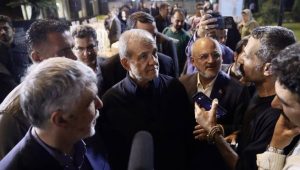
TEHRAN — The dispute over negotiations with the United States in Iran has entered a stage where it can no longer be reduced simply to a confrontation between President Masoud Pezeshkian’s government and its opponents. In recent days, domestic media have, on the one hand, criticized attacks on the government, the parliament speaker and a decision by the Supreme National Security Council, while on the other, a figure such as Saeed Jalili, to whom some forces opposed to negotiations are close, is now openly saying that war and negotiation are both tools of policy.
Khorasan newspaper, in a commentary addressed to those who present themselves as the sole defenders of the establishment’s positions, cited the leader of the Islamic Republic as saying: “Do not turn unjustified differences — or even justified ones — into conflict and division.” The writer then accused opponents of disregarding that instruction in practice: “You had differences with the government; you sharpened the blade further. You had an issue with the parliament speaker; you took ugly slogans into the streets.”
More significantly than the attacks on the government and Mohammad Bagher Ghalibaf, Khorasan pointed to objections directed at the Supreme National Security Council, writing: “You did not approve of the Supreme National Security Council’s decision; instead of preserving the standing of the national security authority, you targeted the very institution whose decisions are not implemented without the Leader’s approval.”