

THIS PAGE WILL BE UPDATED WITH THE LATEST NEWS
UPDATE: 7:00 AM CEST
Iran’s Regime Hangs Another Protester in a Desperate Show of Weakness
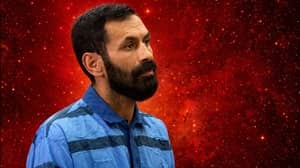
Following the massive nationwide uprisings in January 2026 that brought the ruling establishment to its knees, the Iranian regime continues to rely on its ultimate tool of survival: the execution of political prisoners and protesters.
In yet another heinous crime, the mullahs’ judiciary hanged brave protester Shahram Sadeghi in Karaj on the morning of Sunday, August 16, 2026. Sadeghi’s execution is part of a broader, systemic wave of state-sponsored killings aimed at terrorizing the public. Yet, these executions only expose the religious dictatorship’s profound fear of an increasingly restive and uncompromising society.
Sadeghi was arrested on February 5, 2026, shortly after the peak of the uprisings. On May 30, 2026, the Revolutionary Court of Karaj swiftly sentenced him to death and ordered the confiscation of all his property. To justify the execution, the regime’s judiciary claimed that on the night of January 8, 2026, near Karaj’s Golzar Crossroads, Sadeghi drove his vehicle at high speed, injuring seven regime agents, before allegedly colluding with “rioters” to set his own car on fire.
Defying the Dictatorship: Resistance Units Support Simay Azadi Telethon with 30 Daring Operations
In a display of support for the 30th national telethon of Simay Azadi (Iran National Television – INTV), PMOI/MEK Resistance Units carried out 30 daring operations against regime targets across Iran. INTV serves as the true voice of the Iranian people and remains the only network that broadcasts the operations and activities of the Resistance Units.
Sending a powerful message to the telethon, the Resistance Units declared: “We, the Resistance Units inside Iran, have no money, but we sacrifice everything for Iran.”
The nationwide campaign spanned major cities and provinces, including Aligudarz, Isfahan, Kermanshah, Mashhad, Shiraz, Azna, Birjand, Iranshahr, Khorramabad, Nikshahr, Semirom, Shahriyar, Tehran, and Zahedan. The Resistance Units took direct aim at the regime’s apparatus of terror, targeting and setting fire to IRGC Basij bases—which are primarily tasked with spying on and suppressing dissidents—in Isfahan, Kermanshah, Mashhad, and Iranshahr. They also set fire to regime facilities, including a regime building in Aligudarz and the local headquarters of the Khomeini Foundation in Shiraz.
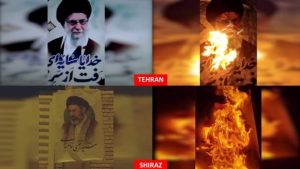
Shattering the regime’s image of authority, the Resistance Units systematically torched state propaganda posters. This included setting fire to posters of regime founder Ruhollah Khomeini, the eliminated former supreme leader Ali Khamenei, and the new regime supreme leader Mojtaba Khamenei.
Iran: Women at Fardis Prison Surrounded by Sewage and Exposed to Disease
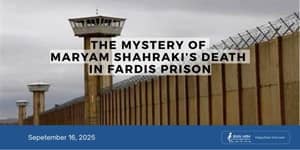
The sanitary conditions in Hall 1 of Fardis Prison in Karaj are extremely poor. Prisoners in this ward are exposed to sewage and are facing serious health risks.
In the recreation area of Hall 1, sewage has overflowed and covered the entire area used by prisoners. The sewage has accumulated on the ground like a lake throughout the area, while prison authorities have taken no action to address the problem, despite the summer heat. The smell of sewage and contaminated air has attracted insects. Prisoners are unable to use the recreation area, and the conditions have led to various illnesses.
Many prisoners have developed illnesses, including diarrhea and vomiting, as a result of the problem. The prison medical unit has also taken no action to treat the affected women prisoners.
Some of the women held in this prison are political prisoners.
Iran’s Medicine Shortage Deepens as Regime Mismanagement Fuels a Growing Health Crisis

Iran’s medicine shortage has evolved far beyond the temporary absence of a few specialized drugs from pharmacy shelves. In 2026, statements by officials, field reports, and warnings from health-sector professionals reveal a multilayered crisis involving disruptions in foreign-currency allocation and raw-material supplies, massive insurance debts, severe liquidity shortages among pharmaceutical producers and pharmacies, weaknesses in distribution and oversight, and the emergence of a parallel market where medicines unavailable through official channels are sold at exorbitant prices.
The crisis increasingly reflects the responsibility of the Iranian regime’s economic and health policies, rather than an unavoidable shortage caused solely by external circumstances.
Even official figures on the scale of medicine shortages are contradictory.
On August 3, 2026, the head of the Food and Drug Administration said the number of essential medicines classified as being in shortage had fallen from 341 to 65.
Iran’s Gasoline Price Test Exposes Regime’s Fear of a New Social Explosion
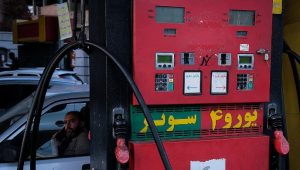
For more than a decade, gasoline prices in Iran have been a political flashpoint. Few economic issues have so consistently threatened to shake government policy and trigger warnings of social unrest. The fundamental imbalance between the Iranian regime and society remains economic hardship and deteriorating living conditions—and gasoline has become one of its most combustible manifestations.
Over the past several days, the government quietly tested a sharp increase in gasoline prices. A price of 78,200 tomans per liter was initially announced and then implemented in Kerman. Within hours, however, the governor of Kerman ordered the sale of gasoline at that price halted. The episode triggered warnings from regime officials and experts, many of whom invoked the memory of the November 2019 nationwide uprising, which followed a gasoline-price increase and rapidly became a major political crisis.
The sequence—announcement, trial implementation, and rapid suspension—suggests an attempt to measure public reaction. The apparent strategy is to announce an exceptionally high price, provoke resistance, retreat, and then introduce a lower but still significantly increased price. In effect, the government would seek to make a substantial increase appear more acceptable by comparison.
Iran’s Banking System Shows Signs of Systemic Distress as Regime Admits Capital Shortfalls and Hidden Bad Loans
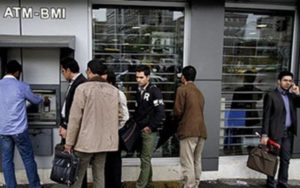
Iran’s banking system is facing a combination of capital weakness, bad loans, frozen assets, inadequate oversight, and foreign-exchange irregularities, according to an unusually revealing report carried by the regime’s state-run Mehr News Agency.
The report quoted Zabihollah Khodaiian, head of the regime’s General Inspection Organization, during a meeting with Central Bank officials, bank executives, banking technology managers, and other government inspectors. While Khodaiian framed the discussion around strengthening the banking system and supporting the economy, his remarks exposed a far more serious picture: a financial system struggling to recover its own resources while being expected to finance production, households, and an economy already under severe pressure.
The revelations are particularly significant because they come from inside the regime’s own supervisory apparatus.
Iran’s Healthcare Services in Crisis with Shortage of 100,000 Nurses

The shortage of 100,000 nurses in Iran’s healthcare system has now become one of the most serious crises facing the country’s medical services. Abbas Ebadi, the Deputy Minister of Health for Nursing Affairs, has also confirmed this figure. At the same time, the Ministry of Health has announced that it needs to recruit 60,000 personnel. However, Iran’s Administrative and Employment Affairs Organization has not yet responded to this request.
Abbas Ebadi, the Deputy Minister of Health for Nursing Affairs, spoke on August 14 about the state of the nursing workforce. He said that the Ministry of Health has formally announced its need to recruit new personnel. The request covers the entire healthcare system. However, the Administrative and Employment Affairs Organization has not yet announced the outcome of its review.
Iran And the US Are Neither at War nor at Peace — They Are Locked in A “War of Endurance”
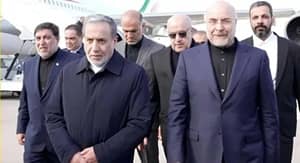
TEHRAN — Iran-US relations have entered a situation that is difficult to explain through traditional definitions of war and peace. Negotiations continue, Iranian officials are discussing shipping arrangements with Oman, and the possibility of an understanding is still being discussed; at the same time, neither side — Iran nor the United States — has backed away from its core positions in the Strait of Hormuz, and the possibility of renewed attacks has not been removed from political calculations. What has emerged is not a stable ceasefire, but a competition over who can withstand pressure longer and raise the costs for the other side.
Babak Negahdari, head of the Iranian parliament’s Research Center, described the situation more explicitly than many Iranian officials. He said one of the enemies’ objectives is to “trap Iran in a state of neither war nor peace” so that the country “remains constantly engaged, worn down and in conflict with its neighbors,” adding: “This vicious cycle must be broken and the country must emerge from the current state of attrition.”
Major Rally in New York on Sept 22 to Stop Executions and Oppose Pezeshkian’s UN Appearance
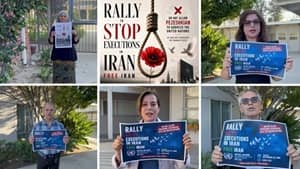
The Organization of Iranian American Communities (OIAC) has released an official flyer inviting Iranian Americans and freedom-loving Iranians to a major rally in New York on Tuesday, September 22, 2026.
The event will take place at 9:00 a.m. at Dag Hammarskjold Plaza (2nd Ave & 47th St.), opposite the United Nations. Organizers are calling on participants to demand an end to executions and torture in Iran, support women’s resistance and students, and push for democracy. A key message on the flyer states: “Do not allow Pezeshkian to address the United Nations. He does not represent the Iranian people.”
Supporters of the Iranian Resistance across the United States, including voices from California and Los Angeles, have amplified the call, urging widespread participation to protest ongoing executions of political prisoners and to stand for a free and democratic Iran.
Bucharest Exhibition Calls for Urgent Action to Stop Executions in Iran
Bucharest, Romania – August 15, 2026 – Supporters of the Iranian Resistance (NCRI and PMOI) held a photo exhibition in Bucharest highlighting human rights violations in Iran and calling for urgent international action to stop the execution of political prisoners and prevent the implementation of death sentences.

“Urgent action is needed to stop the execution of political prisoners in Iran,” the exhibition emphasized, drawing attention to the continued detention of protesters arrested during Iran’s January 2026 uprising, as well as the executions and imminent execution of political prisoners.