

THIS PAGE WILL BE UPDATED WITH THE LATEST NEWS
UPDATE: 12:30 PM CEST
NCRI Official Says Iranian Regime Is Weaker and Vulnerable to Renewed Uprising
Ali Safavi, a member of the Foreign Affairs Committee of the National Council of Resistance of Iran (NCRI), said the Iranian regime is increasingly vulnerable to renewed nationwide unrest and argued that the Iranian people, backed by an organized resistance movement, should be the primary force driving political change in Iran.
Speaking on Real America’s Voice’s American Sunrise program, Safavi said the Iranian crisis cannot be resolved through either engagement with Tehran or direct military intervention. Instead, he argued, international pressure should deny the regime resources used to suppress dissent and finance its military, missile and nuclear programs and regional proxies.
Safavi pointed to four major nationwide uprisings in Iran since 2017, including the January 2026 uprising, as evidence of persistent opposition to the clerical dictatorship. He said the country’s organized resistance movement and its networks inside Iran could help turn widespread discontent into another nationwide uprising.
“The ultimate solution to the Iranian crisis is not either engagement or is it a military intervention,” Safavi said. “It is the Iranian people who are the actors for change, plus the organized resistance.”

He rejected assessments that the Iranian regime had emerged stronger from the recent conflict, saying the government had suffered significant damage and lost senior leaders. He also cited widespread social unrest, saying that 4,229 protests involving different sectors of Iranian society took place during the Iranian year ending in March 2026.
Safavi said Iran’s economic conditions were further increasing pressure on the state. He cited inflation of about 127 percent against a 60 percent increase in the minimum wage, saying wages for a family of four were sufficient for only about 19 days of the month. He also stated that 22 million people within the labor force had no access to employment.
“The economic situation is very dire,” Safavi said, arguing that regime revenues were being directed toward military, missile and nuclear programs and support for regional proxies rather than addressing shortages and rising living costs.
He said the price of bread, a basic staple in Iran, had risen by 97 percent and that authorities were reluctant to increase gasoline prices because of the nationwide protests that followed a fuel-price increase in 2019.
Safavi stressed, however, that economic hardship alone would not bring about the collapse of the regime. What was needed, he said, was an organized opposition capable of mobilizing different sectors of society into a nationwide movement.
Safavi also outlined the NCRI’s 10-point platform, which calls for freedom of expression and assembly, abolition of the death penalty and torture, separation of religion and state, gender equality, equal rights for citizens, autonomy for Iran’s ethnic minorities and a non-nuclear Iran committed to peaceful relations with its neighbors.
UPDATE: 9:30 AM CEST
Resistance Units in Zahedan Exposes the Regime’s Plunder and Forge Path to a Democratic Republic
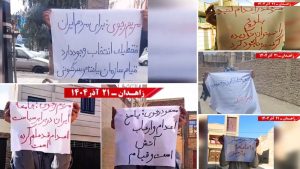
On August 21, 2026, PMOI/MEK Resistance Units in Zahedan, southeast Iran, boldly resumed their weekly anti-regime activities. Rejecting all forms of tyranny, including the mullahs’ religious fascism and the shah’s dictatorship, the brave activists held placards in public locations with messages of resistance.
Demonstrating that the region of Baluchestan is awake and utterly despises both the current regime and the former monarchical dictatorship, they reiterated a core democratic demand of the Iranian people. Their placards firmly declared, “No to mullahs, no to shah. Yes to freedom and a democratic republic.”
The Resistance Units laid bare the reality of the regime’s executive branch, holding placards stating: “Under the clerical dictatorship, the president is merely a logistics clerk for the Supreme Leader—everything else is empty ceremony and theater.”
The activists also highlighted the devastating economic reality for ordinary Iranians, noting that under this plundering regime, “the people’s dining table shrinks daily, the number of people below the poverty line and hunger increases, and the line of the unemployed grows longer.”
Iran’s Fuel Crisis Deepens as Regime Officials Invoke 2019 Protests
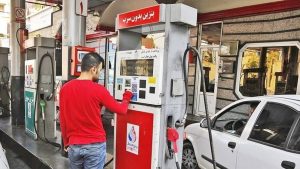
Iran’s gasoline crisis is deepening, with motorists reporting long lines and difficulties obtaining fuel while officials inside the ruling establishment increasingly voice concern over the public consequences of changes to gasoline distribution and prices.
The latest complaints came from Kerman on August 19, 2026, adding to reports of fuel problems in other cities. At the same time, three regime MPs—Seyyed Jalil Mirmohammadi Meybodi, Mojtaba Yousefi, and Hossein-Ali Haji Deligani—raised increasingly stark warnings about the impact of gasoline policies on a population already facing severe economic pressure.
Most notably, Mirmohammadi Meybodi explicitly invoked the November 2019 protests, warning that another mishandled gasoline decision could turn into a major security crisis. His remarks were also reported by Mehr News.
2 Political Prisoners Face Uncertainty and Denial of Furlough in Gorgan and Isfahan

Reports indicate continuing judicial and security pressures on two political prisoners, Masoumeh Azhini and Masoumeh Sarbanzadeh, in Gorgan and Dowlatabad Prisons in Isfahan.
Masoumeh Azhini, a 63-year-old political prisoner and a seeker of justice for the victims of the 1988 massacre of political prisoners, remains in a state of limbo in Gorgan Prison after more than 140 days (4 months) since her arrest.
Ms. Azhini was arrested on April 4, 2026. She had previously relocated from Tehran to the outskirts of Gorgan due to continuous pressure when she was detained by security forces and transferred to an undisclosed location. Although the Public and Revolutionary Prosecutorial Office of Gorgan set bail for her temporary release and her family provided the required amount, authorities continue to deny her temporary release on bail.
The Price of Freedom: Stories History Must Never Forget
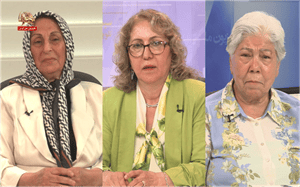
For decades, the struggle for freedom in Iran has been accompanied by repression, imprisonment, executions, and profound personal sacrifice. While the names of political prisoners and those killed for their opposition are sometimes recorded in history, the stories of the families left behind are far less frequently told.
Behind every execution was a mother who lost a son, a family whose life was shattered, and relatives who were often subjected to persecution themselves. Many mothers carried their grief for decades while continuing to preserve the memory of their children and the cause for which they had sacrificed their lives.
Among these stories is that of Eshrat Najibzadeh, known as “Mother Dehghan,” the mother of three members of the People’s Mojahedin Organization of Iran (PMOI/MEK) who were killed, and a former political prisoner in Shiraz. Another is that of Robab Barayi, a former political prisoner of Adelabad Prison in Shiraz.
Their experiences offer a glimpse into the enormous human cost of political repression in Iran and the determination of families who refused to allow those sacrifices to disappear from collective memory.
The Mirage of a Return to Monarchy: What Iran’s 2026 Crisis Has Revealed
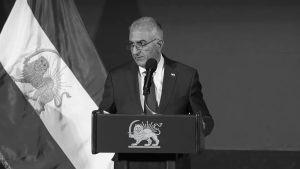
The defining lesson of Iran’s two wars and one major uprising in 2026 is not merely that the ruling regime has entered a deeper crisis. It is that every attempt to revive a failed political order—whether clerical or hereditary—runs against the aspirations of Iranian society.
The notion that Iran can return to a monarchist system under the Pahlavi family is, at best, a political mirage. Iran’s history has known many dynasties, most of which established themselves through military conquest and the exercise of power. The Pahlavi dynasty, however, emerged in the aftermath of the 1921 coup and the subsequent political transformation of the country under Reza Shah. Its restoration would therefore not represent a return to some natural historical order. It would amount to reviving a system that large sections of Iranian society rejected decades ago.
Yet Reza Pahlavi continues to promote the idea that he can play a central role in Iran’s political future. The question is not simply whether he personally seeks such a role. The more consequential question is whether the political project associated with him can offer anything beyond another form of concentrated and hereditary power.
The answer increasingly appears to be no.
Europe Must Cut the Regime Off Financially and Politically and Recognize Iran’s Democratic Resistance
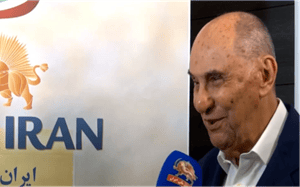
For decades, Western governments have pursued a policy of engagement and appeasement toward Iran’s ruling regime. Negotiations, dialogue, and diplomatic concessions have repeatedly failed to change its behavior, while repression at home and destabilizing activities abroad have continued.
According to Alejo Vidal-Quadras, former Vice President of the European Parliament and President of the International Committee in Search of Justice, the failure of this approach has become undeniable. In an interview with Simay-e Azadi, he argued that neither appeasement nor military action provides a sustainable solution. Instead, he called for a strategy based on maximum political, financial, and diplomatic pressure on the regime, combined with full political support for the Iranian people and the National Council of Resistance of Iran (NCRI).
Vidal-Quadras has been involved with the Iranian resistance for more than two decades. He said his commitment began after meeting Maryam Rajavi approximately 25 years ago and has continued despite the assassination attempt against him that nearly cost him his life.
Iran’s Regime Lays Groundwork for Raising Gasoline Prices
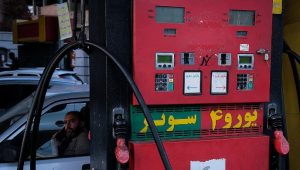
As economic and financial pressure on the Iranian regime intensifies, Iranian regime president Masoud Pezeshkian has once again laid the groundwork for higher fuel prices by highlighting the wide gap between gasoline purchase and sale prices. Meanwhile, the suspension of the UAE’s financial and commercial transactions with Iran has heightened concerns that the Iranian regime’s assets and Iranian banks’ funds in the country could be blocked.
Speaking on Friday, August 21, Pezeshkian said about gasoline prices: “Who said the government should buy gasoline for 1.3 million rials and then sell it for 15,000 rials?” He claimed that continuing this situation would reduce the government’s ability to cover costs such as food voucher programs, payments owed to wheat farmers, insurance, and the livelihoods of workers, retirees, and government employees.
These remarks come as Pezeshkian’s government is pursuing the so-called “fourth gasoline quota” plan at market prices, a proposal that has faced opposition even within the regime. On August 17, Iranian regime parliament speaker Mohammad Bagher Ghalibaf said raising gasoline prices was not “a calculated measure.”
Iranian Regime Parliament Speaker: If People Are Hungry, We Will Not Survive

Mohammad Bagher Ghalibaf, the speaker of the Iranian regime’s Majlis (parliament), warned about the consequences of the economic crisis and the intensification of U.S. sanctions. He said that even with military power, if people are hungry and the country’s economy lacks financial circulation, economic growth, and national production, the Iranian regime will not survive.
During a visit to Iraq on Friday, August 21, Ghalibaf met with people introduced as “Iran-Iraq economic activists,” described the new U.S. sanctions as “oppressive,” and said planning was needed to counter them.
He emphasized expanding trade with Iraq based on the two countries’ national currencies and said that using this method would allow them to “strike a blow against the American currency.”
These remarks came after U.S. Treasury Secretary Scott Bessent announced one day earlier that Washington was implementing a plan to sharply intensify economic sanctions against the Iranian regime with the goal of its “overthrow.”
Bessent described the plan as the largest coordinated economic isolation campaign in world history and said details of the new sanctions would be announced on Monday, August 24.
Stop the Gradual State Murder of Prisoners in Iran
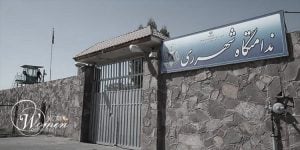
Reports received from Evin, Greater Tehran (Fashafuyeh), Qezel Hesar, Dastgerd (Isfahan), Karaj Central, Malayer, and Gonbad-e Kavus prisons demonstrate a severe deterioration of living standards, medical neglect, and non-compliance with prisoner detention regulations. Collectively, these conditions jeopardize the health and lives of prisoners and may constitute “gradual state murder” and the gradual deprivation of the right to life.
Evin Prison: Temperatures Exceeding 40°C, Bedbug Infestation, and Viral Outbreak
- Temperature and Ventilation: Temperatures inside certain wards exceed 40°C, and existing cooling systems fail to function effectively. Ward doors are kept continuously closed, and prison authorities have rejected requests to allow electric fans or evaporative air coolers purchased at the prisoners’ own expense.
- Non-Compliance with the Separation of Offenses: In Ward 7 of Evin Prison, political prisoners are held alongside general crime convicts and narcotics offenders (approximately one-fifth of Hall 2 is allocated to drug-related defendants).
- Disease Outbreak and Health Hazards: Widespread bedbug infestations and the spread of a viral illness with respiratory symptoms, severe sore throat, lethargy, and extreme weakness have been reported, lacking diagnostic testing or specialized medical care.
Iran Faces Mounting Economic Pressure as War Adds to Inflation and Budget Strains
TEHRAN — Masoud Pezeshkian’s government is confronting a post-war problem for which there appears to be no low-cost answer: government spending and pressure on resources have increased, energy-price reform is back on the table, and households that have endured years of inflation and declining purchasing power are now being asked to bear the cost of new decisions. Majid Babaei, in an analysis of the wartime economy, warned that higher defense and welfare spending and the cost of securing essential goods would directly intensify inflationary pressure if financed through the monetary base.
This pressure has not fallen on an economy that was stable before the war. Valiollah Seif, the former governor of Iran’s central bank, has described policy instability, frequent regulatory changes and volatility in macroeconomic indicators as chronic features of Iran’s economic environment. He wrote: “When the future is uncertain, economic behavior also becomes short-term. Productive investment gives way to quick-return or speculative activities, and firms refrain from implementing development projects.”
Berlin: PMOI Supporters Continue Sit-In Protest Against Executions, Call for a Democratic Republic in Iran
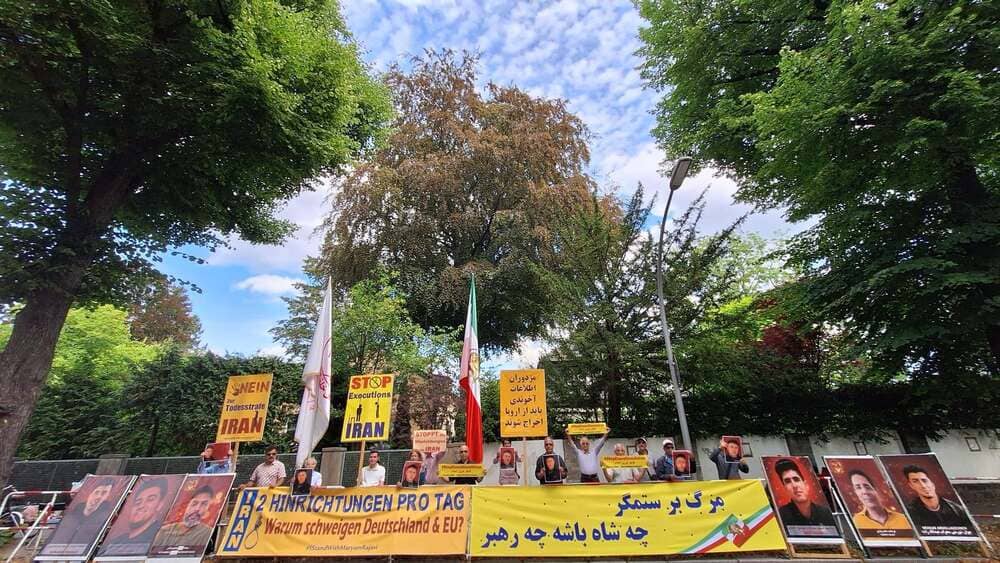
Berlin, Germany — August 21, 2026: Supporters of the People’s Mojahedin Organization of Iran (PMOI/MEK) have continued their sit-in protest outside the Iranian regime’s embassy in Berlin. The protest began on February 28 and has continued in opposition to the regime’s grave human rights violations and brutal executions, as well as to demand the closure of the embassy, which protesters denounce as a hub of espionage and terrorism.

The demonstrators are also demanding an end to the executions of PMOI political prisoners and protesters detained during the January 2026 uprising. They reaffirm their opposition to executions, war, and the policy of appeasement toward Iran’s clerical regime, emphasizing that the only viable solution is the establishment of a democratic republic based on Maryam Rajavi’s Ten-Point Plan.
Paris Exhibition Condemns Iran’s Executions and Human Rights Violations
Paris, France – August 21, 2026 – Supporters of the People’s Mojahedin Organization of Iran (PMOI/MEK) held a book table and photo exhibition in Paris to condemn the execution of political prisoners and the continued detention of protesters arrested during Iran’s January 2026 uprising.

The event highlighted the Iranian people’s demand for a democratic republic and their aspirations for peace, freedom, justice, and fundamental rights. It also drew attention to the Iranian Resistance’s call for international solidarity with the Iranian people.
Winchester Exhibition Raises Awareness of Iran’s Escalating Executions and Human Rights Violations
UK, Winchester – August 21, 2026: Members of the Academics in Exile Association in the UK, supporters of the Iranian Resistance (NCRI / PMOI), held a book table and photo exhibition in Winchester, UK, drawing attention to the Iranian regime’s escalating executions and systematic human rights abuses.

The event received an exceptional response from the public, with visitors expressing solidarity with the Iranian people’s struggle for freedom, democracy, justice, and a secular republic. The exhibition highlighted the regime’s intensifying campaign of executions, including the execution of political prisoners and protesters arrested during the January 2026 uprising, as well as growing concerns over systematic repression and severe human rights violations.