

Three-minute read
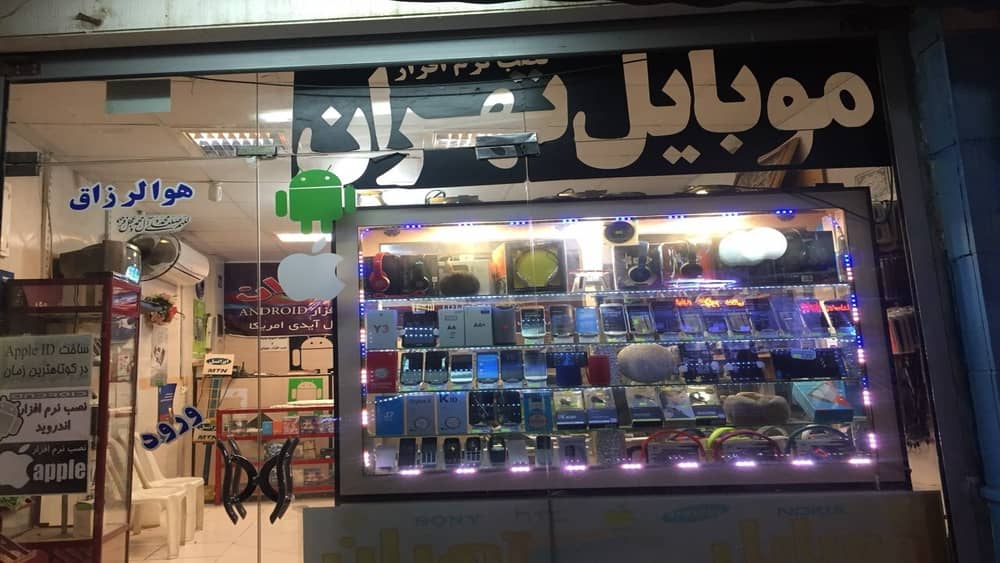
Thousands of Iranians who bought mobile phones through the domestic market are discovering that their devices can suddenly lose network access—not because they tampered with them, but because Iran’s state-controlled registration system failed to stop irregular devices before they were sold.
The latest controversy involves phones activated with manipulated or borrowed IMEI identifiers, including identifiers reportedly belonging to payment terminals. Industry estimates cited in Iranian state media put the number of suspicious devices in the tens of thousands, while reports this week said around 10,000 phones had already lost service.
That would be damaging in any economy. In Iran, it comes as households are being crushed by inflation. The Statistical Center’s September figures showed consumer prices 89.8% higher than a year earlier, with annual inflation at 73.6%. State media specifically noted that soaring mobile-phone prices helped drive inflation in communications.
A System Designed to Prevent Exactly This
Iran’s Hamta registry was created to ensure that every handset operating on domestic networks entered legally and paid the required duties. Yet Tasnim reported this month that the system is again confronting large-scale manipulation. In the latest scheme, legally registered identifiers from other equipment—including POS terminals—were allegedly used to activate phones.
#Corruption and Embezzlement Surface in #Iran as Kourosh Company’s iPhone Ponzi Scheme Collapseshttps://t.co/QkDosVgq4I
— NCRI-FAC (@iran_policy) February 20, 2024
The disturbing part is the repetition. Tasnim itself asked why such abuses keep returning while official imports remain restricted and access to foreign currency remains opaque. It noted that the outcome of an earlier major investigation into importers has still not been publicly clarified.
That earlier case involved more than 10 importing companies, around 80,000 phones and an estimated $80 million in suspected violations. Importers allegedly declared cheaper models while bringing in expensive handsets—particularly luxury iPhones—at lower duties. Yet despite the size of the case, the IRGC mouthpiece acknowledges there is still no transparent public account of what penalties the companies ultimately faced.
Consumers, by contrast, encounter the consequences immediately.
The Buyer Gets the Black Screen
A separate case involving blocked imported phones has dragged on for roughly two years. State media reported that at one stage around 12,000 devices were disconnected or blocked, leaving end users who had bought phones for personal use trapped in a dispute among importers, customs authorities, the Ministry of Industry, the so-called anti-smuggling headquarters and the registration system.
#Iran News in Brief
An #embezzlement scandal rocks the Imam Khomeini Port Complex in Khuzestan Province, Iran, as reported by the state-run Etemad newspaper. The case involves a staggering sum of two million dollars in digital currency, allegedly stolen by an employee responsible… pic.twitter.com/tZ7ResudKl— NCRI-FAC (@iran_policy) April 7, 2024
An industry representative acknowledged that better coordination among state agencies could have prevented the prolonged uncertainty imposed on consumers.
The pattern is difficult to miss: goods pass through a market supervised by numerous state agencies, reach consumers, and only later does the state discover irregularities serious enough to disable them.
Meanwhile, the government itself keeps changing the rules. Commercial imports of phones worth more than €400 have effectively been frozen this year because of foreign-currency restrictions, while even economical devices face supply problems. Passenger registration of the latest iPhone was opened and then abruptly stopped after roughly a week, prompting Tasnim to ask whether the episode reflected “rent-seeking” or simple administrative disorder.
At the same time, nearly $470 million worth of phones entered through passenger-import procedures last year, much of it believed to consist of expensive devices, even as commercial imports faced currency restrictions.
An Old Scandal with New Victims
The latest controversy also revives memories of the Kourosh Company iPhone scandal, which was revealed in 2024 as an example of corruption and regulatory failure in Iran’s mobile market.
Watch and judge why #embezzlement is breaking new records in #Iran pic.twitter.com/Zpzd4n1qLz
— NCRI-FAC (@iran_policy) December 6, 2023
The regime’s own subsequent court proceedings confirmed the scale of the disaster. Prosecutors said Kourosh Company pre-sold 17,760 phones, including heavily discounted iPhones, despite having no license to import mobile phones. Roughly 7,350 buyers were ultimately left without the devices they had paid for.
Even the regime’s contemporary analysis blamed more than one fraudulent businessman. It pointed to defective regulation, rent-producing import arrangements and the failure to enforce existing rules as conditions that allowed the scandal to grow.
That is what makes the newest wave of disconnected phones more than another registration glitch.
Iranian families are already watching food, rent and basic goods consume ever larger shares of their incomes. A smartphone that may represent months of savings can now become partially useless because state institutions failed to detect irregularities before the device reached the buyer.
Delving into #Iran’s Corruption Chronicles – Part 1https://t.co/3uRDWFAqxD
— NCRI-FAC (@iran_policy) December 18, 2023
The contrast is stark. When the regime’s security apparatus feels threatened, it can identify users, monitor communications, track dissidents across platforms, shut down accounts, restrict connectivity and arrest people over their online activity. But when ordinary Iranians need protection from fraud, regulatory failure or the sudden loss of devices they bought in good faith, that same state becomes strikingly ineffective. The machinery of surveillance is precise; the machinery of consumer protection is not. Iran’s rulers have built a system highly capable of controlling citizens, but remarkably incapable of protecting them.