

Three-minute read
On August 24, 2026, at the Paramount intersection in Shiraz, an exhausted shopkeeper faced an economic reality that had finally severed ties with basic arithmetic. The exchange rate had just smashed through the psychological barrier of 200,000 tomans to the U.S. dollar, sending rent and basic operating costs into a vertical ascent. “Our rent went from 18 million tomans to 30 million tomans,” he said, gesturing toward his shop. “I can’t pay my shop rent. I couldn’t pay my electricity bill… You claimed you’d give loans, you’d do this and that. Every pledge and covenant you made with the people, you broke; you couldn’t execute a single one of them.”
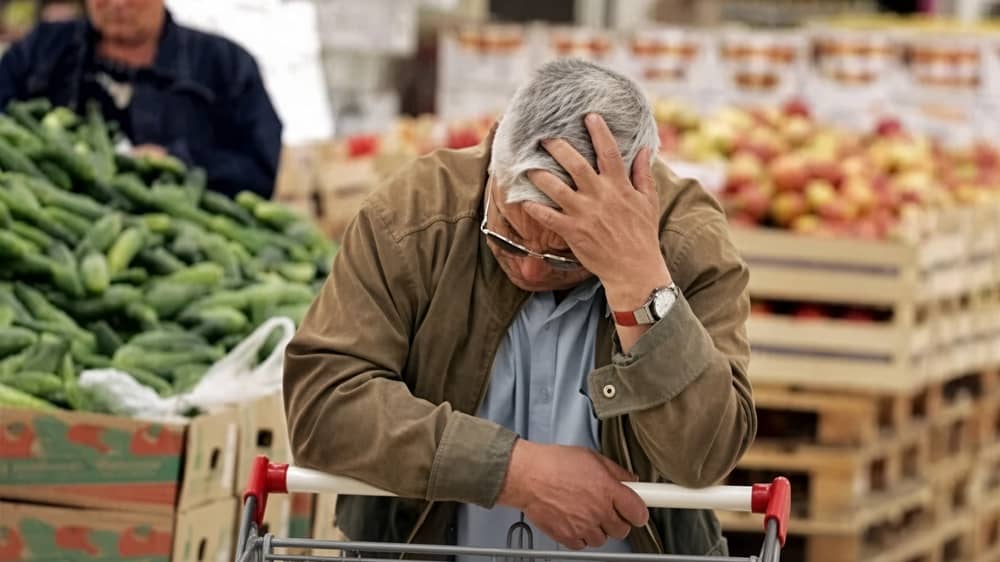
Across the country, the monetary collapse has stripped away the machinery of middle-class survival, turning daily life into an agonizing series of trade-offs. A young physician working her shift that same morning recalled a warning her professors gave seven years ago—that every expensive prescription forces a struggling family to cut back on basic nutrition. Today, she noted, that calculation is magnified a hundredfold: “Our youth burned away—whether me, who is a doctor, or that hardworking individual.” In Tehran, Negar, a 34-year-old elementary school teacher whose monthly salary barely covers ten days of basic necessities, described a society living on borrowed time: “Sometimes I find a purchase invoice from one or two months ago and see the price of that same item is now two or three times higher… In fact, we are feeding ourselves in installments.”
Faced with a population forced to purchase daily groceries on credit, the clerical establishment has responded not with policy solutions, but with information control. During a televised broadcast, government spokesperson Fatemeh Mohajerani was pressed on what percentage of citizens currently endure severe poverty or lack access to adequate food, housing, and healthcare. Her response laid bare the state’s anxiety: “I cannot announce these figures because there is a security prohibition.”
By decree of the Supreme National Security Council, fundamental economic data has been reclassified as state secrets, attempting to conceal an institutional bankruptcy already visible on every dining table.
NCRI Editorial: The Real Battle Is Inside Iranhttps://t.co/UneLPmeZZe
— NCRI-FAC (@iran_policy) August 15, 2026
Empty Shelves and Zero-Oil Budgets
Despite official efforts to seal off poverty statistics, structural collapse routinely breaks through in state-sanctioned metrics. The Statistical Center of Iran reported point-to-point inflation reaching 87.9%, driven by an astonishing 128.1% surge in food prices. Meanwhile, data reported by the state-run Mehr News Agency revealed that consumer demand for red meat collapsed by roughly 50% year-over-year. Per capita dairy consumption has plummeted to one-fourth of the global average, prompting the managing director of the Dairy Cooperatives Union to admit publicly that ordinary citizens can no longer afford fundamental staples like milk, cheese, and yogurt.
As the domestic market implodes, the state’s fiscal engine has effectively seized up. In a candid television appearance, Central Bank Governor Abdolnasser Hemmati acknowledged the harsh reality of Iran’s isolated trade position: “Our income from oil sales has become zero; it is a reality that we are not exporting oil.” Compounding the emergency, the administration is floating plans to raise free-market fuel prices and slash gasoline quotas—a move economic advisors in Donya-e-Eqtesad estimate could trim daily demand by six million liters, but which threatens to trigger massive civil unrest. Conflicting signals from state officials, with Parliament Vice Speaker Ali Nikzad reassuring the public via the Iranian Students’ News Agency (ISNA) that fuel prices would hold while government spokespeople confirmed incoming price hikes, underscore a regime arguing with itself over how to manage extreme scarcity.
The economic vise tightened further on August 24, 2026, when U.S. Treasury Secretary Scott Bessent announced a sweeping new package of secondary sanctions designed to target Iran’s remaining foreign trade partners. In Tehran’s commercial Lalehzar district, Alireza, who operates a lighting store, halted all sales as raw material costs surged 30% in three days. In the city’s north, a shoemaker named Ali watched workshop supplies double in price over eight weeks while managing his retired father’s medical care. “My father receives 20 million tomans a month in pension,” Ali explained, “but he has to pay 18 million tomans every month for his medication. The people, especially those from the most deprived strata of society, are crushed under the pressure of this situation.”
"You can terrorize an opinion. You cannot terrorize an appetite. You can shoot a demonstrator, and the regime has shot thousands. You cannot shoot #hunger, and hunger does not get tired, does not go home at night, and does not negotiate," writes @MansoreGolestan.…
— NCRI-FAC (@iran_policy) August 13, 2026
The Trap of Total Collapse
The clerical regime now finds itself locked in a fatal feedback loop. Without foreign currency reserves or crude oil revenue to subsidize basic goods, the government is attempting to transfer its structural deficits onto a populace that has already liquidated its assets, surrendered its savings, and reduced its food intake to absolute minimums.
As security directives classify hunger as a national security secret and gas stations across Tehran face unexplained operational disruptions, traditional apparatuses of state control are losing their efficacy. When a state can no longer guarantee affordable bread or stable fuel, the distance between quiet economic desperation and a popular revolt narrows to a razor-thin margin.