

THIS PAGE WILL BE UPDATED WITH THE LATEST NEWS
UPDATE: 7:00 AM CEST
Message to the Freedom-Loving Iranians Commemorating the 2022 Uprising
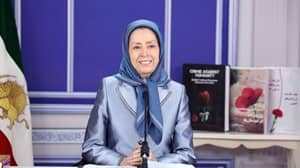
Mrs. Maryam Rajavi’s message: “On the anniversary of the 2022 uprising, our long-suffering people, the dedicated generation, and the rebellious youth honor the memory of that great surge and all its martyrs, wounded, and fighters by preparing for a thunderous uprising. As Massoud (Rajavi) said in the midst of that very uprising: ‘The only path to freedom is the Liberation Army and a hundredfold war through maximum offensive. This is how the new democratic revolution of Iran will triumph.’
“Now, once again, the echoing footsteps of those uprisings resound across the cities of Iran.
Salute, salute, salute to the 750 martyrs of that uprising, and to the tens of thousands who were wounded, injured, and imprisoned!
“An uprising that ignited with the spark of Jina Amini’s precious blood and was then set ablaze across all of Iran, from Tehran to Zahedan and Kurdistan, by the tragic martyrdom of a generation of courageous youth and teenagers like Hadis Najafi, Sarina Esmailzadeh, Mehrshad Shahidi, Khodanur Lojei, and Dr. Ebrahim Rigi. Their memories will never be forgotten.”
Zahedan Resistance Units Mark PMOI Anniversary and Election of New Secretary General
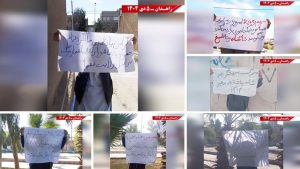
PMOI Resistance Units in Zahedan marked the 61st anniversary of the founding of the People’s Mojahedin Organization of Iran (PMOI/MEK) and the election of Mahnaz Maimanat as the organization’s new Secretary General with a public placard campaign on September 11.
The activists displayed messages in public places addressing the PMOI’s 61-year history, women’s emancipation, organized resistance, regime change, and the rejection of both clerical and monarchical dictatorship.
Among the messages were: “The anti-human regime is doomed to overthrow, and without a doubt, the people of Iran will win their freedom,” and “The democratic revolution for peace and freedom in Iran will be victorious.”
The campaign combined commemoration of the PMOI’s founding with messages presenting its new leadership and Resistance Units as part of a continuing struggle for political change inside Iran.
A distinctive theme of the September 11 activities was the connection Resistance Units drew between the election of the PMOI’s new Secretary General and the role of women in political and social change.
Iran’s Nuclear Crisis Enters a New Phase

The International Atomic Energy Agency (IAEA) has taken its most consequential step on Iran’s nuclear program in two decades. On Wednesday, the IAEA Board of Governors voted 23-3, with eight abstentions, to report Iran to the U.N. Security Council for failing to meet its nonproliferation obligations.
The vote matters, but the more consequential issue is what lies behind it: the international community can no longer reliably verify what Iran’s nuclear program contains. The IAEA has been unable to establish what happened to Iran’s nuclear material and facilities following the recent U.S. and Israeli strikes. Inspectors have not been able to restore the “continuity of knowledge” that is essential to determining where nuclear material is located, what condition it is in, and whether Iran has moved or concealed it.
Before the attacks, the IAEA estimated that Iran possessed 440.9 kilograms of uranium enriched to 60 percent. That is well above the level needed for ordinary civilian nuclear power and technically close to weapons-grade enrichment at 90 percent. The agency has not said that Iran possesses a nuclear weapon. But without access to the relevant facilities and material, it is increasingly difficult to establish what Iran has retained, moved, or potentially produced.
The Massacre of 1988: An Account by Batoul Majani
The massacre of 1988 remains a secret whose full truth has yet to be revealed. In that massacre, which primarily targeted political prisoners affiliated with the PMOI and began on July 19, 1988, the clerical regime committed an unprecedented crime against its political opponents. Khomeini had issued the order for the massacre beforehand in his own handwriting, without dating it. His intention was to complete the unfinished slaughter of PMOI members that had begun in 1981 and 1982.
In that edict, Khomeini commanded the execution of all imprisoned PMOI members who remained steadfast in their political position, writing:
“…Those who in prisons throughout the country persist and continue to persist in their hypocritical position are waging war against God and are condemned to death… Showing mercy to the PMOI is naïveté… Whoever, at any stage, remains in the position of hypocrisy deserves a death sentence. Swiftly destroy the enemies of Islam!”
Khomeini and his regime then cut off the prisons’ communications with the outside world and attempted, through silence, concealment, and absolute censorship, to prevent anyone from learning about the massacre. But on August 31, 1988, Mr. Massoud Rajavi, the leader of the Iranian Resistance, warned Javier Pérez de Cuéllar, Secretary-General of the United Nations, in a telegram about Khomeini’s massacre of political prisoners.
Restrictions on Women Prisoners in Evin; Families Protest Shorter Visits
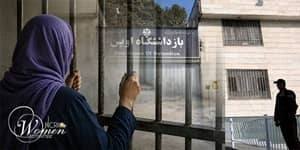
Pressure and restrictions on women prisoners in Evin prison and their families have intensified in recent months.
Following a change in the official in charge of the women’s ward visiting hall, both booth and in-person visiting times have been reduced, while families, in addition to waiting for several hours, are subjected to insulting and inappropriate treatment by the new visiting hall official, a man identified as “Rezaei.” These conditions led to protests by families and prisoners in the tense atmosphere of the visiting hall on Sunday, September 6, 2026.
The new official in charge of the women’s ward visiting hall at Evin Prison ends booth visits after 20 minutes and in-person visits after 40 minutes. Previously, booth visits lasted more than 40 minutes, and in some cases there was no specific time limit for ending them. In-person visits, meanwhile, had previously lasted more than one hour.
Following the change in the official in charge of the women’s ward visiting hall at Evin Prison, additional restrictions have been imposed on visits between prisoners and their families. Restrictions on women prisoners in Evin are now also evident in the visiting process, with the time women prisoners are allowed to spend with their families significantly reduced.
Sunni Mother of Two Sentenced to 25 Years in Prison Without Evidence
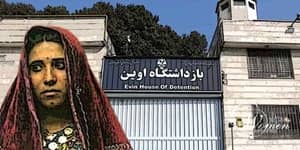
Branch 15 of the Tehran Revolutionary Court, presided over by Abolqasem Salavati, has sentenced Nasimeh Eslamzehi, a Sunni mother to 25 years in prison on charges of “assisting in the crime of baghy” (armed rebellion).
The sentence was issued even though no specific, verifiable evidence of her membership in or cooperation with an armed group was presented.
Nasimeh Eslamzehi, a Sunni mother held in Evin Prison, has been sentenced to 25 years in prison, and the sentence was delivered to her earlier this week. The 42-year-old mother has denied all charges against her since her arrest and has stressed that she was not a member of any group and had no cooperation with any group.
Nasimeh Eslamzehi was tried in three sessions at Branch 15 of the Tehran Revolutionary Court. According to an informed source, no specific evidence indicating her membership in cooperation with, or participation in armed activities was presented during these hearings.
Iran Regime Infighting Escalates Over War, Negotiations, and the Nuclear Deal
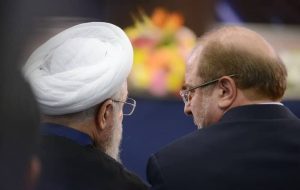
The internal conflict within Iran’s regime over war, negotiations, and the nuclear deal has entered an unusually bitter phase, with rival factions openly attacking one another and accusing their opponents of responsibility for the country’s current crisis.
The latest confrontation was triggered by former president Hassan Rouhani’s recent remarks defending diplomacy and negotiations. His comments have drawn fierce attacks from senior regime figures, who have sought to portray his policies—and particularly the 2015 nuclear deal—as the cause of the current confrontation.
On September 11, Mehdi Fazaeli, a member of the Supreme Leader’s office, launched an unusually personal attack on Rouhani, accusing him of presiding over the “most inefficient” government since the 1979 revolution. He also described Rouhani as one of the “least popular” officials of the post-revolution period and the “rudest” president toward his critics.
Fazaeli further claimed that, according to various opinion polls, Rouhani was the “most unpopular” president at the end of his term and the “most isolated” president since the revolution.
The attacks followed Rouhani’s argument that the regime must stop creating artificial political divisions between military power and diplomacy.
Iran Protests Spread From Teachers and Retirees to Workers and Couriers
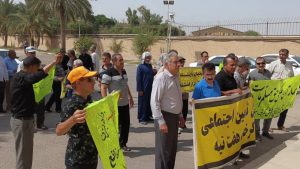
The third week of Shahrivar has brought another broad wave of protests across Iran, with teachers, retirees, workers, nurses, railway employees, and motorcycle delivery drivers taking to the streets over unpaid wages, inadequate pensions, inflation, deteriorating living standards, and official corruption.
The protests, reported from Tehran, Yasuj, Ahvaz, Shush, Dezful, Kermanshah, Isfahan, Kurdistan, Ilam, Arak, and other cities, reveal how economic grievances are increasingly converging with demands for accountability, freedom, and an end to repression.
On Sunday, September 6, teachers gathered in Tehran to protest unpaid claims and arrears, inadequate insurance coverage, and mounting economic pressure. Their slogans demanded accountability from officials and emphasized solidarity between employed and retired teachers.
In Yasuj, teachers also held a solidarity protest in support of colleagues who had traveled to Tehran. The simultaneous actions underscored the growing willingness of educators to coordinate their demands rather than confront their problems individually.
The teachers’ protests reflect grievances that extend beyond salaries. Unpaid benefits, inadequate insurance, and the broader deterioration of living standards have become persistent sources of anger among educators.
Iran: Seyed Mohammad Javad Vafaei Sani, a boxing coach, facing a death sentence
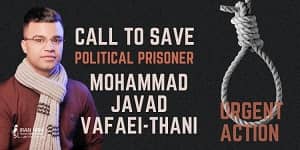
Vafaei Sani was born in 1995 or 1996 and is from Mashhad. Before his arrest, he coached at boxing clubs and worked as an electrician. According to the information provided, his father and brother are ill. Years of imprisonment and uncertainty over the death sentence have also caused his family profound concern.
Mohammad Javad Vafaei Sani, a 30-year-old boxing champion and coach at clubs in Mashhad, was arrested by Ministry of Intelligence officers at his home in the city in February or March 2020. According to information supplied for this case, he was subjected to severe physical and psychological pressure and torture in detention, including 65 days in a detention facility reportedly run by the Islamic Revolutionary Guard Corps Intelligence Organisation. Bail of 30 billion tomans was set for his temporary release pending trial, an amount his family could not afford. He has rejected the allegations against him.
In January 2022, Branch 4 of the Mashhad Revolutionary Court sentenced him to death on the charge of efsad-e fel-arz (corruption on Earth), in connection with alleged arson and destruction of specified premises, including a building of the Governmental Discretionary Punishments Organisation. According to the case information, the initial judgment imposed two death sentences and ten years’ imprisonment. Although represented by a lawyer, he was reportedly denied an effective opportunity to defend himself. The precise date of the trial hearing and the full text of the judgment are not available in the materials reviewed.
Iran’s Nuclear Referral to UN Security Council Exposes Divisions Over Diplomacy and NPT Withdrawal
The referral of Iran’s nuclear file back to the UN Security Council has highlighted an open divide within the Islamic Republic’s political and media establishment. While some figures and outlets are calling for a return to diplomacy and cooperation with the IAEA, the hardline camp is proposing withdrawal from the NPT and restrictions on international inspections as a response.
The referral of Iran’s nuclear file to the Security Council after roughly two decades has not only intensified Tehran’s confrontation with the West, but also exposed an internal divide over how to deal with the crisis. One side emphasizes negotiations, cooperation with the International Atomic Energy Agency and preventing further isolation, while the other is calling for withdrawal from the Nuclear Non-Proliferation Treaty, or NPT, and a sharp reduction in cooperation with the agency.
The strongest position has come from Kayhan. In an article titled “Has the time still not come for Iran to leave the NPT?”, the newspaper argued that Iran’s nuclear cooperation has not only failed to prevent Western pressure, but has turned the IAEA into a tool against Iran’s security. Kayhan concluded that “there is no option left except a decisive response, blinding the enemy’s spying eyes and withdrawing Iran from the NPT”.
Iranian Political Prisoner Alireza Sepahi Transferred to Solitary Confinement: Risk of Imminent Execution

Alireza Sepahi, a death-row prisoner, has been removed from the general ward of Dastgerd Prison in Isfahan and transferred to solitary confinement. In execution cases, such a move can usually signal that the time for carrying out the sentence is approaching, sharply increasing concerns that he may be executed within the coming hours or days.
From the outset, Sepahi’s case has been accompanied by serious reports of torture, beatings, and forced confessions. According to published accounts, during the arrest and interrogation process, Alireza’s mother was tortured in front of him, while he and Abolfazl Sepahi were also beaten in the presence of family members.
Several defendants linked to this case have also told the court about torture, sexual assault, and threats of rape used to force them to confess against one another. Given the role of confessions in the judicial proceedings of this case, these allegations raise serious concerns about compliance with fair-trial standards.
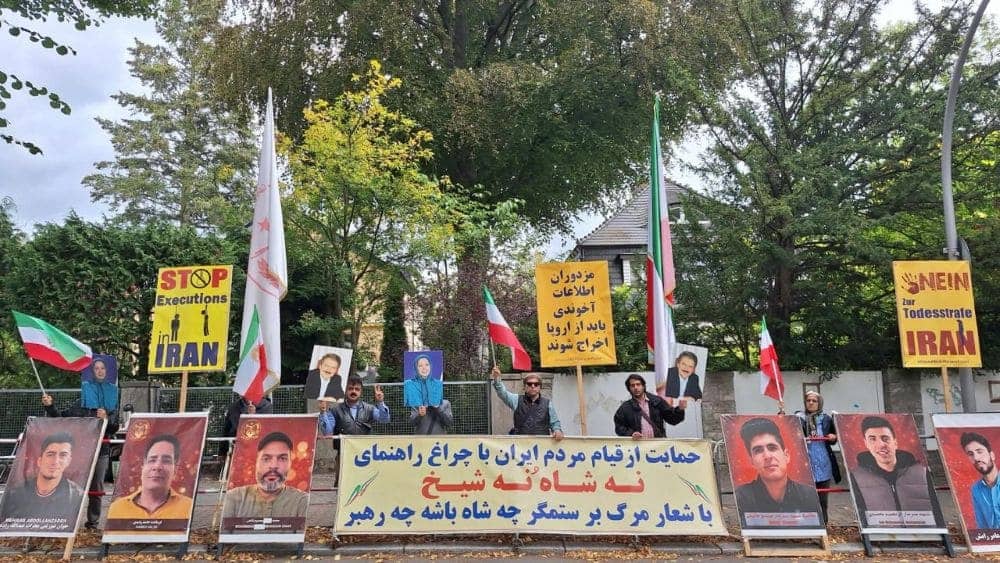
Berlin: PMOI Supporters Mark Day 195 of Sit-In, Call for Closure of Iranian Regime Embassy
Berlin, Germany — September 10, 2026: Supporters of the People’s Mojahedin Organization of Iran (PMOI/MEK) have continued their sit-in protest outside the Iranian regime’s embassy in Berlin for the 195th consecutive day.
The protesters are calling for the closure of the embassy, which they describe as a center of espionage and terrorism operated by the Iranian regime in Germany. They are also demanding accountability for the regime’s systematic repression, human rights violations, and continuing executions in Iran.

The sit-in reflects the protesters’ opposition to both the clerical dictatorship and a return to the former monarchical system. Their position is expressed in the slogan, “Down with the oppressor, be it the Shah or the Supreme Leader.” They say Iran’s future should be based on a free and democratic republic rather than another form of dictatorship.
The protesters support the establishment of a democratic republic based on Mrs. Maryam Rajavi’s Ten-Point Plan and call for international recognition of the provisional government proposed by the National Council of Resistance of Iran (NCRI) as part of the transition toward a democratic Iran.