

THIS PAGE WILL BE UPDATED WITH THE LATEST NEWS
UPDATE: 7:00 AM CET
The November 2019 Uprising: An Enduring Model for the Protests of Iran’s Oppressed People
On the seventh anniversary of the bloody November uprising, we pay homage to the revolutionary movement that swept through more than 200 cities across Iran and honor the extraordinary readiness of its people to fight for the regime’s overthrow. We hold high the memory of the 1,500 courageous protesters who gave their lives during the uprising, renewing our unwavering commitment to carrying their struggle forward to its glorious destination: freedom and a democratic republic.
In those days, Khamenei and the Revolutionary Guards trembled before the surging waves of popular resistance. The commander of the Revolutionary Guard Corps (IRGC) at the time was so alarmed that he compared what had befallen the regime to Hiroshima and Nagasaki. “Believe me, we are in the midst of a major global war,” he said.
To preserve their decaying regime, the authorities resorted to crimes against humanity. In Mahshahr, Ahvaz, Behbahan, Sirjan, Marivan, Shiraz, Khorramshahr, Shahriar, Qods City, Eslamshahr, and dozens of other cities, they spilled the blood of Iran’s young people, including teenagers, in an attempt to suppress the surging tide of public anger.
We will neither forgive nor forget, until the day when the ruling clerics, the commanders of the Revolutionary Guards, and all those responsible for operating the machinery of repression and killing are held accountable before the people of Iran.
Iranian Boxer On Death Row for Protesting to Be Honored in London with Human Rights Award

Iranian boxer Mohammad Javad Vafaei Sani will not be in London on Thursday to accept his Outstanding Human Rights Activist Award from the Global Magnitsky Justice Campaign. He remains on death row in his home country for protesting the government. The ceremony will go on without the 30-year-old, who has been sentenced to death three times since his arrest after the November 2019 protests targeting the Iranian government. The sentence was overturned twice before the nation’s Supreme Court upheld it in 2025. Appeals from boxers, human rights advocates and his family have had no impact on the repressive, hard-line regime in Tehran, which has ramped up executions of its own citizens in recent months.
“His life is in immediate danger,” Vafaei Sani’s family told the Iran Human Rights Monitor in December. “We have no information about him.”
Vafaei Sani was a boxer and coach in Mashhad, Iran. Born to an impoverished family, he became a top national fighter before attracting global attention for his activities outside the ring.
In 2017, he joined protests against the government, then led by Supreme Leader Ayatollah Ali Khamenei. He protested again in 2019, leading to his arrest in early 2020.
PMOI Resistance Units Across Iran Support 146th Week Of ‘No to Executions Tuesdays’ Campaign
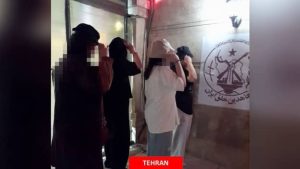
On November 10, 2026, Resistance Units affiliated with the People’s Mojahedin Organization of Iran (PMOI/MEK) carried out anti-regime activities across Iran in solidarity with the “No to Executions Tuesdays” campaign, displaying placards condemning executions and demanding freedom for political prisoners. The activities took place in Tehran, Isfahan, Zanjan, Hamedan, Lahijan, Rasht, and Kerman. The activities coincided with the 146th consecutive week of the “No to Executions Tuesdays” campaign, during which prisoners in 66 prisons staged coordinated hunger strikes against the regime’s use of capital punishment. Through their messages, the Resistance Units condemned the recent execution of two young protesters, demanded the revocation of death sentences against PMOI supporters, and declared that executions would not silence the people’s resistance.
In Tehran, Resistance Units highlighted the cases of political prisoners facing death sentences for their alleged support of the PMOI. One placard declared, “The death sentence of Zahra Tabari must be revoked,” while demanding the release of Arghavan Fallahi and an end to the planned execution of Manouchehr Fallah.
Zahra Tabari, a 68-year-old electrical engineer arrested in April 2025, was sentenced to death on charges related to PMOI membership. Following a retrial, the Revolutionary Court in Rasht issued another death sentence against her on April 14, 2026.
Two Child Marriage Victims Killed in One Day in Iran

The killing of two child marriage victims in a single day has once again exposed the deadly consequences of forced marriage in Iran. Sogand Moshtareki, a 14-year-old child mother in Kerman Province, and Sepideh Raeisi, a 21-year-old pregnant woman in Fars Province, were both forced into marriage as children and were ultimately killed by their husbands. Their cases are not isolated incidents but part of a broader pattern of violence against women sustained by discriminatory laws, a patriarchal system, and the impunity enjoyed by many perpetrators in Iran.
These crimes are not isolated incidents. They are part of a continuing cycle of violence sustained by discriminatory laws, the ruling regime’s patriarchal power structure, and the effective impunity enjoyed by perpetrators of violence against women.
On Friday, November 6, 2026, Sogand Moshtareki, a 14-year-old girl from Kerman Province, was beaten to death by her husband.
She had been forced into marriage at the age of 13 and had given birth only days before her murder.
Sogand had recently survived a traffic accident while being transported for childbirth. She survived that ordeal and safely delivered her baby, only to lose her life shortly afterward at the hands of her husband.
Following the murder, the suspect was arrested and reportedly claimed that the motive was “family disputes.”
Iran’s Workers Face Deepening Poverty as Inflation Erases Wages and Pezeshkian’s Promises Ring Hollow
Iran’s workers are facing an accelerating decline in purchasing power as soaring inflation continues to erode wages and household incomes. Despite President Masoud Pezeshkian’s earlier promise to adjust workers’ and minimum-wage earners’ salaries in the middle of the year in line with inflation, no such increase has materialized. Meanwhile, the government is already preparing its budget for the next fiscal year, offering familiar promises of inflation control, production support, infrastructure reconstruction, and improved living standards.
The gap between these promises and the economic reality facing ordinary Iranians continues to widen. Workers who have already lost a substantial portion of their purchasing power since the beginning of the year are struggling to cover even basic household expenses.
The government’s proposed 1406 (2027–28) budget raises a fundamental question: how can the regime claim to be pursuing financial discipline and protecting people’s livelihoods while maintaining spending priorities that divert enormous resources away from the population?
Pezeshkian’s budget circular emphasizes controlling inflation, preserving production, rebuilding infrastructure, and protecting household livelihoods. Yet these objectives remain largely rhetorical when measured against the government’s actual economic record.
Iranians’ Share of Oil Revenues Declines from $347 per Month to Just $40
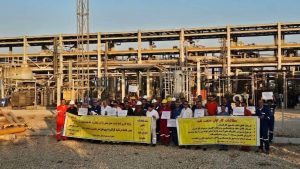
Iran’s oil revenues reached their highest levels in 1974 and 2011, when each Iranian’s monthly share of oil income amounted to $347 and $175, respectively. In recent years, this figure has fallen to just $40.
An examination of the real value of oil revenues shows that Iran’s oil export earnings peaked in 2011, reaching approximately $164 billion (in constant 2025 prices). However, 1974 was also one of the historic peaks in Iran’s oil revenues, with the real value of oil exports reaching approximately $136 billion that year.
Iran’s population in 2011 was approximately 2.4 times its 1974 population. Consequently, despite higher total oil revenues in 2011, real per capita oil income in 1974 was nearly twice that of 2011. Each Iranian’s share amounted to approximately $347 per month in 1974 and $175 per month in 2011. In recent years, this figure has fallen to approximately $40.
The first shock followed the developments surrounding the 1979 Revolution and disruptions to oil production and exports. Iran’s oil production, which had approached approximately six million barrels per day in September 1978, fell to around 2.3 million barrels per day by November. The main reason for this decline was strikes by oil industry workers.
Iranian Political Prisoner Peyman Farahavar’s at Risk of Execution as Judiciary Refers His Case to Implementation Department
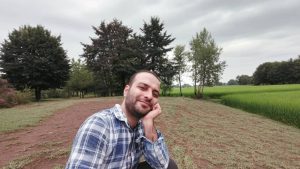
According to reports published on Tuesday, November 10, the case of Peyman (Amin) Farahavar, a 38-year-old poet and political prisoner held at Lakan Prison in Rasht, has been referred to the Execution of Sentences Unit following the Supreme Court’s reaffirmation of his death sentence.
Farahavar informed his family in a telephone call that his case had been transferred to the Execution of Sentences Unit. This development has heightened concerns among his family and human rights activists about the risk of his execution.
The poet, who is from Gilan Province in northern Iran, was sentenced to death by Branch One of the Revolutionary Court in Rasht, presided over by Judge Ahmad Darvish-Goftar, on charges of “rebellion” and “waging war against God,” as well as supporting the People’s Mojahedin Organization of Iran (PMOI/MEK), an Iranian opposition organization.
In his poetry, Farahavar had criticized environmental destruction, illegal land seizures, cronyism, and economic policies in Gilan Province.
Peyman was arrested by security forces in August 2024 and initially transferred to a detention facility run by the Ministry of Intelligence. After seven months of detention and uncertainty at Lakan Prison in Rasht, he was sentenced to death and three months in prison. The sentence was issued on May 1, 2025, by a court presided over by Judge Ahmad Darvish-Goftar, without the presence of a defense lawyer.
Teachers’ Salaries in Iran Plummet, Affecting Classrooms and Students’ Future
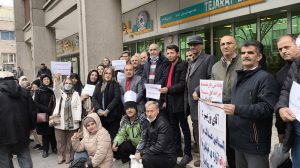
The collapse in teachers’ salaries and the 83% decline in their purchasing power have pushed Iran’s public education system into crisis. Over the past decade, teachers’ purchasing power has fallen by 83%. Monthly salaries of 200 million to 250 million rials (approximately $77 to $91) are no match for the high cost of living, while the government’s retreat from funding public education has plunged Iran’s education system into a deep crisis. Ultimately, students and future generations will bear the cost.
Teachers’ living conditions in Iran have deteriorated to the point that the situation can no longer be described merely as a labor-related issue or a demand for higher salaries. When a teacher with 15 years of experience earns approximately 250 million rials a month, while estimates cited in domestic reports place the poverty line for a household in major cities at between 850 million and 910 million rials (approximately $327 to $350), the issue goes beyond workplace dissatisfaction and has become a structural crisis in public education.
Teachers’ salaries, which stood at approximately $636 a month in 2016, had fallen to around $100 by the autumn of 2026, representing a decline of nearly 83% in one decade. These figures illustrate the severe erosion of teachers’ wages.
Teachers, who should be devoting their full intellectual and professional abilities to educating and nurturing students, are now forced to take on second and even third jobs after school hours to cover their basic living expenses. Under such circumstances, they have little time left for reading, research, lesson preparation, or improving their teaching skills.
PMOI Supporters in Hamburg Rally in Solidarity with Iran’s “Tuesdays Against Executions” Campaign
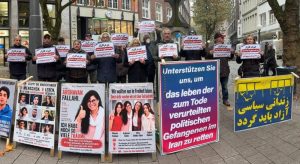
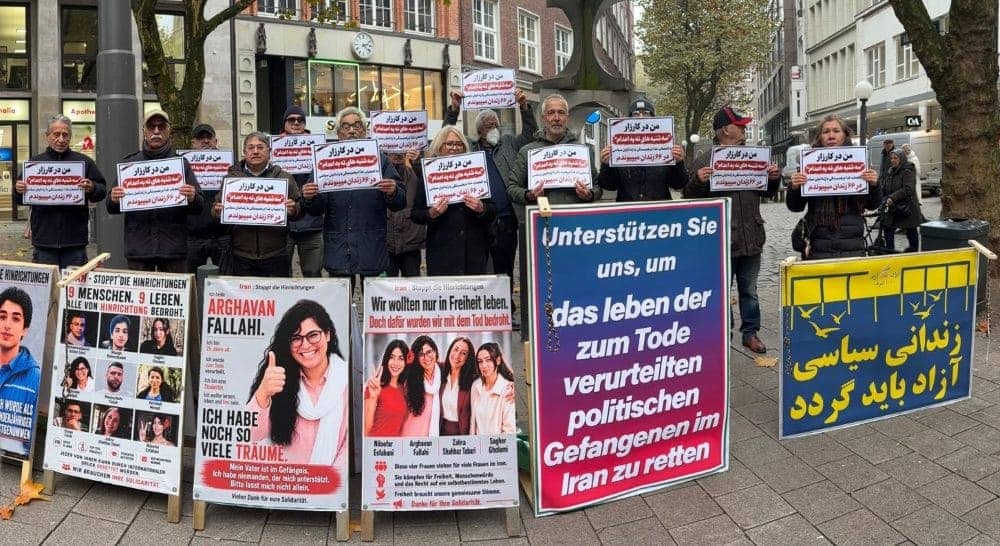
Hamburg, Germany – November 10, 2026: Supporters of the People’s Mojahedin Organization of Iran (PMOI/MEK) held a gathering in Hamburg in solidarity with the 146th week of the “No to Execution Tuesdays” campaign, expressing their support for prisoners across Iran who continue to protest against the death penalty and demand justice and freedom.
The gathering highlighted the ongoing resistance of prisoners in 66 prisons across Iran, where inmates have designated every Tuesday as a day of protest and resistance against executions. Despite the harsh conditions behind prison walls, they remain determined to continue their struggle until the abolition of the death penalty and the establishment of social justice in Iran.
Participants in the Hamburg gathering emphasized that these prisoners represent the voice of a nation seeking freedom and an end to executions. Their protest sends a powerful message of defiance against a practice that continues to claim lives and violate the most fundamental human rights.
The supporters of the PMOI called on freedom-loving people, human rights advocates, and all those committed to human dignity to join the “No to Execution Tuesdays” campaign and amplify the voices of prisoners who are fighting for their lives behind bars.
They stressed the importance of breaking the silence surrounding executions in Iran and preventing the normalization of this inhumane practice. They also reaffirmed their solidarity with prisoners and their determination to continue supporting the campaign until capital punishment is completely abolished.