

Three-minute read
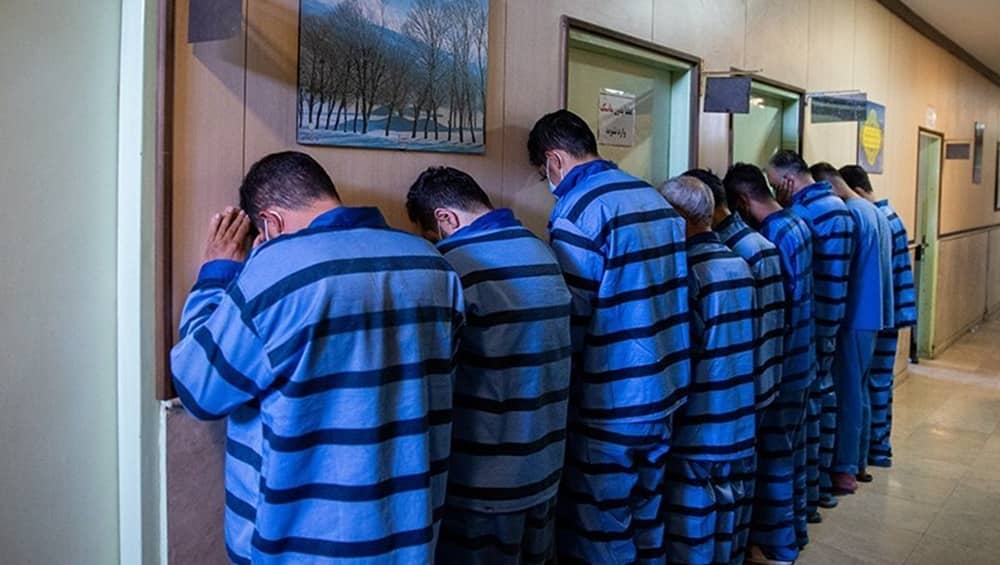
The Iranian regime’s judiciary is widening financial punishment against opponents, while senior institutions are simultaneously threatening action against figures who publicly advocate a referendum or an end to the war on terms outside the ruling establishment’s approved line. Tehran prosecutor Ali Salehi announced that authorities had identified 2,191 bank accounts belonging to 394 people and seized 37 vehicles, accusing their owners of cooperating with a “hostile enemy” during recent conflicts and last year’s protests.
The authorities disclosed no names or individualized evidence supporting those accusations. The measure nevertheless extends an existing campaign: the judiciary had previously announced the seizure of 240 properties and assets and the blocking of 182 bank accounts, including assets linked to journalists, media activists and Iranians living abroad.
Financial coercion is being accompanied by increasingly explicit policing of political speech. In a September 22, 2026, statement, the Assembly of Experts declared that discussion of a referendum or an “honorable peace” under current conditions amounted to surrender and “disturbing public opinion,” calling such speech an “unforgivable crime” and urging the judiciary to act against those responsible. The same statement said continued organized presence in the streets was an “undeniable necessity.”
The target was left unnamed, but the message was difficult to miss. After former regime president Hassan Rouhani called for an “honorable” end to the war and some aligned figures raised the prospect of a referendum, he has been attacked by many regime officials urging judicial action. The dispute cuts directly into Mojtaba Khamenei’s authority: Article 110 of the regime’s own constitution reserves the declaration of war and peace—and the issuance of referendum decrees—to the Supreme Leader. What is presented as a debate over peace therefore also challenges who has the constitutional power to decide it.
Tehran’s refusal to yield under extraordinary military and #economic pressure is often mistaken for "resiliance." The evidence points to something darker: a ruling system that believes it cannot afford to retreat because the greater danger lies at home.
By @HakamianMahmoud…— NCRI-FAC (@iran_policy) September 24, 2026
Negotiation as Another Battlefield
The language of the council’s statement is important when assessing Tehran’s current contacts with foreign interlocutors. Parliament Speaker Mohammad Bagher Ghalibaf said on September 22 that “negotiation is also a method of struggle.” He explicitly rejected the idea that talks represented departure from confrontation, describing them instead as transferring part of the same battlefield into diplomacy: “Diplomacy does not mean surrender.”
At the same time, senior adviser Yahya Rahim Safavi said the supreme leader had left the government room to negotiate as a matter of “expediency.” Yet hardline outlets simultaneously warned of a “political trap,” while other establishment figures pressed for greater latitude to negotiate. The dispute is therefore less between war and peace than over how the ruling system should maneuver under mounting pressure.
That factional hostility has also appeared outside official institutions. Footage published on social media showed a gathering outside Rouhani’s home where participants denounced him and chanted “Death to Khatami, Zarif and Rouhani.”
"Even by the Iranian regime’s own measurements, the #economy is contracting at an extraordinary pace," writes Farid Mahoutchi.https://t.co/vvd8XGsOG9
— NCRI-FAC (@iran_policy) September 22, 2026
Pressure in the Southeast
The domestic-security pressures are not confined to political speech. On September 23, the IRGC confirmed that Brig. Gen. Hossein Zarifi, commander of its Sajjad operational headquarters in Saravan, was killed during fighting in Sistan and Baluchestan. The Guards claimed that five armed opponents were killed and others detained in the operation. State media had already acknowledged previous security-force deaths in operations around Saravan and the killing of a police officer in an attack on the Iranshahr–Bazman road.
Meanwhile, the establishment’s own security rhetoric continues to reveal where it sees vulnerability. On September 23, a deputy IRGC commander in Qom said adversaries were counting on two developments: “miscalculation by officials” and “making people discouraged and tired.” He identified economic sanctions, political disputes and cultural issues as instruments capable of influencing public attitudes.
Taken together, the picture is of a regime locked in confrontation on three fronts: with its own people through repression, confiscation and the criminalization of dissent; with the outside world through war and confrontation; and with itself through widening factional battles over how to escape the crisis. The recurring fear in its own statements is that these pressures may converge—external pressure feeding economic exhaustion, public anger and fractures inside the ruling establishment itself.