

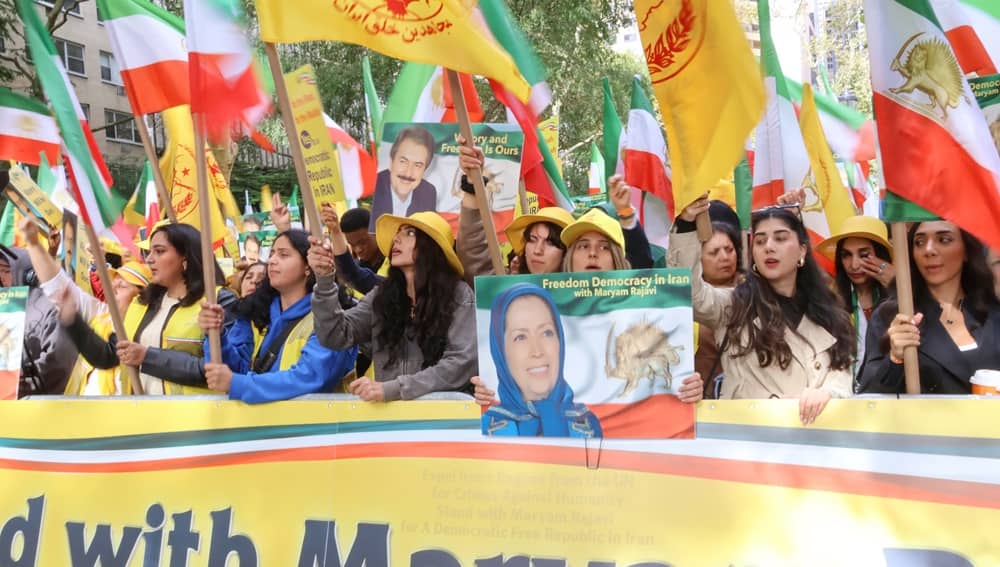
THIS PAGE WILL BE UPDATED WITH THE LATEST NEWS
UPDATE: 7:30 AM CEST
Disease Outbreak in Fardis Prison; Women Prisoners Without Doctors or Medication
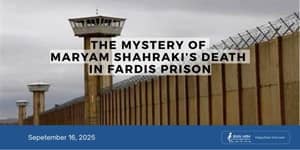
A recent disease outbreak in Fardis Prison in Karaj has sparked serious human rights and health concerns.
As viral and seasonal illnesses sweep through the women’s ward, leaving several inmates in critical condition, many are being denied access to basic medical care.
The lack of essential hygiene supplies, basic symptom-relief medications, a resident doctor, and the overall poor performance of the clinic have severely worsened the prisoners’ conditions.
While overcrowding and substandard facilities have long plagued the facility, the ongoing disease outbreak in Fardis Prison has pushed the crisis to a breaking point.
Medical crises at the facility are far from new. The absence of a doctor and chronic drug shortages have consistently blocked inmates from proper treatment.
Accessing even basic remedies is a constant struggle, as the clinic remains critically underequipped.
Low Pay and Mounting Pressure Are Deepening Iran’s Nursing Crisis

The nursing crisis in Iran has deepened significantly in recent years, with the country’s nursing workforce and broader healthcare system facing increasingly difficult conditions. Reports and documented data published by state-affiliated media reveal a troubling reality: healthcare workers are struggling under severe financial pressure, major disparities in pay, mandatory overtime, and chronic workplace exhaustion.
The crisis cannot simply be attributed to temporary budget shortfalls or administrative shortcomings. It is closely tied to the way the healthcare system is governed and managed. The authorities cannot be separated from responsibility for these conditions, as their failure to address the basic rights and needs of healthcare workers has been a major factor behind the emergence and continuation of the crisis.
One of the clearest signs of the nursing crisis and the deteriorating conditions faced by healthcare workers is the widening gap between soaring inflation and their low incomes.
On September 22, 2026, Jahan-e Sanat reported that, amid a broader crisis in the healthcare sector, many nurses earn less than 30 million tomans a month. Given the soaring cost of living, this effectively leaves many of them struggling below the poverty line.
Iran Regime Infighting Erupts Over Araghchi–Witkoff Contact as Divisions Over U.S. Policy Deepen
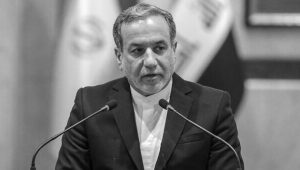
The indirect contact between Iran regime Foreign Minister Abbas Araghchi and U.S. envoy Steve Witkoff on the sidelines of the United Nations General Assembly has triggered an unusually public dispute inside Tehran. The controversy is not limited to whether the contact was necessary. Regime-linked media and officials are openly contradicting one another over who authorized it, who controls foreign policy, and what the encounter says about Tehran’s position under pressure from Washington. The dispute exposes a regime struggling to present a unified line at a moment when its room for maneuver is increasingly constrained.
The sharpest criticism came from Tasnim, a news agency closely associated with the regime’s security establishment. It accused Araghchi of engaging with Witkoff without coordination or authorization from the relevant decision-making bodies, including the Supreme National Security Council.
Tasnim questioned why Araghchi needed to convey Iran’s conditions again when, according to the same report, those conditions had already been communicated to Washington through intermediaries. It also demanded an explanation from the foreign minister regarding the authorization for the contact.
Argentina Advances AMIA Case Against Eight Iranian Regime and Hezbollah Operatives
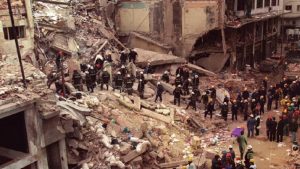
Argentina has taken a major new step toward bringing those accused of planning and executing the 1994 AMIA bombing to trial, formally processing seven Iranian regime officials and a Lebanese Hezbollah operative in connection with the attack that killed 85 people and wounded more than 150.
Federal Judge Daniel Rafecas issued a 648-page ruling on September 21, formally charging the eight suspects with different levels of participation in the bombing of the Argentine Israelite Mutual Association (AMIA) in Buenos Aires.
The ruling also ordered an asset freeze of $500 million for each of the eight defendants. Because the suspects are outside Argentina, the proceedings are being pursued under the country’s recently established legal framework for trials in absentia.
The development marks a significant advance in a case that has remained unresolved in court for more than three decades.
Based on evidence assembled by the AMIA Special Prosecutor’s Office, headed by prosecutor Sebastián Basso, Rafecas determined that the strategic decision to carry out the bombing was made in August 1993 by the highest levels of the Iranian regime.
UN Experts Demand End to Killings of Kurdish Kulbars and Baluch Sukhtbars

United Nations human rights experts have called on Iran regime’s authorities to end the use of lethal force against Kurdish kolbars and Baloch sukhtbars, describing the reported killings as unlawful and demanding independent investigations into every death caused by security forces.
Kolbars, mostly Kurdish border couriers, and sukhtbars, Baloch fuel carriers, operate in some of Iran’s most economically deprived and heavily militarized border regions. The UN experts noted that many depend on carrying goods or fuel across difficult border areas because they have few other means of supporting their families.
“They must not pay for that poverty with their lives,” the experts said in a statement issued on September 23.
According to information received by the UN experts, at least 12 kolbars have been shot dead by Iranian border forces or the Islamic Revolutionary Guard Corps since the beginning of 2026.
The experts said they had received reports of seven kolbars killed by direct gunfire from Iranian border guards during the previous two months alone. Several were reportedly shot at close range and without warning, including cases in which the victims were allegedly carrying no goods.
Iran’s Economy Dips Below Zero Across All Major Macroeconomic Indicators in Spring 2026

The latest official report published by Iran’s Statistical Center provides a clear picture of the deepening crisis and sharp deterioration in Iran’s economic production indicators. Statistical data show that GDP growth in the first quarter of 2026 reached negative 10.1% including oil and negative 4.6% excluding oil.
The diversion of financial resources toward unusual expenditures and regional adventurism, along with the creation of a wartime environment, has severely reduced Iran’s economy’s ability to inject capital into productive sectors. The failure to spend on improving the country’s economic conditions and the neglect of infrastructure modernization have brought gross fixed capital formation down to negative 8.4%, resulting in the deterioration of existing capacities. Continuing this approach will erode productive potential and national income.
An analysis of the indicators for spring 2026 shows that the lack of focus on domestic development and the consequences of the mullahs’ military adventurism have directly undermined the economy’s overall health. This approach has led to a 35.7% decline in exports, a 10% reduction in the size of the economy, and a halving of Iranians’ per capita income over the past 13 years. The various dimensions of these figures and their broader underlying causes are examined below.
Iran: A Lost Generation; The Policies of the Islamic Republic and the Destruction of Children’s Futures

While hundreds of thousands of Iranian children face poverty, educational deprivation, child labor, declining quality of public education, addiction, and lack of minimum growth and development opportunities, governance priorities in the Islamic Republic of Iran—rather than focusing on child rights and investing in their future—have shifted toward securitizing the educational environment, ideological control, and expanding surveillance mechanisms.
The evidence compiled in this report demonstrates that violations of children’s rights in Iran are not the result of a single isolated factor. Widespread educational deprivation, the proliferation of child labor, families’ inability to afford educational expenses, the collapse of public-school quality, increasing psychological and social harm among students, and growing educational inequality have all formed within the context of policies that have marginalized public education and child welfare.
Under conditions where tens of thousands of children are deprived of education, the cost of schooling for millions of families has reached a level where even procuring stationery and basic school necessities has become difficult. Simultaneously, the continuous decrease in education’s share of public resources and the allocation of governance capacity to security priorities have increasingly weakened public education and restricted equal opportunities for children.
This report argues that these cumulative trends are not merely scattered social or economic problems; rather, they constitute a structural pattern of child rights violations whose consequences threaten not only the lives of children today, but also the future of Iran’s human, educational, and social development.
Nasser Atabati: Chief Justice and a Record of Executions and Amputations
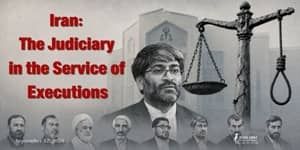
The death penalty in Iran is not the result of a decision by a single judge or court branch. Prosecutors’ offices, provincial chief justices, Revolutionary and criminal courts, the Supreme Court, sentence enforcement units and the Prisons Organisation form links in a process that may extend from arrest and the opening of a case to the execution of a death sentence.
Part four of the series ‘Iran: The Judiciary in the Service of Executions’ concerns Seyed Nasser Atabati. After years of service as a prosecutor and chief justice in Ardabil and West Azerbaijan provinces, he was appointed on 19 August 2026 (28 Mordad 1405) as President of Branch One of the Court of Appeal and Chief Justice of Tehran Province. His periods in office have coincided with executions, the amputation of prisoners’ fingers, flogging, the arrest of protesters, the prosecution of ethnic activists and restrictions on freedom of expression.
Atabati’s transfer to Tehran was part of simultaneous changes within the principal components of the judiciary; the changes also encompassed the Judicial Deputy, the Protection and Intelligence Centre, the Prisons Organisation and several other sensitive divisions. The judiciary presented these transfers as measures to improve efficiency. Their coincidence, however, with Gholamhossein Mohseni Ejei’s emphasis on expediting proceedings in security cases and cases involving severe sentences raises concern that Atabati’s experience in the judicial management of protests and corporal punishment may have been one factor in his selection for the country’s most important judicial jurisdiction. No direct connection between this appointment and possible future protests has been officially announced; this assessment is based on the context of the appointment and his previous record.
Iranian Debate Shifts From Whether to Negotiate to How Much Pressure to Keep

The reported offer to reopen the Strait of Hormuz within seven days if US military pressure eases has sharpened a dispute in Tehran over whether to trade maritime leverage for a diplomatic opening
Reports of a possible reopening of the Strait of Hormuz in exchange for reduced military and maritime pressure have once again brought a longstanding debate within Iran’s political establishment to the forefront: Should Tehran use its most important lever in the Persian Gulf to open a path to negotiations, or maintain the pressure until the military threat ends?
The dispute has become more visible as an Iranian delegation attends meetings in New York and indirect contacts with the United States resume. Esmail Baghaei, spokesman for Iran’s Foreign Ministry, said the Iranian delegation had “clearly and explicitly conveyed its views and conditions to the American side through intermediaries.” According to reports, Tehran’s demands have included an end to the war on all fronts, an end to the naval blockade and economic warfare, and the release of Iranian assets.
MEK Supporters Hold Photo Exhibition in Geneva to Highlight Executions in Iran
Geneva, Switzerland – September 21, 2026: Supporters of the People’s Mojahedin Organization of Iran (PMOI/MEK) held a photo exhibition outside the European headquarters of the United Nations in Geneva, highlighting the victims of Iran’s uprisings and political prisoners executed by the Iranian regime.
The exhibition was held in conjunction with the 63rd session of the United Nations Human Rights Council, drawing attention to the continuing use of the death penalty against political prisoners and protesters in Iran.

Photographs displayed at the exhibition commemorated those who lost their lives during Iran’s uprisings and political prisoners who were executed by the clerical regime. The event sought to bring international attention to their cases and to the ongoing concerns surrounding executions and human rights violations in Iran.