

THIS PAGE WILL BE UPDATED WITH THE LATEST NEWS
UPDATE: 7:30 AM CEST
Maryam Rajavi’s Message to the UN Human Rights Conference, Geneva
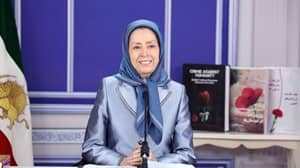
Mrs. Maryam Rajavi’s message: “Human rights violations in Iran have intensified in recent months. These violations include the daily executions of prisoners, particularly members of the People’s Mojahedin and participants in the January uprising; widespread arrests; torture and ill-treatment of political prisoners; and the adoption of a law considering any connection or cooperation with foreign media as a crime. The rising number of executions in recent years is alarming.
• In 2022, at least 646 people were executed.
• In 2023, at least 864 people were executed.
• In 2024, at least 1,000 people were executed.
And the following year (2025) brought a shocking escalation: 2,200 executions.
“In 2026, in addition to executions, for the first time since the massacre in 1988, more than 50 individuals were executed on political grounds over the past few months, and more than one hundred remain on the death row.
The rise in executions is closely linked to the rise of resistance and popular uprisings, revealing the regime’s fear of the Iranian people and their Resistance.
On the one hand, Iran has witnessed repeated uprisings. On the other hand, a new generation of courageous and selfless young people has turned toward the Mojahedin.
The courage they showed in the days before their executions impressed both the people of Iran and people around the world.”
Iranian Political Prisoner Ali Younesi Handed Five More Years as Previous Sentence Nears End

Iranian political prisoner and Sharif University student Ali Younesi has had an additional five-year prison sentence upheld on appeal, extending his incarceration just months before his previous enforceable sentence was due to end.
The ruling comes as Iran’s new academic year begins and means Younesi will remain behind bars rather than return to university. Younesi and fellow imprisoned Sharif University student Amirhossein Moradi had been expected to complete their enforceable sentences in December 2026, after more than six years in prison without a day of furlough.
The new case was brought against the two students in 2025. Both received an additional 15 months for the charge of “propaganda activities against the system.” Younesi was separately sentenced to another five years over the charge of “endorsing and strengthening Israel.” At the time, the ruling also included transfer to Kerman Prison and restrictions on telephone communications and access to cyberspace. The five-year component of the sentence has now been upheld on appeal.
New Academic Year 2026 in Iran: Female University Students Face Security, Economic, and Educational Pressures
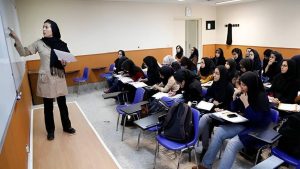
At the beginning of the new academic year, students at universities across Iran are facing a range of problems and restrictions. Security and disciplinary pressures at universities, particularly restrictions imposed on female students, continue alongside rising living costs for students and structural problems in higher education.
For students who study away from their families and in another city, rising costs of accommodation, food, and transportation have added to the challenges of pursuing their education. At the same time, the declining standing of some universities, the financial difficulties faced by professors, and the migration of faculty members have increased concerns about the quality of higher education and the future of students.
On the eve of the new academic year, government officials spoke about enforcing guidelines concerning hijab at universities.
Saeed Karami, Deputy for Cultural and Political Affairs at Universities, announced that a directive from the Ministry of Science, Research and Technology and the Ministry of Health and Medical Education concerning the status of hijab at universities would soon be issued. (Mehr News Agency, September 8, 2026)
Iran-Linked Iraqi Groups Threaten Airport Sit-Ins as Aviation Restrictions Tighten

The tightening of sanctions on the Iran regime and the suspension of flights connected to the regime have triggered a sharp reaction from Iran-aligned armed groups and political factions in Iraq, with some threatening to stage sit-ins at Iraqi airports in an attempt to force the government to reverse the restrictions.
The developments, reported by Asharq Al-Awsat, underscore the extent to which measures targeting the regime’s international aviation links can reverberate through its network of allied groups and political forces in neighboring countries.
Rather than treating the restrictions as a conventional aviation dispute, Iran-aligned factions in Iraq have portrayed them as a broader political and economic confrontation involving the United States and the Iran regime.
Adnan Faihan al-Dulaimi, first deputy speaker of the Iraqi parliament and a figure associated with Asa’ib Ahl al-Haq, criticized the Iraqi government’s implementation of restrictions on civilian flights involving Iran.
Iran’s Falling Rial Deepens the Regime’s Cost-of-Living Crisis
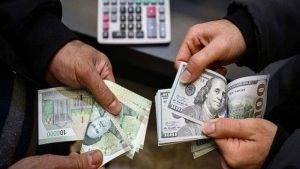
The Iranian rial’s renewed plunge at the end of summer has added another layer of pressure to millions of wage earners, retirees, and working families. With the dollar reaching around 236,000 tomans, the latest currency shock is expected to push up the price of goods and services just as Iranian households enter the autumn season facing an increasingly severe economic squeeze.
The currency decline comes alongside official figures showing that Iran’s economy is contracting at an alarming rate. According to the regime’s Statistics Center, the economy shrank by 10.1 percent in the spring of 1405 (2026) compared with the same period a year earlier.
The contraction was not confined to the oil sector. The economy excluding oil contracted by 4.6 percent, while industries and mines declined by 14.7 percent and services by 4.8 percent. The oil sector suffered the sharpest contraction, with negative growth of 26.4 percent.
At the household level, the consequences are already visible. Final household consumption fell by 4 percent during the same period, indicating that families are cutting back on goods and services that were once ordinary components of everyday life.
Iran’s Economy Enters Survival Phase

Longstanding problems in Iran’s economy, such as inflation, budget deficits, energy imbalances, and weak investment, have taken on new dimensions under the pressure of political and external shocks.
Iran’s economy is now facing an issue that goes beyond rising prices. “Uncertainty” has become a variable that is changing the behavior of households, businesses, and investors. When an economic actor cannot predict the exchange rate, the cost of raw materials, access to energy, or trading conditions in the coming months, long-term decisions give way to survival decisions.
According to a collection of published statistics, inflation accelerated significantly over the past six months. Year-on-year inflation reached about 89% in August. Some experts have also raised the possibility of inflation approaching the triple-digit range.
This situation has a direct impact on households dependent on wages and salaries. If wage growth falls behind price growth, real income declines. Under such circumstances, households first reduce their consumption of nonessential goods and may then cut back on the quality of essential goods they consume.
Access to Dental Care Has Become Extremely Difficult in Iran
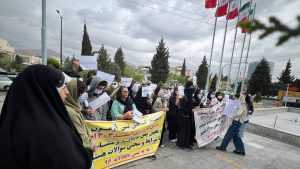
Dental care has now become prohibitively expensive for millions of Iranians and, under the pressure of poverty and declining purchasing power, is repeatedly postponed. Data released by the Iranian regime’s Ministry of Health shows that the oral health crisis extends from childhood into old age, while the gap between the “need for treatment” and the “ability to access it” grows deeper by the day.
Among children aged five to six, 84.3% need dental services; that means more than eight out of every 10 preschool children. Of these needs, 69% are related to fillings and treatment of tooth decay, while 12.3% are related to tooth extraction. The need for tooth extraction at age five is a clear sign of the failure of education, prevention, and early intervention—a failure whose cost falls directly on families.
This cycle does not stop during adolescence. About 75% to 76% of 12- and 15-year-olds continue to have dental problems. Timely treatment could have prevented many of these problems, but the high cost of dental care and inadequate insurance coverage delay visits until severe pain develops. Among people aged 35 to 44, the rate of need reaches 86.1%—the accumulated result of the same cavities that have gone untreated for years.
High Cost of Living Has Turned Life into Hell for Workers and Retirees in Iran
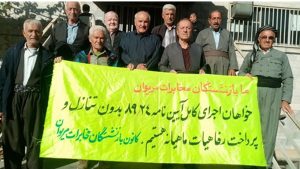
The gap between income and expenses is becoming increasingly pronounced for groups such as day laborers, retirees, and households without a stable income.
In new Persian calendar year (beginning on March 22), although the minimum wage for workers increased by 60%, the simultaneous rise in living costs has meant that a significant portion of this increase has been consumed by higher prices for goods and services. Under these circumstances, workers’ living conditions have not remained stable compared with previous years; they have worsened. The gap between income and expenses is particularly pronounced for groups such as day laborers, retirees, and households without a stable income.
For several years, people’s tables, particularly those of wage earners, have been growing emptier by the day, and unfortunately, the situation continues to deteriorate. The decline in purchasing power is not a temporary phenomenon; it has accumulated gradually over the past years. This is the result of years of neglect of people’s interests. The war has also left Iran in a far worse situation and under economic siege.
Iran: 166 Protesters on Death Row Amid City Militarization
The judicial system of the Islamic Republic of Iran, through expedited trials lacking fair due process standards and behind the closed doors of Revolutionary Courts, has issued and upheld heavy death sentences for dozens of protesters. Charges such as “Moharebeh” (Enmity against God), “Efsad-fil-Arz” (Corruption on Earth), and “Murder” have been assigned without credible evidence and solely based on forced confessions extracted under severe torture.
A vast majority of these defendants have been denied access to independent legal counsel of their choice and are held in conditions of total incommunicado detention and extreme mental and physical strain across various prisons nationwide (including Ghezel Hesar, Adel Abad in Shiraz, Dastgerd in Isfahan, Yasuj, Bojnourd, Lakan in Rasht, and Sari).
The existence of these 166 documented cases represents only the identified portion of a broader policy designed to inflict psychological paralysis on society and deter citizens from demanding their fundamental rights through the direct threat of death.
The catastrophic scale of these human rights violations becomes even more evident as the regime, while holding 166 protesters on the brink of execution, implements new repressive measures across city streets to establish a pervasive atmosphere of fear and militarized control.
Iran Says Kharg Oil Exports Rose 10% Despite Attacks on Its Main Export Terminal
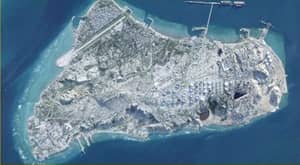
A senior Iranian oil terminals official says oil exports from Kharg not only continued during the war but averaged about 10% above pre-war levels, a claim concerning Iran’s most important oil export terminal, which has come under heavy attack.
Satellite imagery and vessel-tracking data show that Kharg resumed oil loading after periods of inactivity and did not completely cease operations even after the September attacks. Independent shipping data, however, paint a different picture of the next stage of the export process: moving newly loaded oil out of the Persian Gulf and delivering it to foreign markets, particularly China, has remained severely disrupted.
Abbas Asadrouz, managing director of the Iranian Oil Terminals Company, told the Oil Ministry’s SHANA news agency that about 70 million barrels of oil were exported from Kharg during the war and that the terminal continued its export operations despite being struck 548 times, mostly by bunker-buster missiles, according to him.
Berlin Sit-In on Day 211 Calls for End to Executions in Iran, Commemorates September 27, 1981 Uprising
Berlin, Germany — September 26, 2026: Supporters of the People’s Mojahedin Organization of Iran (PMOI/MEK) have continued their sit-in protest outside the Iranian regime’s embassy in Berlin for the 211th consecutive day. The demonstrators commemorated the September 27, 1981, uprising, which was marked by a confrontation between PMOI fighters and the clerical regime in Tehran.

The protesters called for the closure of the embassy, as a center of espionage and terrorism operated by the Iranian regime in Germany. They are also demanding accountability for the regime’s systematic repression, human rights violations, and continuing executions in Iran.
Gothenburg Rally Condemns Executions, Commemorates September 27, 1981 Uprising, and Backs NCRI Alternative
Gothenburg, September 26, 2026 — Supporters of the People’s Mojahedin Organization of Iran (PMOI/MEK) held a rally in Gothenburg to condemn the execution of political prisoners and protesters by Iran’s ruling regime and call for an end to the death penalty. The demonstrators also commemorated the September 27, 1981, uprising, which was marked by a confrontation between PMOI fighters and the clerical regime in Tehran.

Demonstrators voiced their support for the Iranian people’s struggle for freedom and their rejection of all forms of dictatorship. They denounced both the former monarchical dictatorship and the current clerical dictatorship ruling Iran, emphasizing that the Iranian people seek neither a return to the past nor the continuation of the present regime, but a democratic future.