

THIS PAGE WILL BE UPDATED WITH THE LATEST NEWS
UPDATE: 9:30 AM CEST
Resistance Units in Zahedan Renew Calls for Freedom and Honor Legacy of Fallen Members

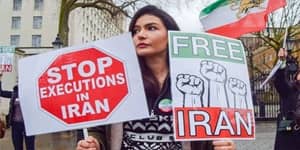
On October 2, 2026, PMOI/MEK Resistance Units resumed their weekly anti-regime activities in Zahedan, southeast Iran, displaying placards in public places with messages of resistance and political change.
Their messages centered on several recurring themes: overthrowing the clerical regime, rejecting both religious and monarchical dictatorship, relying on organized resistance inside Iran, and encouraging the younger generation to join the struggle for freedom. The activities also connected the current struggle with those who have paid the ultimate price for resisting the regime. They honored the tradition of resistance in prisons, standing firm before the gallows, and the role of rebellious youth and Resistance Units in carrying the struggle forward.
One of the most prominent themes of the October 2 campaign was the rejection of both the ruling theocracy and restoration of the former monarchy.
The placards declared, “From Zahedan to Tehran, down with the oppressor, be it the shah or the supreme leader,” and, “A dictator is a dictator, whether with a turban or a crown.” Other messages included, “We want neither shah nor mullahs, dictators be damned,” and “No to mullahs, no to shah, yes to a democratic republic.”
Melek Avcı: Their Stories Did Not Begin on the Gallows, and They Will Not End There
Last week, JINNEWS Ankara published an article by Melek Avcı, a veteran journalist and member of the outlet’s editorial team, titled “Their Story Did Not Begin at the Gallows, and They Will Not End There.”
The piece, published on September 18, 2026, examines the execution system in Iran through the lens of women’s experiences—focusing both on women facing execution for “their struggles for freedom and their people” and those sent to the gallows for “defending themselves against forced marriages and male violence.”
Reflecting on the four years since the death of Jina Amini, the article notes, “These four years have been a period in Iran not only of the great social transformation…, but also of the increasingly brutal apparatus of violence used by the government to suppress this transformation.”
It continues: “The government, however, detained and arrested people who were shouting demands for democracy, freedom, and equality in the streets, on charges of “espionage.” Many were executed in prisons. In this context, the death penalty became not only a state policy to punish dissidents, but also one of the tools of a patriarchal system targeting women. The death penalty did not only target female political prisoners. Women who defended themselves against male violence, child and forced marriages, domestic violence, and rape were also executed and murdered within the same system.”
Who Can Make an Iran Deal Stick?

Secretary of State Marco Rubio recently identified an obstacle to a U.S.-Iran agreement that cannot be settled by adjusting a sanctions schedule or drafting another clause on the Strait of Hormuz. Washington, he said, can negotiate with representatives of “Iran, the state,” but any agreement must also pass through those committed to “Iran, the revolution.” He called this a “real impediment.”
Rubio is right to ask who decides in Tehran. The more urgent question is who can make every center of power honor a decision after the negotiators leave the room. Since Ali Khamenei was killed in February, Iran has retained a supreme leader but lost the long-established arbiter who could impose a costly choice across competing institutions. That loss matters most when the regime faces war abroad and the possibility of renewed unrest at home.
Iran’s government is neither a single chain of command nor a simple contest between moderates and hardliners. The presidency, Supreme National Security Council, Islamic Revolutionary Guard Corps, foreign ministry and supreme leader’s office exercise overlapping authority. The Guards are also central to internal security. A foreign minister may be empowered to negotiate while the military and security institutions that must carry out an agreement have different priorities.
Iran’s Political Shift: From Reform to Demands for Fundamental Change
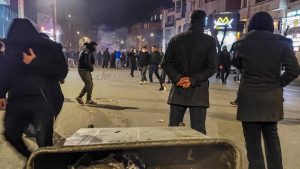
Over the past two decades, Iran has experienced a series of political, social, and economic crises that have profoundly altered how many citizens view the country’s political system and the possibility of change.
One indicator of this transformation is the reported shift from support for gradual reform within the existing system toward demands for fundamental and structural change.
On September 29, 2026, the Iranian website Ensaaf News published comments by Ebrahim Hajiani, a sociologist and the first head of the Iranian Students Polling Agency (ISPA), concerning changes in political attitudes among Iranians.
Hajiani said that a political culture survey conducted in 2003–2004 found that only about 8 percent of respondents favored fundamental changes in the country. According to him, repeated polling by different opinion-research institutions has since placed that figure at approximately 67 percent.
If accurate, the reported increase represents a striking change in political attitudes. It suggests that the expectation of gradual reform within the existing political framework has lost much of its previous appeal, while demands for deeper structural change have become significantly more widespread.
Iran’s Economic Crisis Fuels a Wider Wave of Protests From Workers to Students

Iran’s economic crisis is increasingly spilling into the streets, with workers, retirees, drivers, farmers, students, homebuyers, and other social groups staging protests across the country over unpaid or inadequate wages, soaring living costs, insecure employment, and what they describe as institutionalized corruption and exploitation.
The latest wave of protests shows how demands that initially center on wages, pensions, insurance, housing, or delayed deliveries are increasingly intersecting with broader anger over the policies and institutions of Iran’s regime.
In Tehran, Ahvaz, Shush, Rasht, Isfahan, Kermanshah, Sanandaj, Khorramabad, Tabriz, Arak and other cities, different groups have taken to the streets in recent days, each confronting a different manifestation of the same economic crisis.
At the center of the labor protests is the widening gap between official wages and the actual cost of maintaining a household.
The regime had previously promised adjustments to workers’ wages, but the issue remained unresolved as the summer ended. A September 19 meeting of the Supreme Labor Council that was expected to address wage restoration ended without a final decision, leaving workers once again facing delays and promises rather than meaningful increases.
Consequences of Iran Regime Oil Exports Falling to Zero

As the U.S. maritime blockade of the Iranian regime’s ports and export routes intensifies, Washington’s economic pressure on Tehran has entered a new phase. The U.S. maritime blockade, which targets the Iranian regime’s oil exports, is being pursued alongside the “Economic Expulsion Operation” and sweeping financial, oil, and trade sanctions. U.S. officials say the campaign is aimed at cutting off the Iranian regime’s revenue lifelines and limiting its financial resources. Recent reports also indicate a sharp decline in oil revenues and Tehran’s access to foreign currency.
Scott Bessent, the U.S. Treasury secretary, said this time that crude oil loading from Iranian ports had fallen to zero in September. The development could place the Iranian regime’s main source of revenue under serious constraint.
On Thursday evening, October 1, Bessent wrote on X that “Iran loaded ZERO crude oil onto tankers in September. The Trump Administration is cutting off the Iranian regime’s most critical source of revenue.”
Hashem Khastar: a Teacher Who Teaches the Lesson of Resistance

Hashem Khastar, a retired teacher and labor activist, remains imprisoned at the notorious Vakilabad Prison in Mashhad at the age of 75. Since 2004, he has spent 16 years in prison and exile. Pressure from security agencies continues, and a new case has been opened against him, with a new sentence likely to be issued. Despite this, he has stressed that remaining silent in order to obtain furlough and freedom is a betrayal. Reports published in recent days indicate that, in a recurring scenario, security agencies have opened a new case against Hashem Khastar while he is serving his current sentence. This action, which is intended to prevent his release after the end of his previous prison term, indicates fear of his presence and activities outside the prison walls.
Filing cases against him from inside prison is nothing new for him. In April 2023, a trial was held against him at Branch Seven of the Mashhad Revolutionary Court. The hearing was conducted online and without a lawyer present. The charges included sending 30 letters and six voice messages from prison. Hashem Khastar denied the charge. The judge said the charges against him were insulting regime supreme leader Ali Khamenei and propaganda against the regime. He said that after seven months in solitary confinement, he had been allowed to meet his family in person only twice.
Iran: Farshad Etemadi-Far, a Prisoner with Gastrointestinal Illnesses, and Two Death Sentences
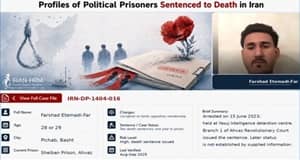
Farshad Etemadi-Far, son of Gholam, was born in 1996 or 1997 and holds a secondary-school diploma. Before his arrest, he lived in Pichab village. Information about his occupation, marital status or dependants is not available.
He had previously been arrested in 2018 or 2019; however, the charges, duration of detention and outcome of that case are unknown.
Farshad Etemadi-Far was arrested by intelligence agents on 15 June 2023, together with Saman Hormat-Nejad and Davoud Hormat-Nejad, and transferred to the Yasuj Intelligence Department detention centre. Accounts of their interrogation also refer to their detention at an Islamic Revolutionary Guard Corps intelligence detention centre; the sequence and exact dates of transfers between these facilities remain unclear.
According to the accounts compiled, the three men were subjected to repeated interrogations, pressure from security officials, and physical and psychological torture. Details of the torture methods, any independent medical examination, and their access to legal counsel during this period are not available.
After some time, Farshad Etemadi-Far and his two companions were transferred to Sheiban Prison in Ahvaz. Following approximately fifteen months in detention, they were summoned to court between 22 August and 21 September 2024. The exact hearing date and details of their defence are unknown.
On 11 July 2025, Branch 1 of the Ahvaz Revolutionary Court, presided over by Judge Adibi-Mehr, sentenced Farshad Etemadi-Far to death on two counts, according to the information provided. Saman Hormat-Nejad received twelve years’ imprisonment and Davoud Hormat-Nejad received fifteen years. The full judgment and the legal basis for imposing two death sentences on Farshad are not available.
Former Iranian Officials Call for NPT Withdrawal as 32 Lawmakers Debate Nuclear Weapons Policy
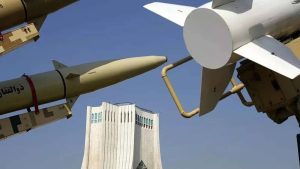
While some lawmakers have spoken of “atomic deterrence” and even testing a nuclear weapon, other officials warn that leaving the treaty could be interpreted as Iran moving toward the bomb; the government has yet to announce any formal change in nuclear policy.
Political pressure in Tehran for Iran to withdraw from the Nuclear Non-Proliferation Treaty, or NPT, has entered a new phase in recent days. Thirty-two officials and members of the administrations of Mahmoud Ahmadinejad and Ebrahim Raisi called in a statement on the Supreme National Security Council, the government and parliament to end cooperation under the treaty and begin the legal process of withdrawal “as soon as possible.” The call comes as a three-urgency bill to withdraw from the NPT remains under consideration in parliament, although the ruling establishment has yet to announce a final decision on leaving the treaty.
Paris: MEK Supporters Highlight Iran’s Executions and Promote October 10 Anti-Death Penalty Action
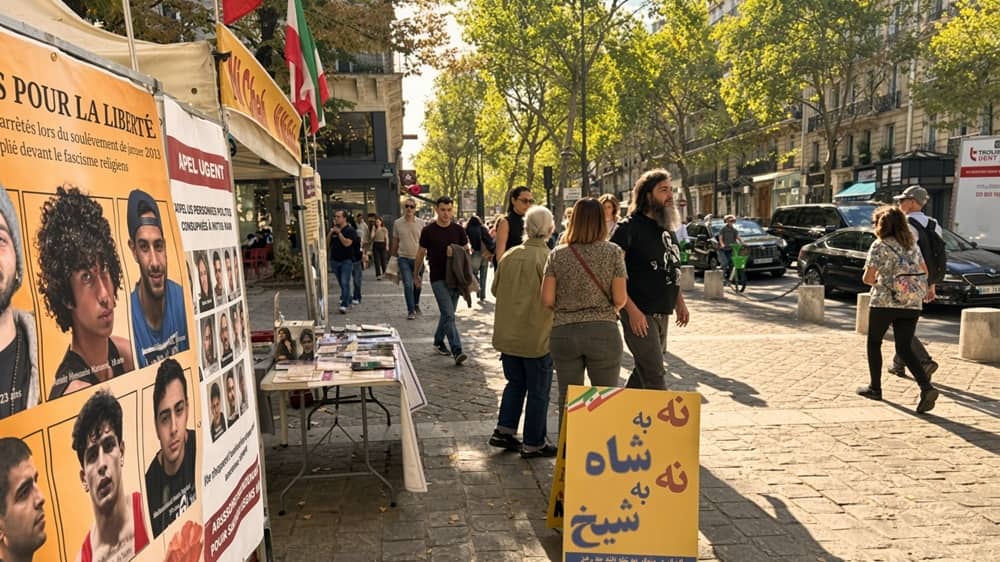
Paris – October 2, 2026 — Supporters of the People’s Mojahedin Organization of Iran (PMOI/MEK) set up a public book table and photo exhibition in Paris, highlighting the worsening human rights crisis in Iran and the regime’s systematic use of executions against political prisoners and protesters arrested during nationwide uprisings. The event also promoted a call for a symbolic 3.5-kilometer run on Saturday, October 10, at Parc Montsouris in Paris, marking the World Day Against the Death Penalty and urging public support for the campaign to #StopExecutionsInIran.

Organizers said the gathering reflected the Iranian people’s demand for a democratic republic and their aspirations for peace, freedom, justice, and fundamental rights. They also underscored the Iranian Resistance’s call for greater international solidarity with the people of Iran.
They urged the French public and the international community to recognize the suffering of Iranians and their rejection of dictatorship in both monarchical and theocratic forms.
217th Day of the Berlin Protest Sit-In: Denouncing Executions and Calling for a Democratic Republic in Iran
Berlin, Germany — October 2, 2026: Supporters of the People’s Mojahedin Organization of Iran (PMOI/MEK) continued their sit-in protest outside the Iranian regime’s embassy in Berlin for the 217th consecutive day, condemning the executions carried out by the mullahs’ regime, particularly the execution of political prisoners and protesters arrested during the uprisings in Iran.
The protesters called for the closure of the embassy, as a center of espionage and terrorism operated by the Iranian regime in Germany. They are also demanding accountability for the regime’s systematic repression, human rights violations, and continuing executions in Iran.

The sit-in reflects the protesters’ opposition to both the clerical dictatorship and a return to the former monarchical system. Their position is expressed in the slogan, “Down with the oppressor, be it the Shah or the Supreme Leader.” They say Iran’s future should be based on a free and democratic republic rather than another form of dictatorship.