

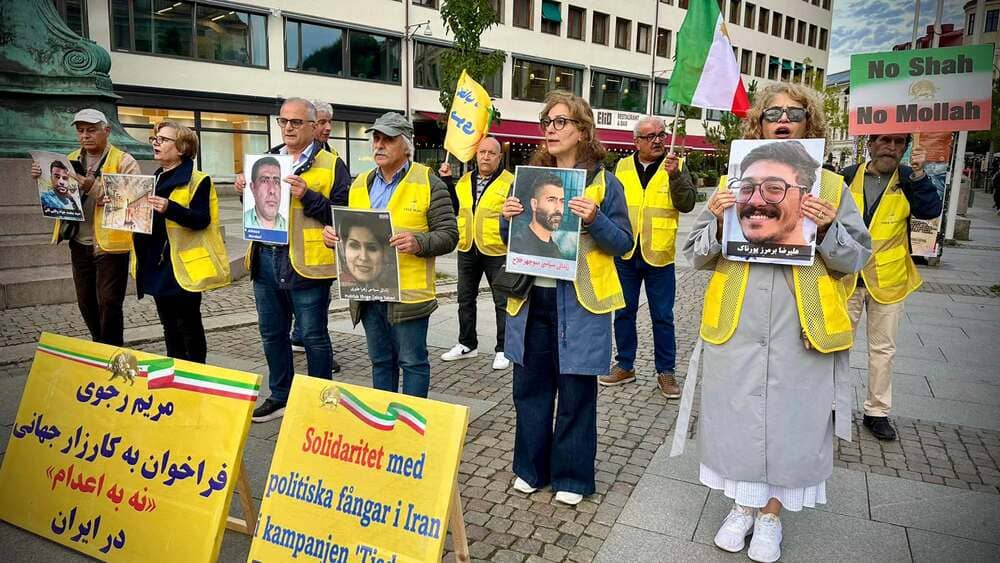
THIS PAGE WILL BE UPDATED WITH THE LATEST NEWS
UPDATE: 8:30 PM CEST
Why Does Tehran Fear an Organized Opposition?

Amid an external war, the Iranian authorities executed six prisoners belonging to the People’s Mojahedin Organization of Iran (PMOI/MEK), who were being held at Ghezel Hesar Prison, within six days. Mohammad Taghavi and Akbar Daneshvarkar were hanged on March 30, 2026, followed the next day by Babak Alipour and Pouya Ghobadi, and then by Vahid Bani-Amerian and Abolhassan Montazer on April 4. All had been arrested before the January uprising. The significance of these executions lies not only in their timing, but also in the way the authorities presented their cases.
In the narrative put forward by state-linked news agencies, these were not simply cases of political opposition or participation in a protest. The judiciary cited membership in an organization opposed to the regime, the creation and leadership of groups, as well as activities aimed at overthrowing the system. These are the authorities’ accusations. Their formulation nevertheless reveals a political reality: the authorities view these individuals as components of an organized structure operating inside the country.
Why does this distinction matter? Anger over the cost of living, corruption and repression can bring crowds into the streets. The authorities then seek, through arrests, violence and cutting communications, to isolate each wave of protest from the next. In their view, a more enduring danger comes from a network capable of surviving between uprisings, retaining its experience and mobilizing when dissent resumes.
UPDATE: 1:30 PM CEST
Iranian National Extradited to US By Montenegro Over Alleged $3.4B Cyberattack Case
PODGORICA, Montenegro (AP) — Montenegro has extradited an Iranian-Turkish dual national to the United States over alleged cyberattacks targeting more than 150 U.S. universities and causing an estimated $3.4 billion in damage, police in the Balkan country said on Thursday.
Amir Barati, 40, was arrested in June by Montenegro’s Interpol office and local police in the coastal town of Kotor. The arrest was made at the request of U.S. authorities, including the FBI.
Montenegrin police described Barati as a “high-profile” target sought in connection with cybercrime and organized crime. He faces several charges in New York, including conspiracy to commit computer fraud, hacking and identity theft.
Police allege that Barati began carrying out large-scale cyberattacks against U.S. infrastructure in 2013 while working with an Iran-based entity. Data stolen in the attacks and access to compromised university accounts were allegedly used to benefit Iran’s Islamic Revolutionary Guard Corps and other Iranian organizations, including universities.
Operation Economic Outcast Targets Iran’s Remaining Industrial Lifelines
WASHINGTON—Today, as part of Operation Economic Outcast, the U.S. Department of the Treasury is targeting some of the last significant elements of Iran’s failing industrial infrastructure, including its rail and automotive conglomerates. Much like the petroleum sector, Iran’s automotive and rail industries have been coopted by the regime and the Islamic Revolutionary Guard Corps (IRGC), whose corruption and self‑serving interests have pushed Iran’s economy to the brink.
“The Iranian regime’s ability to fund its war machine and inflict terror on the world has been severely diminished thanks to Operation Economic Outcast,” said Secretary of the Treasury Scott Bessent. “Today’s action directly targets Iran’s enablers and lays the groundwork for the United States and our partners to drain the regime’s revenue once and for all.”
As the U.S. military’s maritime blockade takes hold and Iran’s oil revenues fall to zero, the regime has grown increasingly dependent on these remaining industries to maintain a veneer of economic solvency. Because the rail and automotive sectors represent some of the regime’s largest remaining sources of revenue and logistical capacity, today’s action strikes directly at the critical arteries Iran relies on to sustain its economy and evade sanctions.
Iran Will Have ‘Nothing Left to Trade’ Within Two Weeks as Oil Lifeline Dries Up: Bessent
US Treasury Secretary Scott Bessent said he expected Iran to complete its remaining oil shipments to China within two weeks, leaving Tehran with “nothing left to trade for anything” amid an intense economic pressure campaign against the country.
Speaking in an interview with Fox News on Sunday, Bessent said only about 15 million barrels of Iranian oil remain out for delivery with the ongoing blockade.
He said that this was evidence that Operation Economic Outcast has left Tehran economically isolated.
“They will have nothing to trade for anything, probably within the next two weeks. They are going to make their final deliveries of oil to China, and then they will have nothing,” Bessent said.
He said he believed Iran was “feeling the pressure,” leading to its renewed interest in striking a deal while also noting that Strait of Hormuz was already open.
UK Police Arrest Dual UK-Iranian Man in Fairford Air Base Investigation
LONDON, Oct 1 (Reuters) – British counter-terrorism police investigating a suspected plot involving an air base used by the US to target Iran said on Thursday they had arrested a dual UK-Iranian national on suspicion of preparing terrorist acts.
In an incident which triggered a huge police response, raised alarm among Western allies, and remains largely unexplained, five British men in their 20s were arrested on Sunday on suspected terrorism and explosive offences near RAF Fairford in western England.
The men were later released without charge on police bail. But counter-terrorism police said they were considering whether a foreign state had been involved in the incident and Prime Minister Andy Burnham said on Wednesday it might have had an Iranian link.
Iran has said accusations it was involved were baseless and on Thursday summoned the British ambassador in Tehran over the issue.
UPDATE: 7:00 AM CEST
Freedom Prize for the Iranian People: 71 Figures Criticize Reza Pahlavi’s Trusteeship

Seventy-one figures from politics, the judiciary and public life—including politicians, legal experts and cultural figures—have sent an open letter to the heads of the liberal FDP-affiliated Friedrich Naumann Foundation for Freedom. They call on the foundation to reconsider its decision to have Reza Pahlavi accept the Freedom Prize on behalf of the Iranian people.
The open letter was initiated by Joachim Rücker, a former president of the UN Human Rights Council. Among those who signed it are former Bundestag President Wolfgang Thierse (SPD), Alexandra Hildebrandt, director of the Wall Museum at Checkpoint Charlie, Wolfgang Schomburg, a former judge at Germany’s Federal Court of Justice and the International Criminal Court, and Protestant theologian and former regional bishop Margot Käßmann.
As previously reported, the Friedrich Naumann Foundation plans to award the 2026 Freedom Prize to the Iranian people at Frankfurt’s St. Paul’s Church in November. “The prize honors the courage of countless people who resist,” the foundation said in explaining its decision. It is referring to women, students, journalists, workers, and “families who stand up against paternalism, harassment and the denial of individual life choices. Their strength does not lie in individual actions, but in the perseverance of a society that refuses to be silenced.”
46 Countries Condemn the Iranian Regime’s Escalating Executions at UN Human Rights Council

A cross-regional group of 46 countries condemned the escalating use of the death penalty in Iran at the 63rd session of the United Nations Human Rights Council in Geneva on September 30, drawing particular attention to the execution of protesters arrested following the nationwide protests that began in late December 2025.
The joint statement, delivered by Liechtenstein, cited the findings of the UN High Commissioner for Human Rights, the Special Rapporteur on Iran, and the Independent International Fact-Finding Mission on Iran. The statement was delivered on behalf of forty-six participating countries, including Italy, Germany, the United Kingdom, Canada, Switzerland, Spain, Albania, France, Australia, Denmark, Greece, Ireland, and Belgium.
The statement warned that at least 31 protesters had been executed following the January crackdown and that dozens more, including women and children, had been sentenced to death or remained at imminent risk of execution. It also expressed alarm over public executions and reports of proceedings involving closed hearings, denial of due-process guarantees, torture and ill-treatment, enforced disappearances, and coerced confessions.
Iran: 30-Year-Old Woman Mahrokh Mirzaei Executed in Isfahan Prison

On the morning of Monday, September 28, 2026, Mahrokh Mirzaei was executed in Isfahan Prison. She was 30 years old and lived in Isfahan.
She had been arrested four years ago on charges of murdering her husband and was sentenced to death.
During her four-year marriage, Mahrokh Mirzaei faced ongoing disputes and persistent tensions with her husband. These circumstances gradually affected her mental and psychological well-being, leading to serious difficulties.
With the execution of Mahrokh Mirzaei, the number of women executed in Iranian prisons since the beginning of 2026 has reached at least 28.
According to data recorded by the Women’s Committee of the National Council of Resistance of Iran, at least 356 women have been executed in Iran since 2007.
Many of the women executed by the Iranian regime are themselves victims of domestic violence and discriminatory family laws. A significant number have acted in self-defense.
Since Masoud Pezeshkian took office, the clerical regime has executed 4110 prisoners, including 116 women.
Iran’s Regime Intensifies Pressure on Universities as Student Protests Re-emerge
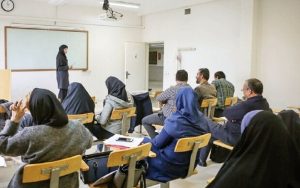
As universities reopen across Iran, the regime is rapidly intensifying warnings, threats, and security measures targeting students. State media, regime officials, and Friday prayer leaders have repeatedly called for tighter control of campuses, portraying universities as potential centers of what they describe as “organized unrest.”
The campaign has begun even as the new academic year is only days old, underscoring the regime’s sensitivity to student activism and its potential connection with broader social protests. A recent report in the regime-affiliated Nobonyad newspaper, associated with the hardline Paydari faction, criticized the Ministry of Science for what it described as insufficiently forceful action against alleged “elements of unrest” and called for tougher measures on university campuses.
The newspaper cited regime parliamentarians warning that opponents were allegedly preparing organized unrest and placing particular emphasis on universities.
Geneva Conference Highlights Iran’s Environmental Crisis as a Human Rights Emergency
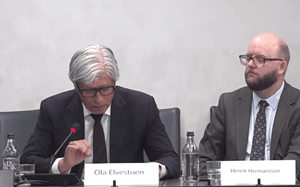
The deepening human rights crisis in Iran is inseparable from a wider environmental catastrophe that is increasingly affecting the population’s access to water, clean air, health, livelihoods, and basic living conditions, Norwegian politician Ola Elvestuen said at a conference held at the European headquarters of the United Nations in Geneva.
The conference brought together political figures, legal experts, and human rights advocates to discuss the deteriorating human rights situation in Iran and the escalating use of executions by the regime.
Elvestuen, who served as Norway’s Minister of Climate and Environment from 2018 to 2020 and has been a member of parliament, focused his remarks on the environmental dimension of the crisis. He argued that environmental destruction in Iran should not be treated as a separate technical issue but as part of a broader crisis involving fundamental rights, including the right to life, health, security, access to water, and a safe environment.
Iran’s Teachers and Nurses Resign Due to Economic Hardship

Teachers and nurses have once again returned to the media spotlight in recent days. Numerous videos of resignations by members of these two groups have been widely circulated on social media.
One week after the start of the academic year, images of teachers resigning have spread widely on social media. The Coordinating Council of Teachers’ Trade Associations has attributed this wave to poor working conditions, economic hardships, and neglect of education. In a statement, the same council also cited wages below the poverty line and administrative bureaucracy as factors contributing to dissatisfaction. Trade-union reports indicate an increase in teacher and nurse resignations in various parts of the country.
The head of the Supreme Council of Iran’s Nursing Organization has warned of an increase in mass resignations. According to him, continuation of the current situation could leave medical centers without nurses. Trade-union officials emphasize that the issue today is not merely recruiting staff but retaining existing nurses. This situation shows that the nursing workforce challenge is not limited to migration.
The Link Between Iran’s Economy and Theft, Murder, and Suicide

Not all crimes can be attributed to economic factors, but reviews by Iranian media outlets show that shocks such as inflation, recession, unemployment, and income inequality are associated with increases in theft, murder, and suicide through reduced purchasing power, psychological pressure, and weakened social cohesion.
A study in Iran covering 2011 to 2022 says that registered thefts increased as inflation rose. An analysis of data from 2012 to 2024 also shows a correlation of 0.68 between the rate of people arrested for theft and inflation, and 0.62 with the poverty rate. For murder, a correlation of 0.72 with inflation and 0.78 with poverty has been reported. These figures alone do not establish a causal relationship, but they indicate a link between economic conditions and social harm.
According to a report published by the state-run eghtesaad24 website on September 29, international studies also say that inflation and inequality can be associated with increases in violent crime, particularly murder; an effect that is stronger in disadvantaged areas with high poverty and unemployment and weak infrastructure. Regarding suicide, studies associate unemployment and inflation with suicide rates, particularly among people over 40. In Iran, an analysis of data from 2012 to 2024 shows a correlation of 0.65 between the suicide rate and inflation and 0.86 with the poverty rate.
Iran Human Rights Report: Mashhad Executions, Torture & Criminal Record of Judge Akbari-Moghaddam
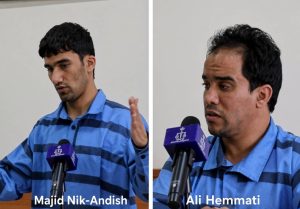
Continuing the policy of repression and the issuance of heavy judicial sentences against citizens and protesters, state media reported the execution of two other detainees from the January 2026 protests in Mashhad. This report examines the legal dimensions of the executions of Ali Hemmati Sistani and Majid Nikandish, the torture methods applied to extract forced confessions, blatant contradictions in security agency documentation, and the criminal record of Judge Gholamreza Akbari-Moghaddam, Head of Branch 1 of the Mashhad Revolutionary Court.
According to a report by Mizan News Agency (affiliated with the judiciary), Ali Hemmati Sistani (33, from Mashhad) and Majid Nikandish (23, from Quchan, Kurdish), who were arrested in connection with the January 18 and 19, 2026 protests in the Tabarsi district of Mashhad, were executed on September 30, 2026. Given that these prisoners were held in Mashhad Central (Vakilabad) Prison, the execution is believed to have been carried out there.
According to informed sources, Majid Nikandish was subjected to the most severe torture during interrogation. He was held in solitary confinement for about three months and, during interrogations, after being hung by his hands, suffered a broken jaw and a dislocated shoulder. Following these tortures, Majid was held in special cells for security prisoners, security wards, and for a period in Ward 4. In court, Majid denied the charge of leading the protests, emphasizing that he was merely present among the people and had killed no one.
Iran’s President Urges Reformists to Defend US Talks as Rubio Orders Iranian Delegation to Leave
TEHRAN — Masoud Pezeshkian has asked reformist activists to speak to the public about the need for negotiations with the United States, a request that comes as hardline factions are increasing pressure on both his government and Mohammad Bagher Ghalibaf, while outside Iran, contacts between Tehran and Washington have also encountered a fresh deadlock. Axios reported Thursday that U.S. Secretary of State Marco Rubio, after negotiations stalled on Monday, ordered the Iranian delegation, including Abbas Araghchi, to leave the United States immediately. Pezeshkian met Tuesday evening with a number of political activists, mostly reformists, to discuss economic problems and negotiations with the United States. Mohammad Ali Abtahi, who attended the meeting, said the main focus of the discussions was reviving the understanding between Tehran and Washington and that participants supported efforts to restore it.
According to Arman Melli, Pezeshkian asked reformist activists to speak to the public about the negotiations and defend the need for them. He also said: “The foundation and basis of reformism is flexibility within oneself, not in the other side.”
The approach immediately drew criticism from conservative media. Kayhan questioned the president’s meeting with reformists at a time of economic pressure, while Nobonyad described it as a sign of the continued influence of the pro-negotiation approach within the government.
On 215th Day of Berlin Protest Sit-In, Execution of Protesters Ali Hemmati and Majid Nikandish Condemned
Berlin, Germany — September 30, 2026: Supporters of the People’s Mojahedin Organization of Iran (PMOI/MEK) continued their sit-in protest outside the Iranian regime’s embassy in Berlin for the 215th consecutive day and condemned the execution of Ali Hemmati and Majid Nikandish, two protesters from the January 2026 uprising, by the mullahs’ regime.

The protesters called for the closure of the embassy, as a center of espionage and terrorism operated by the Iranian regime in Germany. They are also demanding accountability for the regime’s systematic repression, human rights violations, and continuing executions in Iran.
PMOI Supporters Protest Executions of Two January Protesters in Copenhagen
Copenhagen, Denmark – September 30, 2026 – Supporters of the People’s Mojahedin Organization of Iran (PMOI/MEK) held a protest rally in Copenhagen against the execution of Ali Hemmati and Majid Nikandish, two protesters arrested during the January 2026 uprising in Iran.

Holding photos of the victims, demonstrators condemned the clerical regime’s actions as blatant human rights violations. They described the executions as a sign of the regime’s growing desperation in the face of public dissent and vowed to continue their struggle until the overthrow of the mullahs’ rule and the establishment of a free, democratic, and just republic.