
THIS PAGE WILL BE UPDATED WITH THE LATEST NEWS
UPDATE: 7:00 AM CET
PMOI Resistance Units Mark November 2019 Uprising Anniversary, Reject Both Shah And Mullahs
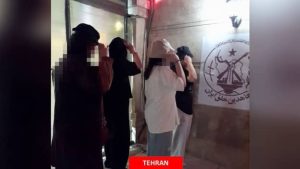
In November 2026, Resistance Units affiliated with the People’s Mojahedin Organization of Iran (PMOI/MEK) marked the seventh anniversary of the November 2019 uprising with anti-regime activities across Iran, reaffirming their determination to keep the spirit of the uprising alive and prepare for the next wave of nationwide protests.
Despite the regime’s security measures, Resistance Units displayed placards in public locations across Tehran, Karaj, Mashhad, Isfahan, and Shiraz, carrying messages of resistance, regime change, and rejection of all forms of dictatorship.
In Tehran, one placard declared, “We the Resistance Units are ready for uprisings. People of Iran, let’s get ready for the next uprising.”
The activities combined remembrance of those killed in the November 2019 crackdown with a message that the struggle for freedom continues and that Iran’s future must be a democratic republic, free from both clerical and monarchical dictatorship.
NCRI’s Kurdistan Autonomy Plan at 43: A Blueprint for a United, Democratic Iran
On November 8, 1983, the National Council of Resistance of Iran (NCRI) adopted a 12-point Plan for the Autonomy of Iranian Kurdistan. Forty-three years later, the anniversary is more than a historical milestone. It is a reminder that Iran’s democratic future requires not only an end to dictatorship but also an enforceable answer to the political, cultural, and economic discrimination endured by its nationalities.
In a November 8, 2026, message, Maryam Rajavi, the NCRI’s President-elect for the transitional period, commemorated the plan’s adoption and underscored Article 7 of her Ten-Point Plan: autonomy and an end to “double oppression” against Iran’s nationalities and ethnic groups, consistent with the Kurdistan framework.
This commitment matters because of its specificity. The NCRI did not simply promise equality in general terms. In 1983, amid the clerical regime’s war against the Kurdish population, the NCRI’s plan proposed institutions, democratic procedures, and defined powers for self-government—while explicitly preserving Iran’s sovereignty and territorial integrity.
The plan establishes a Supreme Council of Kurdistan, elected by universal, direct, equal, and secret ballot, to legislate on internal affairs. It assigns the administration of regional affairs and internal security to autonomous institutions, subject to the Republic’s general laws. The central government retains foreign policy, national defense, border protection, customs, monetary policy, and economic programs of national importance.
Iran Shields Its Repression with Global Confrontations

The war with Iran has cost the United States more than $47 billion, according to a Pentagon estimate reported by Reuters on Oct. 28.
More than $29 billion covers replacement munitions.
A study found higher fuel prices have cost American consumers an average of $471 each. U.S. troops remain exposed to missile and drone attacks.
How can America avoid paying for another confrontation?
The answer cannot be found in missile inventories and nuclear facilities alone.
It also lies in the struggle taking place inside Iran.
On Oct. 18, Iranian retirees protested inadequate pensions, soaring prices and medical costs in several cities. In Kermanshah, they asked where the oil revenues had gone.
In Rasht, protesters condemned executions.
Another chant captured their distrust of Tehran’s narrative, “Our enemy is right here. They lie when they say it’s America.”
Why would retirees struggling to afford medicine also protest death sentences?
Iran’s Rulers Split Over Negotiations, Nuclear Policy and the Price of Peace
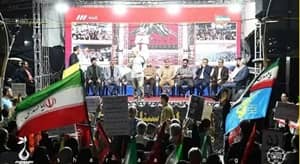
Disputes over negotiations with the United States, Iran’s nuclear doctrine and the composition of its negotiating team point to a wider struggle over how the ruling establishment should exit the war — and how it will manage the political consequences at home.
Iran’s internal dispute over ending the war is not only about the terms of a possible agreement, but also about who controls the process and who bears the political cost of what follows.
Divisions inside Iran’s ruling establishment over negotiations with the United States, the future of the nuclear program and the terms for ending the war are becoming increasingly visible, exposing a wider struggle over authority, responsibility and the domestic consequences of any settlement.
The competing positions do not prove that one faction wants war while another seeks peace. But they show that the disagreement goes beyond the details of a possible deal.
Academics in Exile Hold Southampton Campaign Against Executions and Human Rights Abuses in Iran
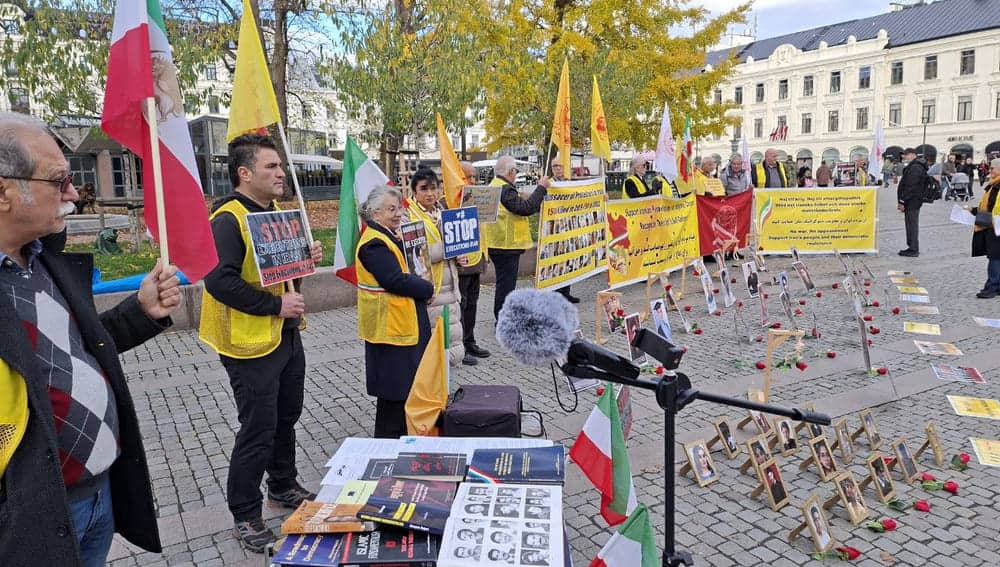
Southampton, UK — November 7, 2026: Members of the Academics in Exile Association in the UK, which supports the Iranian Resistance (NCRI), took to the streets of Southampton with a clear message: Iran’s executions must stop.
Through a book table and photo exhibition in Southampton city center, the organizers sought to raise public awareness of the Iranian regime’s escalating executions, systematic repression, and serious human rights violations. Through photographs and publications, they highlighted the human cost of repression in Iran and the suffering endured by ordinary people.
Today, 7 November 2026, members of Academics in Exile held a book table and photo exhibition in Southampton city centre as part of our campaign to raise awareness of human rights violations and executions in Iran.
We collected petitions condemning the Iranian regime’s abuses and… pic.twitter.com/eXuMsr3931
— Academics In Exile Association (@iranianacademic) November 7, 2026
The public response was powerful. People expressed solidarity with the Iranian people’s struggle for freedom, democracy, justice, and a secular republic. Many also signed petitions condemning the Iranian regime’s abuses and death sentences, calling on the United Nations and the international community to take concrete action to stop executions and support the Iranian people’s democratic aspirations.
A central message of the campaign was the rejection of all forms of dictatorship, whether monarchical or theocratic, reflected in the slogan “No to Shah, No to Mullahs.” The organizers underscored the need for a democratic alternative that would secure freedom, justice, and a secular republic for Iran.
Silence is not neutrality when lives are at stake. The world must act.
PMOI Supporters in Uster, Switzerland Hold Exhibition Denouncing Iranian Regime Executions
Uster, Switzerland – November 7, 2026 — Supporters of the People’s Mojahedin Organization of Iran (PMOI/MEK) held a photo exhibition and book table in Uster to condemn executions carried out by the Iranian regime and to oppose the death penalty, particularly against political prisoners.

Participants also expressed solidarity with the “No to Execution Tuesdays” campaign, which calls for an end to executions in Iran. They urged the immediate release of political prisoners and an end to the prosecution and persecution of protesters and other dissidents.

The exhibition expressed support for NCRI President-elect Maryam Rajavi‘s “No to Executions” campaign and called for its expansion worldwide. Participants also renewed their call for regime change and the establishment of a secular, democratic republic, rejecting both theocracy and monarchy.