
THIS PAGE WILL BE UPDATED WITH THE LATEST NEWS
UPDATE: 8:30 AM CET
Maryam Rajavi’s Meetings with European Political Figures and Parliamentarians
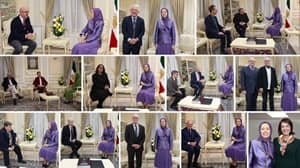
On the sidelines of the conference “The Third Option: Overthrow by the People and the Resistance,” Maryam Rajavi, met with political figures and parliamentarians from various European countries.
Including Charles Michel, former President of the European Council and former Prime Minister of Belgium; John Bercow, former Speaker of the House of Commons of the United Kingdom; Franz Josef Jung, former Federal Minister of Defence of Germany; Hans-Ulrich Seidt, former German Ambassador; Naike Gruppioni, Member of the Italian Parliament; Dorien Rookmaker, former Member of the European Parliament; Baroness Verma, Member of the House of Lords; Alejo Vidal-Quadras, former Vice-President of the European Parliament; Patrick Lussi, Member of the Grand Council of Geneva;
Ola Elvestuen, former Norwegian Minister of Climate and Environment and former Member of Parliament; Juku-Kalle Raid and Ando Kiviberg, Members of the Estonian Parliament; Emanuelis Zingeris, Member of the Lithuanian Parliament; Anna Fotyga, former Foreign Minister of Poland; Alfredo Antoniozzi, Member of the Italian Parliament; and Damian Arabia, Member of the Argentine Parliament.
Iran’s Nationwide Truckers’ Strike Exposes the Depth of the Regime’s Economic Crisis
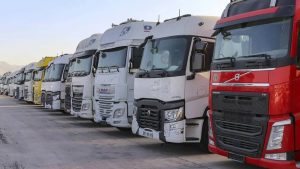
Since November 22, truck drivers across Iran have been on strike in protest against inadequate freight rates, fuel shortages, and soaring operating costs that have made it increasingly difficult for them to earn a living. By November 27, the nationwide strike is in its sixth consecutive day, encompassing 20 cities across 14 provinces.
Despite attempts by regime officials to deny and downplay the protests, the movement has steadily expanded, with fuel tanker drivers also joining the strike in some cities.
The strike in one of Iran’s most vital economic sectors comes amid growing protests by workers, retirees, and other sectors of society over deteriorating living conditions. It highlights not only the worsening economic hardships facing millions of Iranians but also the mounting challenges confronting the regime as economic grievances translate into sustained collective action.
Iran’s Ruling Factions Clash as Economic Paralysis and Fear of Uprising Narrow the Regime’s Options
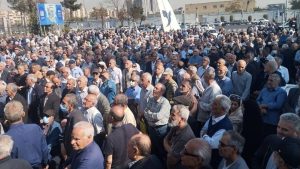
The contrast highlights a deeper crisis within the regime: its leadership recognizes the economic and political costs of maintaining the current situation but remains unable to agree on a viable way forward. More importantly, its security policies reveal that the regime sees the growing potential for domestic unrest as an immediate threat to its survival.
Throughout November, Pezeshkian repeatedly described the “neither war nor peace” situation as an unsustainable state of uncertainty. He even attributed the demand to resolve the situation directly to Mojtaba Khamenei. Ghalibaf likewise maintained that the deadlock could not continue indefinitely and had to be addressed.
Yet Mojtaba Khamenei’s message marking Basij Week made no reference to negotiations, the external confrontation, or the economic blockade. Instead, it emphasized strengthening the Basij paramilitary force, expanding street mobilization, and advancing the slogan “Every Iranian, one Basiji.”
Iran’s Currency Crisis Deepens as Capital Flees and Household Purchasing Power Collapses
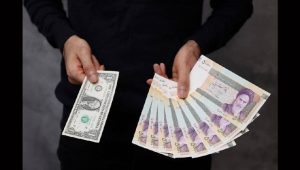
The rush toward dollars, gold, and real estate reflects a growing loss of confidence in the national currency and the government’s ability to stabilize the economy. What might appear to be individual decisions to protect personal savings has become part of a broader economic cycle in which declining confidence accelerates capital flight, increases demand for foreign currency, and puts further pressure on the rial.
Several interconnected factors are driving this deterioration: chronic budget deficits, excessive money creation, structural weaknesses in production, restrictions on access to foreign currency, and the consequences of the regime’s confrontational foreign policies and regional intervention.
Iran’s Medicine Crisis: Patients Trapped by Shortages and Rising Prices
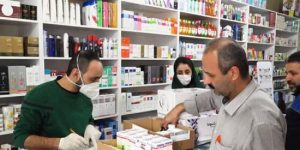
The medicine crisis is no longer a problem affecting only a particular group of patients; it has affected millions of people across the country. Patients with heart disease, diabetes, cancer, and psychiatric disorders, as well as those suffering from rare and chronic illnesses, are facing a common question.
Official statistics offer conflicting pictures of the shortages. The Director General of the Drug Department at Iran’s Food and Drug Administration has reported shortages of approximately 85 out of 700 essential medicines. Other reports indicate that nearly 800 types of medication are in short supply. More than 97% of medicines are produced domestically, but their production depends on imported raw materials.
According to the head of Iran’s Food and Drug Administration, some medicines are available in the warehouses of pharmaceutical distribution companies. However, debts owed by medical universities prevent these medicines from being delivered to hospitals. Another report estimates that insurance companies owe pharmacies approximately $300 million. These debts are undermining liquidity throughout the distribution chain.
Iran’s Economic Growth Can Drop to Negative 6% At Best, Inflation Could Reach 100%
According to the state-run Khabar Online news website, Iran’s economy is facing a series of monetary, inflationary, trade, and foreign-exchange pressures at the end of 2026. These conditions are affecting the outlook for economic growth, the purchasing power of the national currency, and foreign trade. Economic estimates point to persistently high inflation, significant growth in monetary indicators, and a decline in the dollar value of liquidity. In this environment, 2027 will be a year in which economic policymakers must contain accumulated crises and restore stability to macroeconomic indicators—a course that requires fiscal discipline, management of foreign-exchange resources, and support for production.
At the end of the year (March 22, 2027), Iran’s economy faces a difficult outlook marked by stagflation, high growth in monetary indicators, and foreign-exchange pressures. Estimates by economist Vahid Shaghaghi Shahri suggest that the country’s economic growth will reach negative 6% in the most optimistic scenario, while overall inflation will stand at between 90% and 100%—a picture pointing to deepening structural imbalances in the economy.
Referring to developments in monetary indicators, Shaghaghi Shahri says that year-on-year growth in the monetary base reached 89.9% in September 2026, money growth reached 63.3%, and liquidity growth stood at 51.6%. Accordingly, monetary base growth is projected to reach 90% to 100% by the end of the current year, while liquidity growth is expected to reach 50% to 60%.
Iran Weighs Response to US-Backed Armenia Corridor as Construction Begins
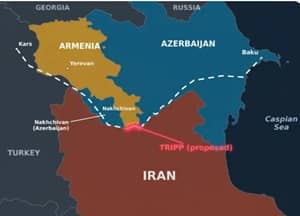 As Washington and Armenia move ahead with the Trump Route, Tehran faces the prospect of a long-term American commercial presence near its northern border, prompting debate over how to protect its security and transit interests.
Tehran has vowed to closely monitor the development of a US-backed transport corridor through southern Armenia, as Washington and Yerevan begin implementing a project that could reshape trade and geopolitical relations across the South Caucasus.
Armenian Prime Minister Nikol Pashinyan announced on November 23 the launch of the practical phase of the Trump Route for International Peace and Prosperity (TRIPP), with preparatory construction work beginning in Armenia’s southern Syunik province, which borders Iran.
The project will connect mainland Azerbaijan with its Nakhchivan exclave through Armenian territory, creating an additional transport link between Central Asia, the Caspian region and Western markets.
Iranian Youth Delegation Highlights Young Generation’s Role in Iran’s Democratic Future at Paris Conference
PARIS, November 21, 2026 — Among the speakers addressing the international conference in Paris, representatives of the Delegation of the Iranian Youth Association, Nahal Safa and Arman Habibi, highlighted the role of Iran’s younger generation in the struggle for democratic change, honoring the sacrifices of political prisoners, Resistance Units, and generations of Iranians who have fought against dictatorship.

Speaking at the conference, held under the title “The Third Option: Overthrow by the Iranian People and Resistance,” the two young representatives emphasized that Iran’s future must be based on freedom, popular sovereignty, gender equality, and a democratic republic, rejecting both the former monarchical dictatorship and the current religious dictatorship.
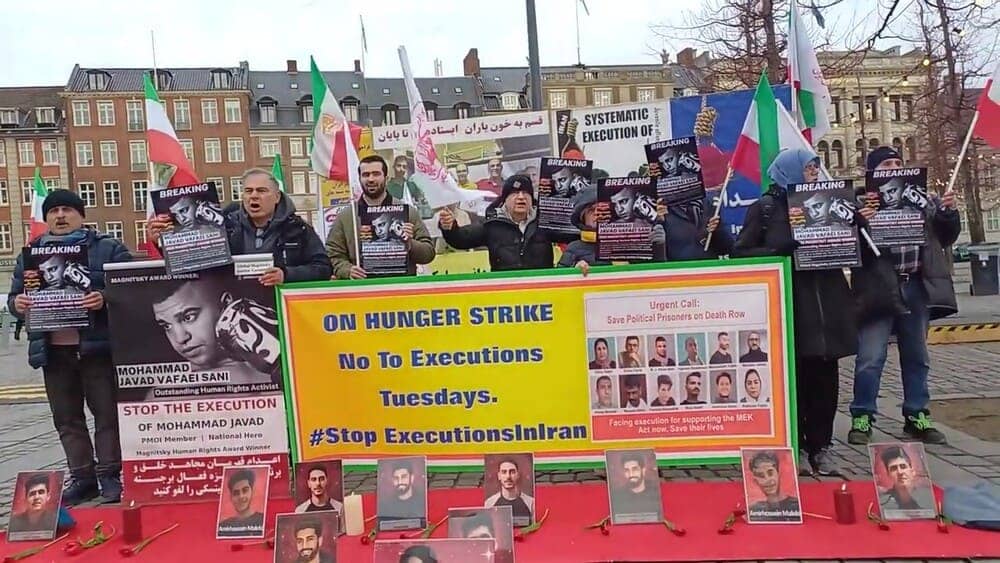
PMOI Supporters Mark 272 Days of Sit-In in Berlin, Call for End to Executions
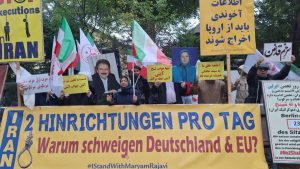
Berlin, Germany — November 26, 2026 — On the 272nd consecutive day of their sit-in outside the Iranian regime’s embassy in Berlin, supporters of the People’s Mojahedin Organization of Iran (PMOI/MEK) condemned the regime’s ongoing executions, called for the immediate abolition of the death penalty, and rejected all forms of dictatorship.
In a statement read during the protest, demonstrators denounced the execution of political prisoners and the rising number of executions of protesters arrested during nationwide uprisings in Iran. They also voiced support for the National Council of Resistance of Iran (NCRI) as a democratic alternative, calling for the establishment of a democratic republic and rejecting both monarchical and clerical dictatorship.
The protesters further demanded the closure of the Iranian regime’s embassy in Berlin as a center for espionage and terrorism on German soil. They called for accountability for the regime’s systematic repression, widespread human rights violations, and continued use of the death penalty.
Sydney Exhibition Highlights Executions and Human Rights Crisis in Iran
Sydney, Australia – November 26, 2026 – Supporters of the People’s Mojahedin Organization of Iran (PMOI/MEK) held a book table and photo exhibition in Sydney on November 26 to draw attention to Iran’s deteriorating human rights situation, particularly the execution of political prisoners and protesters detained during nationwide uprisings.

Despite unfavorable weather, activists gathered to highlight what they described as systematic human rights abuses in Iran. They condemned the executions as serious violations of fundamental rights and called for an end to executions and democratic change in the country.
The participants urged the Australian government and the international community to take a firm stance against Iran’s clerical rulers, increase pressure to stop executions, and support the Iranian people’s demands for freedom, democracy, and human rights.