
THIS PAGE WILL BE UPDATED WITH THE LATEST NEWS
UPDATE: 7:00 AM CET
Message to the Conference in the Netherlands on the International Day for the Elimination of Violence against Women
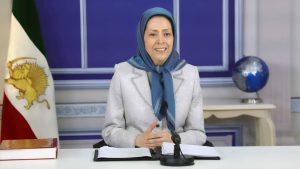
Mrs. Maryam Rajavi’s speech: “I am very pleased to send this message to your conference on the International Day for the Elimination of Violence against Women. First, I would like to salute my fellow citizens in Abdanan who stood up to protest against the regime on November 17. Their protest is another clear evidence that the people of Iran are ready for an uprising. November 25th, the International Day for the Elimination of Violence against Women, serves as a powerful reminder of the nature of Iran’s misogynistic regime, a regime that has violated women’s rights and imposed various forms of compulsion upon them, including compulsory veiling.
“The suppression of women is part of a systematic strategy used to contain a society that is demanding change.
Under the rule of the mullahs’ regime, we have seen on the one hand, the couragous resistance of women in prisons and under torture, including those who are facing the death sentence, my dear sisters Zahra Tabari, Arghavan Fallahi, and dozens of others. On the other hand, the regime’s culture of misogyny and violence has expanded into our people’s homes. Just this past week, the tragic murders of several young women by their fathers or husbands shocked the Iranian society.”
November 25, International Day for the Elimination of Violence Against Women
Actions by rebellious youth and Resistance Units across Iran to mark the International Day for the Elimination of Violence Against Women:

Karaj: November 25, International Day for the Elimination of Violence Against Women — a day exposing the disgrace of the mullahs’ misogynistic dictatorship.
Maryam Rajavi: This regime will be overthrown by these very free and liberated women. The women of Iran have resolved to bring down the greatest religious dictatorship in history.
Iranian Political Prisoner Lukman Aminpour Reaffirms Commitment to Resistance in Letter to Masoud Rajavi

Aminpour, has faced repeated arrests and lengthy prison sentences because of his support for the People’s Mojahedin Organization of Iran (PMOI/MEK). First arrested in March 2018, he was sentenced to six years in prison on charges of propaganda against the state and alleged ties to the PMOI. He was released in March 2020 following the outbreak of the COVID-19 pandemic but was arrested again on June 2, 2020, and transferred to Evin Prison.
In January 2021, a court sentenced him to a total of 10 years in prison: five years on charges of association and collusion against national security and another five years for alleged membership in the PMOI. During his detention, he was reportedly held in solitary confinement and subjected to pressure during interrogations.
His imprisonment became even more severe following the October 2022 fire and unrest at Evin Prison. After being transferred to other detention facilities, including Gohardasht and Qezel Hesar prisons, Aminpour was prosecuted in connection with the Evin Prison fire. On June 19, 2024, Branch 1148 of the Tehran Criminal Court sentenced him to an additional eight years and eight months in prison and 148 lashes. The sentence included punishments for alleged destruction of property, disruption of prison order, and disobedience to prison officials. In November 2024, an appeals court upheld the additional prison and flogging sentences.
Iran’s Winter Gas Crisis Deepens as War Damage Exposes Years of Energy Mismanagement

The crisis is already extending beyond the gas sector. Industrial consumers face supply restrictions, power plants are struggling to secure sufficient fuel, and scheduled electricity cuts for households and businesses began on November 22. Despite possessing some of the world’s largest natural gas reserves, Iran’s regime is once again struggling to provide reliable energy to its own population.
The regime’s President Masoud Pezeshkian acknowledged the severity of the situation on November 21, warning that the country would face energy supply problems during the winter. He said attacks on gas infrastructure had further aggravated an existing imbalance.
Iran’s Regime Uses Cyberattacks, Disinformation, and Academic Theft to Mask Its Technological Weaknesses

Iran’s regime is increasingly using cyber operations, technological propaganda, and intellectual property theft as instruments of confrontation with the international community. While state-affiliated media boast of supposedly disabling critical infrastructure in the United States and other countries, the reality behind these claims is considerably less impressive. The regime’s actual cyber capabilities are concentrated largely on less-protected targets, espionage, data theft, and operations conducted through proxy networks. This contrast exposes an important feature of the regime’s technological strategy: presenting an exaggerated image of cyber power while exploiting the scientific and technological resources of other countries to compensate for its own shortcomings.
The distinction between genuine cyber operations and fabricated claims is essential to understanding how Tehran uses technology not only as a tool of espionage and disruption but also as an instrument of psychological warfare.
On November 21, the IRGC-affiliated newspaper Javan published an article claiming that four major technical incidents had occurred in the United States over five consecutive days. These allegedly included disruptions to Microsoft systems, nationwide aviation systems, major banks, and the classified communications network of the National Security Agency (NSA).
150 Anti-Repression Operations and 709 Resistance Activities Challenge Iran’s Regime Amid Maximum Security Alert
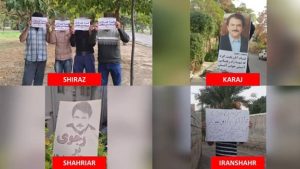
Iran’s regime has intensified its security measures amid growing economic discontent and the anniversary of the November 2019 uprising. Yet, despite an extensive security mobilization, Resistance Units have continued their activities across the country, carrying out 150 anti-repression operations and 709 revolutionary activities in eight nationwide campaigns over the past month. The scale and continuity of these activities highlight the ongoing confrontation between the regime and a society that has repeatedly demonstrated its unwillingness to accept authoritarian rule. They also raise a fundamental question: if the regime exercises such extensive control over the country, why does it continue to mobilize such enormous resources against organized resistance?
The answer lies partly in the regime’s enduring fear that localized acts of defiance could contribute to a broader uprising.
The eight nationwide campaigns addressed a range of issues, from executions and economic repression to the destruction of people’s livelihoods and the commemoration of previous uprisings.
1.5 Million More Iranians Join Ranks of Unemployed as Consequences of War Take Their Toll

The fragile ceasefire and the looming threat of renewed war, economic blockade, and widespread sanctions have created difficult conditions for Iran’s economy. The labor market and workers’ livelihoods are among the first areas to bear the brunt of this situation. Estimates indicate that at least 1.5 million jobs were lost during the war. Meanwhile, the wages of workers who have managed to remain employed are insufficient to keep up with successive waves of price increases.
What makes the current situation facing workers even more alarming is not merely the growing number of unemployed people, but also the economic circumstances of those who have managed to keep their jobs. In other words, one segment of the workforce is facing unemployment and a complete loss of income, while another must cover rising living expenses on a fixed income.
Hamid Haj-Esmaeili, a labor market expert, told the state-run Fararu newspaper that, according to estimates by Iran’s Ministry of Cooperatives, Labor, and Social Welfare, approximately 1.5 million people lost their jobs during the war. He also noted that initial estimates at certain points had put the number of lost jobs at between three million and 3.5 million. According to the expert, some jobs have been restored since the ceasefire took effect, but a large number of workers continue to face unemployment and the consequences of losing their livelihoods.
UN Special Rapporteur Mai Sato Expresses Concern Over Executions in Iran

Mai Sato, the UN Special Rapporteur on the situation of human rights in Iran, expressed grave concern over the imminent execution of Milad Armoun and Navid Najjaran, two detainees arrested during the nationwide protests of 2022. According to reports, the two prisoners, Milad Armoun and Navid Najjaran, were on the verge of being executed at dawn on Wednesday, November 25. The two men have been in detention for more than three years. They have been charged with “corruption on earth” (efsad-fil-arz), allegedly for their involvement in the killing of a member of the Basij, a paramilitary force affiliated with the Islamic Revolutionary Guard Corps (IRGC). The shocking aspect of this case is that a criminal court acquitted them of the murder charge, and no retribution (qisas) sentence was issued. Nevertheless, an anti-revolutionary and anti-people court of the Iranian regime sentenced them to death.
Mai Sato raised the fundamental question of how death sentences could be issued after the defendants had been acquitted of murder. She also referred to reports of torture and forced confessions. She called for the immediate suspension and annulment of the sentences. This case once again highlights serious concerns about the independence of the judiciary, the right to a fair trial, the prohibition of torture, and the right to life in Iran.
Iran: Eyewitness Report on the 8–9 January 2026 Babol Killings Ahead of the Protests’ Anniversary

This report is based on a direct eyewitness account of events on Thursday and Friday, 8–9 January 2026, in the city of Babol during the nationwide protests. This report focuses strictly on field events, patterns of the use of force, the condition of the injured, and access to medical care within the framework of international human rights law. Approaching the anniversary of the nationwide Dey protests, recording and analyzing such evidence carries preventive and evidentiary importance for United Nations oversight mechanisms—particularly the Independent International Fact-Finding Mission on the Islamic Republic of Iran and the Special Rapporteur on the situation of human rights in the Islamic Republic of Iran.
- Widespread and Unrelenting Gunfire: According to the eyewitness account, during the nights of 8-9 January in central and densely populated areas of Babol, gunfire from firearms took place extensively and continuously; over prolonged periods—including roughly two and a half hours on Thursday, January 8, and also from approximately 8:20 p.m. to 10:00 p.m. in the city center—the sound of gunshots was heard roughly every three to five seconds, with thousands of rounds fired in total. It has also been reported that near Police Station No. 13 and the Babol police headquarters, roughly two thousand rounds were fired horizontally at ground level—rather than into the air—within about thirty minutes or less.
- Absence of Prior Warning and Direct Firing Instead of Arrest: Contrary to standard crowd-control procedures and unlike warning shots into the air or conventional warnings, gunfire was directed straight at protesters without prior warning. According to the witness, in certain locations (including from Bagh-e Ferdows Square toward Shariati Street), the implicit or explicit directive centered on “shooting instead of arresting” and “wounding or killing,” with no warning shots into the air or graduated crowd-dispersal measures observed.
Iran: Urgent Appeal to Save Milad Armoun and Navid Najaran; Halt Executions, Ensure Fair Trial

Emergency Situation: Milad Armoun (27, arrested on 3 November 2022 in Tehran) and Navid Najaran (34, arrested on 2 December 2022 in Ahvaz), two protesters from the 2022 nationwide protests in the case known as “Ekbatan,” face a serious and imminent risk of execution following the Supreme Court’s confirmation of their death sentences and their transfer to solitary confinement in Ghezel Hesar Prison on Saturday, 21 November 2026. These concerns persist on Wednesday, 25 November 2026 (the date reportedly set for their execution), as Mizan News Agency, affiliated with the judiciary, while denying claims that the Revolutionary Court’s final death sentence against the two protesters had been overturned, stated that reports regarding the timing of the execution are “inaccurate”—a situation that, due to a lack of official transparency and ongoing detention and solitary confinement, heightens fears of a sudden implementation of the sentence. Meanwhile, the UN Special Rapporteur on the situation of human rights in Iran, Madam Mai Sato, has also warned of deeply concerning reports regarding the situation of the two prisoners and called for an immediate halt to their executions and the quashing of their sentences.
Iran’s Guardian Council Challenges Pezeshkian’s Internet Reform Body, Deepening Power Struggle

Iran’s Guardian Council has dealt a fresh blow to President Masoud Pezeshkian’s efforts to overhaul internet governance, with its six clerical members declaring the establishment of a special body under the presidency contrary to Islamic law.
The opinion, announced on November 22 by Guardian Council spokesperson Hadi Tahan Nazif, challenges the legal basis of the Special Headquarters for the Organization and Governance of Cyberspace, established by Pezeshkian in May to coordinate digital policies and eliminate overlapping responsibilities among government institutions.
The clerics concluded that the headquarters encroached on the authority of the Supreme Council of Cyberspace, an institution established by decree of Iran’s supreme leader.
Their objections also extend to government decisions concerning nationwide internet shutdowns, the development of Iran’s domestic information network and restrictions on digital businesses.
The intervention places one of Pezeshkian’s principal initiatives for implementing his electoral promise to ease internet filtering in jeopardy, while reopening a longstanding dispute over the distribution of power between elected and unelected institutions in Iran.
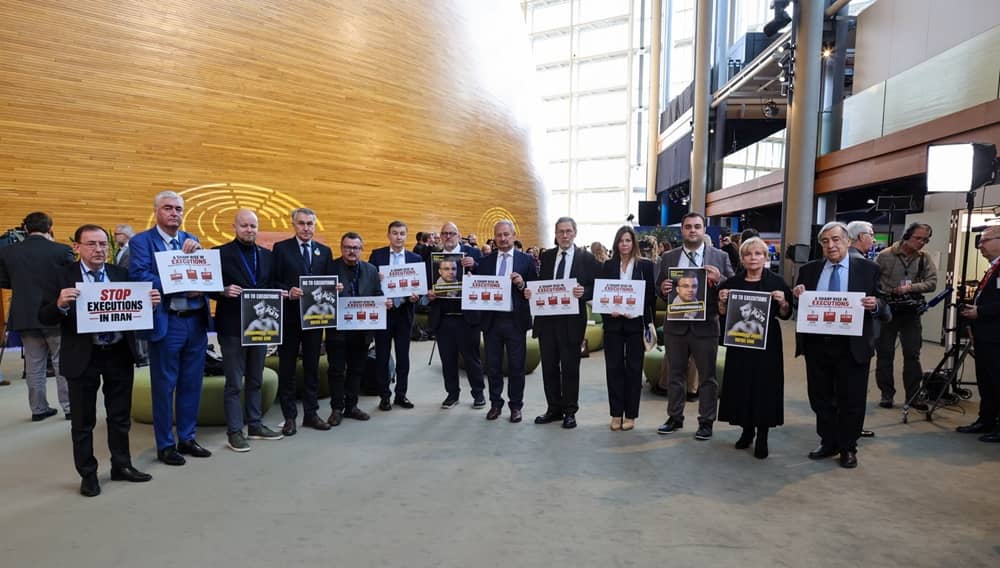
Berlin Protest Marks 270 Days Against Iran Executions, Backs Week 148 of No to Execution Tuesdays
Berlin, Germany — November 24, 2026 — On the 270th consecutive day of their sit-in outside the Iranian regime’s embassy in Berlin, supporters of the People’s Mojahedin Organization of Iran (PMOI/MEK) condemned the regime’s ongoing executions, called for the immediate abolition of the death penalty, rejected all forms of dictatorship, and expressed solidarity with Week 148 of the No to Execution Tuesdays campaign.

The demonstrators denounced the execution of political prisoners and the rising number of executions targeting protesters arrested during nationwide uprisings in Iran. They also voiced support for the National Council of Resistance of Iran (NCRI) as a democratic alternative, calling for the establishment of a democratic republic and rejecting both monarchical and clerical dictatorship.