
THIS PAGE WILL BE UPDATED WITH THE LATEST NEWS
UPDATE: 7:30 AM CEST
Arrested PMOI Supporters Face Growing Dangers Amid Iran Regime’s Execution Campaign
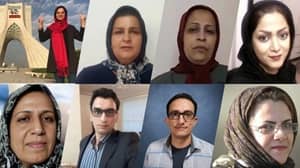
On October 11, 2026, the National Council of Resistance of Iran (NCRI) released the names and details of 12 supporters and relatives of members of the People’s Mojahedin Organization of Iran (PMOI/MEK), who have been arrested by the Iranian regime in different cities across the country.
The detainees include former political prisoners, relatives of executed PMOI members, workers, and citizens from different backgrounds. The arrests come amid an escalating campaign of executions and repression targeting political prisoners and members of the organized opposition.
The disclosure raises serious concerns about the safety and fate of the detainees, particularly given the regime’s recent executions of PMOI members and its continuing refusal to provide information about other imprisoned or missing dissidents.
Among the identified detainees is Nasrollah Fallahi, 69, from Pakdasht, Tehran, arrested on October 4. A former political prisoner from the 1980s, Fallahi was arrested again in 2022 and had recently been released after serving four years in prison. His daughter, Arghavan Fallahi, is also a political prisoner who has been sentenced to death.
Two Women Named Among Newly Identified PMOI Detainees

The Secretariat of the National Council of Resistance of Iran (NCRI) announced on October 11, 2026, the names of 12 family members and supporters of the People’s Mojahedin Organization of Iran (PMOI/MEK) who have been arrested in various cities across the country. Among the detainees are two women.
According to the statement, Zeinab Saremi was arrested in Tehran in October 2026. She is the daughter of Ali Saremi, a PMOI member and steadfast political prisoner who was executed in Evin Prison on December 28, 2010, after enduring 24 years of imprisonment and torture.
Leila Barzegar, 49, was also arrested in the city of Torbat-e Jam, in Razavi Khorasan Province, northeastern Iran, on August 5, 2026.
In the statement, the NCRI Secretariat expressed concern over the condition of the detainees and called on the United Nations, particularly the UN High Commissioner for Human Rights and the UN Special Rapporteur on the situation of human rights in Iran, to take immediate action to clarify their situation.
Girl Children in Iran: A Childhood Besieged by Poverty, Child Marriage, and Violence

International Day of the Girl Child is an opportunity to highlight the fundamental rights of all children to education, security, health, play, and an age-appropriate future. For many girl children in Iran, however, childhood is defined by a continuous cycle of deprivation and harm—ranging from early child marriage and forced school dropouts to child labor, severe poverty, and domestic violence.
These issues are deeply interconnected. Poverty creates the conditions for school dropouts and child labor, while early child marriage halts a girl child’s education and leaves her vulnerable to early pregnancy and violence. Combined, these factors perpetuate an ongoing cycle of poverty and marginalization passed down to the next generation.
Education is one of the most critical pathways out of poverty yet escalating economic pressure forces girl children out of school. In families facing severe livelihood hardships, a child may be driven into the labor market instead of studying and playing, or early child marriage halts her education altogether.
This crisis is not limited to losing a few years of schooling. Dropping out drastically restricts a girl’s future opportunities, confining her to low-paying, precarious employment in adulthood. This creates a vicious cycle where poverty leads to school dropouts, and dropping out guarantees the perpetuation of poverty.
British MP Bob Blackman Condemns Pahlavi Award Decision and Urges Accountability for Iran’s Regime
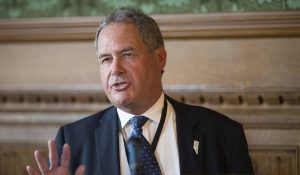
British MP Bob Blackman has called for a fundamental change in Western policy toward Iran, warning that appeasement has enabled the ruling regime to intensify repression, executions, and terrorism. Speaking at a conference marking the World Day Against the Death Penalty, Blackman also criticized a German think tank’s decision to invite Reza Pahlavi to receive a Freedom Prize awarded to the Iranian people, arguing that the move undermines the struggle for a democratic future in Iran.
Blackman, chair of the British Committee for Iran Freedom and co-chair of the International Parliamentary Committee for a Democratic Iran, stressed that international attention to military confrontations and maritime security must not overshadow the regime’s continuing campaign of repression against the Iranian population.
He argued that the central conflict over Iran’s future is between the Iranian people and their organized resistance on one side and the ruling establishment, the Islamic Revolutionary Guard Corps (IRGC), and its regional proxies on the other. Executions, he said, have become one of the regime’s principal instruments for suppressing dissent and maintaining control.
Iran’s Economic Crisis Forces Families to Abandon Basic Consumer Needs
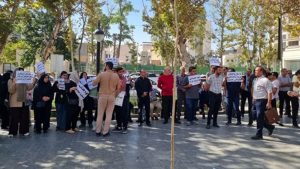
In an October 8, 2026, report, the state-run Jomhouri Eslami newspaper examined the changing purchasing patterns of Iranian households. The report described how higher living expenses and shifting consumption priorities are transforming not only household budgets but also social behavior and the future of domestic production.
The changes reflect a broader economic reality: for many Iranians, shopping is no longer about choosing between different products, improving living conditions, or replacing outdated possessions. It has become a struggle to meet basic needs.
According to Jomhouri Eslami, many families are postponing purchases or eliminating them altogether. Rather than buying new products, they increasingly turn to secondhand goods, including items that households would ordinarily expect to purchase new.
This shift is more than a sign of greater thrift. It reflects the declining ability of families to afford ordinary consumer goods and maintain their previous living standards.
Iran Uses Crypto Mining to Ease Sanctions Pressure as Illegal Miners Consume Up to 2,400 MW
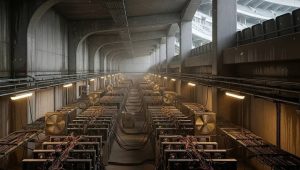
Official reports say illegal crypto mining consumes as much as 2,400 megawatts of electricity, worsening part of a power deficit whose consequences are being felt by industries and households.
Iran has used cryptocurrency mining as one way to obtain assets that can be used outside a sanctions-restricted financial system. Reuters previously reported, citing research by blockchain analytics firm Elliptic, that Bitcoin mined in Iran could be used to finance imports and reduce the impact of sanctions. New figures from Iranian institutions show that the electricity required for this activity, particularly illegal mining, imposes a heavy cost on a grid already struggling with chronic energy shortages and restrictions on industrial power supplies.
Iran has recognized cryptocurrency mining in recent years and required licensed miners to make the digital currency they produce available through an official mechanism to finance imports. Legal activity in this sector, including the import and operation of mining equipment, is subject to licenses and regulations issued by the Ministry of Industry, Mine and Trade. Reuters reported in 2021 that about 4.5% of global Bitcoin mining at the time was taking place in Iran, while Elliptic estimated its potential annual revenue at close to $1 billion.
Stockholm: Resistance Supporters Complete 5K Run in Heavy Rain on World Day Against the Death Penalty
Stockholm, Sweden – October 10, 2026 — Despite heavy rain, participants in a 5-kilometer walk and run successfully completed their protest action opposite the Swedish Parliament in Stockholm. The event, held on the World Day Against the Death Penalty, was organized by supporters of the Iranian Resistance and the People’s Mojahedin Organization of Iran (PMOI/MEK).
Every step was a cry in defense of the right to life. Every drop of rain testified to the determination to end the death penalty in Iran. The downpour could not halt the marchers, just as the demand for justice and the right to life cannot be silenced.

Participants came to the streets to declare clearly that human life is valuable and that no one should be sent to the gallows. The action specifically protested the executions of political prisoners and protesters arrested during recent uprisings, while opposing all death sentences issued by the regime.
Iranian Americans Condemn Executions in Iran at Lincoln Memorial on World Day Against the Death Penalty
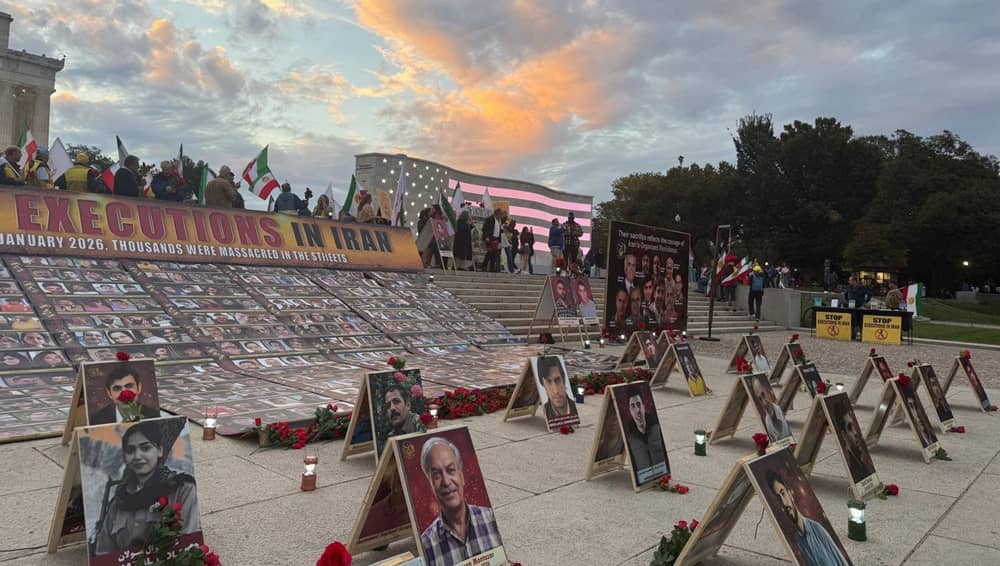
Supporters of the National Council of Resistance of Iran (NCRI) and members of the Organization of Iranian American Communities (OIAC) gathered at the Lincoln Memorial in Washington, DC, on October 10, 2026, marking World Day Against the Death Penalty.
Organizers and participants called for an immediate end to executions in Iran and accountability for officials of Iran’s ruling regime. They stated that only an end to the repressive regime will bring democratic change.
We call on free nations to establish an international mechanism to hold Iran regime officials accountable for ongoing crimes against humanity and persecution of political dissidents. pic.twitter.com/5GB6IWU2kE
— OIAC: Organization of Iranian American Communities (@OrgIAC) October 10, 2026
Speakers and participants raised their voices for those the Iranian regime seeks to silence. Their stated demand was clear: stop executions in Iran and free political prisoners. They noted that behind every execution is a human life, a family, and a future stolen, and said they stand with prisoners facing death and with the Iranian people demanding freedom and a democratic republic. The message included “No to executions. Yes to life. Yes to a free Iran.”
Participants also stated “No shah, no mullahs” and called on policymakers to support regime change by the Iranian people and their organized resistance. They called on free nations to establish an international mechanism to hold Iran regime officials accountable for ongoing crimes against humanity and the persecution of political dissidents.