
THIS PAGE WILL BE UPDATED WITH THE LATEST NEWS
UPDATE: 7:00 AM CEST
Iran’s Regime Upholds Death Sentence for Student Amirhassan Akbari Monfared

On October 11, 2026, the Iranian regime’s Supreme Court upheld the death sentence of Amirhassan Akbari Monfared, a 23-year-old accounting student at Karaj Azad University held in Evin Prison. Branch 41 confirmed his conviction for baghi (rebellion) through membership in the People’s Mojahedin Organization of Iran (PMOI/MEK), placing him at imminent risk of execution.
The decision was delivered by a deputy from Evin Prison accompanied by two people, including a masked Ministry of Intelligence representative. Authorities simultaneously presented Amirhassan with a pardon application and a document demanding repentance and disavowal of the PMOI. He refused to read the papers and referred the matter to his lawyer.
Amirhassan was arrested on January 19, 2025, when heavily armed agents wearing bulletproof vests raided his paternal home in Karaj. The arrest came one day after the elimination of the regime’s criminal judges Ali Razini and Mohammad Moghiseh in the “Abdar-chi” (“tea boy”) incident. Amirhassan had no involvement in or knowledge of the incident.
Iran’s Workers Face Deepening Poverty as Wages Fall Far Below Living Costs
The figures expose a deepening crisis for working families, whose wages can no longer cover food, housing, healthcare, and other essential expenses. The burden falls particularly heavily on those who remain employed full-time but cannot earn enough to escape poverty.
On September 13, 2026, Khabar Online reported that the poverty line had exceeded 70 million tomans, while workers’ wages remained below 20 million tomans. The report, citing estimates attributed to Khorami, highlighted the growing disparity between earnings and the cost of living.
Mehr News Agency had previously reported, on February 28, 2026, that the relative poverty line stood at 60 million tomans or more, underscoring the scale of financial hardship facing households.
Food Inflation Reaches 150% in Some Parts of Iran
In September 2026, Hormozgan Province recorded the highest food inflation rate in Iran, at 149.8%, while the lowest provincial rate was still 104%. This report examines the impact of this surge on household expenses and livelihoods.
In September 2026, the general price index rose by 73.6% compared with the previous 12 months. Compared with the same month a year earlier, the increase was 89.8%. Monthly inflation stood at 4.2%, while annual inflation rose by 3.7 percentage points compared with the previous month, August. These figures reflect overall market conditions, but the food category provides a clearer picture.
In the food, beverages, and tobacco category, year-on-year inflation reached 121.8%, while annual inflation stood at 108.8%. This means consumers are paying more than twice as much for the same food basket as they did a year ago. These figures exceed the overall inflation rate and more directly reflect the cost of household necessities.
For non-food goods and services, year-on-year inflation stood at 71.9%, while annual inflation was 55.3%. The 49.9-percentage-point gap in year-on-year inflation indicates that food prices have risen far more sharply than those of other goods and services. Food inflation has become the main driver of rising living costs.
The Staggering Cost of Thalassemia in Iran

A new report by the Thalassemia Association says the monthly cost of treatment for each patient has exceeded 1 billion rials (approximately $400 per month, while a worker’s monthly salary barely reaches $100). Younes Arab, CEO of the Thalassemia Association, said that most of this cost is effectively paid out of patients’ own pockets. This figure has turned the cost of the disease from a medical issue into a persistent economic burden on families.
According to a report published on October 8, the CEO of the Thalassemia Association attributed the increase in treatment costs to currency fluctuations and the removal of preferential exchange rates. The report states that preferential exchange rates for medicines and medical equipment were discontinued in November 2025. Price increases of 10% to 12% have also been reported for some medicines as a result of exchange-rate changes.
The issue is not simply the rising price of one medication. Thalassemia treatment involves a combination of medicines, tests, specialist appointments, and ongoing care. Patients may require long-term treatment to manage complications of the disease. As a result, price increases at multiple stages of treatment cumulatively raise the total cost for families.
For some items, according to the CEO of the Thalassemia Association, patients’ out-of-pocket payments increased more than 600-fold after preferential exchange rates were eliminated. This figure illustrates the extent to which costs have been shifted to the end consumer.
Iran Official Says $2 Trillion In Regional Digital Infrastructure Could Be Targeted in Renewed War
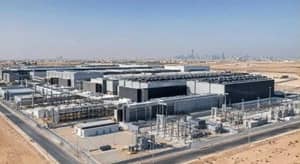
Mohsen Rezaei, while making talks with the United States conditional on Tehran’s terms, said communications cables, data centers and AI facilities in the Middle East could come within Iran’s reach if war resumes.
Mohsen Rezaei, secretary of Iran’s Supreme National Security Council, has warned that if war with the United States resumes, Tehran could expand the range of its targets to include costly digital infrastructure across the region, remarks made as indirect contacts between Tehran and Washington continue and tensions persist over the Strait of Hormuz.
Rezaei said in the televised interview that Iran had not used all of its capabilities in previous confrontations and had other options available for a new conflict. “If war breaks out, many of the cables, data centers and AI facilities that are extremely valuable financially will come within range.”
He said the value of this infrastructure exceeds $2 trillion and that some of it had been moved from the United States and Europe to the Middle East because of its high energy requirements. The figure and Rezaei’s assessment have not been independently verified in the sources reviewed.
Oslo: Iranian Resistance Supporters Run Marathon Against Executions in Iran
Oslo, Norway – October 10, 2026: On the World Day Against the Death Penalty, supporters of the People’s Mojahedin Organization of Iran (PMOI/MEK) and the Iranian Resistance took part in the Oslo Marathon wearing vests with the slogans “No to Executions” and “Stop Executions in Iran.”
They condemned the executions carried out by the Iranian regime and called for the abolition of the death penalty, especially for political prisoners and protesters arrested during uprisings in Iran.

Supporters of the Iranian Resistance demanded an end to impunity for regime leaders responsible for crimes against humanity and urged that they be brought to justice before an international court.
Rejecting both monarchical dictatorship and clerical rule, they also expressed support for a democratic republic based on Mrs. Maryam Rajavi’s Ten-Point Plan, which includes the abolition of the death penalty.
Malmö Rally Protests Executions in Iran on World Day Against the Death Penalty
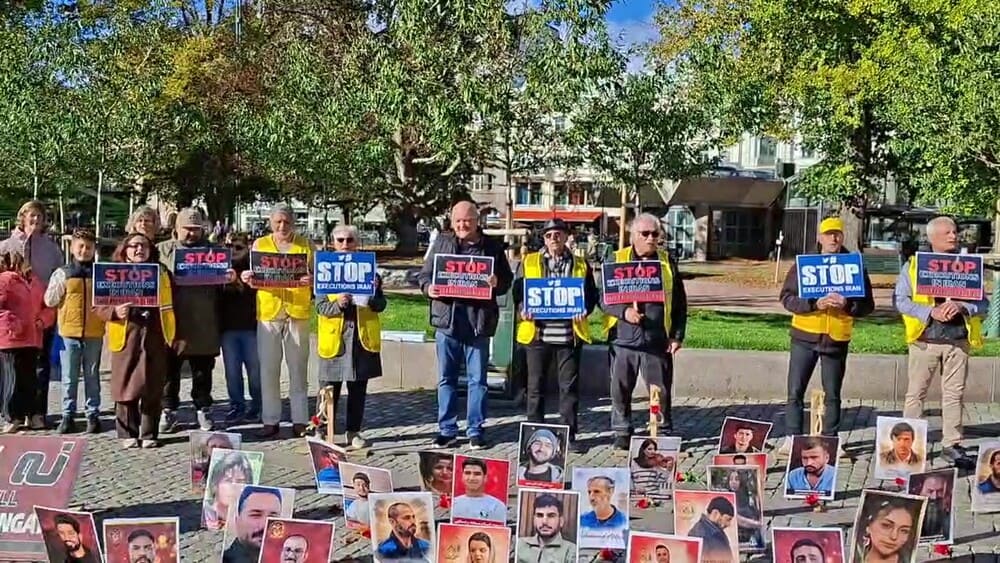
Malmö, Sweden – October 10, 2026: On the World Day Against the Death Penalty, supporters of the Iranian Resistance (PMOI and NCRI) held a rally and photo exhibition to protest the Iranian regime’s continued use of the death penalty and draw international attention to the plight of political prisoners and protesters facing execution.
The rally condemned the threatened executions of political prisoners and protesters arrested during recent nationwide uprisings, as well as the death penalty in all its forms. Demonstrators called for an immediate halt to all executions.

They strongly denounced the actions of Iran’s ruling clerical regime, declaring the executions clear violations of fundamental human rights. The demonstrators paid tribute to the victims by displaying their photographs and called on the Swedish government to close the Iranian regime’s embassy in Sweden, a center for espionage and terrorism targeting freedom-seeking Iranians, particularly supporters of the Iranian Resistance.
Iranian Resistance Supporters Hold Global Anti-Execution Events on World Day Against the Death Penalty
On Saturday, October 10, 2026, World Day Against the Death Penalty, supporters of the Iranian Resistance and human rights advocates held events in cities across Europe, Australia and North America. The program included symbolic endurance runs in nine cities and other solidarity actions, all drawing attention to executions in Iran and expressing support for prisoners facing death sentences.
The endurance runs took place in Paris, London, Cologne, Rome, Amsterdam, Stockholm, Oslo, Sydney and Luxembourg. Participants described the runs as a symbol of the long and difficult path of the Iranian people’s struggle for freedom.
1-#Paris, Oct 10, 2026 🇫🇷: At Parc Montsouris, Iranian Resistance supporters run to denounce executions in Iran. At least 45 political prisoners, including 9 PMOI supporters, have been executed since early 2026.#WorldDayAgainstTheDeathPenalty #StopExecutionsInIran pic.twitter.com/zT2bIsLqmp
— Iran Freedom (@4FreedominIran) October 10, 2026
Through these sporting and political actions, they sought to draw international attention to the growing use of executions in Iran and show solidarity with political prisoners and protesters.