

THIS PAGE WILL BE UPDATED WITH THE LATEST NEWS
UPDATE: 8:00 AM CEST
Resistance Units in Zahedan Reject Shah and Mullahs, Demand a Democratic Republic
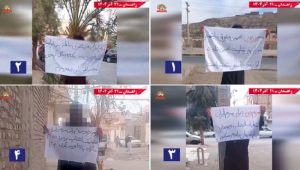
On October 16, 2026, PMOI/MEK Resistance Units resumed their weekly anti-regime activities in Zahedan, southeastern Iran, displaying placards in public places rejecting both the ruling clerical dictatorship and a return to monarchy. Their messages linked opposition to executions and repression with the demand for a democratic republic.
“A dictator is a dictator, whether with a turban or a crown,” read one placard. Another declared: “No to mullahs, no to shah, yes to freedom and democratic republic.”
A major theme of the campaign was opposition to promoting Reza Pahlavi, son of Iran’s deposed shah, as a representative of the Iranian people. The messages came amid controversy over the Friedrich Naumann Foundation for Freedom’s 2026 Freedom Prize, which was offered to Pahlavi. The decision to give the prize to the representative of the ousted shah dictatorship has caused outrage, including a letter dated October 16, in which 306 Iranian associations and communities protested the arrangement.
One placard rejected “rewarding or legitimizing the remnants of the autocratic, foreign-dependent Shah,” arguing that monarchical dictatorship deserved no more recognition than clerical dictatorship.
Veteran PMOI Member Jalal Farkhondi Passes Away After 50 Years Of Resistance Against Two Dictatorships
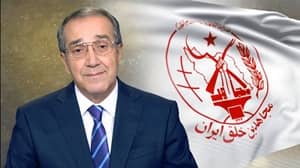
It is with heavy hearts that we announce the passing of PMOI member Jalal Farkhondi in Albania due to illness, following 50 years of relentless struggle against two dictatorships in the ranks of the PMOI and the National Liberation Army of Iran (NLA).
Jalal Farkhondi was born in 1960 in Tabriz, northwestern Iran. In 1976, while studying in Tehran, he became acquainted with the ideals and struggles of the PMOI by reading the biographies of its martyrs and the defense statements of PMOI members before the Shah’s military courts.
Together with a group of students and friends from his neighborhood, he began distributing leaflets and engaging in activities in support of the PMOI. As a result, he was arrested by the Gendarmerie in Amol in June 1976 and was detained and interrogated for several days.
In 1979, during the anti-monarchical revolution, Jalal Farkhondi participated in organizing demonstrations and protest marches. Following the September 8, 1978 massacre, carried out on the orders of the treacherous Shah, he intensified his activities, spreading the slogans “The only path to liberation is armed struggle” and “Freedom for political prisoners” among young people.
Femicide in Iran: When the Law Grants Killers Impunity Instead of Protecting Women
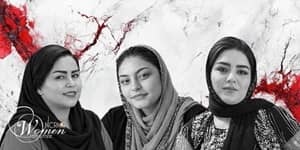
Femicide in Iran: In just a few days in October 2026, several women and girls were murdered in different cities across Iran by the men closest to them—from a 16-year-old child bride to a mother who was shot alongside her 14-year-old daughter.
These crimes are neither isolated incidents nor exceptional cases. They are part of the reality women in Iran face every day: a reality in which the misogynistic laws of the mullahs’ regime, ineffective penalties, and a culture of impunity for perpetrators of violence have created conditions that allow femicide to continue.
A review of killings reported in recent weeks shows that violence against women in Iran is not an individual or family crisis, but a structural problem rooted in the state itself.
Fereshteh Yousefzadeh, a 38-year-old mother of three, was murdered by her husband, a member of the Revolutionary Guard Corps (IRGC). Mohammad Mohammadi, 56, an IRGC member in the city of Dehloran, Ilam Province, opened fire with a Kalashnikov, killing Fereshteh, her 14-year-old daughter Roza, and her nine-year-old twins, Radbin and Hadis.
Iran Regime’s Unfulfilled Food Voucher Promises Leave Millions Facing Exclusion

Iran’s regime is facing growing public anger over its failure to deliver promised increases in food voucher allowances, as soaring prices erode household purchasing power and millions risk losing access to the program. The food voucher scheme, presented as a measure to protect livelihoods amid the country’s deepening economic crisis, has instead become another source of frustration for families struggling to afford basic necessities.
The controversy intensified after months of delays, repeated changes to eligibility criteria, and reports that the government intends to remove millions of people from the list of beneficiaries.
In December 2025, after President Masoud Pezeshkian’s government removed the preferential exchange rate, officials promised to provide food vouchers worth one million tomans to all citizens. The measure was presented as compensation for the resulting economic pressure on households.
Approximately nine months later, however, the promised support had still not materialized as announced.
On October 7, 2026, officials once again discussed changes to the program without announcing a concrete increase in the allowance. Instead, new eligibility conditions were introduced, including an income ceiling of 20 million tomans and restrictions involving home and car ownership.
Iran: Militarization of Children and Their Military Training
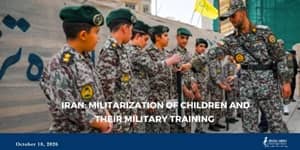
In October 2026 (Mehr 1405), the publication of documented images and reports in Iranian domestic media, including Rouydad 24 and ISNA, revealed alarming dimensions of the military training of children and adolescents in public spaces. According to these images, military and security forces operating under the so-called “Jan-Fada” battalions in various parts of Tehran, including Azadi Square and Haft-e Tir Square, have been training children and adolescents in handling firearms, including assault rifles, scoped rifles, and machine guns. These actions, conducted with the presence and supervision of official forces and in the view of the general public, reflect the continuation of a pattern pursued over past decades through the mobilization and military organization of students. Relying on visual evidence and official statements, this report examines the dimensions of this phenomenon, the historical background of using children in military and security structures and assesses the compliance of these practices with the international obligations of the Islamic Republic of Iran regarding child rights.
During government-sponsored exhibitions and gatherings held in October 2026 in Tehran, numerous images depicting direct military training provided to children drew widespread reactions:
- Haft-e Tir Square, Tehran (October 4, 2026 ): Media images show senior military officers in IRGC uniforms instructing boys and girls on how to handle, assemble/disassemble, and aim heavy and semi-heavy military weapons. (Rouydad 24, October 4, 2026 – )
Azadi Square, Tehran (September 27, 2026): Booths in this square featured children dressed in paramilitary uniforms (resembling commando units) practicing aiming with scoped rifles and machine guns mounted on military vehicles. In some images, children are trained to aim at target baskets featuring specific images. (Rouydad 24, September 27, 2026– )
Trump Says Iran War Will End ‘Very Quickly’ as Tehran Keeps Diplomacy Open Amid Hormuz Attacks
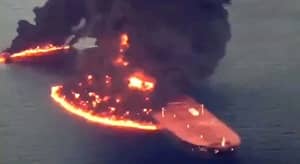
TEHRAN — As insecurity continues in the Strait of Hormuz, officials and figures close to different factions of the Islamic Republic have entered into a public dispute over how the war should proceed, the possibility of negotiations with the United States, and responsibility for the collapse of the Islamabad understanding. Abbas Araghchi says Iran has not closed the door to diplomacy, while media outlets and forces close to hardline factions have targeted critics of the government’s war policy and competing accounts of the maritime attacks.
At a meeting of foreign ministers of the Organization of Islamic Cooperation in Baghdad, Araghchi emphasized both Iran’s readiness to defend itself and the continued availability of a political path. Shargh described the position as a sign that Tehran is continuing efforts to preserve a diplomatic channel amid the war. The stance comes as Russian Foreign Minister Sergei Lavrov’s visit to Tehran has also fueled speculation about mediation and behind-the-scenes contacts.
The main debate inside Iran is now focused on why the Islamabad understanding collapsed. Abbas Araghchi has placed responsibility on Washington, saying the United States violated the agreement. But Gholamhossein Karbaschi, a reformist figure, has offered a different account, saying attacks on several ships near the Strait of Hormuz contributed to the failure of the understanding.
Iranian Resistance Supporters in Malmö Back the NCRI as a Democratic Alternative for a Democratic Republic in Iran
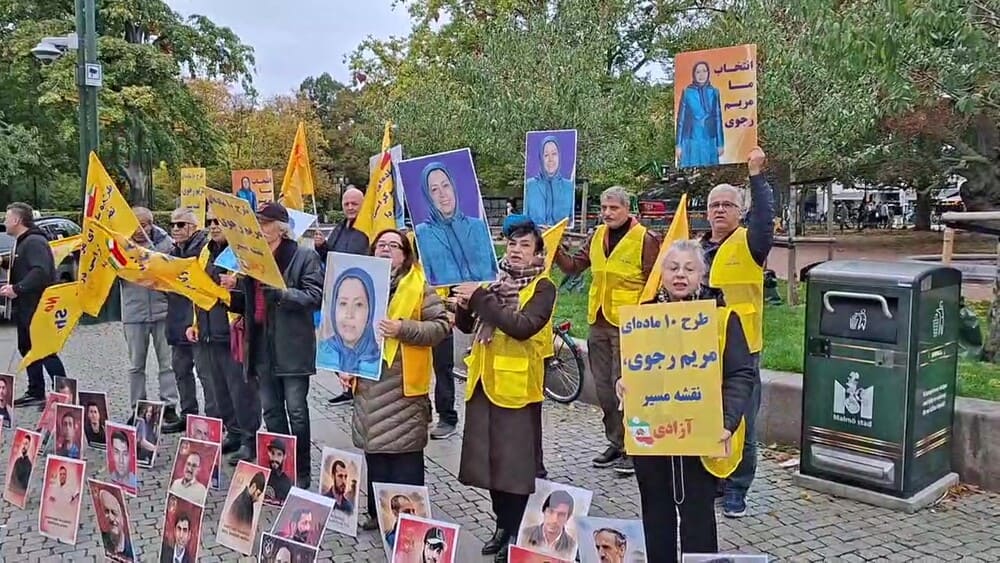
Malmö, Sweden – October 17, 2026 – Supporters of the Iranian Resistance held a rally in Malmö to reaffirm their support for the National Council of Resistance of Iran (NCRI) as a democratic alternative to Iran’s ruling religious dictatorship. The gathering took place ahead of the anniversary of October 22, 1993, when the NCRI elected Maryam Rajavi as president-elect of the provisional government for a transitional period leading to the establishment of a democratic republic in Iran.

Under the proposed transition, the provisional government would have a six-month mandate to prepare for elections to a Constituent Assembly, paving the way for the transfer of sovereignty to the Iranian people.
Participants expressed their support for the NCRI’s democratic platform and Maryam Rajavi’s Ten-Point Plan for Iran’s future, which advocates a democratic republic and rejects all forms of dictatorship, whether a restoration of the former monarchical system or the continuation of the current religious dictatorship.
Bucharest Exhibition Condemns the Iranian Regime’s Executions and Human Rights Violations
Bucharest, Romania – October 17, 2026 – Supporters of the People’s Mojahedin Organization of Iran (PMOI/MEK) held a photo exhibition in Bucharest to highlight human rights violations in Iran and call for urgent international action to halt executions and prevent the implementation of death sentences against political prisoners.
The exhibition drew attention to the ongoing detention of protesters arrested during Iran’s January 2026 uprising, as well as the executions of political prisoners and the imminent threat of execution facing others. Participants stressed the urgent need for international intervention to prevent further executions.

The event called for the complete abolition of the death penalty in Iran and the immediate release of all political prisoners and detainees, particularly those at imminent risk of execution. Organizers also urged the international community to take effective action and called for senior Iranian regime officials to be held accountable before an international tribunal for crimes against humanity.
PMOI Supporters in Heidelberg Protest the Iranian Regime’s Use of the Death Penalty
Heidelberg, Germany – October 17, 2026 – Supporters of the People’s Mojahedin Organization of Iran (PMOI/MEK) staged a book table and photo exhibition in Heidelberg to protest the Iranian regime’s continued use of the death penalty and highlight the plight of political prisoners and protesters facing execution.
Participants urged the international community to take immediate and decisive action to save political prisoners and protesters arrested during recent protests who face execution. They called for swift measures to prevent further executions and effective international pressure on the Iranian regime to end its use of capital punishment as a tool of repression.

They also demanded the immediate and unconditional release of political prisoners and protesters sentenced to death, along with the abolition of the death penalty in Iran.
The participants further called for senior Iranian regime officials responsible for systematic human rights violations and executions to be brought before an international tribunal to face accountability for crimes against humanity.